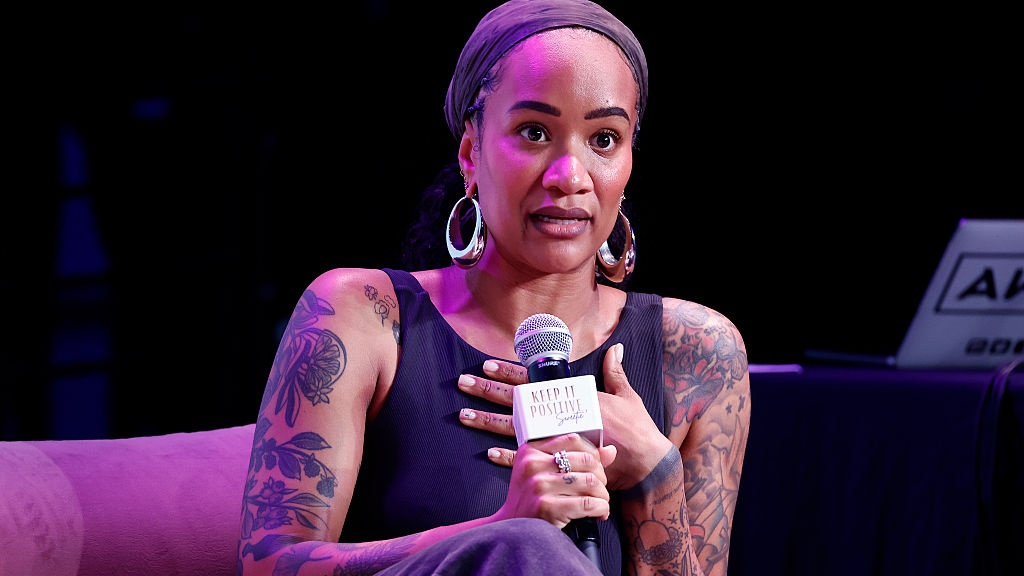
In Alex Elle’s latest book, The Company We Keep, there’s a passage that deeply resonated with the way I’ve been feeling about the lack of societal and institutional accountability we’ve witnessed through news like what’s happening at LSU with Kendall Francis and at Cornell University with Jane Doe.
Elle wrote, “At the heart of every meaningful relationship lies the responsibility to communicate openly and truthfully.” Building on that sentiment, she continues with, “However, in a world where we’ve grown accustomed to the mantra of ‘not owing’ anyone anything, we’ve blurred the lines between healthy boundaries and avoidance. Building responsible relationships requires honesty because it fosters trust, deepens understanding, and builds a foundation of mutual respect.”
To put it plainly, before we arrive at the heinous crimes of sexual assault and abuse, there is a consistent trail of unaccountability that has been embedded into the relationships within an abuser’s life. It’s hard to fathom that anyone wakes up, generally believing that their actions won’t have any consequences. It’s built by pattern recognition. The depth in which the lack of accountability we’re seeing come full force today exists is the byproduct of unhealthy relationships that operate without firm guardrails. Before a person takes the form of an abuser, there’s a friend who awkwardly laughed at their unhealthy thinking, or a parent who has made excuses for their actions. At one time or through several interactions, the absence of explicit boundaries can communicate that certain behaviors are acceptable. Kier Gaines, a licensed therapist and author of It All Starts When You Do: How to Do the Real Work of Self-Healing, added to the conversation of accountability through boundaries as it relates to consent and sexual encounters.

Disagreeing is a part of any relationship, but where moral issues such as sexual assault and abuse of any kind are concerned, accountability should be non-negotiable. As my mother so often reminds me, birds of a feather flock together. The community we surround ourselves with says a lot about who we are and what we do and do not stand for. The compassion, or lack thereof, exhibited by those we hold near and dear to us is a testament to what we accept in our own lives.
Yet, there is a real sense of disconnection when it comes to having in-depth conversations with the company we keep about where we stand on certain issues. Even I have a moral litmus test to see how people react to topics where I see no room for negotiation. These conversations can be uncomfortable, but discomfort is not a reason to avoid them. In fact, the refusal to challenge the people closest to us may be part of what allows harmful thinking to go unchecked.
We see this same tension in conversations about separating the art from the artist, a concept that can skew too far in the opposite direction of accountability. Somewhere along the way, we’ve adapted to numbness, compartmentalizing the violence we see online and within the news cycle. We’ve become a society more focused on individualism than collectivism, and it shows in how we interact with one another.
Everyone has the right to safety from harm. The fact that we continue to debate that indirectly through the stories that dominate the news cycle shows how often we repeat the same conversations without addressing their roots. Something awful should not have to happen to us to show empathy to someone else.
These conversations need to happen in real life, within our own communities, just as much, if not more, than they happen online. What happens when something awful happens to us, someone we care about deeply, or someone in close proximity to us? Do we uphold our resolve to remain numb and passive, or do we address the issue head-on?
Accountability begins long before a headline. It begins with the boundaries we establish, the behavior we challenge, and the conversations we are willing to have with the people we love.