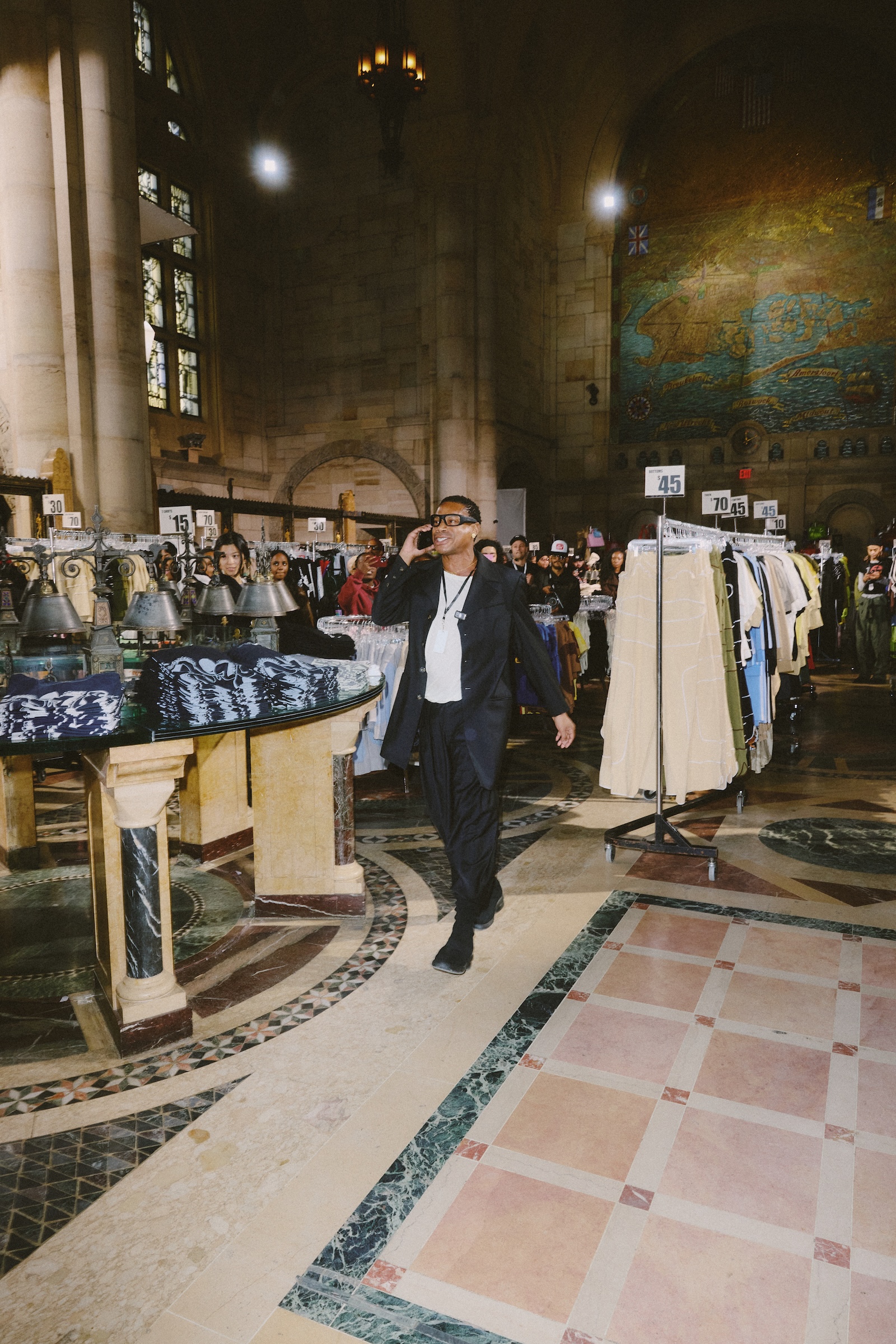
Telfar Clemens has never been particularly interested in playing fashion’s game by fashion’s rules. So, when guests arrived in Paris expecting to watch the designer unveil his Spring/Summer 2027 collection in person, perhaps they should have known better. Instead, Telfar gagged the girls with one of the best switch-ups of the season: the runway show they thought they were about to see in Paris was actually happening thousands of miles away in Brooklyn, New York.
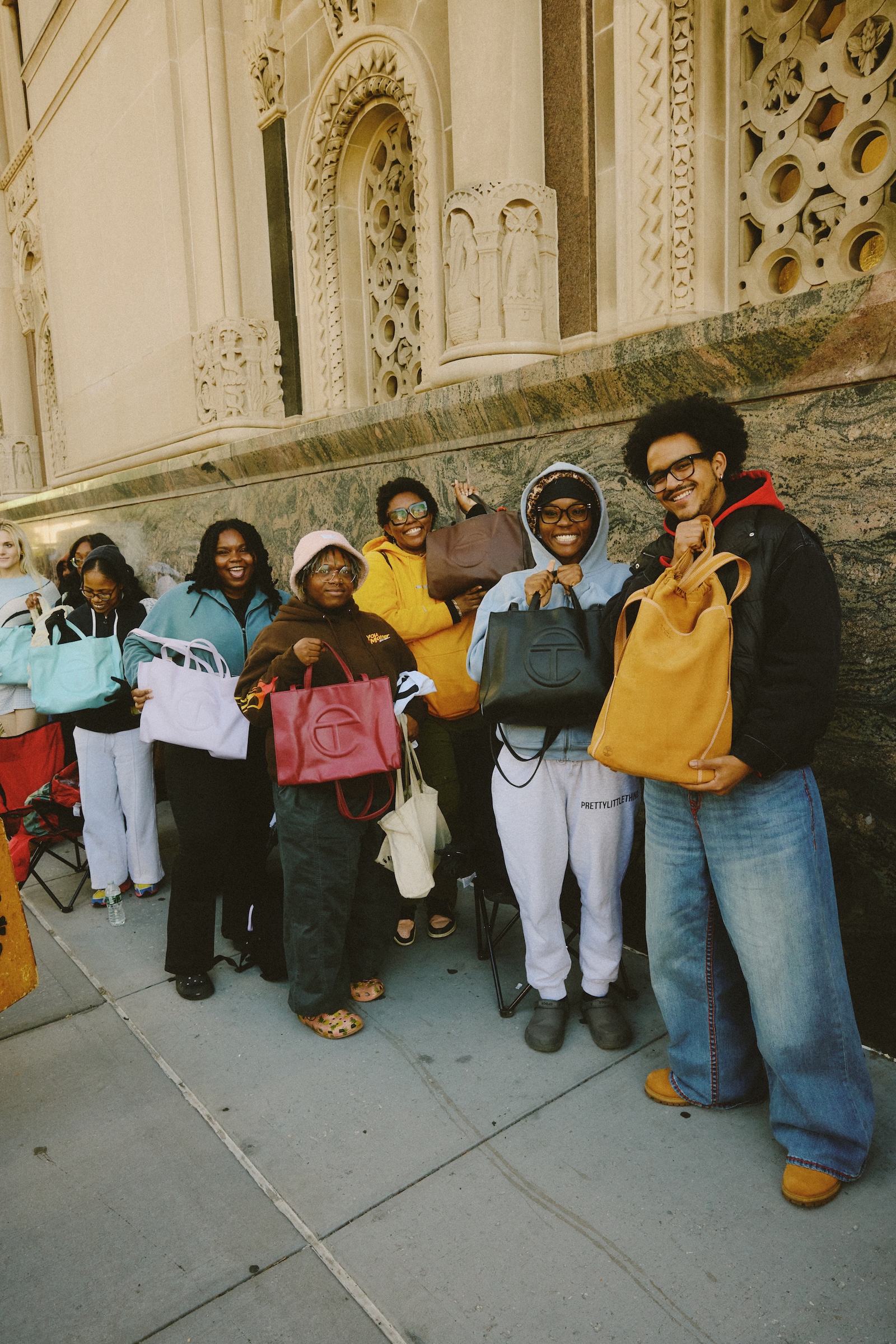
Yes, Brooklyn.
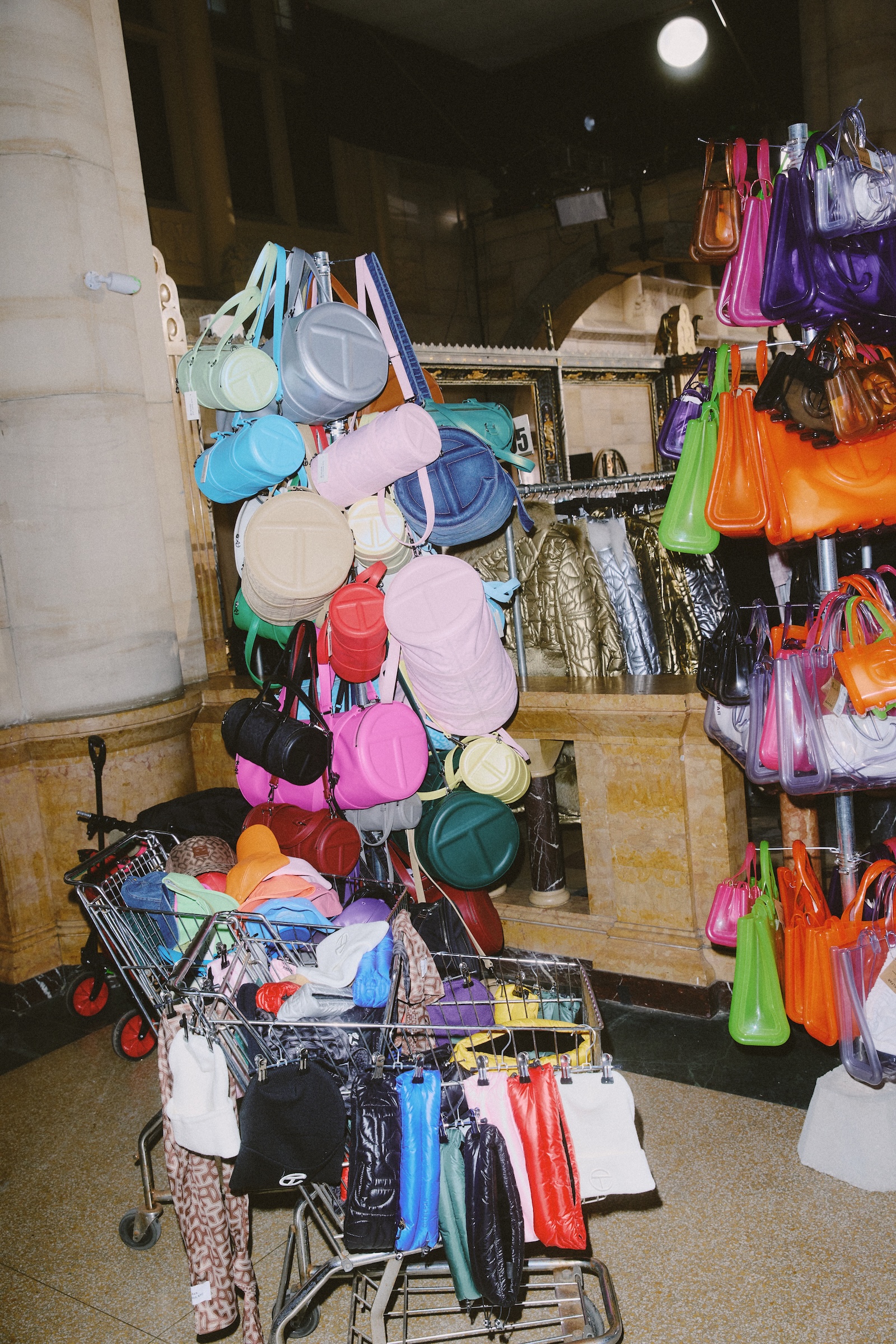
While roughly 300 guests gathered in Paris, the real action was unfolding back home, where hundreds of New Yorkers had gathered for what was ostensibly a Telfar sample sale. The brand had invited people to trade in old bags, shop, and participate in the kind of democratic fashion experience that has become inseparable from the Telfar universe. Then came the surprise. The sample sale became a runway show, and the runway show became a broadcast to Paris.
It was cheeky. It was conceptual. It was very Telfar.
More importantly, it felt like a love letter to the city that held Clemens down long before the rest of the fashion industry decided he was worth paying attention to. Telfar could have used Paris Fashion Week as another opportunity to prove that the brand belongs on fashion’s grandest stages. Instead, Clemens essentially flipped the camera around and asked why Paris should automatically be considered the center of the conversation at all. New York, and specifically Brooklyn, has been home to the community that helped turn the Telfar Shopping Bag into a cultural phenomenon. Why abandon that community simply because Paris came calling?
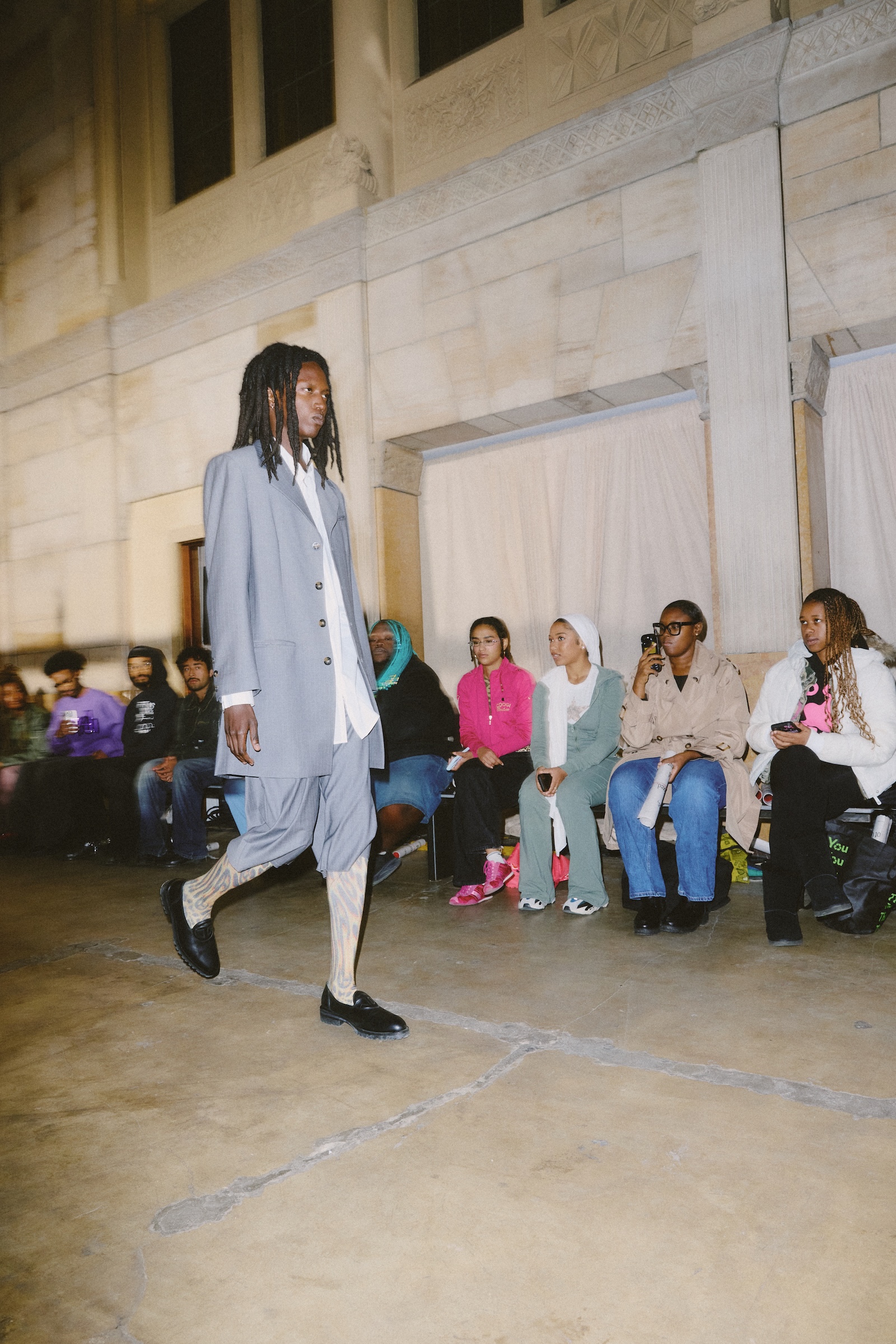
The collection itself carried that same tension between convention and disruption. Tailoring served as one of its strongest foundations, but these were hardly traditional office clothes. Telfar explored the suit as both uniform and social signifier, creating jackets in cropped, classic and exaggerated zoot proportions alongside balloon and straight trousers, raw-hemmed skirts, culottes and wrap shorts. Several pieces were constructed to be worn inside out, exposing silk-jacquard branded linings, bindings and details that would typically remain hidden.
That inside-out philosophy continued throughout the collection. Suit linings became funnel-neck shirts, oversized shirtdresses and backless halter tops. Raw edges and loose threads disrupted the preciousness normally associated with silk, while crisp poplin shirting arrived with zippers replacing more expected closures. Telfar has always understood that deconstruction works best when there is something recognizable underneath it. Here, the familiar language of getting dressed for work was pulled apart and sent back onto the street.
And once those clothes hit the street, things got considerably wilder.
Snake and leopard prints slithered across sheer shirts, baby tees, halters, bodysuits, hoodies and leggings. The patterns were developed using animal skins manipulated across office scanners, cleverly hiding the house’s branding within their spots and scales. The mundane machinery of office life suddenly became a tool for creating something primal.
Denim came next with an iridescent sharkskin finish in red, purple, green and black. Super-stacked skinny jeans gathered dramatically up the leg, while barrel jeans were transformed into roomy parkas and skinny denim became the foundation for racer jackets. Telfar even revisited the visual language of New York’s 212 era through the Skew-T, referencing the oversized tees once tucked asymmetrically for easy access to beepers. It was nostalgia without costume, pulling from a distinctly New York way of dressing without getting trapped in the past.
Perhaps the collection’s most interesting proposition came through its obsession with perceived value. Crack-printed T-shirts mimicked leather, only for the process to become as expensive as using actual leather. Instead of abandoning the idea, Telfar pushed further. Sweatshirts were turned inside out and brushed until their fleece resembled cashmere. Motorcycle jackets and pants were painstakingly recreated using worn-in sweats. Luxury, once again, became less about what something was supposed to be and more about what Telfar could convince it to become.
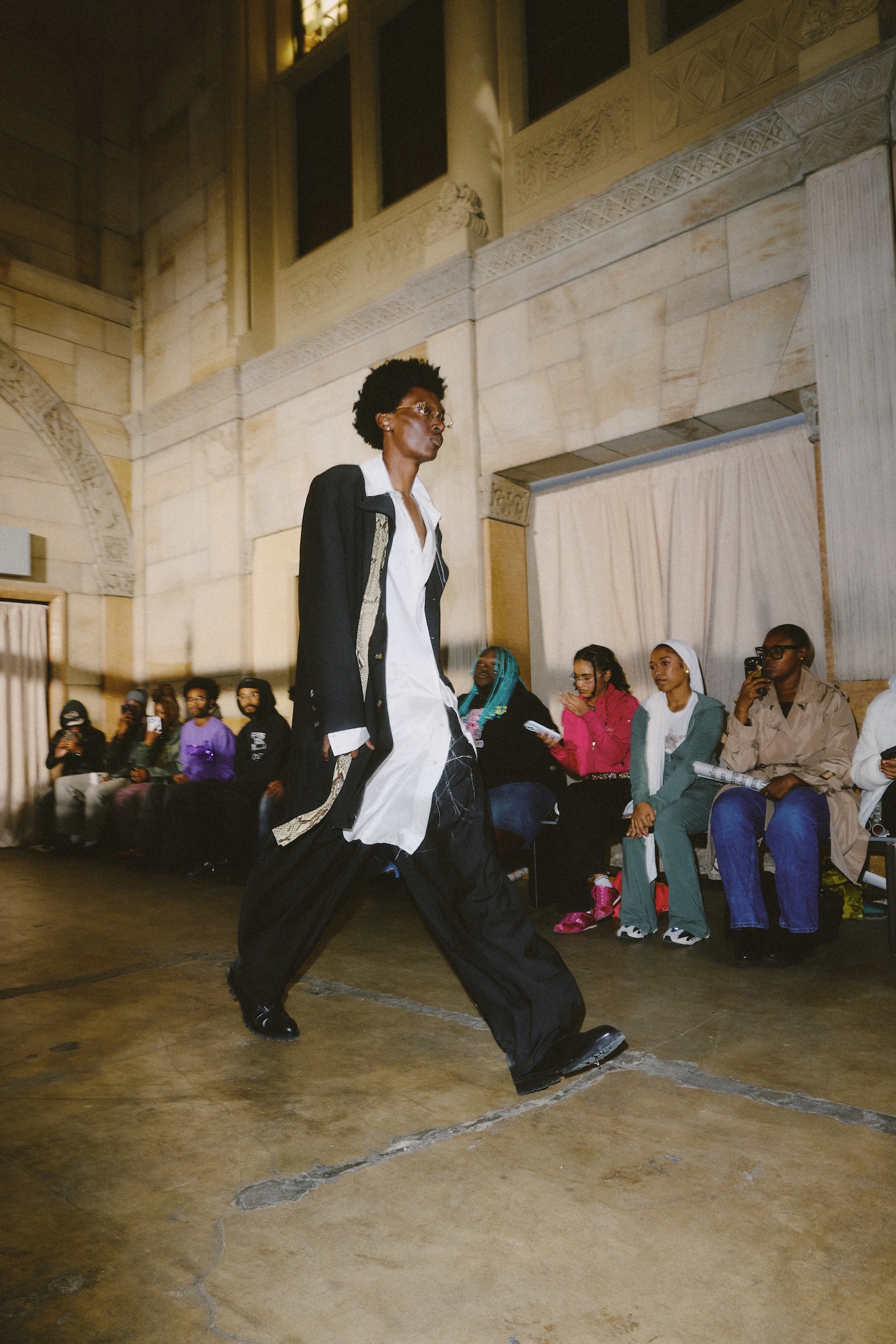
By the finale, the collection had moved into darker territory. Floor-length wool coats with crack-leather sleeves nodded to varsity jackets, while mirrored tanks, halters and metal chains added an industrial finish. Bags appeared throughout, including an unreleased style the brand deliberately refused to explain. Knowing Telfar, we’ll probably understand the joke when everyone else does.
But the clothes were only half the story.
For years, the fashion establishment has asked whether Telfar is a luxury brand, an internet phenomenon, a social experiment, a genderless fashion project or something else entirely. At this point, perhaps the inability to neatly categorize it is the point. Clemens has spent more than two decades building a house whose relationship with its audience often feels more important than its relationship with the industry.
Paris got the screen. Brooklyn got the show.
And somehow, in a season where everyone is fighting for the biggest venue, the loudest celebrity front row and the most viral runway moment, Telfar managed to make distance itself the spectacle. The people who thought they were attending the fashion show watched it happen somewhere else. The people who thought they were attending a sample sale suddenly found themselves sitting at the center of Fashion Week.
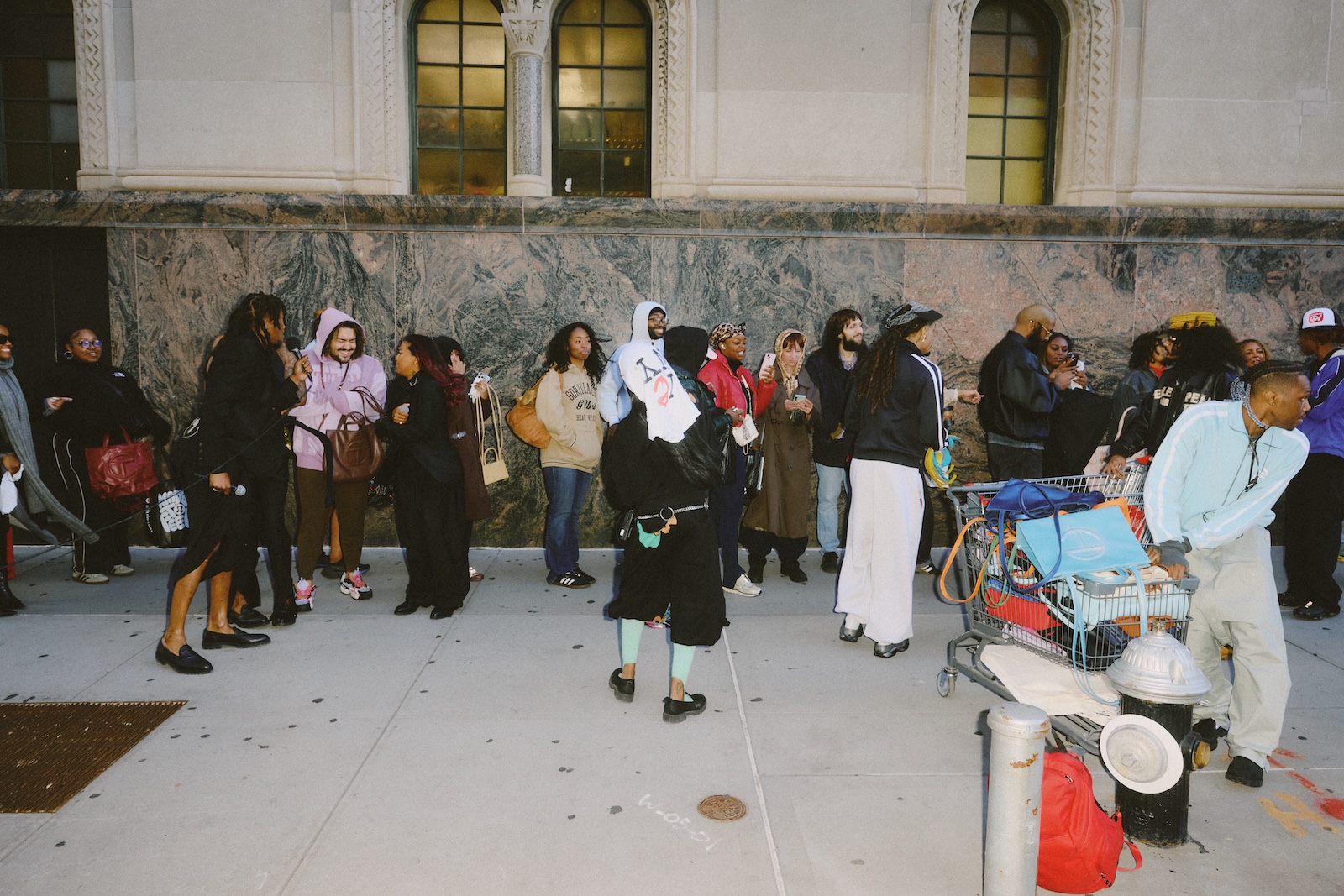
Now that’s the gag.