Nearly half of HBCU alumni (46%) report being engaged at work, compared to just 31% of U.S. workers nationally. The data on HBCUs is compelling, from graduation rates to career outcomes and economic mobility. What the data cannot fully capture is the mechanism behind it. The group chats, referrals, and social media outreach that turn into job offers.
Some of these opportunities start with a phone call from someone you have never met who heard your name from someone who heard your name from someone else—and all of that someone-to-someone is moving along a thread that traces back to a single school. The HBCU alumni network activates like this constantly, in ways that are rarely announced and almost never documented. What it produces—jobs, clients, partnerships, opportunities, entire career trajectories—gets attributed to luck, timing, or being in the right place. Rarely does it get called what it actually is: infrastructure.
People rarely talk about that infrastructure when they discuss the HBCU experience. We often see coverage of the homecoming traditions, cultural richness, and academic excellence. But what about what follows graduation? EBONY spoke with three alumni from Tuskegee University and Norfolk State University on the career infrastructure that moves quietly and powerfully through Black professional life.
The Network in Action
Courtney Haywood earned her master’s degree from Norfolk State University in 2011. She grew up going to HBCU homecomings with her mother, a Cheyney University graduate, from age five. By the time she arrived at Norfolk State as a graduate student, she already understood what she was walking into. What she did not fully anticipate was how long the network would keep working for her. “It isn’t collecting business cards or only reaching out when you need a job,” Haywood said. “It’s relationship building. It’s somebody saying, ‘I know somebody you should meet.’ It’s showing up for Homecoming and picking up a conversation like no time has passed.”
The story she returns to most often starts with a $500 lip gloss competition during the pandemic. Ashley Jones, a fellow Norfolk State alum, launched a competition for small business ideas. Haywood pitched her lip gloss brand, Cultivated By Urbanity, and Jones chose her. Even though the lip gloss business didn’t go anywhere, their relationship did. Years later, Haywood pitched Jones on PR representation for her brand Tones of Melanin, and Jones said yes. Months after that, Jones pitched Tones of Melanin on the season 14 finale of Shark Tank, where she secured a $300,000 investment from Mark Cuban. “The real story is trust and networking,” Haywood said. “Ashley first took a chance on me when I was pitching her a $500 lip gloss idea. Years later, she trusted me with the public relations and reputation of something she had spent years building.”
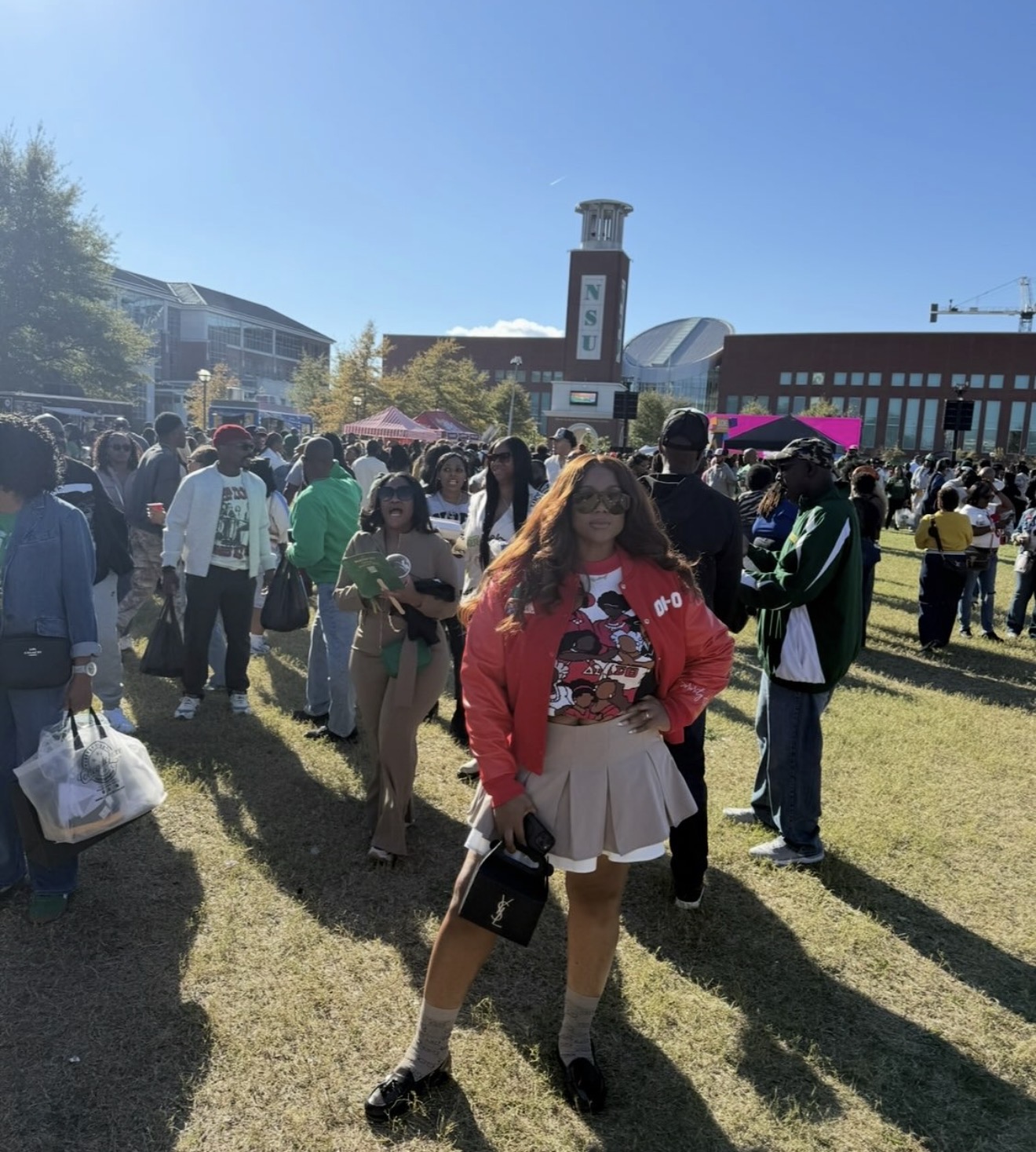
Gerald Carter graduated from Tuskegee University in 2008 with a degree in electrical engineering. His first job out of Tuskegee came through the alumni network. Graduates already in strong roles at major companies came back to campus to recruit and told him exactly what to do next. Twelve years later, when his company Diversity Photos—the stock photography platform he founded with his wife Nicole to address the industry’s representation gap—found its content being used without permission by Adobe, the network mobilized again.
“Alumni heard our story and amplified it, invited me onto their podcasts, shared it across their platforms, and connected me with attorneys who could help us defend our work,” Carter said. “That’s what the HBCU network really is: an instant connection that becomes both a ladder and a shield.”
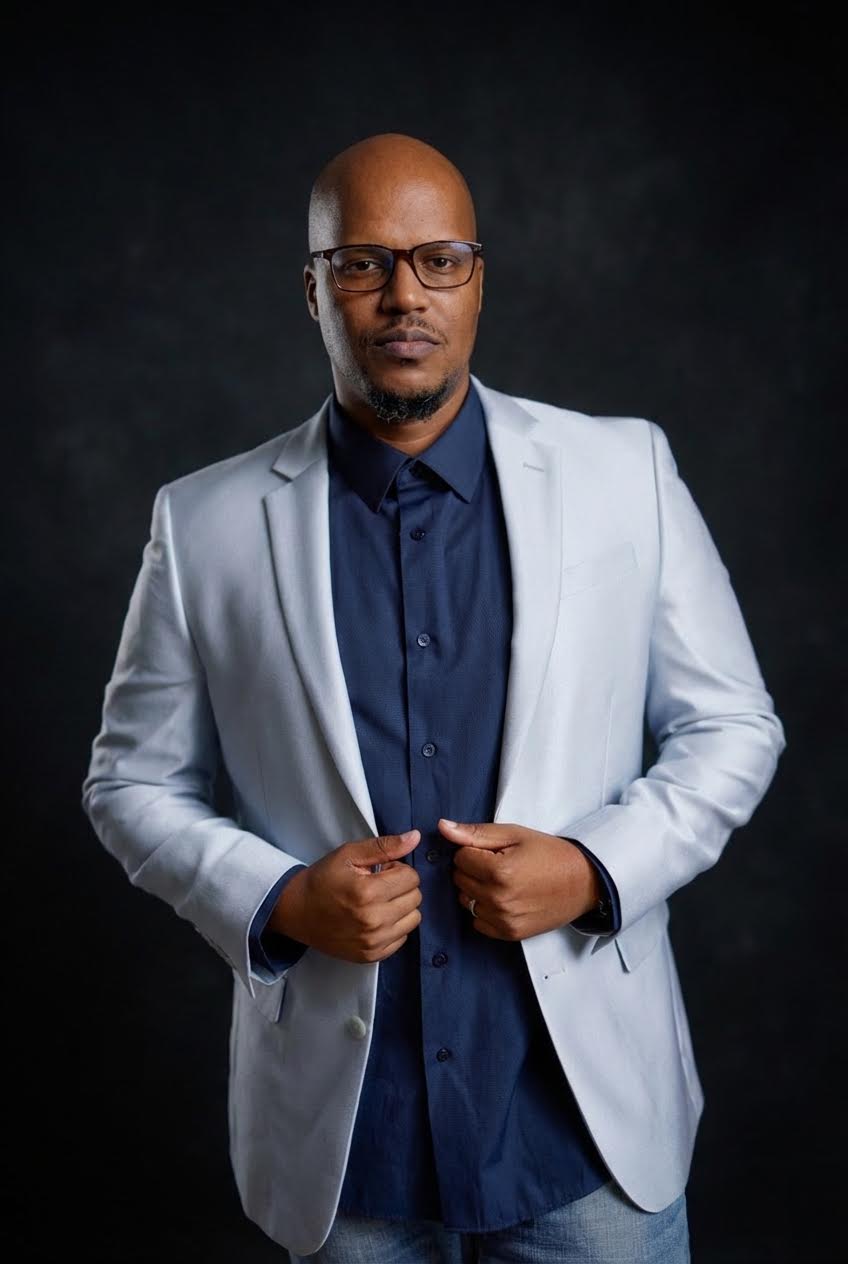
Destinie James-Knowles graduated from Tuskegee University in December 2024 with degrees in electrical engineering and computer engineering. Before she had even finished her degree, her Tuskegee network had already placed her in rooms that her resume alone couldn’t have gotten her into. A Tuskegee alum at Chevron vouched for her in a way that carried institutional weight, and she ended up meeting the CEO and winning a pitch competition.
“Nothing on my resume got me into that room,” she said. “A Tuskegee graduate who saw a Tuskegee student and decided to spend some of his own credibility did.”
She also secured $80,000 in Honeywell funding to launch a cross-continental study abroad initiative between Tuskegee and the University of the Witwatersrand in South Africa — made possible in part because Dr. Rhonda Collier, a faculty member, invested in her idea like it was her own.
Why HBCU Networks Operate Differently
The difference between HBCU networking and conventional professional networking is both cultural and structural. Carter described what it feels like to walk into most corporate spaces as a Black professional, including having to prove your intelligence and value before the real conversation can even begin. The HBCU network, he said, flips that dynamic entirely. “When I meet another Tuskegee alum, or any HBCU graduate, those hurdles are already cleared,” he said. “You start from a position of excellence. The question isn’t whether you belong. It’s what we can build together. In the HBCU network, you don’t have to prove your excellence. You have to maintain it.”
Haywood described a similar dynamic: the way an HBCU credential creates what she calls a cultural shorthand that collapses the distance between strangers. She can be wearing a Norfolk State sweatshirt in an airport, and someone from Howard, Hampton, or Delaware State will stop her and a conversation will begin. “It can start with belonging before business,” she said. “And sometimes that ‘I see you’ becomes, ‘I know somebody you should meet.’”
James-Knowles put the difference most plainly: “Think of it like the difference between a business contact and a cousin. A business contact will forward your resume if it costs them nothing. A cousin will call somebody. That is the distinction.”

The Reciprocity Engine
The network sustains itself because the people it benefits feel responsible for keeping it running for the next person. Haywood returns to Norfolk State every summer to help students develop the professional readiness they will need after graduation. She also tapped her network to bring Lincoln University students to New York City for behind-the-scenes experiences at CBS, ABC, and SiriusXM. When they arrived wearing their Lincoln University gear, another HBCU alum at SiriusXM saw them and opened an unplanned door that led to time with Roxanne Shanté. “I had used my professional network to help get those students to New York and into those buildings,” Haywood said, “but then another HBCU alum saw students representing his alma mater and opened a door that I hadn’t even planned for.”
Carter takes calls from younger Tuskegee engineers figuring out how to break into tech or start a company. “Someone did the same for me when I was starting out,” he said, “so I’m paying back what I was given.”
James-Knowles founded Shift Alt Her, a nonprofit advancing women in technology, and is offering a scholarship to women in STEM at Tuskegee. “I lift as I climb,” she said. “That is not a slogan to me. It is the terms of the deal I accepted when other people did it for me.”
All three alumni agree that social media and platforms like LinkedIn have widened the network’s reach without changing its foundation. Carter can now identify Tuskegee alumni inside any company within minutes. When the Diversity Photos story needed amplification, the network activated online at a scale that would have been impossible a decade ago. Haywood posted a TikTok about The HBCU News Store in Union Station in Washington, D.C., and asked people to drop their school and graduation year in the comments. The comment section, she said, turned into Homecoming.
James-Knowles offered the most useful caveat. “Digital platforms are best at maintenance and worst at formation,” she said. “A connection request is an introduction, not a relationship. People confuse the two and then wonder why nobody responds to their messages.”
What Current Students Should Know
The advice from all three converges on the same core idea: start before you think you need to. Carter says to get into a research program, build relationships with faculty, and find alumni two to five years ahead of you. James-Knowles says to go to the professor’s office hours when you don’t need anything, say yes to the things that scare you, and give before you take. Haywood’s advice cuts to the heart of it: “Homecoming is where we reunite with the network. College is where you have the opportunity to start building it.”
The HBCU network is a system built by people who understood that access means little if you aren’t willing to extend it.
As James-Knowles put it: “Every person reading this who came out of an HBCU should ask themselves one question: who is coming behind me, and what have I actually done for them lately?”