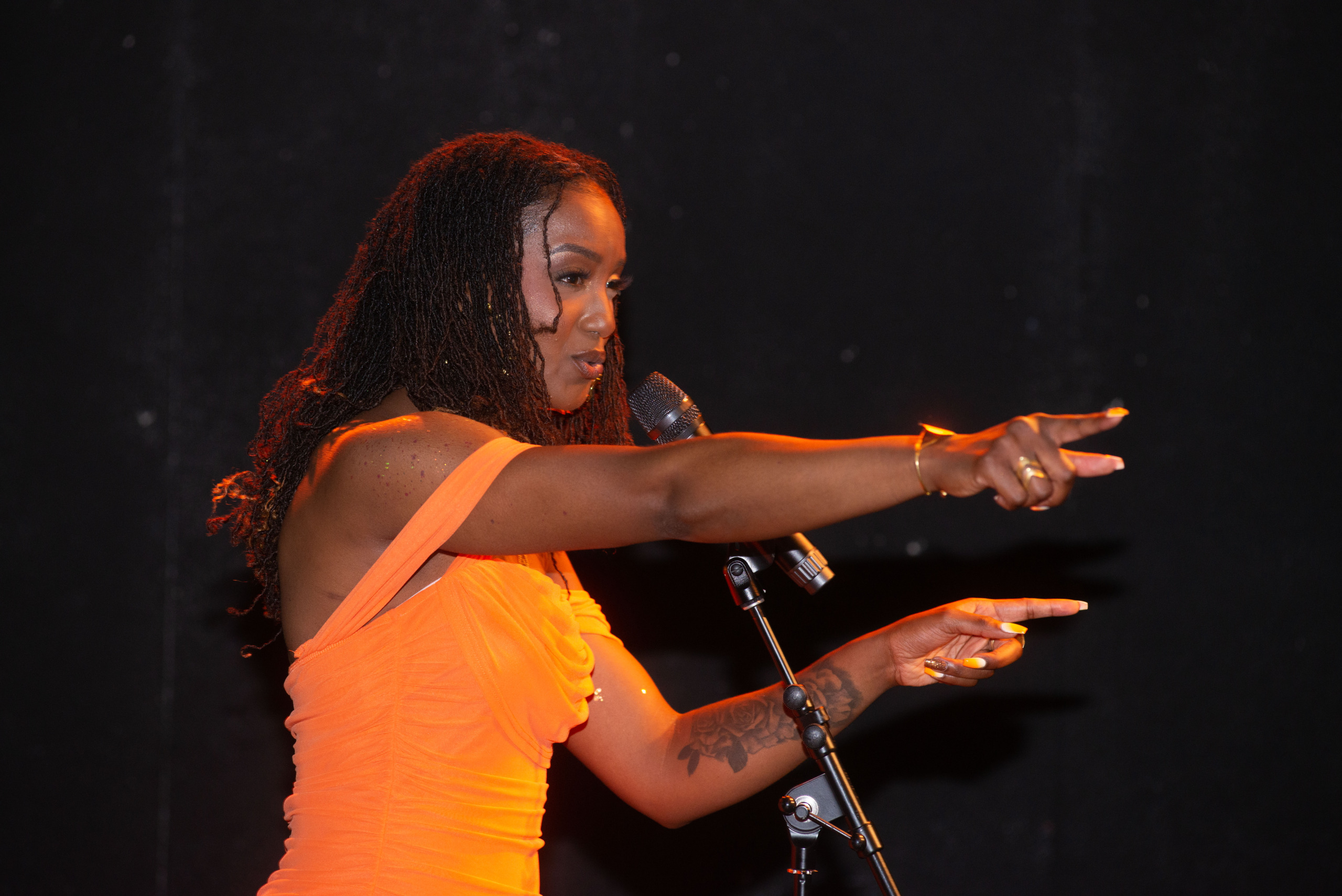
The outlet of poetry and spoken word has always existed as the catalyst between experience and documented expression. We’ve seen how powerful poetry can be through the lens of Nikki Giovani, Gwendolyn Brooks, Langston Hughes, and so many more exemplary poets. Imani Wallace, artistically known as Lyrical Faith is continuing that tradition through her practice, most recent track release “Best Friend,” where she explores the beauty of platonic friendship. For two decades she has dedicated her life to the expression of poetry and spoken word not solely for her individual expression, but in the context of immortalizing the nuances of Black women’s experiences across categories instead of limiting her work to our often polarized pain.
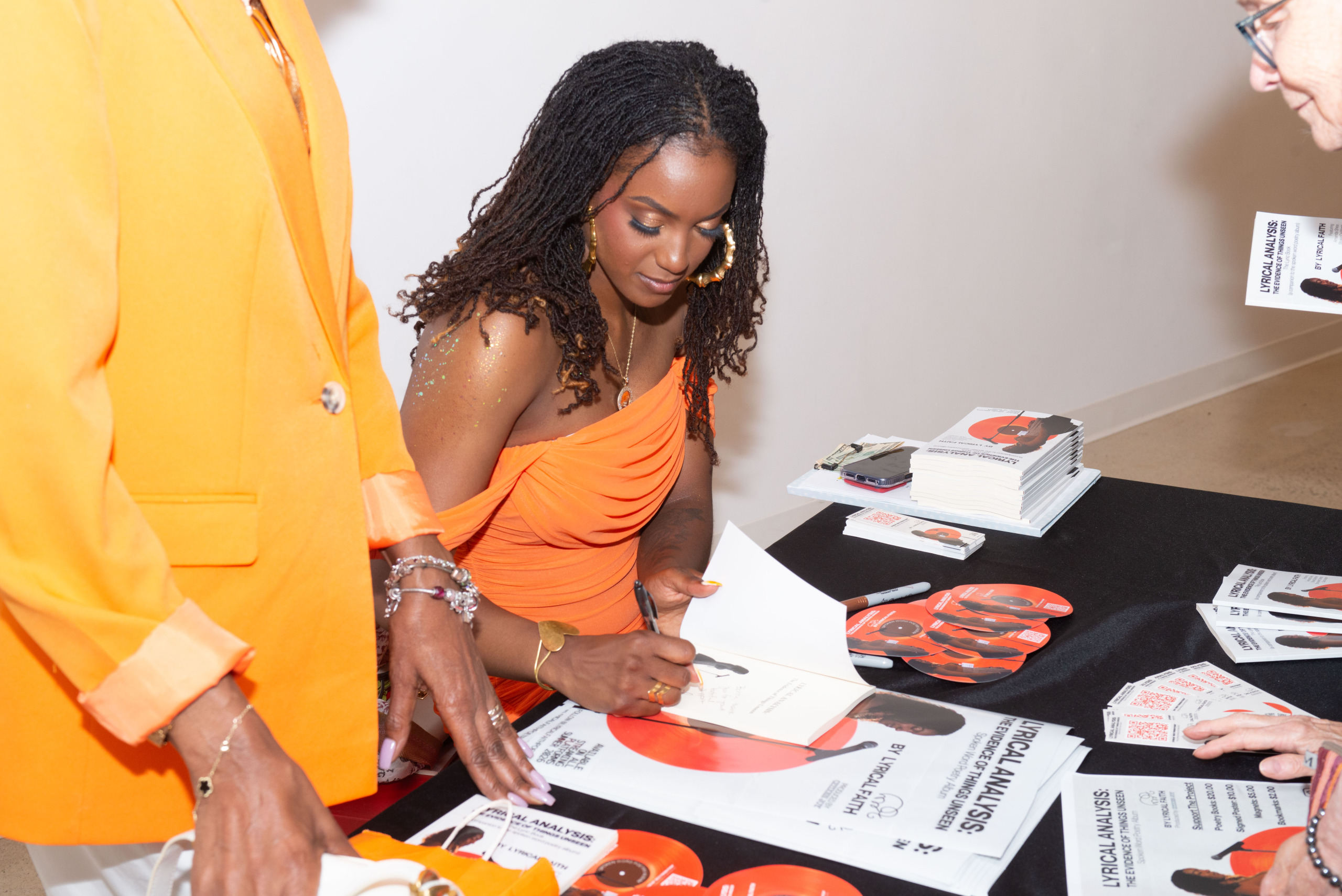
EBONY caught up with Lyrical Faith to talk about her career as a poet, her forthcoming debut album LYRICAL ANALYSIS: The Evidence of Things Unseen, and the accompanying book of the same title.
EBONY: Tell me about how you came to choose poetry as your artistic expression. What was your earliest experience with poetry, and what about the form initially drew you in?
Lyrical Faith: My earliest experience with poetry was in my middle school English class – shoutout to Ms. Brown – where we were introduced to the rhythm and radiance that spoken word could have, dissimilar to the basic public school curricular standards that presented poetry under the authority of old, deceased, white voices. It felt like the first thing I was really good at. I kept a journal and wrote every single day. But what I remember most about discovering poetry was realizing that language could hold things that regular conversation sometimes couldn’t. I could take an emotion, an experience, even something I didn’t completely understand yet, and put it somewhere.
This year marks the 20 year anniversary of me writing and performing poetry. Over time, this craft became more than something I did—it became one of the primary ways I understood myself. There’s actually a line from the album, I Been Writing These Poems (IBWTP) where I say that I write these poems mostly to remind myself of who I really am. I think that gets to the heart of my relationship with poetry.
Then, spoken word gave those words a body. That’s what really captivated me about the form. A poem doesn’t have to remain on the page. It can breathe. It can have rhythm and silence. It can live alongside music. It can become testimony. Poetry gave me permission to be a writer, storyteller, performer, researcher, cultural critic and just a Black girl from the Bronx with something to say—all at the same time.
As a Black woman creating art in a moment when so much of what happens in our communities is reflected in public conversation, how have you used poetry as a way to process, respond to or make sense of the world around you?
Poetry is where I interrogate things. Sometimes I’m responding directly to what’s happening in the world, and sometimes I’m trying to understand what that world has done inside of me.
I can take something happening socially, politically, culturally, or [even] something happening internally, and ask; ‘What is really going on here? And what am I feeling that I haven’t found language for yet?’
My work can move from the Bronx to Black American history, and span from ancestral memory to friendship, grief, faith, boundaries and emotional survival. That’s intentional because that’s how I experience the world. Those things aren’t neatly separated.
Something I’ve become increasingly intentional about is refusing to make Black suffering the only subject worthy of documentation. Black joy deserves an archive, too. For me, poetry is both witness and evidence. It documents what happened around me, but it also documents what survived inside of me.
There is a long history of Black women using poetry and other forms of art to document their experiences, challenge social norms and give language to emotions that can be difficult to articulate. How do you see yourself participating in that tradition, and what does it mean to you to create work that speaks specifically to the experiences of Black women?
I don’t think I could separate my voice from the Black women whose voices made mine possible. When I write about myself, I’m rarely writing only about myself. I’m carrying histories that existed before me. I’m carrying women whose resistance created room for my voice, artists who showed me that poetry could serve as tragedy turned testimony, elders whose survival became instruction and ancestors who left a torch for me to carry as I seek God’s voice for confirmation that I’m walking in my purpose each day.
However, I also think participating in the tradition of Black women’s art means expanding what gets preserved. I want the archive to contain our resistance, absolutely. But I also want somebody to open it and find our audacity — humor, friendships, softness, faith, boundaries, contradictions, and confidence. I don’t want to only document what Black women have survived. I want to document who we are when survival isn’t the only thing we’re being asked to do.
Your recent track “Best Friend Poem” explores the intimacy and complexity of friendship. What inspired you to turn that particular relationship into poetry, and what did creating the piece reveal to you about friendship, connection or yourself?
I wanted to write about friendship with the same seriousness that we usually reserve for romantic love. We have all of this artistic language for finding “the one,” but some of the deepest love I’ve experienced in my life has existed in friendship. I wanted to raise the question: Why shouldn’t I reflect this kind of love through poetry, too?
Friendship can become family. It can become a sanctuary. Creating it made me recognize that friendship is one of the places where I’ve experienced home. That realization actually became part of the larger philosophy of [my] album.
Platonic love can resurrect parts of us. Chosen family can make us whole. Friendship can be sacred. And I think Black friendship deserves to be documented as part of Black history too, not just the people we struggled beside, but the people we laughed with while we survived.
When you think about the role of art in the lives of Black women today, what do you believe poetry can offer us that other forms of expression sometimes cannot? And what do you hope someone takes away after encountering your work?
Poetry gives us permission to tell the truth without requiring that truth to arrive neatly packaged.
We can be angry and loving in the same poem. We can grieve and laugh in the same breath. We can be faithful and questioning. We can speak from the personal and somehow find the collective inside of it. Poetry has room for contradiction, and I think that’s incredibly important for Black women because we’re so often asked to flatten ourselves into something easily understood.
Poetry says you don’t have to make yourself easier to consume. Spoken word adds another layer because the body becomes part of the text. Breath becomes punctuation. Silence means something. Rhythm means something. The way I say a word can carry history that isn’t necessarily visible on the page.
[When] a Black woman encounters my work, I hope she walks away feeling seen, but I also hope she feels possible. I hope she understands that she doesn’t have to wait for the world to validate what her own becoming has already placed inside of her.
Some things are real before they’re visible. Sometimes believing in yourself is the first evidence that the life you’re becoming is already on its way.