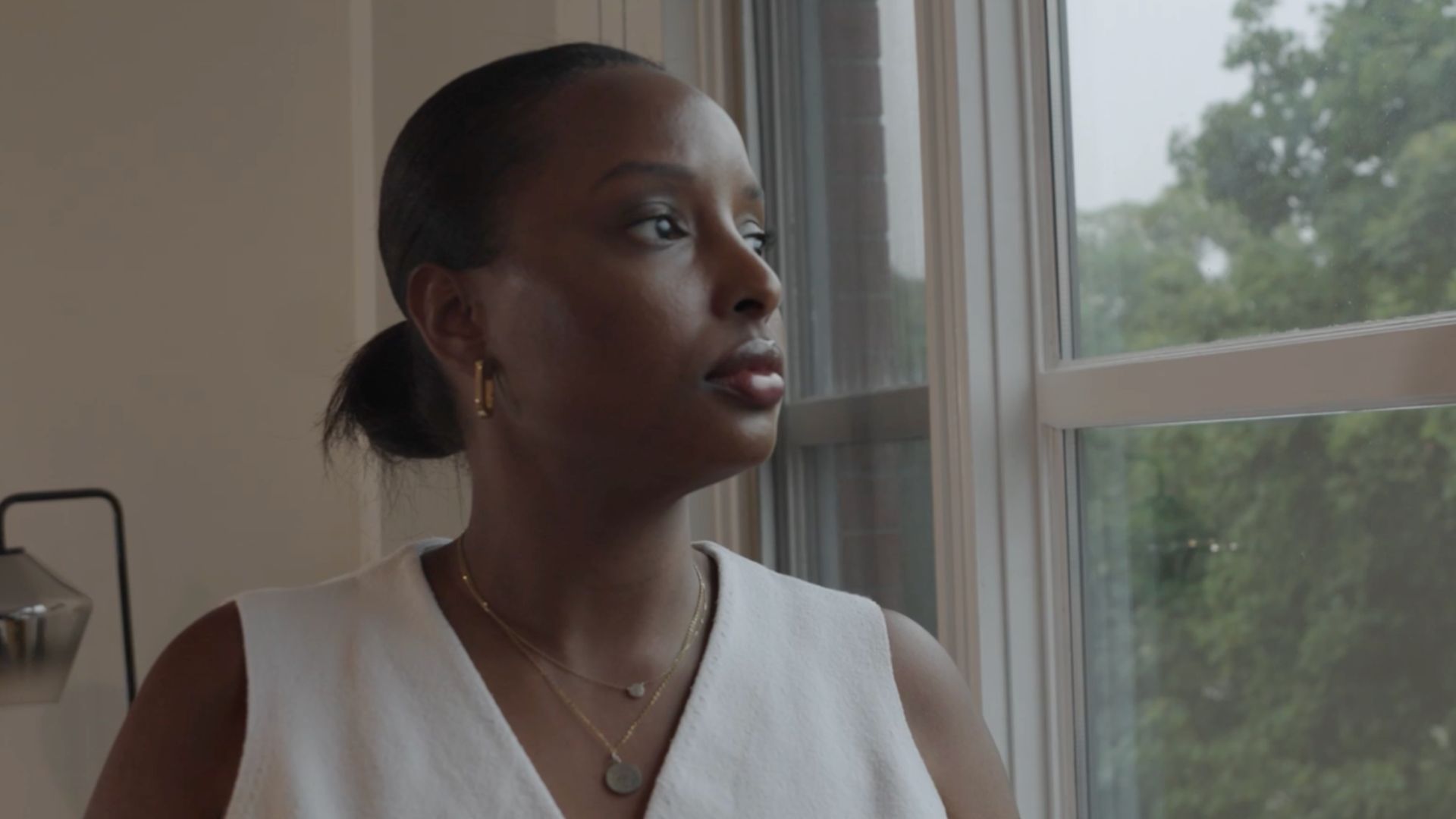
With roughly 700,000 Black women pushed out of the workforce since the beginning of 2025, unemployment has become more than a statistic. For Black women, losing a job can mean months of financial uncertainty, an unexpected shift in identity and the exhausting process of proving their worth in a job market that does not always reward their experience or qualifications. Journalist and filmmaker Sidney Madden wants to make sure their stories are not lost in the numbers. Her upcoming documentary, And Counting, follows four Black women across generations, industries and career levels as they navigate life after being laid off, offering an intimate look at what happens when professional stability disappears and the next chapter remains uncertain.
“I really, as a documentarian, needed us to take stock of the ins and outs of somebody’s life that’s part of that 700,000 and how it goes beyond the statistics,” Madden told EBONY. “Because as I saw the statistics go up and up, I remember when I first conceived this film, it was around 500,000. And like, that’s half a million, that’s already insane. But then it went up and up and up. And I noticed the more it would go up, the more apathy people would have for it.”
For Madden, who has spent more than a decade working as a music journalist, the project is both a professional pivot and a personal undertaking. After working at NPR, where she co-hosted the podcast Louder Than a Riot, she witnessed the impact of layoffs when the organization shuttered the team’s operation in 2023, leaving her and her co-host as the remaining members. The experience brought its own version of survivor’s remorse, an emotion that stayed with her as she considered her next chapter in storytelling.
The idea for And Counting took shape earlier this year during a road trip with her best friend. As the two discussed the growing number of people they knew who had been laid off, Madden began imagining a documentary that could capture the experiences behind the headlines.
“I know so many people laid off. I know so many people pushed out,” she says. “And the psychological toll of a layoff as a Black woman is one thing, but now when it’s like we’re part of this whole tidal wave of layoffs, it’s a whole other thing.”
Madden also wanted to tell these stories independently, allowing the women to speak freely about their experiences without worrying about the institutional or political relationships of a particular media outlet. The resulting documentary brings together four women whose professional backgrounds differ, but whose experiences reveal common threads in the aftermath of job loss.
Among them is Maite Nicholas, a former USAID employee whose organization was dissolved under the Trump administration in 2025. Rachel Finn, a former librarian at Barnard College, was laid off amid sweeping cuts at the institution. Asha Brown is pursuing another MBA, while Kaitlyn McNab, a former culture editor at Teen Vogue, is building a career as a full-time freelance journalist.
Their stories illustrate how layoffs can disrupt more than a person’s income. When someone has invested years in building a career, developing expertise and contributing to a workplace, losing that position can also shake their sense of purpose.
“All of the people I spoke to … talked about how what they did was purpose work,” Madden says. “They really enjoyed what they did. They were good at what they did. They were trying to build something for themselves, bigger than themselves. It was purposeful. And so when you’re laid off in that way, it can be a huge hit to your self-esteem. It can be a hit to your identity.”
That disruption can also leave women questioning themselves, even when they have done everything traditionally expected of them to advance professionally. Madden hopes the documentary will challenge the isolation that often accompanies unemployment, particularly when job seekers are left wondering why their education, connections and experience have not translated into new opportunities.
“Everybody thinks it’s just me. Like, what am I doing wrong? Because I did everything right,” she says. “I got all the degrees. I did all the networking. I am active and visible on LinkedIn. I am checking all the boxes all the time.”
The women in And Counting are navigating different paths forward. Brown plans to complete her next MBA in 2027. Nicolas is pursuing training in artificial intelligence and exploring opportunities in consulting. Kaitlyn is finding her footing in freelance journalism, while Finn has secured contract work within New York City’s CUNY library system and is exploring alternative health practices and plant medicine.
Their journeys complicate the familiar expectation that people should quickly bounce back from a layoff, reinvent themselves or turn unemployment into an opportunity. Moving forward looks different for everyone, and a new direction does not necessarily erase the uncertainty of the circumstances that made it necessary.
“Culturally, Black women are the backbone of the Black community, and we are always going to lean on each other for community in times of hardship,” Madden says. “It’s a reminder that it’s not in us, it’s truly on us in this moment. But when it is on us, who do we have to rely on? Each other. That’s what we always have had.”
Still, Madden does not want community resilience to become another expectation placed on Black women, requiring them to shoulder hardship while making their struggles look manageable. Instead, she wants audiences to understand the personal and structural realities behind the rising unemployment numbers and to recognize that these experiences are not isolated incidents.
“We can’t have some revisionist history,” she says. “Five years from now, talking about how this was just a blip because the economy was bad, because AI was taking over. No, this is specific to us.”
Currently, And Counting exists as a 10-minute proof of concept, with Madden working toward a feature-length version that will explore the women’s experiences in greater depth, including their relationships with professional networks and the implications of signing nondisclosure agreements as part of severance arrangements. She is raising funds to complete the longer version and compensate the subjects and production team who helped bring the project to life.
The documentary has already begun resonating with audiences. Madden says women have approached her after watching the trailer to share that the stories reflect their own experiences. That response reinforces the reason she wanted to make the film in the first place.
“I want to make sure that we will always have the ability to tell our own stories and tell the world what’s happening to us in an undiluted fashion,” she says. “I just appreciate that. It’s resonating with so many.”
For updates on screenings and fundraising, follow And Counting. Madden is pursuing film festival submissions and additional screenings as she works to bring the full-length documentary to audiences.