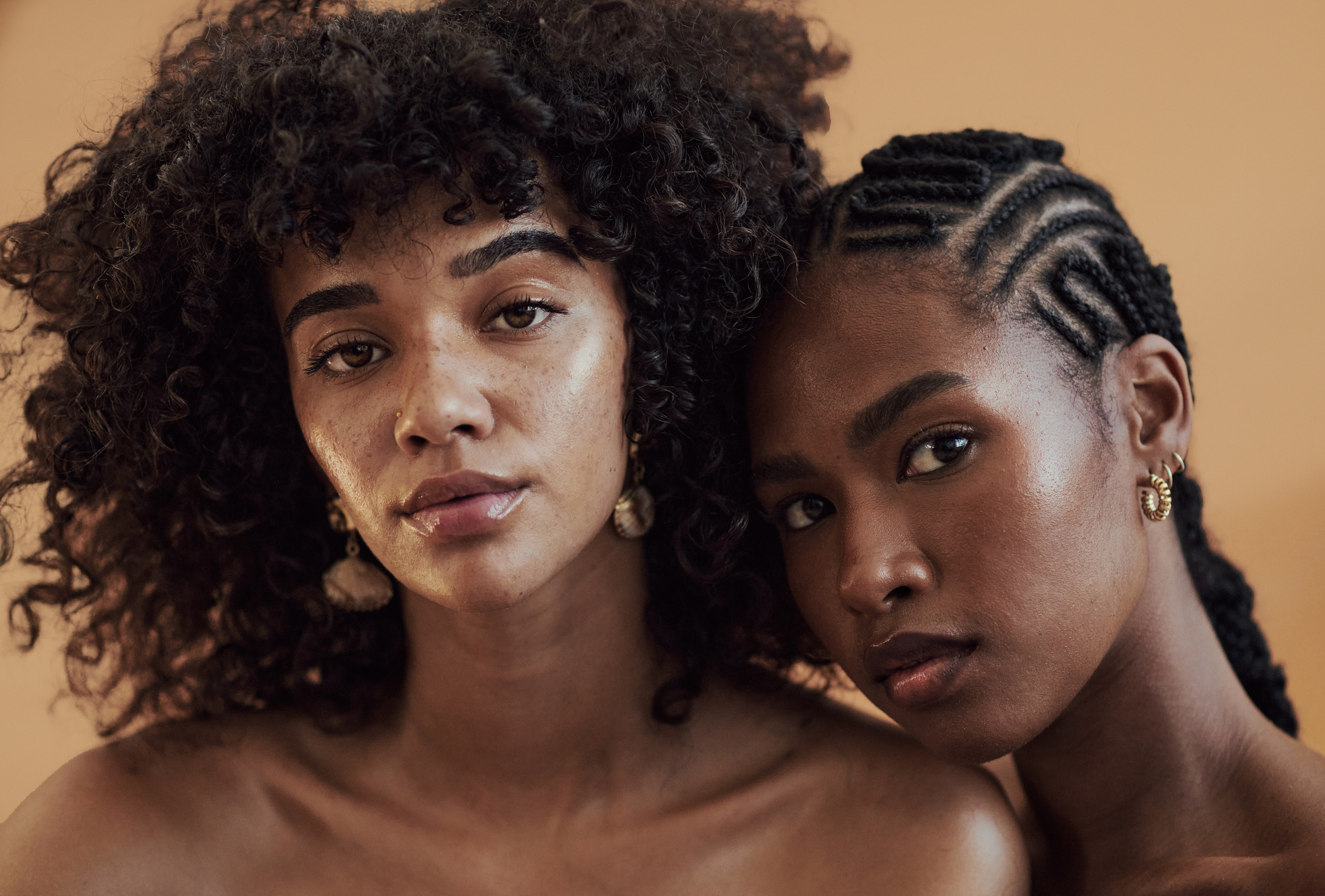
The sparring that has taken place both online and publicly between beauty service providers and clientele has existed as a perpetual source of tension over the greater portion of the 2020s’ era of the internet. The most recent inciting event is what appears to be a mass exodus from independent stylists as a whole — or at least, expanded access to a viable alternative. Like clockwork, algorithms across social media platforms have sensationalized the latest hack that hints at convenience; hair salons at Ulta and JCPenney. While the salon features aren’t new components to either retailer, what is new is the comfortability and affordability Black women are finding within the confines of the chain stores.
Experiencing comfort in a setting that isn’t specifically dedicated to servicing the textured curls, coils, or otherwise we possess is an encounter that is largely unheard of. Although we are not collectively monolithic, we as Black women do have a shared tidbit of wisdom among us. It’s a golden rule that each of our mothers have expressed to us at some point in one way or another. And as simple as it sounds, the warning has likely existed as a reminder every time we decide to sit in someone’s chair.
The sacred advice: don’t let just anybody do your hair.
Somewhere along the way, throughout the years of transformation in the beauty service industry we’ve had no choice but to betray that advice. Beauty shops don’t look like what they used to when we were growing up. Gone are the days of going to the same person for a cut, color, doobie wrap, extensions, or roller set. There’s no more perusing through EBONY and Jet magazines while you endure the heat of the dryer, wishing that the minutes would fly by and that your trusted stylist would be over to collect you soon. So much has changed, and many of us feel the gap because it doesn’t seem like said changes were for the better.
What happened to our beauty shops?
There’s a running list of reasons why the landscape of hair stylists is drastically different from the era we affectionately dub the good old days. The popularization of individual salon suites is a part of that list. Immediately after is the change in service lists, the implementation of booking sites, and the worrisomeness of booking policies. Back in the day, you could just have your stylist write you in their books. Now, all it takes is a few clicks on a phone.
While the online access to a stylist’s books is mostly convenient, the addition of egregious etiquette policies that vary from one servicer to the next and lump-sum deposits have robbed us of the experience of humanity. It has eliminated the natural process of rapport that can only be built through loyalty and proven assurance that you were in good hands. Now, all of that with the help of ‘hey boo’ texts have robbed us of that trust. If losing trust isn’t bad enough, the relationship between stylists and clients has dissolved at the hands of modern technology as many certified cosmetologists have dwindled or shifted gears into influence and the desire of celebrity styling. Contributors like clout and money have replaced the delicate values we used to depend on.
Visiting your regular salon used to come with familiarity and community. It was a space that allowed Black women to momentarily drop the load to be taken care of. When stylists began to exit the traditional multi-chair salon, instead opting for isolated salon suites where we’re often in mixed company, that communal space eventually dissipated. The shift from lingering or being able to take your time transitioned in an atmosphere comparable to a fast food drive thru, prioritizing a quick, in and out model. The stylists who don’t work out of suites usually work out of their homes which isn’t inherently a problem. But what is a problem and a point of discomfort is that setting consisting of children running around or crying and unknown people walking in and out of the house when a client is trying to relax.
The art of versatility has been abandoned
Hair stylists have flocked toward limiting their services based on what yields the most profit, what they like to do most, or what they’ve become most notable for. When everyone only wants to do a particular service it’s hard to remain consistent in anyone’s hands. Not to mention that services like sew-ins, quick weaves, wig installs, and braids no longer come with the standard shampoo and blow dry.
As Black women, we are taught early on that our hair is our glory. That glory requires protection through precautionary measures. But with the increase of suite stylists whose priority seemingly leans toward ego and cash grabs, the act of protecting has become an anticipated battle that has us all fatigued.
Stylist ego has tainted the ritual
Getting your hair done used to be a non-negotiable luxury. Now, it has morphed into a downhill battle of dodging hurdles before you make it to the chair. Between dreaded ‘hey boo’ texts, last minute fees for hair density and length, and the dilution of quality customer service – the girls are tired. Additionally, the population of stylists who aren’t transparent about their credentials is only increasing. And all of this isn’t to say that stylists that align with our core values don’t exist, but when what we’re running from seems to now be an industry norm, the refuge of tradition is more than alluring. Not to mention that the hairstylists who do hair based on their passion have diminished. The type of stylists we’re trying to get away from has become consumed with greed and notoriety while their work isn’t reflective of the quality it takes. I know we were all tuned in and sat for the $900 sew-in debacle just a few weeks ago.
Why we’re really allured by this new option
Well before we knew Ulta and JCPenney were viable options, many of us have resolved to doing our hair at home and not because we wanted to. Even when we find a stylist whose work is high quality, we’re often priced out of her services. Predatory price gouging is real. There are stylists who post about hating the work. The work around we’ve been subjected to is price gouging that benefits the stylists, while isolating the client. As much as women will sacrifice and budget for their hair, the fact remains that we aren’t all ballers. Also, even if we do have the funds, splurging on a $250 pixie cut may not seem justifiable.
At salons like Ulta and JCPenney, there’s a tempting solution for our points of contention as customers. Easy booking, pay transparency, licensed cosmetologists, access to premium hair care products, and standards for customer service are all what we’ve yearned for over the last decade. Women aren’t shamed for having a budget. We’re not priced out from seeing a professional to help us care for our glory.
It just seems like a win.
Although no solution comes without its pitfalls. Ulta is facing racial discrimination suit filed earlier this year. The plaintiff alleges that an Ulta employee and the store manager refused to service her and her adolescent daughter due to discomfort with servicing their hair texture. This isn’t something that should be overlooked. If this retailer is guilty of discrimination, it should pay consequences – that I’m not debating. But what I will say is that we should be able to find and be serviced by whoever is best for the health of our hair, budget, and peace of mind. No matter where a woman decides to entrust her tresses, she should feel at ease.