
Tyler Perry’s Why Did I Get Married Again had the right intention but a flawed approach, and it’s more than just being shot over a few days. The film — which unsurprisingly felt more like a stage play — premiered on Netflix nearly 20 years after viewers watched Sheila drive up that mountain to save her marriage in the original. And, unfortunately, it doesn’t quite live up to its predecessors.
Since Why Did I Get Married hit theaters in 2007, much has changed about how younger generations approach marriage and relationships. Millennials are less likely to go to the altar than previous generations; digital dating discourse can feel as polluted as today’s dating pool and, as WDIGMA star Taraji P. Henson told EBONY, “You see the divorce rate? Clearly we all are still asking that question.”
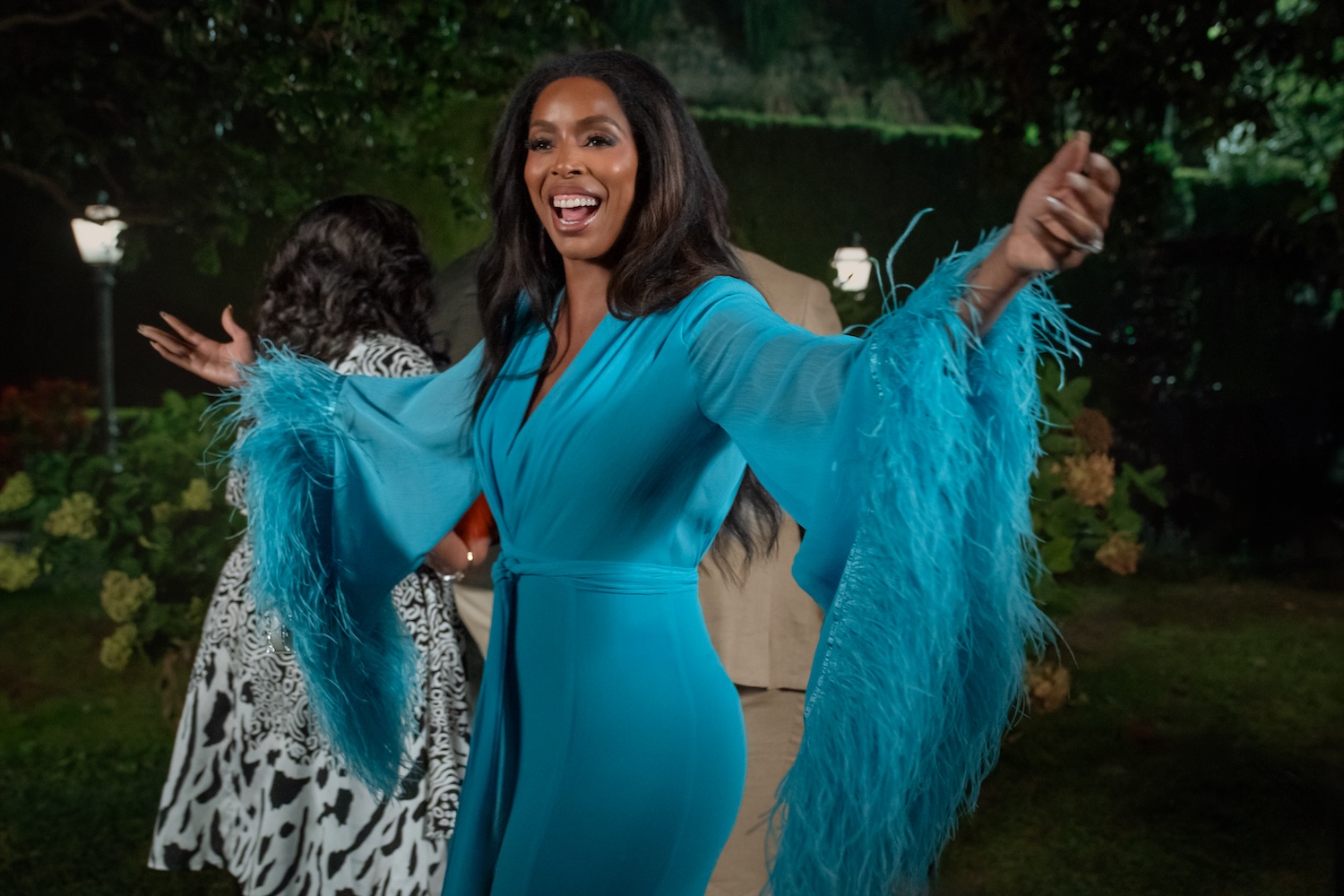
Perry approaches that change by taking the franchise’s key messaging about the good, bad and ugly of marriage and introduces the impact parental relationships have on the next generation. But that message gets lost in the film’s fast pacing and crowded cast.
Spoilers ahead
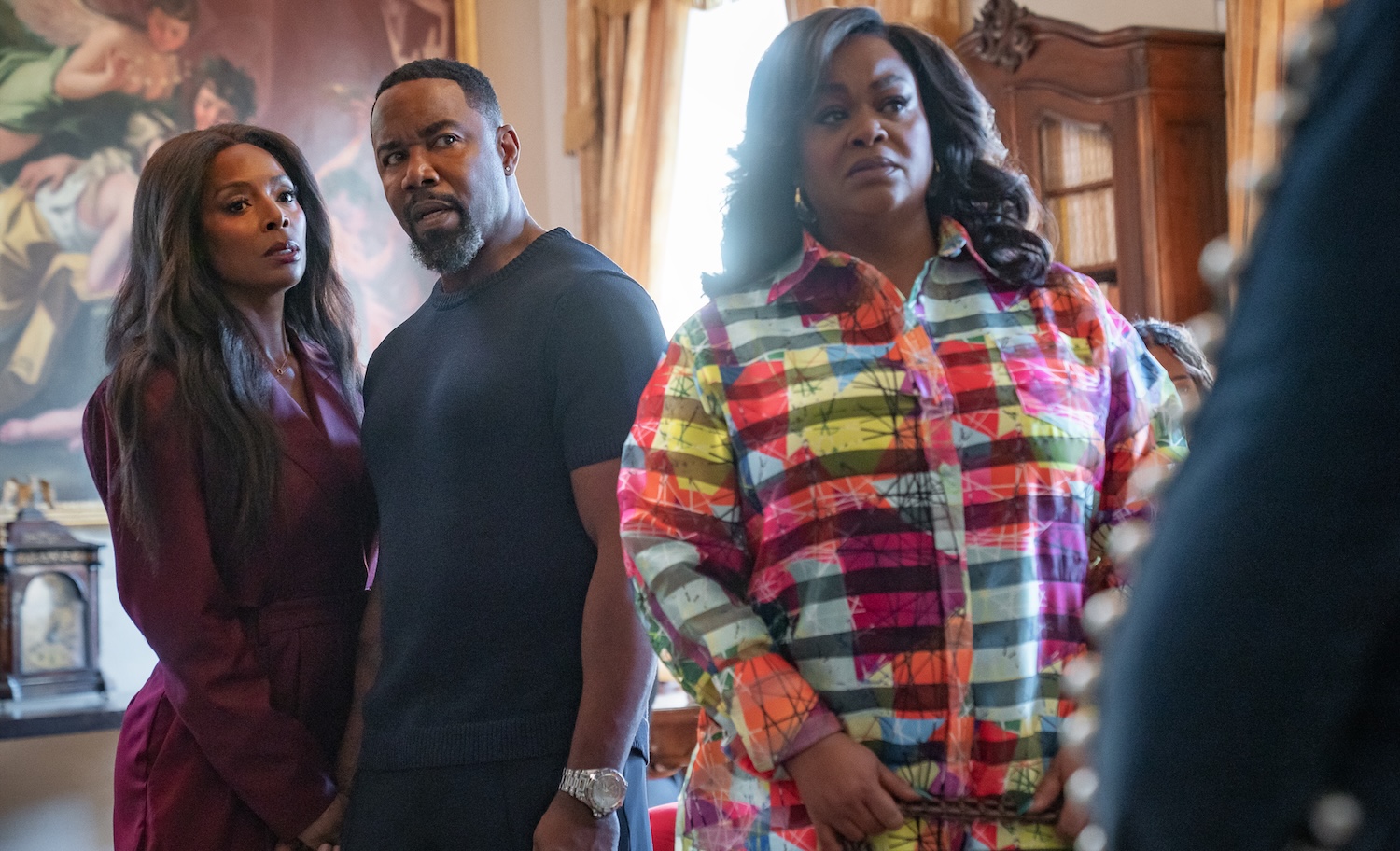
WDIGMA quickly catches us up to speed on the original couples. Marcus (Michael Jai White) and Angela (Tasha Smith) still love to argue, but they’ve come a long way from the clap scandal. Terry (Perry) and Diane (Sharon Leal) are navigating subtle insecurities around his predictable personality. Sheila (Jill Scott) and Troy (Lamman Rucker) are still happily married with an adult son named Denver (Charles L. Smith).
Mike (Richard T. Jones) is still around, despite his abusive past with Sheila. And Roselyn (Henson) is introduced as the friend who’s always been in the group, but her demanding schedule has kept her away. She’s hoping to restore her relationship with her son while sabotaging a growing one with a younger beau.

Then we’re introduced to seven new faces, five being the adult children of the characters and two being Mike and Roselyn’s younger partners. Marcus and Angela’s daughter, Jasmine (Armani Greer), is preparing to marry Roselyn’s son Wesley (Everette Osborne) in Italy. But they’re holding onto a secret that prompts Sheila to believe Wesley is abusive. (We learn later that he isn’t, but he has cheated.) Their son, Marcus Jr. (Da’Vinchi), is holding onto a secret of his own as he’s sleeping with his ex, Regina (Sydney Winbush), who happens to be Mike’s much younger girlfriend.
But even an overcrowded cast can still have its shiny moments. For White, those overlapping stories are the film’s heart.
“You’re seeing the maturation of not only the friendships, but the storylines and everything,” he said. “There’s like five storylines that could be movies themselves. It’s not only the clear storyline about parents being unattainable to their children and giving them this pressure, but there’s all these other things that I feel like Tyler really kind of outdid himself story-wise.”
There are a lot of moving parts in this sequel. But at its core, the film is about breaking the cycle of toxic relationship habits that get passed down from parents to their children. The OG characters’ kids have inherited a proclivity for keeping secrets and hiding behind a veil of perfection. Their relationships pay the cost.
Da’Vinchi feels these conversations are necessary. He added that a big reason why he took this role is that he’s considering what marriage could look like for himself.
“Our generation kind of runs away from love,” he told EBONY. “I just want the floor to be open between the generations, bridging the gap. I think that once we have these honest conversations, the younger generation can be better equipped for marriage, however that looks for them.”
Perry’s thesis for WDIGMA is strong enough to build on, though it feels as if the filmmaker took one of his strongest film franchises and weighed it down with a heavy-handedness that is reminiscent of a stage play.
Still, the film quickly made the No. 1 spot on the platform, according to FlixPatrol. And reactions on social media have been all across the
View on Threads
View on Threads
View on Threads
Many viewers noted that they were confused trying to keep track of who was related to who. Certain important details were mentioned briefly without space to breathe; learning that Sheila’s mother has Alzheimer’s, for instance. Instead of using moments throughout the film for important dialogue, Perry added a 10-minute scene where each main character takes turns airing their relationship’s secrets in a heart-to-heart, bringing the franchise back to its original stage format.
WDIGMA thrives in its lighter moments: Angela stopping Marcus Jr.’s mile-high club attempt, Marcus quietly dislocating his shoulder during a bench press competition with Wesley and Perry poking fun at his wig reputation by giving Mike a horrible toupé. The nostalgic appeal of seeing how far these characters have come may be the film’s most endearing part.
While it may take a few viewings to remember all the characters laid out in Perry’s return to WDIGMA — with its rich character history, a new generation of actors and dense subject matter, WDIGMA could have been better suited as a limited series — Smith said she hopes that viewers will watch and find their own story in these characters.
“Sometimes I feel like seeing the testimony of other people, even if it’s good or bad, but the things that they’ve had to experience and what God has brought them through can inspire people to either quit sooner, to create boundaries sooner, to either let your no be no and mean it when it comes to relationships and the things that you are willing to endure or not endure,” she explained.
“I just hope that it’s an inspiration and a good checkpoint for people when it comes to relationships; looking at the testimony of these characters, prayerfully, it’s going to inspire.”