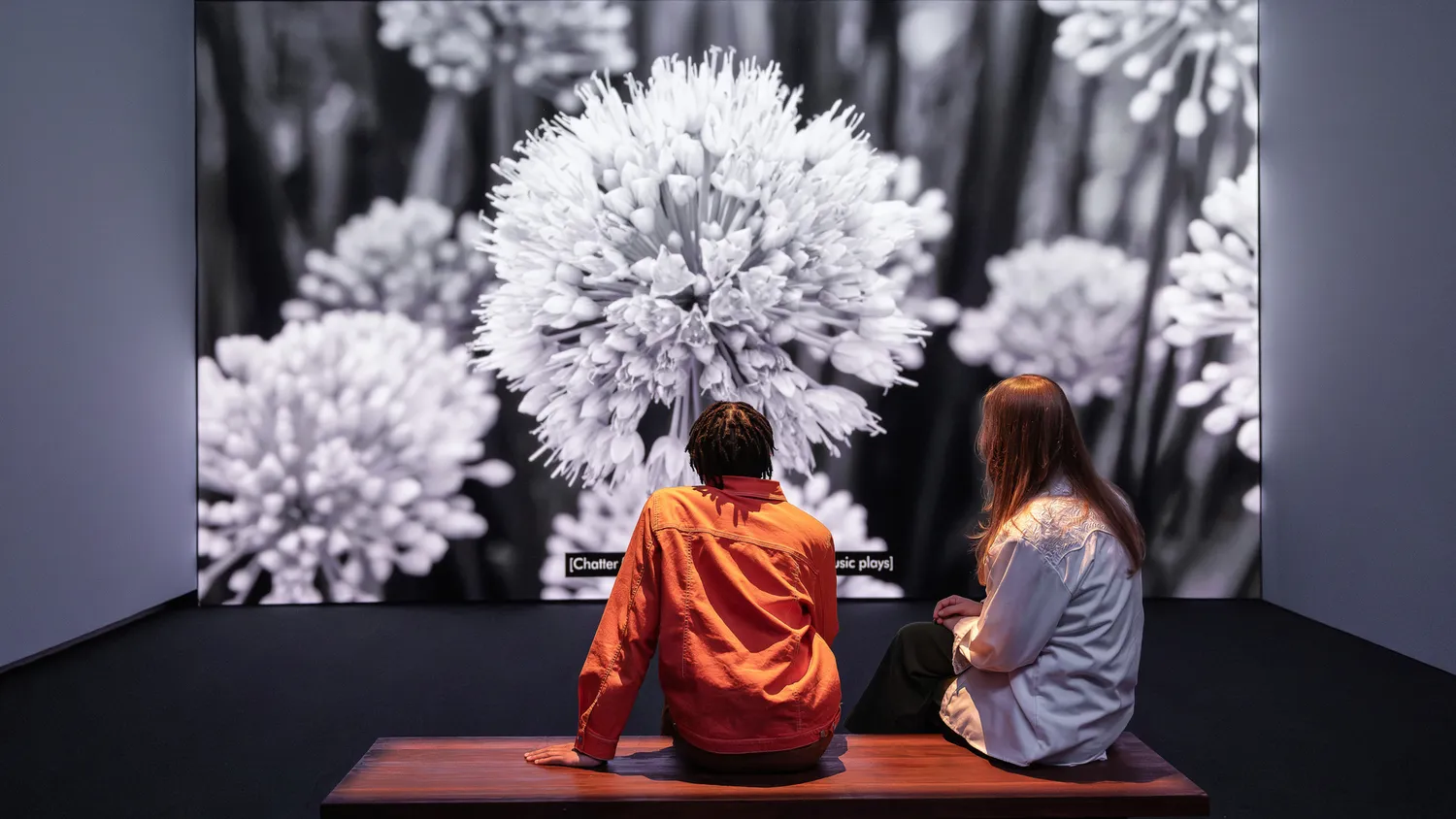
In the year of the American semiquincentennial, Philadelphia situates itself as an origin site, lending itself to the national imagination through the arts spaces that define the city. In this context, there was a kindredness in encountering the Barnes Foundation’s Freedom Dreams the same weekend as the fifteenth BlackStar Film Festival, comprising four days devoted to Black, Brown, and Indigenous cinema.
Both showcases reflect an investment in the image as a place where history can be revised by forging space for interior life, inherited memory, and speculative freedom. In these spaces, images flicker, repeat, and contradict dominant narratives, asking what happens when the people historically treated as objects of American history become its image-makers.
Co-curated by James Claiborne and Maori Karmael Holmes, Freedom Dreams brought together moving-image and installation works by Arthur Jafa, David Hartt, Garrett Bradley, Ja’Tovia Gary, and Tourmaline. Though their artistic approaches differ, each work arrives at the proposition that Black life is most truthfully rendered when allowed its full register.
Holmes founded BlackStar in 2012 to celebrate the visual and storytelling traditions of Black, Brown, and Indigenous people worldwide. Its 15th edition, held August 6 through 9, included 91 films from more than 30 countries, with premieres distributed across the program.
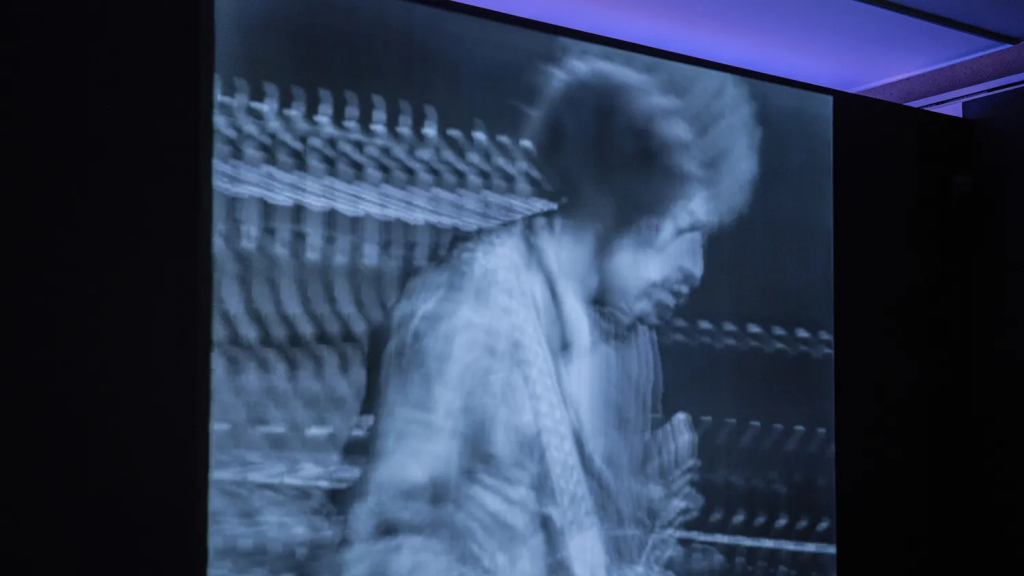
Holmes’s curatorial career has instead focused on the person behind the looking. Freedom Dreams takes its name from Robin D. G. Kelley’s Freedom Dreams: The Black Radical Imagination, his study of the visions that make political transformation imaginable before it becomes achievable. The exhibition extends Kelley’s premise into the moving image, reimagining the breadth of Black existence across multiple contexts of interiority. That sensibility travels easily from the Barnes to BlackStar, where the moving image is treated as a form capable of carrying interior worlds.
Holmes’s own Scene Not Heard: Women in Philadelphia Hip Hop is one such film, restored and screened at BlackStar as part of the anniversary. Her documentary, made two decades ago, chronicled women who shaped Philadelphia hip-hop while examining how the city itself had been overlooked in national accounts of the genre. Its subjects include Bahamadia, Ursula Rucker, Lady B, Dyana Williams, and others whose work complicates the masculine mythologies through which hip-hop history is often narrated. Seen now, the film feels almost like an early blueprint for the institution Holmes would eventually construct in her current curatorial and programming work.
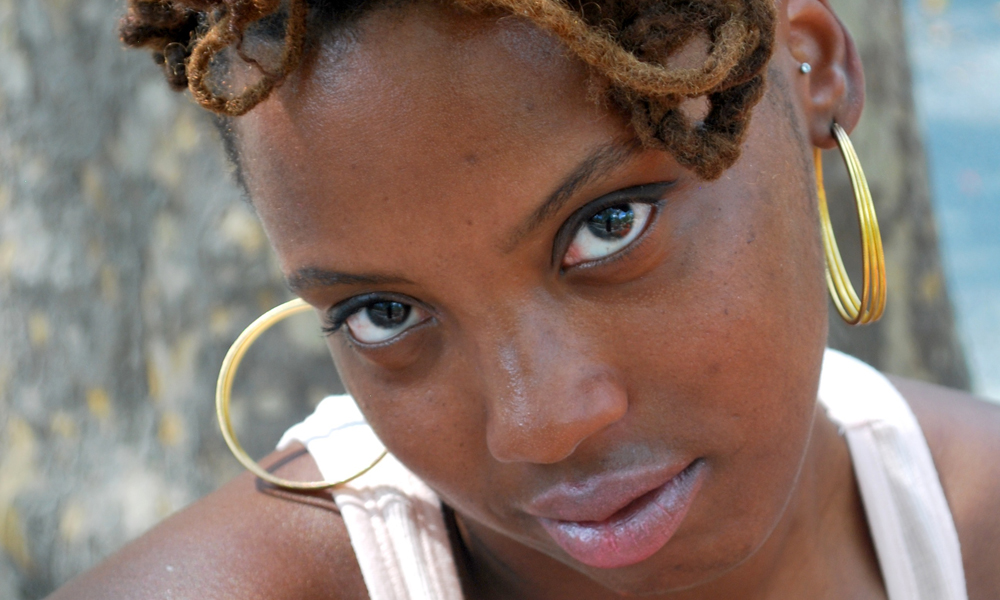
What is striking about Holmes’s body of work as a curator, filmmaker, programmer, producer, and institution-builder is her premise: there is no singular story to tell, but an entire unsung archive to elevate. BlackStar and Freedom Dreams operate within that landscape like an archive placed beside another archive.
BlackStar’s 91-film program alone makes that impossible. Its films move between documentary and fiction, investigation and autobiography, queer life and colonial history, pleasure and grief, land and displacement, political struggle and romantic longing.
A number of standout films defined the premise of reclamation and promise that define Blackstar’s ethos.
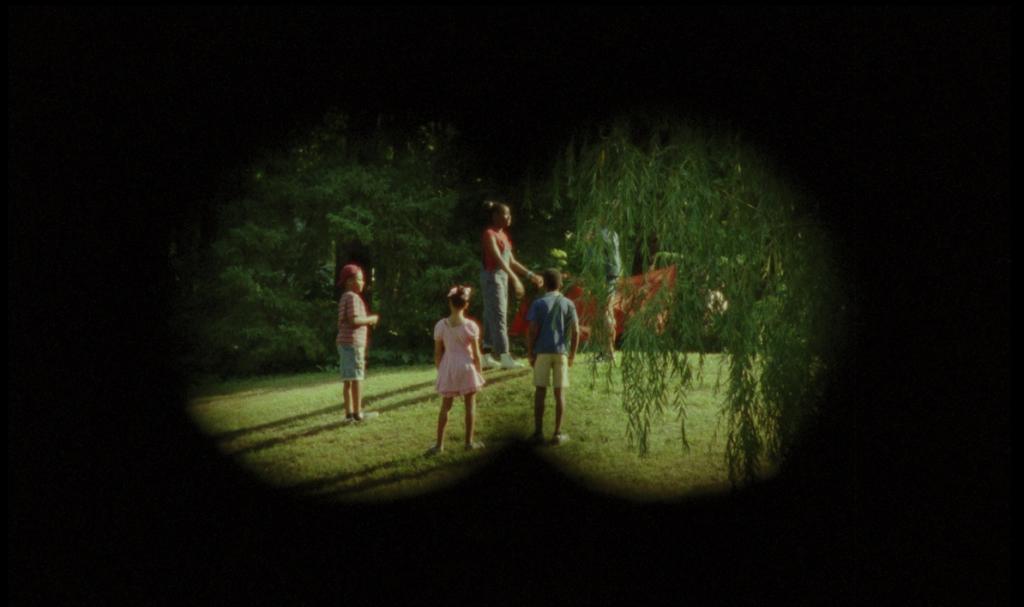
Miryam Charles’s Treasure Island places historical pressures inside the emotional scale of childhood in a story set in the Summer of 1993. The film follows 12-year-old Marthe as she persuades her brother to run away from home. Joined by cousins in a park, the children discover that the thing they wish to flee is also the thing that binds them.
True North, Michèle Stephenson’s excavation of Black resistance in 1960s Montreal centers the Congress of Black Writers and the 1969 Sir George Williams Affair. The filmmaker refuses the fiction of Canada as a gentler racial landscape, instead revealing a geography in which Black people were forced to make themselves audible against institutions invested in their disappearance. The film’s archival images are warmed and made more urgent by the elders who survived this history, whose memories transform political record into inheritance.
For four days at BlackStar, and for four months inside the Barnes, Philadelphia became a city crowded with communicating histories. In the BlackStar films, as in Holmes’s practice, the past is not presented as something settled or safely behind us, but as an inheritance carried through families, institutions, cities, and bodies. That compatibility makes Philadelphia such fertile ground for the creative work exhibited. BlackStar and the Barnes allow memory, resistance, and belonging to occupy the same frame.