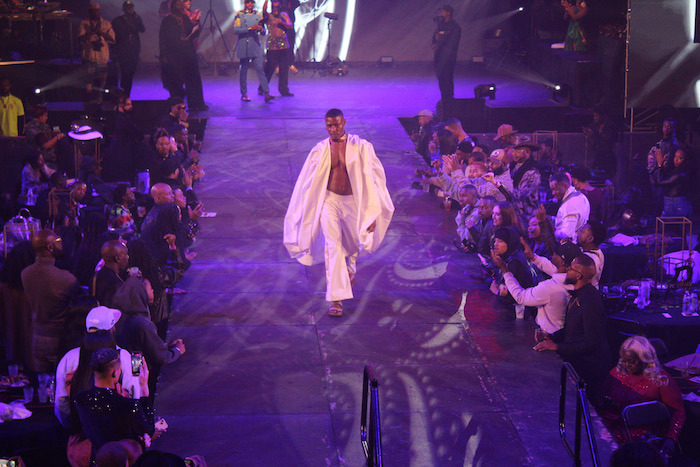
For decades, hip-hop and ballroom have moved in lockstep. While mainstream audiences often view them as separate cultural movements, anyone who has stepped inside a ballroom knows the relationship runs far deeper. Hip-hop is embedded into the DNA of ballroom culture, from the beats that soundtrack categories to the legendary commentators whose voices become instruments themselves.
Long before social media clips introduced the masses to ballroom, commentators were turning battles into live performances. Their rapid-fire delivery, rhythmic cadence and lyrical improvisation transformed runway walks and dips into something closer to a rap concert than a competition. The ballroom commentator doesn’t simply narrate. They command the room. They build tension. They create stars.
Few embodied that better than Kevin JZ Prodigy. Widely regarded as one of the most influential commentators in ballroom history, Kevin JZ Prodigy turned commentary into an art form. His iconic chants, quick-witted rhymes and unforgettable calls helped define an entire era of ballroom. His impact became so undeniable that Beyoncé tapped him for her 2022 album Renaissance, bringing ballroom’s signature sound to one of the biggest musical projects of the decade. His voice can be heard throughout the album, serving as a bridge between underground ballroom culture and mainstream pop audiences worldwide.
@kevinjzp I did what Beyoncé told me to do!!!!!! #rennasaince #herecomethehurricane #kevinjzprodigy #beyonce ♬ original sound – Kevin Jz Prodigy
Kevin JZ Prodigy isn’t alone. Legends such as MC Debra, Precious Basquiat, Icon Overall Mother Jack Mizrahi and Icon Overall Father Michael Roberson helped shape the language and energy that ballroom audiences know and love. Their commentary often pulls directly from hip-hop traditions: freestyling, call-and-response, wordplay, battle energy, and crowd control. In many ways, ballroom commentators operate like emcees, using rhythm and language to elevate performers while keeping the crowd engaged.
The influence extends beyond the microphone. Ballroom’s Legendary Statement Symbols, commonly referred to as LSSs, function almost like hip-hop catchphrases and ad-libs. These repeated chants and signature calls become cultural markers, passed from generation to generation within the community. They carry history, identity, and status while reinforcing ballroom’s deep connection to Black musical traditions.
That connection reached new heights with Beyoncé’s Renaissance era. More than simply sampling ballroom culture, the superstar centered it. Renaissance celebrated the Black and LGBTQ+ pioneers who built dance floors, music scenes and cultural movements that often went unrecognized. During the Renaissance World Tour, ballroom-inspired choreography, runway-inspired staging and vogue elements became central parts of the show. Dancers moved through formations that mirrored ballroom categories, while the spirit of competition and self-expression remained at the forefront.
What makes ballroom and hip-hop such natural partners is that both were born from Black communities creating space for themselves when mainstream institutions refused to. Both are rooted in storytelling, performance, resilience and reinvention. Whether it’s a rapper commanding a stage or a commentator commanding a ballroom floor, the objective remains the same: captivate the audience and celebrate Black creativity.
As we celebrate Black Music Month, it’s impossible to discuss the evolution of hip-hop without acknowledging ballroom’s contribution. The beats may change and the venues may evolve, but the relationship remains undeniable. Ballroom didn’t just borrow from hip-hop. It helped shape how Black performance, rhythm and cultural expression continue to move through the world.