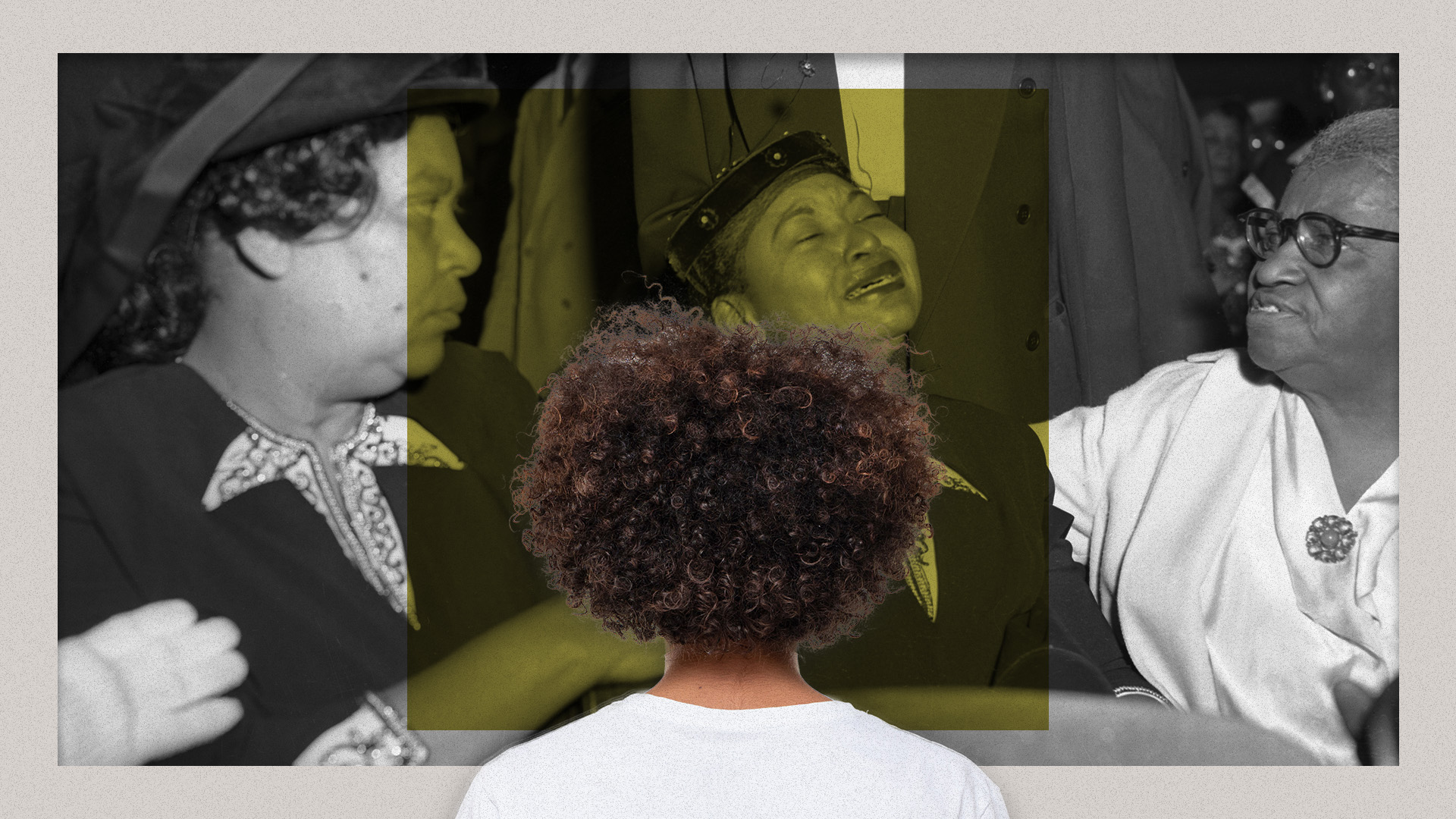
Black people are being found hanging from trees and in wooded areas across America, and somehow this has not become a national emergency. That should disturb us almost as much as the deaths themselves.
Media coverage has occurred, families have demanded answers, civil rights leaders have intervened, names and images have traveled across social media, and yet the country has largely absorbed each death and moved on. Despite all of this, there has been no sustained national reckoning with why these cases continue to emerge across jurisdictions, why so many occur in locations carrying the unmistakable historical imagery of lynching, or why something this culturally explosive has produced so little institutional alarm.
In a previous EBONY examination, “The Tree Is Not Just a Tree: Black Death, American Memory and the Return of Strange Fruit”, the central question was whether America could recognize racial terror if it no longer arrived wearing its nineteenth-century costume. Available evidence does not establish that every death examined represents racial violence. Many have been officially classified as suicides.
Still, the repetition and the geography deserve deep analysis. And the silence surrounding it is loud and tells its own story, one that deserves deep scrutiny and critique.
Because perhaps, this is more than just the traumatic imagery that lynching imposes. Maybe the deeper question is centered on why recognizing the depth of this imagery has required so little of us in media, justice systems, and national organizing efforts.
Where is the broader outrage?
America Has Practiced This Kind of Quiet Before
Ida B. Wells understood that racial violence survives through more than the people who commit it. Institutions also sustain it by minimizing it, and the public by moving on. The history of federal anti-lynching legislation makes that painfully clear.
According to the House Judiciary Committee’s report on the Emmett Till Antilynching Act, federal anti-lynching legislation was introduced more than 200 times beginning in 1900. It took until 2022 for lynching to become a federal hate crime.
The century-long delay in recognizing the horror through federal law cannot be reduced to legislative dysfunction. It reveals something about national priority and how Black communities spent generations identifying an emergency that the institutions with the greatest power to respond repeatedly failed to treat with comparable urgency.
All of this reads as indifference, and that lens sets the boundaries of what a culture is willing to tolerate. Today, that tolerance moves at digital speed. A Black person is found hanging, the story circulates, questions emerge, authorities release a statement, and boom, public attention moves elsewhere.
Who Gets to Become an Emergency?
American attention has never been distributed equally, and research makes the disparity difficult to dismiss.
Zach Sommers, writing in the Journal of Criminal Law and Criminology, compared FBI missing-person data with national news coverage and found significant racial disparities. White women received a disproportionate amount of coverage, while missing Black people were less likely to receive coverage and received less attention when their cases were reported. This gap is pervasive across media outlets.
The Columbia Journalism Review (CJR) later developed a tool estimating the amount of press attention a missing person might receive based on demographic characteristics. After analyzing 3,600 stories against national missing-persons data, CJR found that a white woman missing in New York could expect roughly four times the coverage of a Latino man under identical circumstances. NPR reporting further supports this whitewashing, showing that young white women were predicted to receive considerably more coverage than Black, Latino, and Indigenous people.
Media attention helps establish the boundaries of public urgency. Newsrooms decide which cases receive reporters for weeks rather than hours, which unanswered questions become investigations, and which deaths remain largely confined to statements issued by local authorities.
When Black people are found hanging, and coverage ends once authorities announce there is no evidence of foul play, journalism should interrogate whether it has reported an investigation or reported the government’s account of one.
Everyone loves a good TikTok report, but the nearly missing narrative from mainstream media amplifies the consequences of allowing “official explanations” of Black death to become the final word too quickly.
What Has America Learned to Feel?
Research has also documented something deeper about how people perceive Black suffering. A study published in PLOS ONE examined racial bias in perceptions of pain, including the underestimation of pain experienced by Black people. In contrast, research in Frontiers in Psychology examined racial differences in how people respond when witnessing another person’s pain. These studies do not explain public reaction to the deaths examined here. Still, they raise an important question about the cultural conditions surrounding that reaction: What happens when a society becomes accustomed to seeing Black people suffer?
This is where culture becomes consequential, because it shapes what captures our attention, what disturbs us, and what we believe demands interruption.
America has been exposed to Black suffering for centuries, from an economy built through enslavement and public lynchings that drew crowds to images of police violence now repeatedly circulated across our screens. That history matters because sustained exposure to suffering can make even the horrific feel familiar.
And familiarity with Black suffering carries its own danger: eventually, what should stop us in our tracks may struggle to stop us at all.
Visibility Without Consequence Is Its Own Failure
Demartravion “Trey” Reed’s death demonstrates the limits of visibility.
After the 21-year-old Delta State University student was found hanging near recreation courts on campus, the case drew the attention of several prominent figures. Civil rights attorney Ben Crump became involved, Colin Kaepernick offered to fund an independent autopsy, and Congressman Bennie Thompson called for federal involvement, according to Mississippi Public Broadcasting.
Those interventions expose an inequity that deserves attention. How many Black families have access to that level of intervention?
A justice system cannot depend upon celebrity proximity to generate scrutiny. Confidence in an investigation should not become more accessible because a family can secure a nationally recognized attorney or attract congressional attention.
Although attention from those public figures moved the story in the right direction, it also shows how certain types of visibility can become unintentionally deceptive, allowing millions to see something without any institution becoming meaningfully accountable for what they saw.
Make the Quiet Expensive
Black communities have always built their own systems of accountability when national attention failed them. So, these cases cannot remain disconnected local stories. Newsrooms should examine them across jurisdictions, investigators should provide transparency that earns public confidence, and elected officials should ask whether recurring cases warrant broader review. Black churches, HBCUs, civil rights organizations, and Black media should use their institutional power to keep these deaths before the public.
And the rest of us have infrastructure too. Keep talking, posting, researching, and creating posts because public attention cannot expire simply because the news cycle has moved on. If the institutions responsible for informing the public and pursuing justice will not sustain that attention, communities must keep generating enough noise that looking away becomes impossible.
Every one of these deaths may ultimately have an explanation fully supported by the evidence. The public deserves to see the rigor that produced those conclusions. Families should not have to create a movement to receive that level of scrutiny.
These deaths may evoke the strange fruit of America’s past, but the silence surrounding them is becoming rotten in its own right. Our outrage cannot be allowed to fade because a timeline moves on, an algorithm shifts, or another headline takes its place.
The tree still means something. The silence means something too. And the expiration date for our noise is not tomorrow; it’s now.