Making it in Hollywood and being financially stable are not the same thing. In fact, the financial struggle has become the industry’s rite of passage, proving you wanted it badly enough. You arrive broke, work hard, and get your big break. From there, you’re laughing at your haters all the way to the bank. It’s that simple, right? Ummm… no, wrong.
For every Taraji P. Henson, who packed up her son and moved to LA at 26 with $700 in her pocket, or Halle Berry, who spent time in a homeless shelter before landing her first role, there are hundreds of Black actors who chased the same dream and never got the same fairytale ending. Think of every actor whose face you know immediately, but when called to say who they are, “That’s such and such, from so and so.” Their work is etched in your brain, but unfortunately, they don’t have the widely known success, with the matching checks to follow.
It’s largely because at any given time, roughly 90 percent of SAG-AFTRA members are out of work. And despite that, the industry doesn’t have a plan in place (or at least the resources to support it) for when bookings slow down, the checks stop coming, and the pressure to maintain the appearance of success outlasts the actual money. And as always, who is going to suffer the most in these instances? Black actors.
Jéan Elie knows what that pressure feels like. He played Ahmal Dee, Issa’s sharp-tongued, openly gay younger brother, across all five seasons of HBO’s Insecure, which we’ve all come to know as one of the most culturally significant Black shows of the last decade. The character became a fan favorite and something more than that, one of those rare TV roles that people pointed to when they talked about what honest representation of gay Black men could actually look like on screen. Earlier this year, Elie appeared in Marvel’s Wonder Man on Disney+, serving as both an actor and a Haitian cultural consultant.
In a recent Instagram post, Elie said what most working actors in his position don’t say — or at least don’t say out loud to the general public, “Funny how life works… one season you’re doing what you love, living the dream, and the next you’re clocking in somewhere new while you build toward the next role.”
He is building his own production company and developing new projects, including a vertical series he’s crowdfunding through Patreon, but in the meantime, he’s working a day job, recognized mid-shift by a fan who loved Insecure. There was no bitterness in the post or even a public breakdown of sorts. It was just a matter-of-fact acknowledgment that the gap between being recognized and being paid is something he is actively living with.
In Black Hollywood, that kind of honesty is rare because the culture demands you perform success whether you’re living it or not. Admitting otherwise can sometimes feel like defeat (or even embarrassment) to the same industry that undervalued you in the first place.
During a 2024 stand-up set that went viral, Nika King, who played Zendaya’s mother on Euphoria, told the audience she hadn’t booked a single thing since the show ended. “I’m serious, I haven’t booked nothing since Euphoria. This is some bullshit. I thought my career was on the rise after Euphoria, I thought I was good,” she said. She mentioned calling Taraji P. Henson about it, and said that Henson told her to get used to it. And while the crowd laughed in that moment, the people who really felt her were the working Black actors who had been thinking the same thing for years and hadn’t said a word.
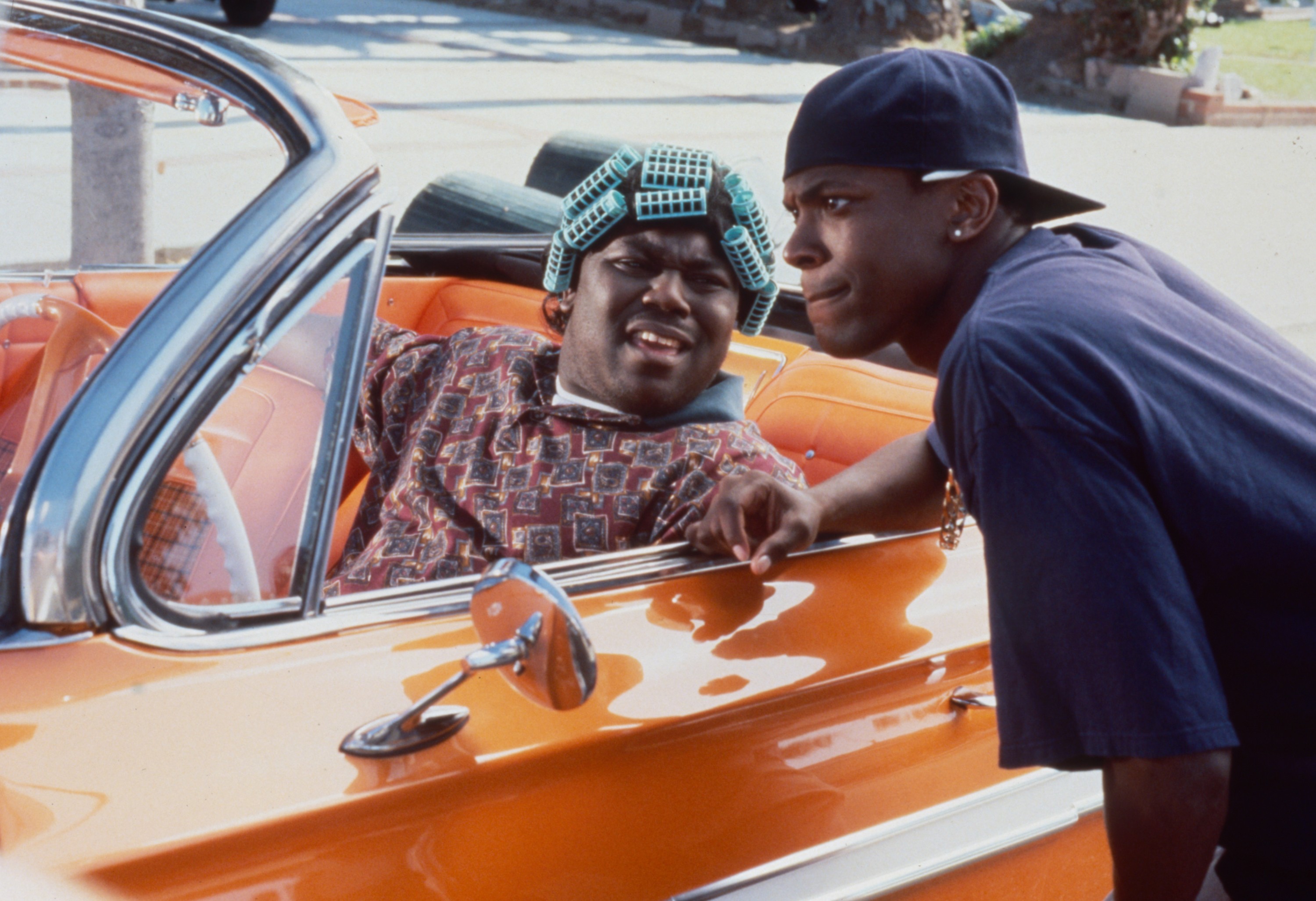
Then there is Faizon Love, the actor audiences have watched across dozens of films spanning three decades of Black Hollywood, from Big Worm in Friday to the Gimbels manager in Elf. This month, his attorney stood before a Florida judge and told the court that Love had been homeless, had lived out of his car, and was surviving on roughly $10,000 a year in royalties from Elf. According to court filings obtained by TMZ, he reported earning nothing in 2025 and claimed his highest annual gross income over the previous five years was $13,000. The film has aired every holiday season for more than two decades and continues to generate significant revenue for the studio, yet Love’s cut is enough to cover a few months of groceries.
The industry’s economics make this outcome almost inevitable. The majority of SAG-AFTRA members do not earn enough from acting to qualify for the union’s own health insurance, which requires at least $26,470 in acting income per year. For Black actresses specifically, research from the National Partnership for Women and Families found that they earn 64 cents for every dollar their white counterparts make. That means Black actors are starting from a smaller check, building toward a smaller residual, and landing on a smaller cushion when the work dries up. Love has more credits than most actors will ever accumulate, yet none of them are paying his rent.
Let’s be real, we could name Black actors who have faced this kind of public scrutiny for days. Remember when Geoffrey Owens, who played Elvin on The Cosby Show for nearly a decade, was photographed bagging groceries at a Trader Joe’s in New Jersey in 2018? Or Jaimee Foxworth, who played Judy Winslow on Family Matters, said she later had to turn to adult films to support herself financially after being unable to find work.
But it’s the actors who navigate this best who tend to be the ones who stopped waiting for the industry to figure it out for them. Elie is a good example of what that looks like in practice. He is building a production company, creating his own content, and funding his next project directly through the people who already believe in his work, which is something financial advisors who work with talent say most actors don’t think seriously about until they’re already in trouble.
The pattern they repeatedly see is actors who spend at the level of their best year rather than their average year, who sign contracts without fully understanding how residuals are calculated, and who assume that the visibility from a big role will keep generating opportunities long after the momentum has faded. The ones who avoid that fate are almost always the ones who never confuse being known with being secure.
The business runs partly on the myth that a recognizable face means a comfortable life, and the culture around Black Hollywood runs on something even harder to shake: the belief that saying you’re struggling means you didn’t make it after all. So the actors stay quiet, keep posting, keep showing up to events, and figure out the rest in private.
Kimberly Wilson (@kimberlynatasha) is an award-winning journalist and editor whose work explores business, travel, sports, and culture through the lens of the Black experience.