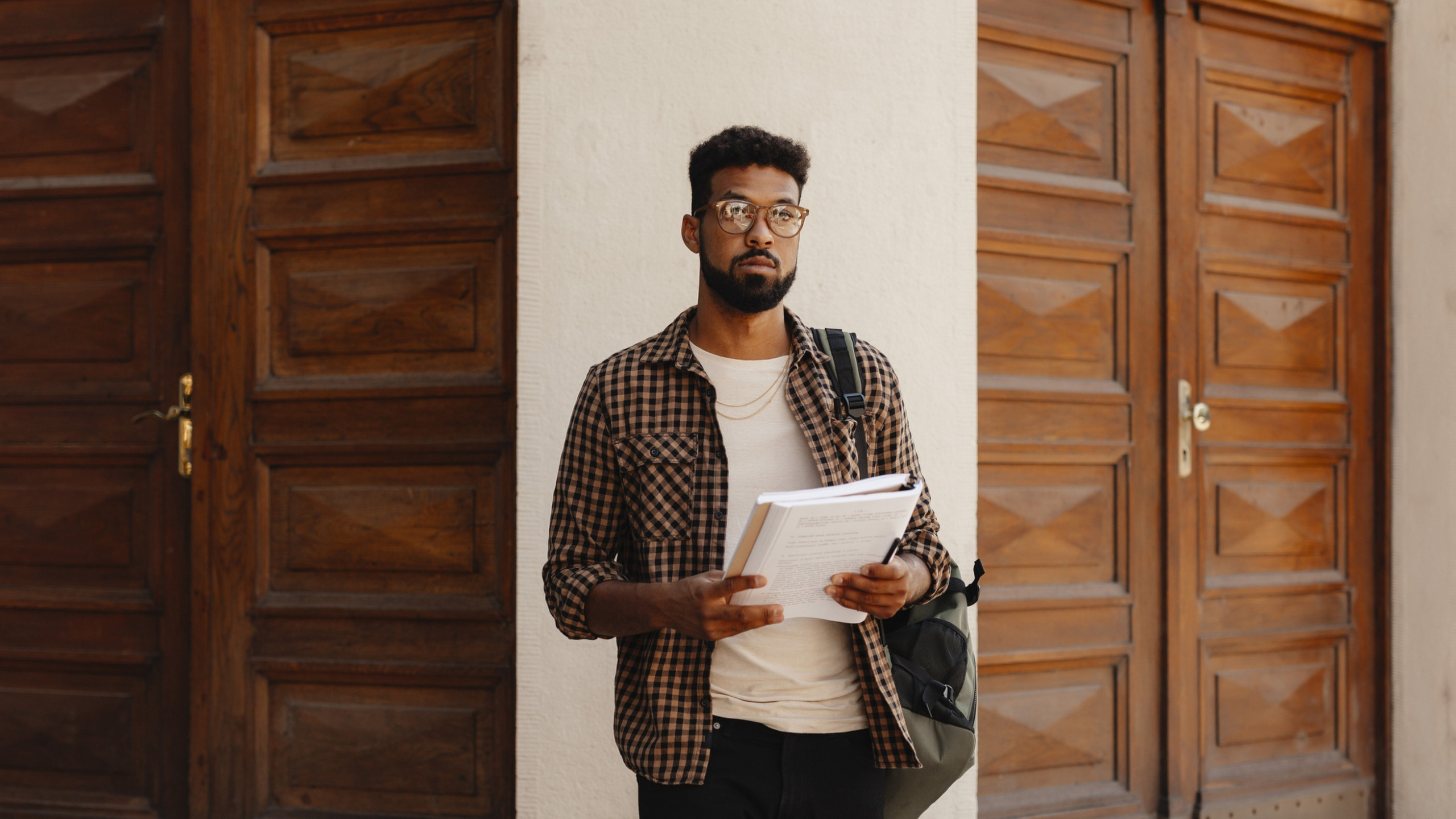
For generations, A Different World has shaped what many people think the HBCU experience looks like: packed parties, homecomings, romance and lifelong friendships that eventually feel like family. Today, social media adds another layer, offering a constant highlight reel of what the experience “should” look like. But what happens when your experience doesn’t look like Hillman College?
For some students, finding community at an HBCU isn’t immediate, and loneliness can sting more when everyone around you seems to be living the experience you expected. Ahead, Dr. Joy Harden Bradford, a licensed psychologist and founder of Therapy for Black Girls,
shares how students can begin building an HBCU experience that feels authentic to them. Morehouse College freshman Connor Littlejohn also shares what helped him feel at home.
When the “Best Years of Your Life” Don’t Feel That Way
When you think about HBCUs, community is often one of the first things that comes to mind. These institutions are celebrated for creating safe spaces where Black students can experience cultural pride, tradition and belonging.
But arriving on campus doesn’t necessarily mean that feeling happens immediately. If your experience feels lonely or underwhelming, it’s easy to wonder whether you’re doing something wrong, or even whether you chose the wrong school. Bradford says those feelings aren’t unusual. “Many students feel lonely and disconnected when starting college,” she tells EBONY. Giving yourself time to adjust is okay, she says, and so is telling people who care about you that you’re struggling. “You might be surprised at how much support you’ll get by being more transparent.”
Social Media Can Make It Feel Like Everyone Else Is Having a Better Experience
Social media can make comparison almost unavoidable. In one scroll session, you’ll see friend groups taking photos, students joining Greek organizations, packed homecoming events and people seemingly having the time of their lives. But Bradford cautions against mistaking someone’s social media presence for the full picture of their college experience. “I think it’s important to note that there is not one singular way to have an HBCU experience and to remember that what we post on social media is often the highlights of our experiences, not the entirety of it,” she says.
Instead of comparing, she suggests getting curious. “Even if it looks like that on the outside, we don’t really know the full story behind what other people are experiencing,” Bradford says. “And if there is someone who seems like they have it all figured out, ask them questions about how they’ve done it.” Admitting you need help can bring people closer, too. “Vulnerability often creates space for more meaningful connections. Sharing that you need help with something often makes it more likely that people are willing to help.”
Finding Your People Can Take Time
Your closest college friendships may not form during orientation week, or even during your first semester. Looking back on her own HBCU experience at Xavier University of Louisiana, Bradford says she wishes she had known “how important it was to remain open to all the different ways you could meet people who would become important to you.” That could mean joining clubs and organizations, talking to classmates or simply getting to know the people who live nearby. Relationships that initially feel surface level can deepen over time, Bradford adds.
Bradford’s advice is simple: “Join a club that is connected to something you’re passionate about. You’ll likely meet others who share similar interests which may make it easier to connect.” And although staying in your room can feel comforting when loneliness sets in, Bradford encourages students to remain engaged.
For Littlejohn, finding community started before he even arrived. Group chats created for incoming students let him get acquainted with classmates ahead of move-in and New Student Orientation (NSO). “I can recall seeing people during NSO and recognizing them from a group chat we were both active in, or just from seeing them on social media,” he says.
Once on campus, dorm chants and residence hall basketball tournaments helped build connections. “Because of things like this, I feel connected to those I share a dorm with, even if we have nothing else in common,” he says.
Build the HBCU Experience That Actually Works for You
Littlejohn encourages other students to release the idea that there is a checklist they have to complete for their college years to count. “I would advise them to let go of the idea that the ‘HBCU experience’ has to fit in a box,” he says. “There are so many different kinds of people at an HBCU, there is definitely a group of people they would fit in with.” Like Bradford, he recommends students get outside, look around and check their emails often. “From my experience, there’s always something going on, and that means there’s a place they can go to meet new people.”
If you’re struggling enough to consider transferring or withdrawing, Bradford encourages students not to make the decision too quickly. “I would encourage them to remember that hard does not mean impossible,” she says. “Getting used to a whole new place without the support you’ve had your entire life can be a very scary and intimidating process, but it’s not impossible.”
That starts with how you treat yourself. “Be gentle with yourself during this transition. Beating yourself up and being overly critical of yourself will not lead to a different outcome. Instead try using the resources on your campus to help you connect,” Bradford says.
If the school still doesn’t feel like the right fit after your first semester, Bradford says it’s fair to consider other options, “but don’t make a decision based on a limited amount of information.” Changing course doesn’t mean you’ve failed.