It takes a particular kind of audacity to lecture America about law and order when the man in the Oval Office has 34 felony convictions of his own. Yet here we are.
The Trump administration has developed an increasingly recognizable pattern of targeting Black women in positions of political power. Investigations, indictments, attempted removals, and public threats have become recurring features of a presidency that appears particularly offended by Black women who refuse to be intimidated. But the latest case complicates the conversation.
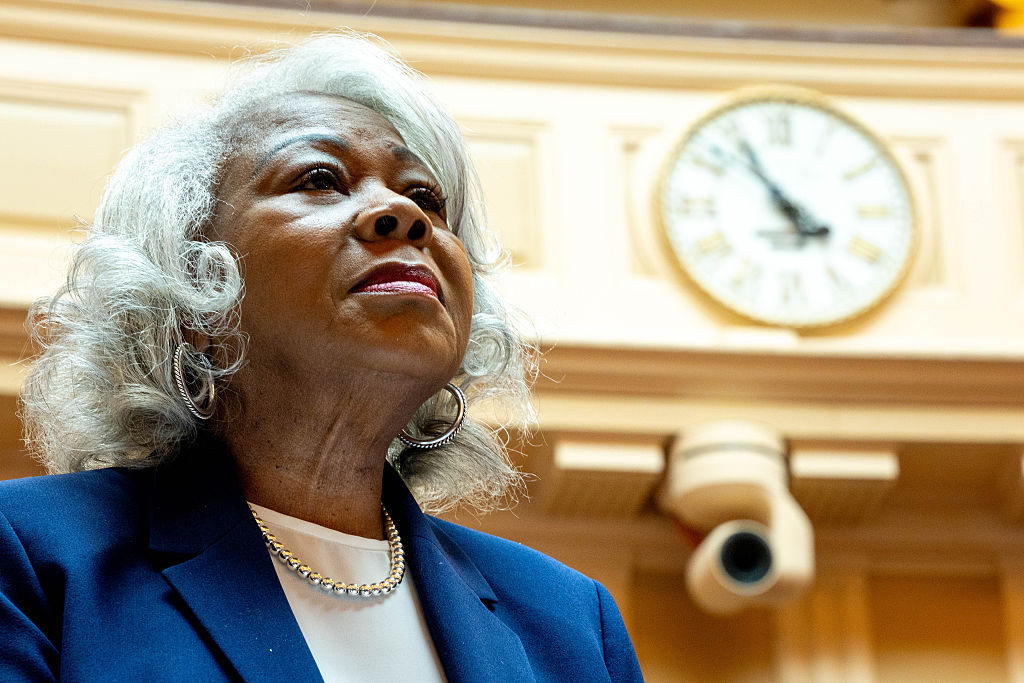
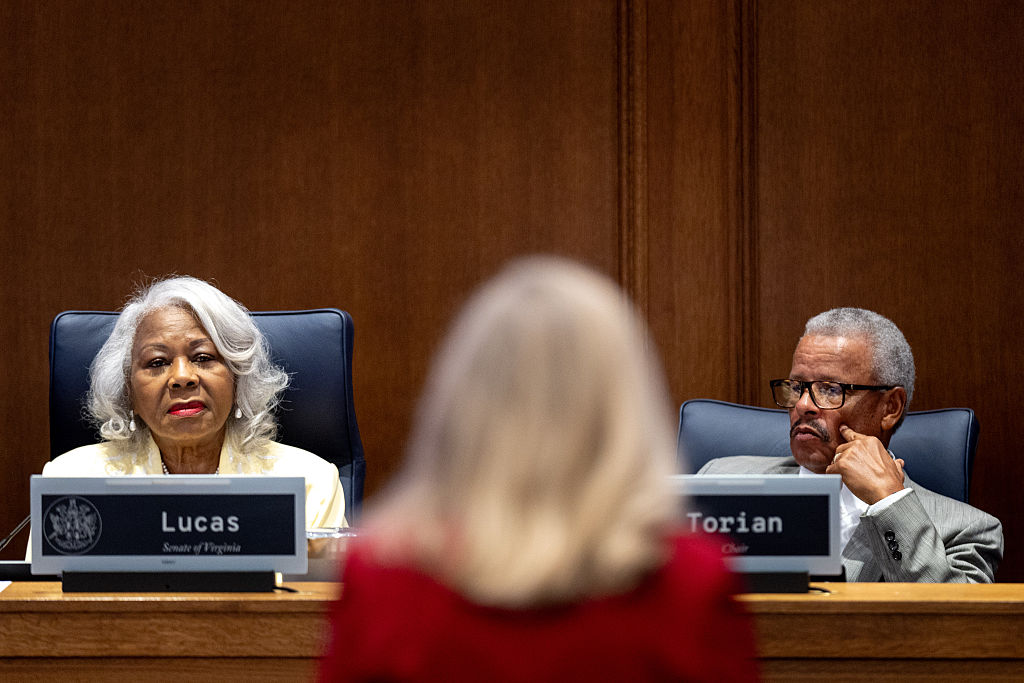
Virginia state Sen. L. Louise Lucas, one of the Commonwealth’s most influential Black political figures, now faces serious federal criminal charges. Unlike some of the administration’s other high-profile pursuits, the allegations against Lucas are specific and backed by enough documented evidence to prompt a collective sigh of disappointment and a closer look at what’s really going on. That’s what makes this moment so uncomfortable.
We can recognize the possibility of legitimate wrongdoing without ignoring the political machinery pursuing it. We can demand accountability from Lucas while questioning the credibility of an administration whose leader has spent years evading, attacking, and undermining the very institutions now demanding that she answer to them.
Duality is a thing, and political integrity requires us to confront both.
When the Allegations Cannot Simply Be Dismissed
According to CBS News, federal prosecutors allege that Lucas, 82, used her medical cannabis business to facilitate illegal marijuana distribution, launder proceeds, and influence state policy to protect the operation. Her two daughters and grandson are among six co-defendants.
The indictment alleges that Lucas received repeated warnings from a senior law enforcement official, that regulators cited her business twice, and that she acknowledged during a recorded conversation that certain conduct violated the law.
Lucas has denied wrongdoing and vowed to fight the charges. She deserves the presumption of innocence and every protection the Constitution affords. An indictment is not a conviction, and prosecutors still bear the burden of proving their case. As much as the Democrats are pushing supporters to back the blue in this socio-political environment, political allegiance cannot replace ethical judgment.
If the allegations are proven, Lucas will have violated the public trust she spent decades building. Black political representation is not an exemption from accountability. In fact, communities that have fought so hard for meaningful representation deserve leaders who understand that public office is a responsibility, not a family business.
Still, the legitimacy of an investigation does not automatically establish the neutrality of those conducting it.
The Administration’s Black Woman Problem
Lucas did not become the subject of federal scrutiny in a political vacuum.
As documented by Virginia’s The Legacy Newspaper, her case follows a disturbing series of federal actions involving prominent Black women who have challenged Trump or occupied positions of institutional authority.
New York Attorney General Letitia James successfully pursued a civil fraud case against Trump and his business empire. She subsequently faced federal bank fraud charges brought by a prosecutor with previous ties to Trump. A federal judge dismissed the indictment after finding the prosecutor’s appointment unlawful, and two subsequent grand juries declined to revive the charges.
New Jersey Congresswoman LaMonica McIver faces federal assault charges stemming from an immigration detention facility oversight visit, although other elected officials present were not charged.
Federal Reserve Governor Lisa Cook, the first Black woman appointed to the institution’s board, has faced an attempted presidential removal over disputed mortgage allegations.
And Rep. Ilhan Omar, a frequent target of Trump’s public attacks, recently had her home searched by federal agents. No one has charged her with a crime.
These women occupy positions of authority, exercise institutional power, and have challenged a president who has repeatedly demonstrated an appetite for personal and political retribution. To suggest that every investigation is necessarily fabricated would be intellectually dishonest.
Ignoring this pattern would be equally irresponsible, particularly when the growing use of federal law enforcement against Black women who challenge presidential power raises serious concerns about political retaliation, selective prosecution, and the weaponization of justice.
Justice Has a Calendar, Too
The Justice Department maintains that the Lucas investigation began during the Biden administration, which complicates any argument that Trump personally initiated the case. Fair enough.
But investigations have timelines, and administrations decide when to execute searches, announce charges, and pursue public prosecutions.
Virginia Gov. Abigail Spanberger warned that the timing further undermines public confidence in the Justice Department. Federal agents also raided Lucas’s office shortly after she helped lead Virginia’s successful redistricting referendum, an effort accompanied by her public criticism of Trump.
None of these circumstances independently proves political interference. Together, however, they raise questions that deserve more than a dismissive press statement. For decades, federal prosecutors have generally exercised caution around politically sensitive investigative actions near elections. That restraint exists for a reason.
Even when prosecutors have legitimate evidence, the manner and timing of enforcement can carry political consequences.
The Convicted President and the Politics of Accountability
Perhaps the most extraordinary part of this entire controversy is the messenger.
At the press conference announcing Lucas’s charges, Attorney General Todd Blanche declared that nobody is above the law. The irony practically wrote itself.
In 2024, Blanche served as Trump’s lead defense attorney in the Manhattan criminal trial that resulted in 34 felony convictions for falsifying business records.
Trump ultimately received an unconditional discharge, avoiding incarceration, fines, and probation. He continues to challenge the conviction, but a federal judge rejected his August bid to move the case to federal court.
His other criminal prosecutions, including federal cases involving the 2020 election and classified documents, never reached verdicts. After returning to office, the federal cases were abandoned under longstanding Justice Department policy regarding sitting presidents. The Georgia election interference prosecution also collapsed.
Meanwhile, Trump has exercised presidential clemency for approximately 1,500 people connected to January 6 and granted relief to other politically connected defendants. Now his administration wants America to believe its commitment to accountability is beyond reproach.
Trump’s convictions do not invalidate legitimate Justice Department prosecutions. Still, an administration that repeatedly invokes the sanctity of the law. At the same time, its leader benefits from extraordinary legal protections and political privileges unavailable to ordinary Americans, raising serious questions about the credibility and consistency of its commitment to justice.
A president with 34 felony convictions is not automatically incapable of overseeing legitimate law enforcement. He is, however, uniquely ill-positioned to lecture the nation on equal accountability while exercising extraordinary discretion over who is punished and who is spared.
You want a textbook definition of hypocrisy, here it is.
Black Women Deserve Justice, Not Political Immunity or Selective Prosecution
In moments like this, the temptation is to retreat into political tribalism.
Some will defend Lucas simply because Trump is pursuing her. Others will treat her indictment as proof that every Black woman targeted by this administration deserves suspicion. Both responses are intellectually lazy.
Black women deserve neither automatic exoneration nor disproportionate prosecution, but the same evidentiary standards, constitutional protections, and presumption of innocence afforded to everyone else, just as Black communities deserve political leaders whose integrity and conduct can withstand investigation.
America cannot sustain a justice system where political loyalty buys leniency while political opposition invites extraordinary scrutiny.
Black women have spent generations navigating institutions that demand exceptional performance while offering unequal protection. Seeing those same institutions become tools for potential political retaliation should concern anyone who believes in democratic governance.
The law cannot be sacred when prosecuting your enemies and negotiable when protecting your friends.
No one should be above the law, especially those running it.