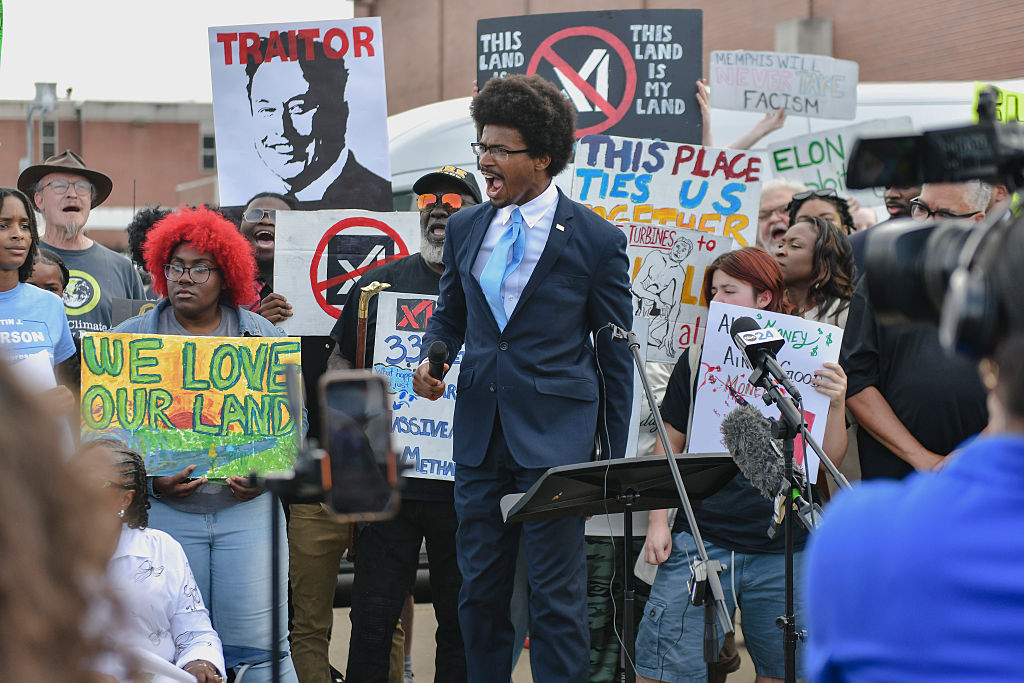
On October 20, the Memphis City Council failed to pass a proposed moratorium that would have paused new data center development for a year. Instead, council members approved a substitute ordinance establishing a 135-day pause while the city says it will develop regulations for large-scale data centers. The decision came after years of community opposition, particularly among South Memphis residents whose lives have been most effected by the presence of the data centers. Residents have raised numerous concerns about environmental and public health consequences, but to no avail their distress has gone largely unrecognized and unattended.
Memphis, Tennessee, is home to Elon Musk’s xAI data center operations and what the company has described as the world’s largest supercomputer. But as artificial intelligence infrastructure continues to expand, the community’s frustration and worry are heightened about what that growth means for the communities expected to live alongside it.
A moratorium would have provided a temporary pause or restriction imposed by the local government on further data center development. In this case, it would give officials time to evaluate the potential environmental, economic and public health impacts of data centers before approving additional development.
Those in favor of moratoriums argue that communities deserve time to assess the consequences of these facilities, including their demands on local power grids, water resources and air quality. Data centers require substantial amounts of electricity to operate and can consume millions of gallons of water, depending on their size and cooling systems. Their operations can also raise concerns about noise pollution and emissions associated with the electricity and backup power systems that support them.
Those opposed to moratoriums argue that restrictions could discourage corporate investment, slow artificial intelligence development and hurt local economies. However, when the potential economic benefits are weighed against the environmental and health concerns raised by residents, it is worth asking whether corporate growth should take precedence over the quality of life of the people who call these communities home.
For South Memphis residents, this is not a new fight. Community members have been pushing for greater accountability and stronger protections as data center development expands in the region. Tennessee State Rep. Justin Pearson has also advocated for guardrails on data center development since 2024.
The concerns extend beyond the facilities themselves. In nearby Southaven, Mississippi, a natural gas power plant supplying electricity to xAI’s data centers has faced legal challenges from the NAACP and other organizations over alleged pollution. The controversy underscores the broader questions surrounding the environmental costs of powering artificial intelligence and the communities that ultimately bear those costs.
The circumstances surrounding Memphis’ data center expansion also reflect a much longer history of environmental racism in the United States. From Flint, Michigan’s 10-year water crisis to Louisiana’s Cancer Alley, predominantly Black and low-income communities have repeatedly faced environmental hazards while their concerns about health and safety have gone unanswered or inadequately addressed.
To say these communities are fatigued by the reality they are forced to navigate is an understatement. The continued disregard for the health and safety of marginalized residents has become an all-too-familiar reality. For many, the concern is not simply that another industrial development is coming to their community, but that their well-being may once again be treated as secondary to economic interests.
Memphis is also part of a growing national debate over whether data center development should be temporarily restricted.
According to the National Conference of State Legislatures, lawmakers in 16 states were considering legislation to restrict or temporarily halt data center development as of September 2026. The legislative efforts reflect growing concerns about the effects these facilities could have on communities, utility infrastructure and the environment.
As of the NCSL’s September 15, 2026 update, legislation proposing data center moratoriums had been introduced in Delaware, Georgia, Michigan, New Jersey, Pennsylvania, South Carolina and Vermont. Virginia’s proposal remained under consideration, while legislation in Maryland, Minnesota, New Hampshire, Oklahoma, South Dakota and Wisconsin failed to advance. Maine’s proposed moratorium was vetoed, while New York’s proposal had passed its legislature.
New York has also taken a separate executive action. In July 2026, Gov. Kathy Hochul issued an executive order establishing a temporary, one-year moratorium on new data centers with peak electricity demand exceeding 50 megawatts while the state develops a regulatory framework. This is distinct from a moratorium enacted through state legislation.
The distinction matters because the growing number of proposals reflects an effort to give communities and policymakers more time to assess the long-term implications of data center development. While some lawmakers see these facilities as essential to economic growth and technological advancement, others are rightfully questioning whether development should proceed without stronger safeguards.
In Memphis, the 135-day pause offers a window for officials to develop regulations, but it falls short of the yearlong moratorium community members sought. Residents have expressed frustration over the substitute ordinance, which some said they received on short notice and did not have sufficient time to review before it went into effect.
For Black communities that have historically borne the brunt of environmental racism through industrial development, another shortened opportunity to be heard has only deepened the distrust in local leadership.
As tempting as it may be to accept these outcomes as inevitable, resignation only allows the problem to continue. Environmental racism is not simply a matter of where industrial facilities are built. It is also about whose concerns are taken seriously, whose health is protected and whose interests guide decisions about a community’s future.
Economic development should not require residents to sacrifice their health, safety or quality of life. As Memphis determines its next steps, residents must continue demanding transparency and accountability from the officials elected to represent them. That means showing up, making concerns heard and voting for leaders who will advocate for the well-being of entire communities, not simply the interests of corporations or the bottom line.
Progress cannot be measured by investment alone. It must also be measured by the people who are able to live healthier, safer lives because of it.