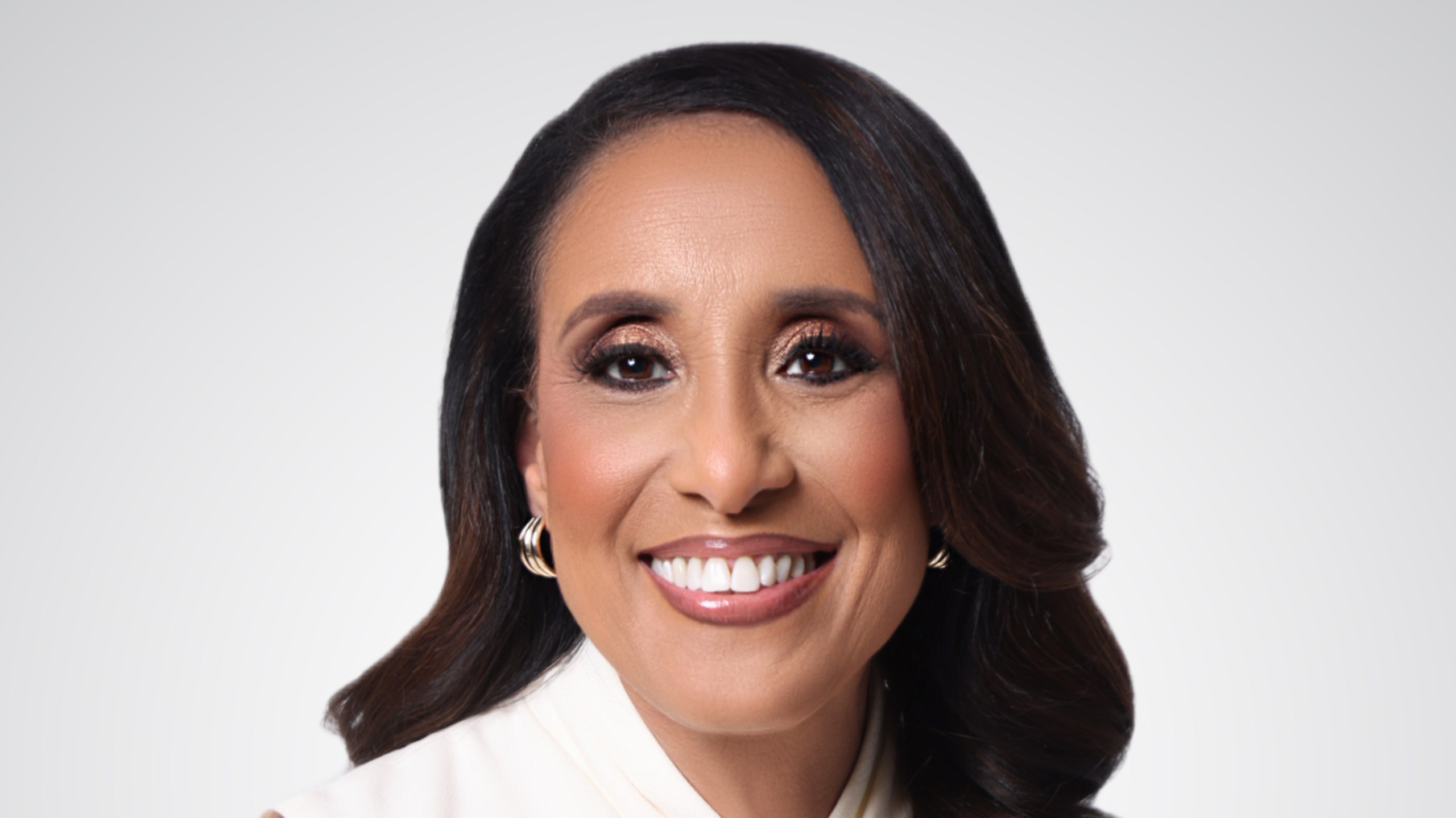
Judge Penny Brown Reynolds has dedicated her life to justice and civil rights. She says she didn’t know it at the time, but everything in her life was leading to her run to be Georgia’s next secretary of state. She began her career in Georgia politics as chief of staff and then as executive counsel to Governor Roy Barnes beginning in 1998, making her the first African American to hold both positions. She then worked on the Fulton County bench as a trial court judge for eight years. Over time, she developed a reputation for fairness, with none of her criminal rulings ever overturned. She credits her career success to her deep devotion to her faith, having been under the tutelage of civil rights leaders and ministers Rev. C.T. Vivian and Dr. Joseph Lowry.
“The faith hat is one that never comes off,” Brown Reynolds told EBONY during an interview at her campaign office located in the historic West End district in Atlanta. “I often say I am not ashamed, but assured. My faith is everything. It is the basis of my decision. It gives me my integrity. It sets me apart from my MAGA extremist opponent. I don’t use faith on Sunday mornings like most people do. If you look at the teachings, at least of my faith, it is that we’re to treat our neighbors as we would want to be treated, and that we believe that there is enough for everyone.”

Her most recent appointment was to the Biden-Harris administration, where she served as Acting Assistant Secretary and Deputy Assistant Secretary for Civil Rights and Chief EEO Officer at the U.S. Department of Agriculture. Now, Brown Reynolds is bringing her extensive career experience, strong spiritual convictions as an ordained minister, and broad knowledge of the state’s political landscape and justice system to her campaign for Georgia’s next secretary of state.
Brown Reynolds defeated her opponent Dana Barrett in the Democratic primary runoff in June by nearly 28%, receiving over 200,000 votes. In November, she will face off with Republican candidate Rep. Tim Fleming, who received nearly 380,000 votes in the Republican primary runoff. The seat for Georgia’s secretary of state has carried significant weight, not just in the state, but nationally since the aftermath of the 2020 presidential election.
After losing the race in 2020, President Trump repeatedly made false claims that the state’s election results were bogus, and asked Georgia’s current secretary of state, Brad Raffensperger, to overturn the results. Trump’s efforts to reverse former President Joe Biden’s win resulted in his 2023 arrest, where he was charged with 13 felonies. In November 2025, all charges were dropped.
Since Raffensperger refused to turn over the state’s voting rolls to the U.S. Department of Justice, friction within the Georgia legislature has intensified. In 2021, Georgia Senate Bill 202 passed, stripping the authority of the secretary of state to act as the state election board’s voting chair. In 2024, another bill was passed, completely removing the secretary of state from the board. Backlash from the federal government has continued as well. In January, the FBI raided a Fulton County election warehouse, where they seized more than 650 ballot boxes. In May, a U.S. district judge ruled that the Department of Justice does not have to return the ballot boxes to Fulton County election officials.

Brown Reynolds can expect the discord between Georgia and the Trump administration to remain, should she win, as she would be immediately preparing for the 2028 presidential race. She says she’s ready to hit the ground running to restore Georgians’ faith in the integrity of the state’s voting system after Trump and co. have spent six years planting seeds of doubt.
“Donald Trump poisoned the well,” she said. “He poisoned the well because the system for them only works when they win. When it doesn’t, suddenly it’s corrupt. It’s a corrupt regime that has infiltrated the federal government. The number one thing I have to do is educate the voters about it. If you say something enough times, and no one is countering that, people will believe it.”
Brown Reynolds wants to gather and target voters, particularly those in rural areas and young or first-time voters, to educate them on civics. She hopes to integrate technology, not only as a means for learning but as a way to update voters on how many people have voted at each precinct and wait times for lines.
Beyond undoing the lies perpetuated by Trump and his supporters, Brown Reynolds is bracing for state legislatures to redraw district lines ahead of the 2028 race. Since the Supreme Court’s conservative majority effectively dismantled the Voting Rights Act in April, the door has been left wide open for racial gerrymandering to take place. Already, Georgia Governor Brian Kemp has tried but failed to get legislatures to redraw lines. Despite the secretary of state’s weakened authority after both Senate bills passed, Brown Reynolds said she’s ready to push back in court should Republicans try again to manipulate district lines.
“They’re limited to the extent that they cannot, without a constitutional amendment, change the authority that I have to certify the election, and that’s the superpower of the position. They could tinker all they want with who sits on the board, but my constitutional authority they cannot thwart by laws. I will meet them at the courthouse steps, for every authority that they try to take away from that position.”
Brown Reynolds says that even if GOP lawmakers are successful in redrawing voting maps, she is going to follow the law while simultaneously trying to change it and galvanize others to put pressure on those lawmakers. Already, resistance from minority voters and organizers was successful in stopping their first attempt to gerrymander.
“In the Black church, we say, ‘What the enemy meant for bad, God will turn it into a good.’ You can draw the districts all you want, but you cannot take away our right to vote. If they were winning, they wouldn’t have to do all of this. We have to go out and vote in such decisive numbers that they can’t even say it was close enough to have something happen.”
The last day to register to vote in Georgia is Oct. 5. In-person early voting will take place from October 13-30.