
Over the past few years, I’ve become increasingly fond of Pilates for its holistic benefits. It allows me to prioritize both physical and mental wellness while building core stability, improving focus, and bringing greater awareness to my body. As I navigate my thirties and the changes that come with them, Pilates has felt like a reliable, grounding practice—one that lets me move without judgment.
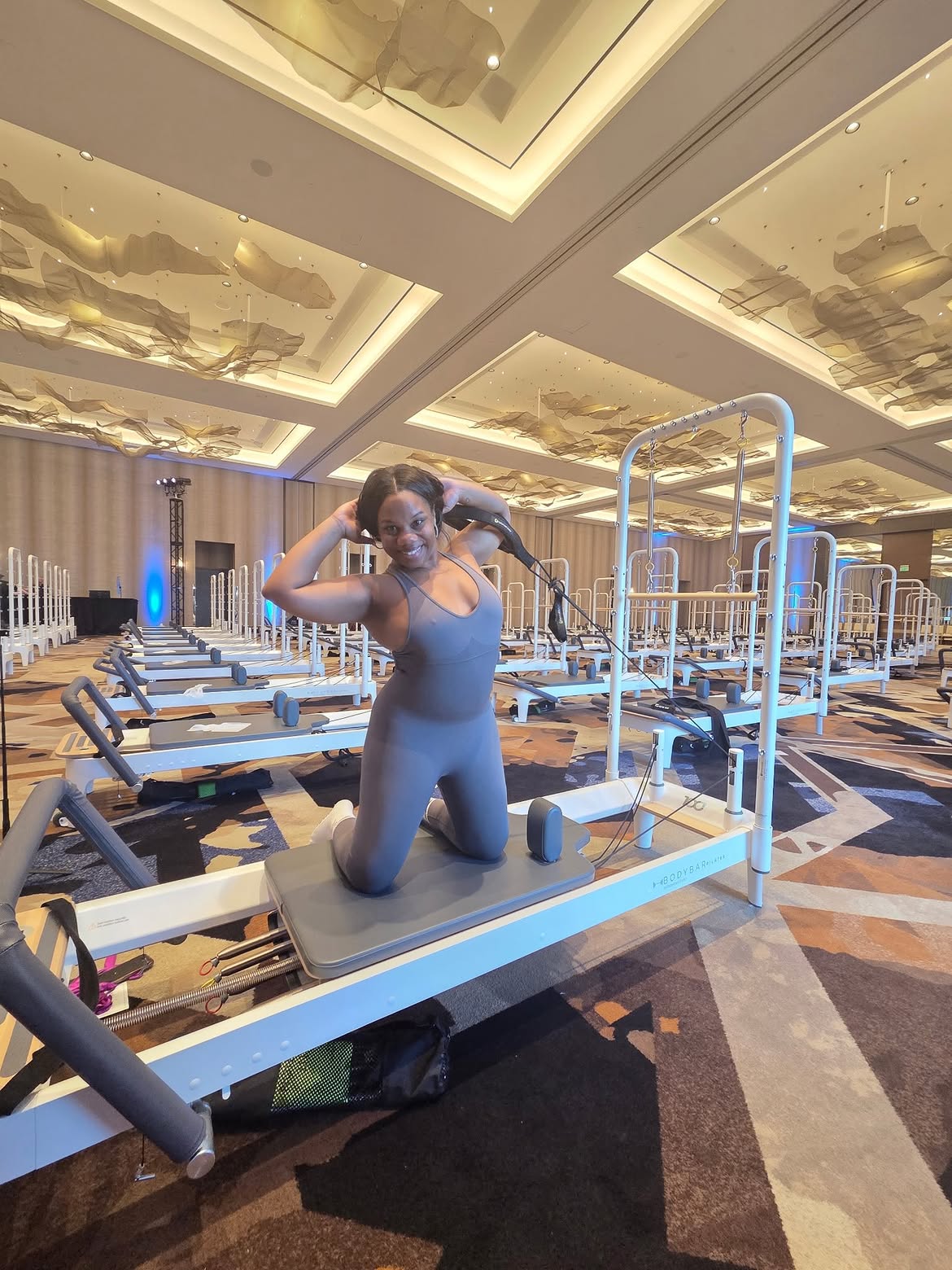
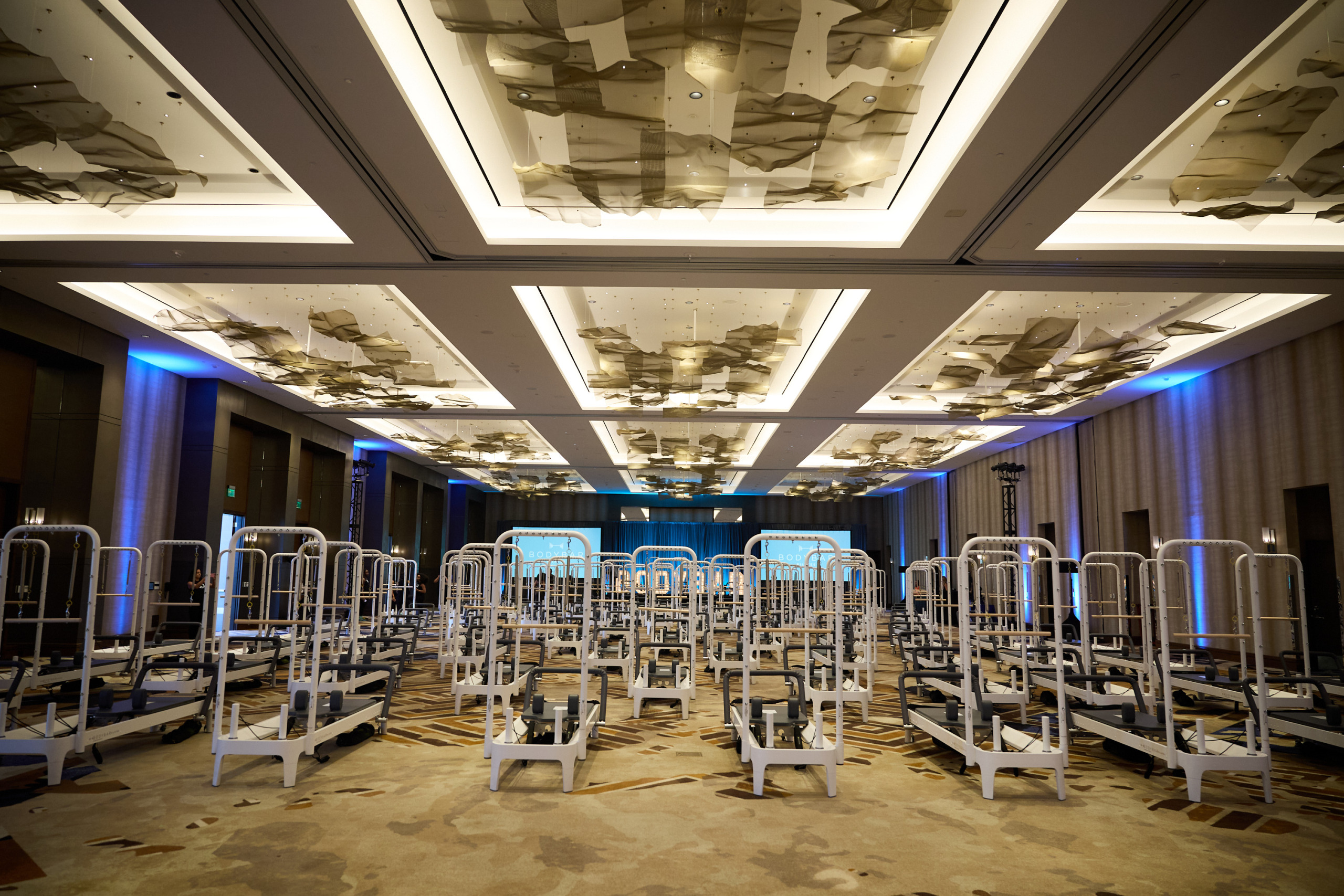
So, when BODYBAR Pilates invited me to participate in the nation’s largest independently organized reformer Pilates class, I couldn’t say no. Held at the Omni Frisco Hotel at The Star in Frisco, Texas, the 50-minute class brought together 100 participants on 100 reformers to celebrate Pilates’ 100th anniversary and BODYBAR’s opening of its 100th studio on September 13. The milestone meant more than numbers, though. The event also raised $10,000 for the Foundation for Women’s Cancer, with $100 donated for every reformer in recognition of Gynecologic Cancer Awareness Month.
For me, the gathering also offered an opportunity to reflect on the Black women who have helped shape and expand the history of Pilates. When honoring the revolutionary work and impact of Joseph Pilates, I couldn’t help but think of Kathy Stanford Grant, a pioneering Black dancer and instructor who became one of only two people Pilates himself officially certified. After suffering a severe knee injury during her career and undergoing unsuccessful surgeries, Grant was sent to Joseph Pilates for rehabilitation in the mid-1960s.
She went on to direct a Pilates gym, teach classes at Henri Bendel in New York City, and become a prominent instructor at the Tisch School of the Arts at New York University, helping diversify the practice in New York City and beyond. Her legacy feels particularly relevant today as Black women continue to reclaim and expand their presence in Pilates and wellness. Today, Black women are increasingly finding community through Pilates studios, digital platforms, and organizations dedicated to representation. Sonja R. Price Herbert, for example, founded Black Girl Pilates in 2017 to support and increase the visibility of Black Pilates instructors.
I often incorporate Pilates into my own wellness routine, so participating in this milestone felt like an opportunity to experience not only the physical practice, but also the community being built around it. The class also couldn’t have been more timely, taking place during Self-Care Awareness Month and Gynecologic Cancer Awareness Month. The $10,000 donation to the Foundation for Women’s Cancer gave the celebration an even greater purpose. The organization supports and empowers people affected by gynecologic cancers through education, research, and public awareness.
Dr. Elizabeth Stock of the Foundation for Women’s Cancer emphasized the importance of awareness, early detection, and listening to your body. “Know your normal,” Stock told attendees. “You know your body best.” Her message aligned with the event’s broader purpose: encouraging women to prioritize their health and feel empowered to advocate for themselves.

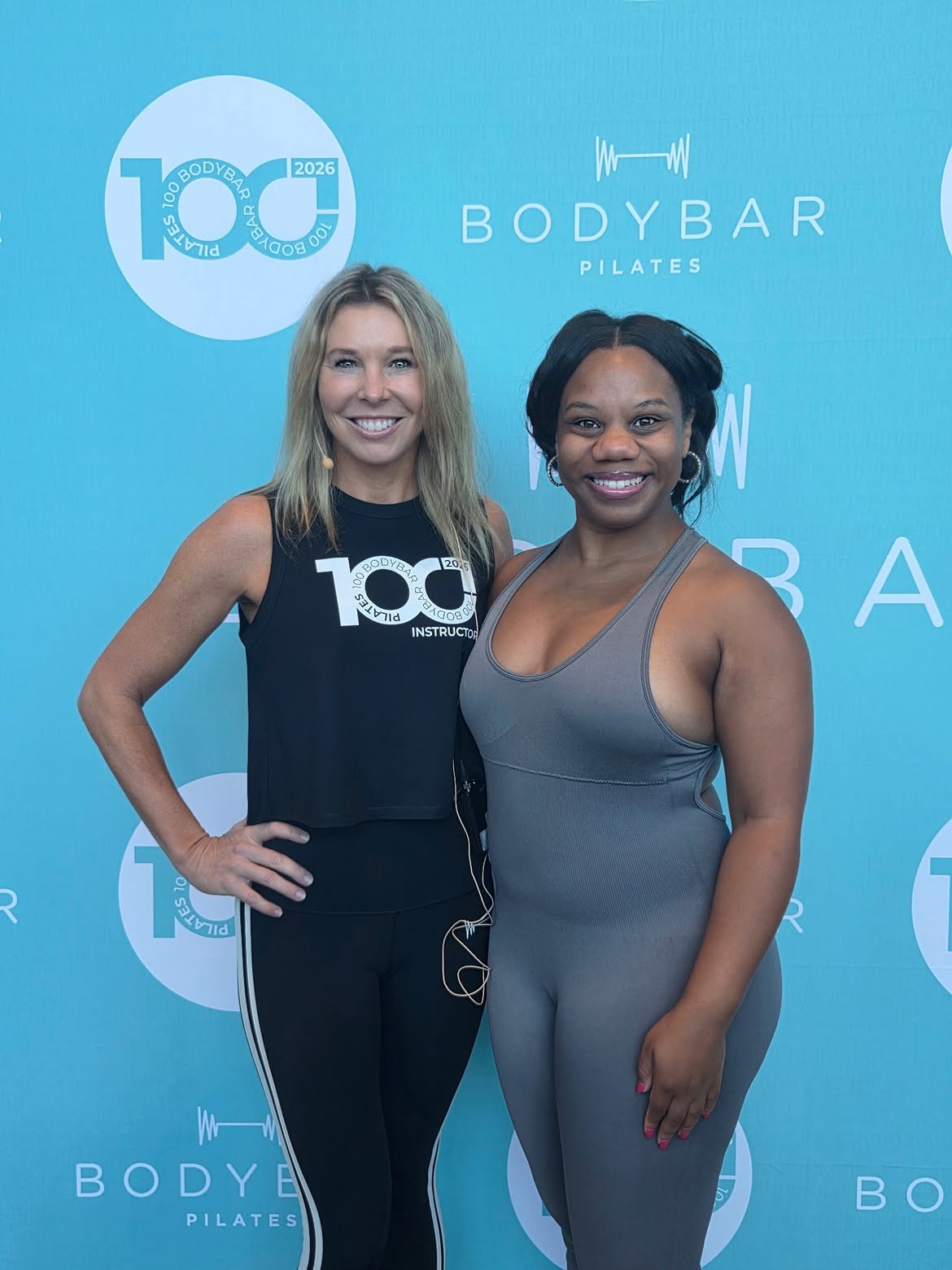
BODYBAR President and Co-Founder Kamille McCollum said supporting women’s health was an intentional part of the celebration. “Most of our members, most of our owners are women,” McCollum said. “We wanted to find a foundation that we could continue to work with going forward that is going to hit a national footprint.” For McCollum, the event was never meant to be solely about showcasing BODYBAR.“We wanted to do something not just to showcase BODYBAR,” she said. “We wanted to showcase something somebody else and give away.”
She also emphasized the importance of opening up conversations around women’s health. “I think a lot of times women’s health issues and stuff are just not talked about enough,” McCollum said. “And so this is opening up that door so that people can feel more comfortable to talk about it.” Part of Pilates’ staying power is its versatility. McCollum explained that reformer Pilates can accommodate a wide range of ages and fitness levels. A class can include elite athletes alongside older adults, with the reformer’s springs providing either additional resistance or support depending on the movement and participant.
That adaptability is part of what McCollum believes has kept Pilates relevant 100 years after Joseph Pilates established the practice. For McCollum, reformer Pilates has also transformed how she approaches her own fitness. Before discovering the reformer about 12 years ago, she was a runner with strong legs but wanted to develop greater core and upper-body strength. “It’s just that full-body workout,” she said. She also views Pilates as an important tool for functional movement and quality of life, particularly as people age. “Knowing how to bend and pick up and to twist and turn is so good, especially as we age,” McCollum said. “Needing to know the right way to move is so important.”

That philosophy resonates with me. I’ve become increasingly interested in strength that extends beyond appearance. Pilates challenges me to pay attention to how my body moves, slow down, and focus on building strength throughout my entire body. There is also something mentally restorative about dedicating time to movement without judgment. For some people, walking into a Pilates studio can be intimidating. The reformer itself can seem complicated, and people may assume everyone in the room is supposed to look or move a certain way. McCollum wants BODYBAR to challenge that perception. “Those machines can be intimidating,” she said. “And so we always say, you need to make sure people feel good about getting onto that reformer.”
She also wants members to understand that Pilates is not about conforming to one particular body type. “We are all body types,” McCollum said. “You’re going to see all different kinds of bodies on those reformers.” That inclusivity was important to me as I entered the class. As a curvy woman who works out regularly and is committed to maintaining a healthy lifestyle, I wanted to see whether a room filled with 100 people would actually feel welcoming and inclusive.
McCollum said BODYBAR is actively thinking about how to reach communities that may not yet see themselves represented in reformer Pilates. That sentiment captured something important about the event: The goal wasn’t simply to get 100 people onto 100 reformers. It was to demonstrate how movement can create community across differences.

When the 50-minute class began, the room’s energy was palpable. Three instructors led the workout while approximately 20 instructors were on the floor supporting participants, demonstrating movements, encouraging us, and helping with form. We moved through squats, bicep curls, chest presses, leg presses, bridges, and scissor kicks. The class was challenging, but it was also empowering. Surrounded by Pilates enthusiasts ranging from beginners to more experienced practitioners, I felt like we were doing something bigger than a workout. Everyone was moving toward the same goal, regardless of experience level.
The room represented different ages, body types, and backgrounds. And while everyone arrived with their own individual reasons for being there, we shared the same reformers, the same instructors, and the same 50 minutes. I left the class feeling inspired and accomplished. More importantly, I was reminded of why Pilates has become such a grounding part of my wellness routine. It doesn’t require me to approach movement from a place of punishment or perfection. Instead, it asks me to be present with my body.
A century after Joseph Pilates introduced his method, the practice continues to evolve. For Black women, that evolution also means seeing ourselves represented within the wellness spaces we enter, honoring the women who helped pave the way and creating communities where everyone has room to move. Looking toward BODYBAR’s future, McCollum said the company is already thinking about what comes after its 100th studio. “I want us to look, you know, maybe when we hit our 200 mark, like what is something else that we can do that can be big, that can just be impactful?” she said.
Ultimately, she wants BODYBAR to be known as more than a place to work out. “We’re here more than just a workout,” McCollum said. “We’re here to build community and really create a family that’s all across the United States.” After 100 years of Pilates, perhaps that is one of the practice’s most enduring lessons: Wellness is not only about strengthening the body. It is also about creating space for people to feel seen, supported, and connected. And for Black women continuing to reclaim our relationship with wellness, that community is worth celebrating.