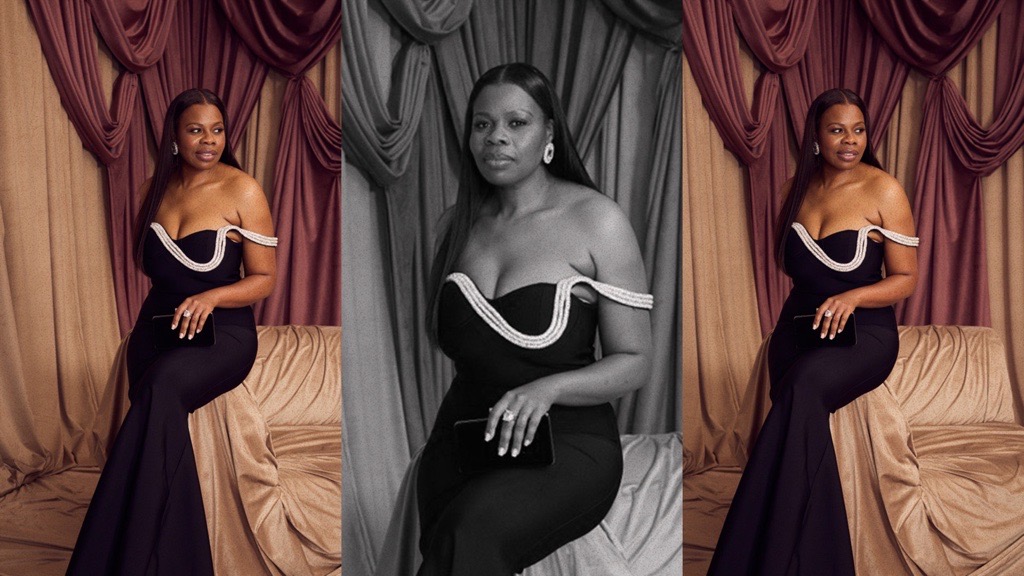
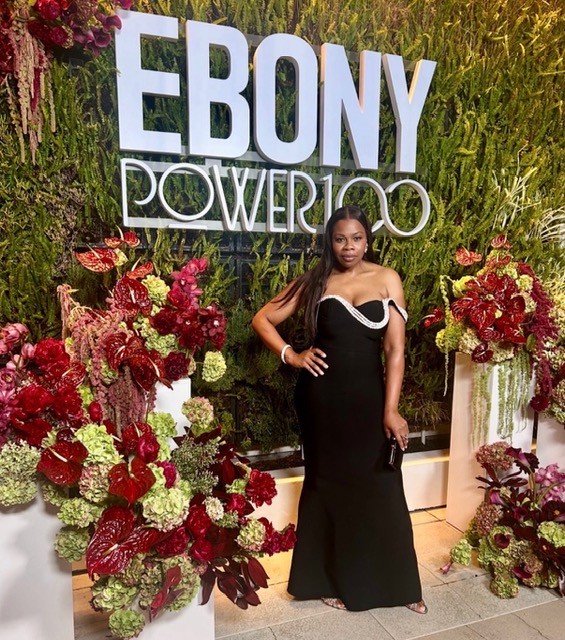
The night I had been looking forward to for months had finally arrived. It was November 2025, and I was preparing to attend my company’s exclusive gala in Los Angeles. EBONY’s Power 100 is a star-studded black-tie event honoring some of the most influential Black leaders, innovators, artists and changemakers of the year.
As Senior Director of Pricing and Planning at EBONY, I had spent years supporting the event behind the scenes. Attending was never a part of my role, but this year was different. I was honored with a company award a few months prior and was invited to attend as a guest. I couldn’t have been more excited. That day, my hair and makeup had been done to perfection in the glam suite. My dress fit perfectly. My heels were on, and I felt beautiful, confident and grateful to be there. I smiled the entire night, and not a forced smile to hide what I was going through, but genuine joy. I was proud of our team’s accomplishments and honored to be among so many remarkable people.
What many people didn’t know was that just a few weeks earlier, I had been diagnosed with stage 3 breast cancer and I was days away from a life-saving surgery. Looking back, that evening signified the end of a chapter in my life. It was the last week of the old me as I knew her, and everything I thought I knew about my body and my future would soon change.
People often ask, “Ayanna, how did you find out you had breast cancer? Was it a routine mammogram?” Even though I always stayed on top of my annual screenings, it was actually my husband who first noticed something was different. After he mentioned it, I performed a self-exam and immediately found what he had felt. That next morning, I went to see my gynecologist.
During the exam, she said, “Ayanna, not only do I feel what you found, but I’m pretty sure I feel something else as well. Therefore, I need you to go to the breast center as soon as possible.”
The urgency in her voice told me everything I needed to know, and the next day I underwent a mammogram and ultrasound. I tried to stay calm, reminding myself that most breast concerns turn out to be false alarms.
Minutes after returning home, the breast center called and asked me to come back for additional imaging. When I arrived, the technician took the images before handing me a cellphone. Confused, I answered. On the other end was the doctor who was reviewing my scans in real time. “Ayanna,” he said. “I’m glad you came back.”
He explained that they found a tumor along with other suspicious findings and that I needed a biopsy immediately. As he spoke, I locked eyes with the technician. She was doing her best to remain professional, but I could see the concern in her face. She already knew what the doctor was going to tell me, and deep down, so did I.
A few days later, I underwent the biopsy to further confirm things. During the procedure, the doctor repeatedly mentioned being able to feel the area she needed to sample, but she couldn’t see it on the ultrasound. The next morning, my phone rang. When I saw the doctor’s name, my stomach dropped. I had breast cancer.
I was speechless, and so many thoughts ran through my head. I felt perfectly healthy and never had a serious illness. I exercised regularly. I also didn’t smoke, drink and had no family history of breast cancer. Yet here I was listening to a doctor tell me I had cancer. She began explaining my specific type and I stopped her and asked, “Wait, there are different kinds of breast cancer?”
“Yes,” she said. The type I had was called Invasive Lobular Carcinoma. It’s a form that often grows in thin sheet-like masses within the breast tissue, rather than forming a distinct lump. Because of this, it can be difficult to detect through traditional imaging and is often diagnosed at a later stage.
Beyond that initial explanation, I can’t recall much of what she said. The words “you have breast cancer” continued to echo in my mind, and I immediately thought of my three sons. How would we tell them? Would they understand? Would hearing the word cancer be too much? We ultimately decided to wait until we had more information. But one thing was certain— life would never be the same.
Within hours of my diagnosis, survival mode kicked in. The tears slowed, and in their place came a need to figure out how I could beat this. Through what I can only describe as God’s grace, I was placed under the care of an exceptional breast surgeon who is typically hard to get established with. One of my nurses was able to make it happen.
From the moment my husband and I met my surgeon, we knew I was in good hands. She had a calm, reassuring presence that immediately put us at ease. After reviewing my scans, she explained all of my options while making sure we understood what each path would look like. When it was my turn to speak, without hesitation, I told her I wanted a double mastectomy. Although the cancer had only been detected in my left breast, I knew I wanted to give myself the best chance at a long and healthy life.
Based on the imaging, my doctor believed it was stage 1. However, she explained that the ultrasound had limitations and I would need to undergo an MRI to provide the complete picture.
I had the MRI, and it showed more extensive disease than the ultrasound had suggested. What initially appeared to be a small tumor now showed as a large mass measuring approximately ten centimeters. It wasn’t stage 1— it was likely stage 3. I also needed to have additional scans to determine if the cancer had spread to other parts of my body.
I had never been more afraid in my life. I could barely eat or sleep over those next few days. I remember sobbing to a friend and asking, “What if I don’t live to see my boys become adults? What if I never become a grandmother?”
My surgeon had already approved my trip to Los Angeles for the EBONY Power 100 Gala, but now I questioned if I should go. I called her [my surgeon] to get her feedback, and without hesitation, she said, “You go to Los Angeles and leave cancer in New Jersey. When you get back, then we’ll operate.” Her confirmation gave me permission to breathe again, so I went. During my time in Los Angeles, I wasn’t a woman facing a life-changing diagnosis; I was simply Ayanna.
I laughed, celebrated, supported my coworkers and experienced an event I had spent years helping curate. Looking back, I realize how much I needed that reminder that life was still happening outside of hospital rooms and test results. I was also incredibly fortunate to be surrounded by my village. My husband, family, friends and coworkers carried me through one of the darkest moments of my life. Funny enough, one of my greatest fears during this journey was sharing my diagnosis at work. I worried people would see me differently or question my ability to lead.
That never happened.
EBONY’s CEO reassured me that I had her full support. Our People Operations team helped me navigate every aspect of my leave and recovery. Coworkers checked in regularly, sent care packages, books and notes of encouragement. Sadly, I met several women throughout my journey who shared stories of feeling unsupported in the workplace. Their experiences made me even more grateful for mine.
My faith also became an anchor. I lost my grandmother in 2020, and she typically would have been the first person I called after my diagnosis. Instead, I reached out to her sister— my great-aunt— who encouraged me to pray and lean into scripture.
The day before surgery, my company’s SVP of Finance called and prayed over me. During the conversation, she said something I’ll never forget. “When they open you up tomorrow, they’re not going to find what they think they saw on that MRI.”
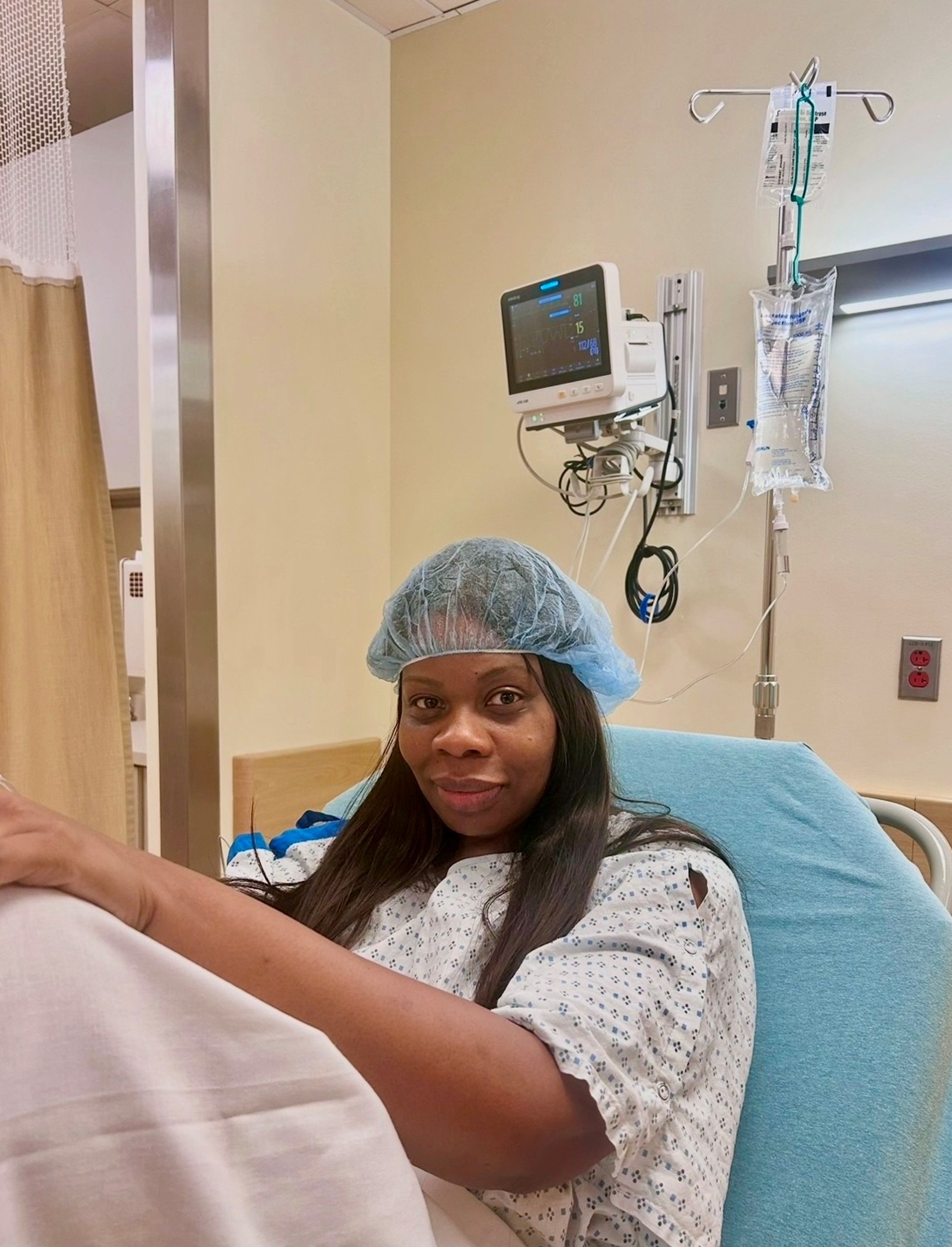
On November 10, 2025, I underwent a double mastectomy. Weeks later, the pathology results revealed something unexpected. The single ten-centimeter mass was actually seven different tumors clustered together. My surgeon explained that this was a more favorable finding than what was originally assumed. My lymph nodes were also clear, and the scans confirmed that the cancer had not spread to other parts of my body. My oncologist revealed that I would not need chemotherapy or radiation, and my treatment plan would consist of targeted inhibitor medications, like Kisqali, and ongoing monitoring.
Even with this encouraging news, I have to admit that recovery from the surgery was one of the hardest things I have ever gone through. My husband had to help me with nearly everything from eating and bathing to dressing and managing the surgical drains that made sleep nearly impossible. Though the physical pain was unbearable at times, the emotional pain ran deeper. Knowing that I lost my breasts was incredibly hard to grapple with, mentally and emotionally.
Before cancer, I felt comfortable in my body. But after my surgery, it took weeks before I could truly look at myself again. My husband encouraged me to see a therapist to help me process the loss. During one of the sessions, I repeated that I couldn’t wait for a plastic surgeon to fix how I look. My therapist shifted that perspective and reminded me that I wasn’t broken. Instead of seeing reconstruction as repairing what cancer had taken from me, she encouraged me to view it as rebuilding and embrace the person I was becoming.
That shift changed everything. While I still have moments of insecurity, I am more comfortable in my skin despite the scars. Since my double mastectomy in November 2025, I have undergone one reconstructive procedure, with two more still ahead. With each step, I’ve grown a little more confident and I credit that progress not only to the exceptional skills of my plastic surgeon, but mostly to prioritizing my mental health throughout my cancer journey.
The greatest lesson this journey has taught me is that healing isn’t just physical. It’s emotional, mental and spiritual. Most importantly, there is life after breast cancer. Through it all, I’ve never stopped being a wife and a mother. I was also fortunate to feel well enough to return to work six weeks after my surgery. Shortly after, I even found my way back to the gym.
What I didn’t expect from this experience was how much it would change me. Before, I moved through life chasing what’s next. I rarely slowed down long enough to appreciate the beauty of simply being present. This year, for the first time in my life, I celebrated my birthday in a major way. Surrounded by thirty of my closest girlfriends, we all wore pink in honor of breast cancer awareness. It was joyful, emotional and deeply meaningful.
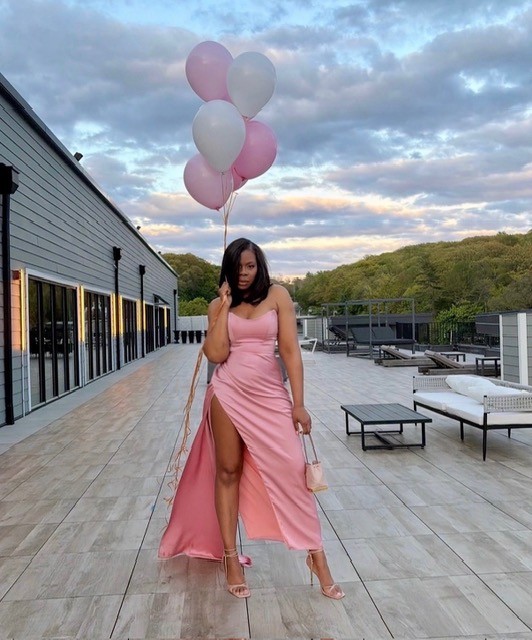
Standing in the middle of that party, I realized that every birthday is a privilege and life isn’t just about the milestones we race towards. It’s about honoring the gift of still being here.
Admittedly, I am not the same woman who walked into that EBONY Power 100 Gala in November 2025. Cancer has tested, stretched and reshaped me— literally and figuratively. I don’t just accept this new version of myself; I love her, fully and immensely.