When most people picture Black entrepreneurship, their minds go to the same handful of places, usually a salon, a restaurant, or a clothing line. And to be clear, there is nothing wrong with any of that. Black creativity has been shaping those spaces for generations, often without getting the credit or the capital that came with it.
But that is not the whole story.
Because right now, Black founders are writing the software your job runs on. They are designing the buildings you walk into and the neighborhoods around them. They are managing billions of dollars, moving freight across the country, and building the technology hospitals use to take better care of patients.
Black Business Month is not an opportunity to present a ranked list, but rather to shine a light on the people who are helping elevate the Black dollar. Consider this your reminder that we are not just showing up in the marketplace. We are shaping it.
Here are 12 Black-owned businesses making waves, setting the standard, and proving they are worth your attention, your investment, and your business.
BLK & Bold Specialty Beverages — Pernell Cezar & Rod Johnson
For childhood friends Pernell Cezar and Rod Johnson, BLK & Bold Specialty Beverages turned something as simple as your morning coffee into something bigger. The independently owned company built its business model around giving back to nonprofits supporting young people, and that was not an afterthought. There is something powerful about two Black men proving that scale and social responsibility do not have to compete with each other.
WalkGoodLA — Etienne Maurice
Not every founder starts by asking what they can sell. Sometimes the better question is what your community actually needs.
That is the question filmmaker and creative Etienne Maurice asked in 2020 when he founded WalkGoodLA. What started amid protest and collective grief grew into something much bigger through yoga, hiking, breathwork, and community gatherings that give Black and brown Angelenos permission to do something we are not always taught to prioritize: heal.
GRAY — Brandon “BJ” Gray
The Paris-trained, LA-born designer launched what was originally Grayscale in 2017, focused on menswear. His tailoring and bold prints found fans among actors, athletes, and artists fast, and demand from women eventually pushed the brand into something bigger. In 2023, it became GRAY, expanding into womenswear while keeping the visual language intact.
In an industry where Black aesthetics get borrowed and monetized constantly, there is real power in Black designers owning the label instead of just influencing the look.
Calendly — Tope Awotona
Awotona founded Calendly in 2013 after getting fed up with something most of us just accept: the endless back-and-forth of trying to find a time to meet. So he built the fix, sinking his own money in and bootstrapping the company for years before it became the scheduling platform millions of people use today.
The Gathering Spot — Ryan Wilson & TK Petersen
Ryan Wilson and TK Petersen built a business around proximity and the power of community when they launched The Gathering Spot. Opening in Atlanta in 2016, they were not just launching another members-only club. Rather, they were seeking to build a room where entrepreneurs, creatives, political leaders, and culture-shapers could all exist in the same ecosystem. A decade later, it is hard to talk about Atlanta without talking about it.
Part workspace, part social club, part civic gathering place, The Gathering Spot proves connection can be built like infrastructure.
The Doux — Maya & Brian Smith
The husband-and-wife team started building The Doux while stationed at a U.S. Air Force base in Germany, with Maya’s years as a licensed cosmetologist as the foundation. Today it is an independent, Black-owned, veteran-owned hair care company with a look that pulls straight from ’90s hip-hop culture and a formula built on decades of real experience with textured hair.
That combination is what let The Doux land in major retailers without losing the people who made the brand in the first place.
The Lip Bar — Melissa Butler
Before The Lip Bar became a beauty brand sitting in thousands of stores, Melissa Butler was working on Wall Street and making lipstick in her Brooklyn kitchen because she was tired of an industry that treated inclusion like an afterthought. Then she went on Shark Tank, and all the investors passed.
She kept building anyway, and the Detroit-based company grew well beyond lipstick and into major retailers, still centered on the people mainstream beauty has historically ignored.
Moody Nolan — Jonathan Moody
Jonathan Moody leads Moody Nolan, the architecture firm his father Curt Moody founded in 1982. Jonathan became CEO in 2020 and has kept growing both the firm’s footprint and its focus on designing for communities the profession too often overlooks.
Black architects remain seriously underrepresented, and Moody’s work is proof that Black entrepreneurship can shape more than a marketplace, but can literally shape the actual environment around us.
Ariel Investments — Mellody Hobson
Building wealth is one conversation. Deciding where capital moves is a different one entirely.
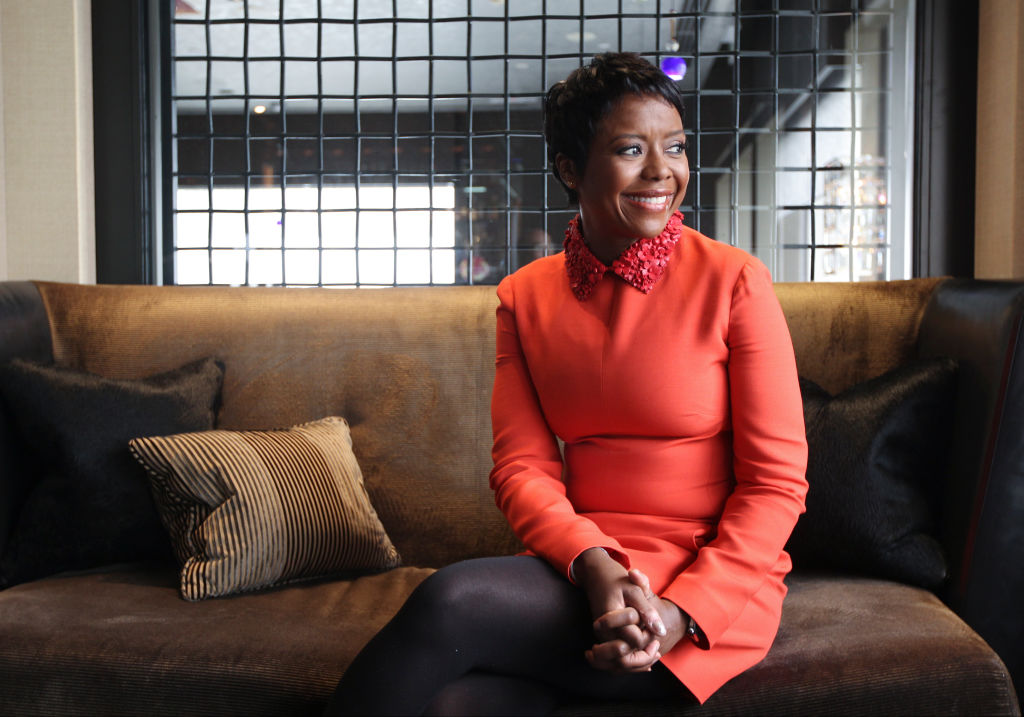
As co-CEO of Ariel Investments, Mellody Hobson has spent her career in a conversation about how capital moves, steering strategy and growth at one of the country’s most prominent Black-owned investment firms while expanding its reach through ventures she has founded and co-founded.
The Ariel team understands that companies cannot scale on vision alone and that capital and who has access to it matters. Hobson’s work is a reminder that ownership is only half of it. The other half is allocation.
Run Smart LLC — Charity Newsom
If any city understands what it means to move something from one place to another, it is Memphis. Charity Newsom is building squarely inside that legacy.
Founded in 2020, Run Smart LLC is a Memphis-based, minority- and woman-owned transportation and logistics company handling customized delivery and freight. It is the kind of industry most people never think about until something goes wrong. Medicine has to get to hospitals. Food has to get to stores. Everything you buy took a journey to get to you.
ActOne Group — Janice Bryant Howroyd
Janice Bryant Howroyd founded ActOne Group in 1978 after arriving in California with $1,500 in her pocket. What followed is one of the most significant Black entrepreneurship stories in American business. ActOne has grown into a global workforce-management enterprise, connecting people to jobs and helping businesses find and manage the talent they need to run.
IntusCare — Robbie Felton & Evan Jackson
Sometimes the best technology starts with paying attention to a very human problem.
For Robbie Felton, that problem came from watching his mother work as a geriatric social worker and seeing firsthand how fragmented information made an already hard job harder. While at Brown University, he teamed up with Evan Jackson and Alex Rothberg to build a fix. IntusCare launched in 2019, building technology for organizations providing complex care to older adults, helping teams coordinate services with better data instead of guesswork.
Innovation does not mean much if the people affected by the problem are an afterthought. IntusCare started by looking closely at the people doing the work and the people receiving the care, then built from there.
Maybe that is the real story of Black entrepreneurship right now. We are not just asking where there is room for us in the marketplace. We are looking at what is missing and deciding to build it ourselves.