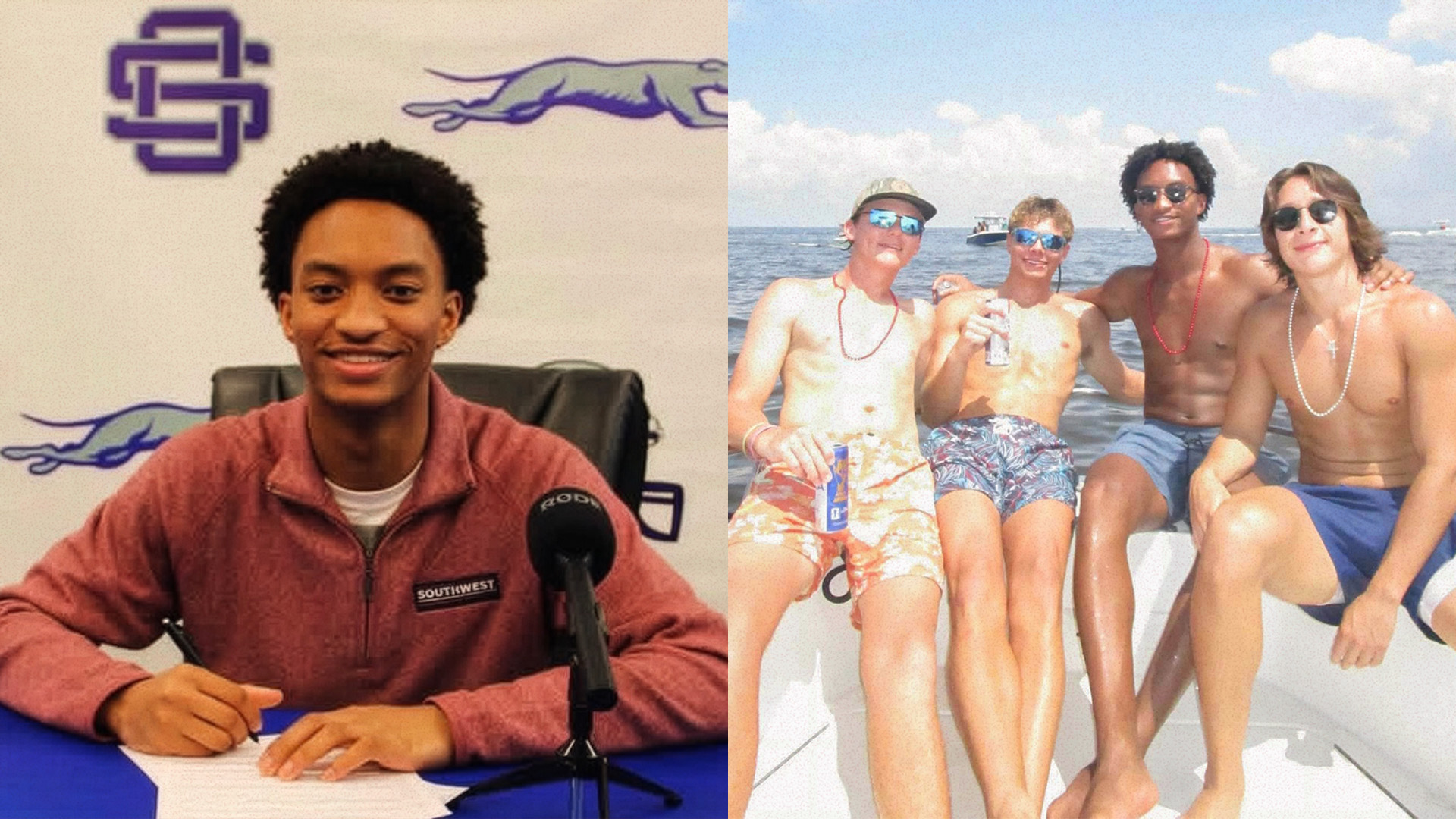
After weeks of private grand jury proceedings, the death of Nolan Wells still remains a mystery after a grand jury in Jackson County, Mississippi, has ruled the case a no true bill and does not believe that the passing was racially motivated. “No true bill” is the legal terminology used to describe there being not enough evidence found within a respective case to bring charges to parties suspected to be involved.
Mississippi District Attorney Angel Myers McIlrath released a video statement and the semi-redacted Grand Jury report around 9 p.m. on Monday, September 21, in which she delved deeper into the case’s proceedings and her perspective on it.
“Jackson County, after a thorough and exhaustive investigation, your Grand Jury met last week concerning the death investigation of Nolan Wells and unanimously returned a no true bill. In addition to prosecuting the guilty, the grand jury must also exonerate those falsely accused. The Grand Jury was comprised of a diverse group of individuals representing a cross-section of our Jackson County community. A copy of the grand jury report has been filed with the Jackson County circuit clerk, as required by law, and a redacted copy is publicly available on our website, Facebook page, and at the circuit clerk’s office. […] The death of Nolan Wells has devastated our community. Outsiders and influencers have attempted to exploit Nolan’s death to divide and create chaos here, but we are better together […],” she expressed in the released video.
She continued to say that Wells’ family, legal team, and those close to him knew that his passing and disappearance didn’t happen as a result of racial violence and that the outward lack of transparency in proceedings was to help protect the integrity of innocent individuals.
McIlrath further condemned Ben Crump and his legal team for not being truthful about how her office and their team worked together, despite giving them full insight into the evidence received and reviewed.
The proceedings kept the identities of 23 Grand Jury members sealed. According to the grand jury report, their ages ranged from 27 to 68, with racial representation spanning Caucasian, African American, Hispanic, Native American, and Asian. All jurors reviewed physical and digital evidence, including GPS data, surveillance footage, video and images gathered during the investigation, and subpoenas.
The infamous Sea Tow call was also presented to the jury and was alleged to highlight suspected involvement by Wells’ friends who were with him. The call was reviewed and edited for clarity by audio engineer Jeanetta Brantley, and it went viral on social media. The Wells family legal team also retained their own audio engineer to analyze the call. However, the Grand Jury found iterations of the call that were online and on social media to be false.
The Grand Jury is sticking to their belief that Wells chose not only to stay on the island, but that the position of, condition of, time of discovery, and location of Wells’ body were consistent with drowning, as per the report.
The report also confirmed that the forensic examiner brought Wells’ phone examination findings into evidence, and that the family worked with Garrett Discovery Inc. on an initial 14-page report and a later final report of 21 pages, as well as a 261-page report of his Snapchat conversation history.
The jury not only noted that Wells purchased alcohol with a fake ID, but that no alcohol was provided to him or his friends by someone over the age of 21. Images of him at a pool party on social media were found to have been taken before Fourth of July weekend, and it is not out of the ordinary for people to leave Horn Island on a different boat than they came in on.
Because much of the grand jury proceedings are private, it is unclear what the state of Mississippi specifically presented or argued to jurors regarding the evidence or who was considered a potential suspect. Growing concern has risen among followers of the case after a lack of transparency from legal officials in the case from the initial report of Wells’ death to today. As well as how the state of Mississippi has historically handled cases tied to mysterious deaths of people of color and other race-related cases.
In response to the grand jury’s decision. Attorney Ben Crump, his legal team, and the Wells-Wonsley family released a joint statement on Instagram expressing their disdain for the decision and their continued push for answers. “Nationally renowned civil rights and personal injury attorney Ben Crump and the legal team for the family of 18-year-old Nolan Xavier Wells said Jackson County District Attorney Angel Myers McIlrath is attempting to close the chapter on Wells’ death without getting to the bottom of what caused the blunt force trauma to the back of his head and body. […] Dr. Mitchell concluded that an undetermined cause and manner of death are the most appropriate and scientifically supportable findings.”
The statement continued to confirm that Crump and the legal team will release Dr. Mitchell’s full report and called on the DA to release the full autopsy report from the Mississippi pathologist. The legal team is also calling on the DA’s office to keep the investigation active and open while pushing for the U.S. Department of Justice to start an independent federal review. With there being no statute of limitations for homicide cases in Mississippi, more evidence has the potential to be presented to conclude that Wells’ passing was not accidental.
Attorney Ben Crump, alongside Wells’ parents, Christine and Elmore, will hold a press conference on Tuesday, September 22, at 12 p.m. Eastern Standard Time to dive deeper into their call to action in continuing to seek answers on the true cause of death of their son.