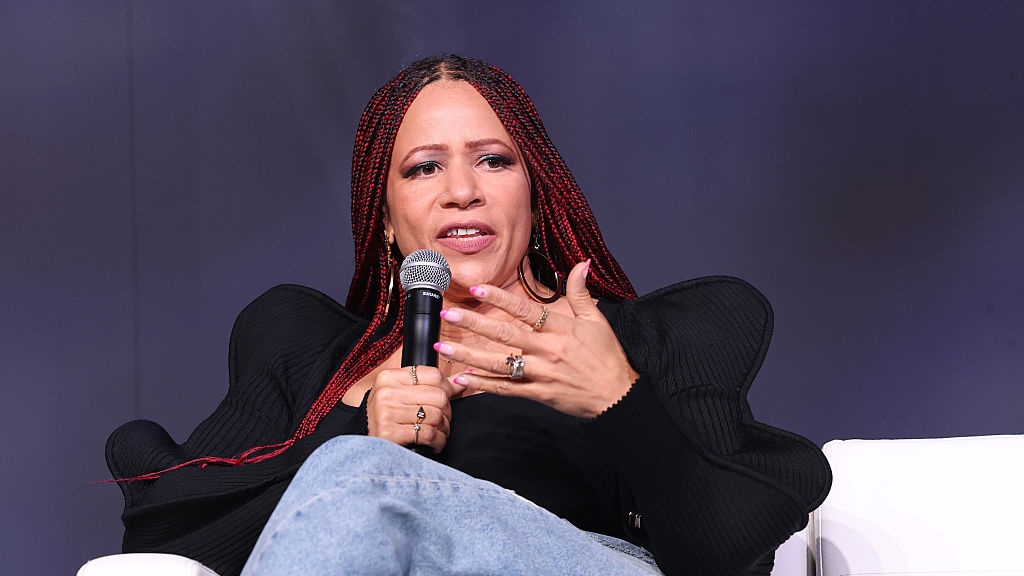
Investigative journalist Nikole Hannah-Jones penned a candidly, in-depth essay In Fighting for Every Black Child, Did I Betray My Own? for The New York Times where she openly grapples with the decision she and her husband, Faraji Hannah-Jones made at the beginning of their daughter Najya’s educational experience. The essay offers an analysis into Hannah-Joneses choice to enroll her daughter into New York City’s public school system, that is equally notorious for segregation and as it is for educational inequities regarding Black and brown students. What has propelled their decision as parents into the culture’s zeitgeist of discourse is the fact that Hannah-Jones shares that her daughter vehemently disagreed with the decision once she became of age to fully understand the implications of the choices that were originally made for her.
The reactions the essay has solicited are greatly skewed on a spectrum with understanding on one side with utter disagreeance on the opposite end of it all. But, the belief that has acted as middle ground among spectators is clear: Parents are often tasked with making impossible choices. What remains abundantly relatable across parenting is that there is no cut and dry guide book that can support every parent and child. To each is truly their own. While Hannah-Jones originally made a choice that she and her husband felt as though went toward the greater good of the Black community while fighting the inequitable conditions parents and student endure nationwide was the just thing to do. The choice also aligned with the values the couples attempted to ingrain within their daughter. But what happens when your child grows of sound mind to question the decisions you have made on their behalf and are able to coherently disagree? And ultimately make the opposite choice for themselves. Writers, parents, and spectators alike are weighing in with their own opinions.
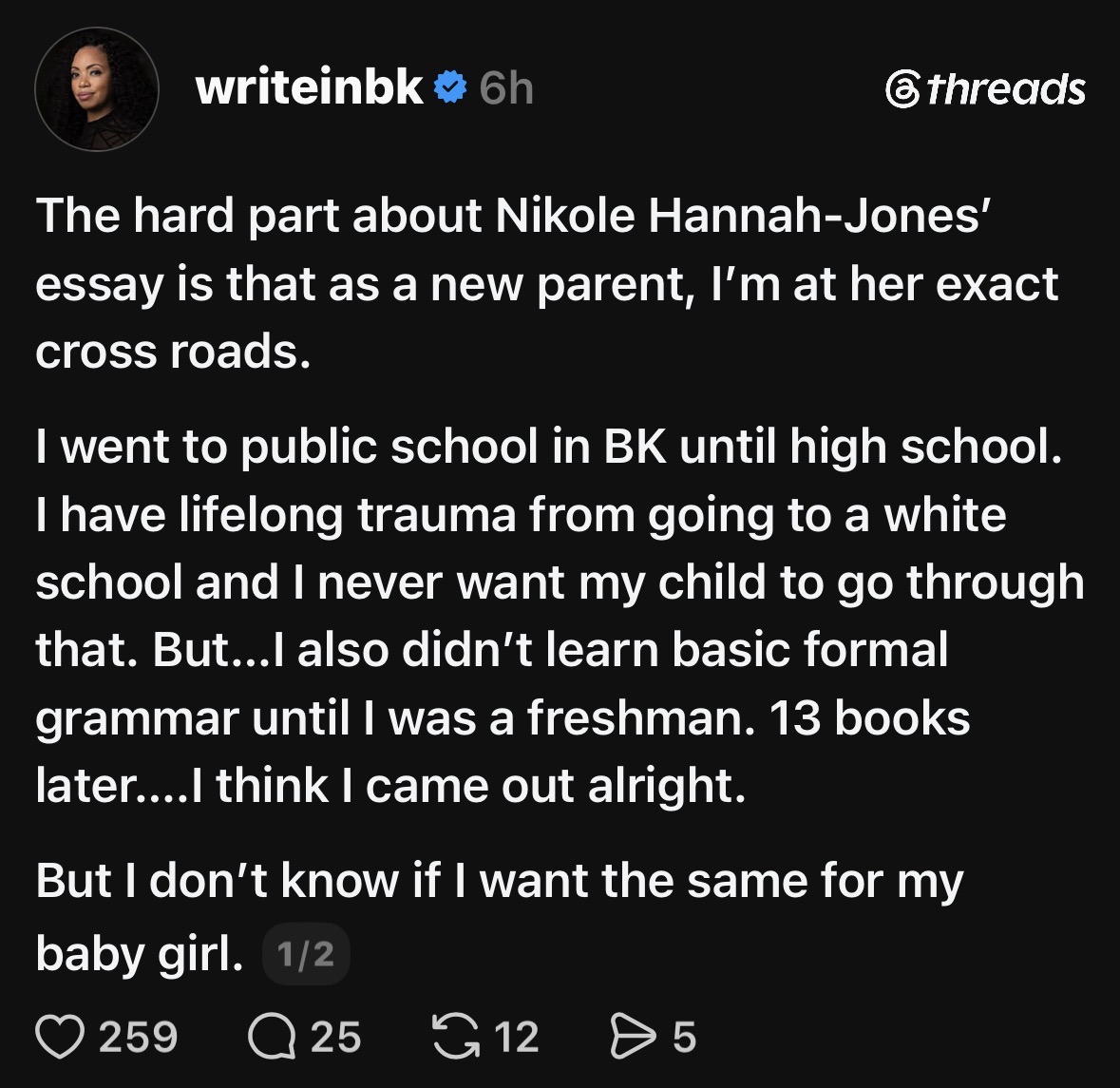
Novelist Tiffany D. Jackson, a native New Yorker who matriculated through the city’s school system and is now entering a new experience with the system as a parent who will undoubtedly have to make decisions similar to the ones Hannah-Jones has made. She also acknowledges that she isn’t certain how she will ultimately approach the situation as the time nears.
Dr. Amber is weighing in on a systematic basis of how Hannah-Jones’s decision is comparable to that of segregation activists like Ruby Bridges and that the act of sacrifice isn’t a new concept for the Black community. Although, even in the face of attempting to fight for basic liberties like quality educational access, this is all still being done at the expense of a child’s experience — specifically Najya Hannah-Jones.
But we cannot fairly digest either Nikole’s decision or Najya’s feelings without also considering the nuances that both the public educational sector and private sector poses. While Najya attended a school that lagged in quality educational resources, the argument that she may have been exposed to less flagrant racial injustice than she likely would have experienced in a private, predominately white setting is a something worth considering. The question then becomes; how do we address a situation where arguably no one wins because there are shortcomings in all presented options?