Nowadays, you can purchase weed anywhere in New York. The man behind the bodega counter has an eighth, I can rely on a shady-looking smoke shop for a preroll, and there’s always someone at Washington Square Park or Jacob Riis Beach with weed for sale. In most cases, the person selling me this isn’t Black.
Back in my home state of Florida, your neighborhood drug dealer is the primary source for copping weed, and it’s not like things aren’t changing anytime soon. Last election, Floridians put up a good fight with Florida’s Amendment 3, only to lose by less than 5% of the necessary voter support for recreational use of marijuana. As I learned more about the restrictions and regulations involved in the legalization process, I grew an admiration for entrepreneurs who endure this business, especially when they’re BIPOC or formerly incarcerated for weed-related charges.
On top of the difficulty involved with this process, being a Black woman doesn’t make it easier. To quote the popular expression of Black women working twice as hard to overcome their double discrimination — or as author Anna Gifty Opoku-Agyeman discusses in her new book The Double Tax — the adversity is inescapable for Black female cannabis business owners.
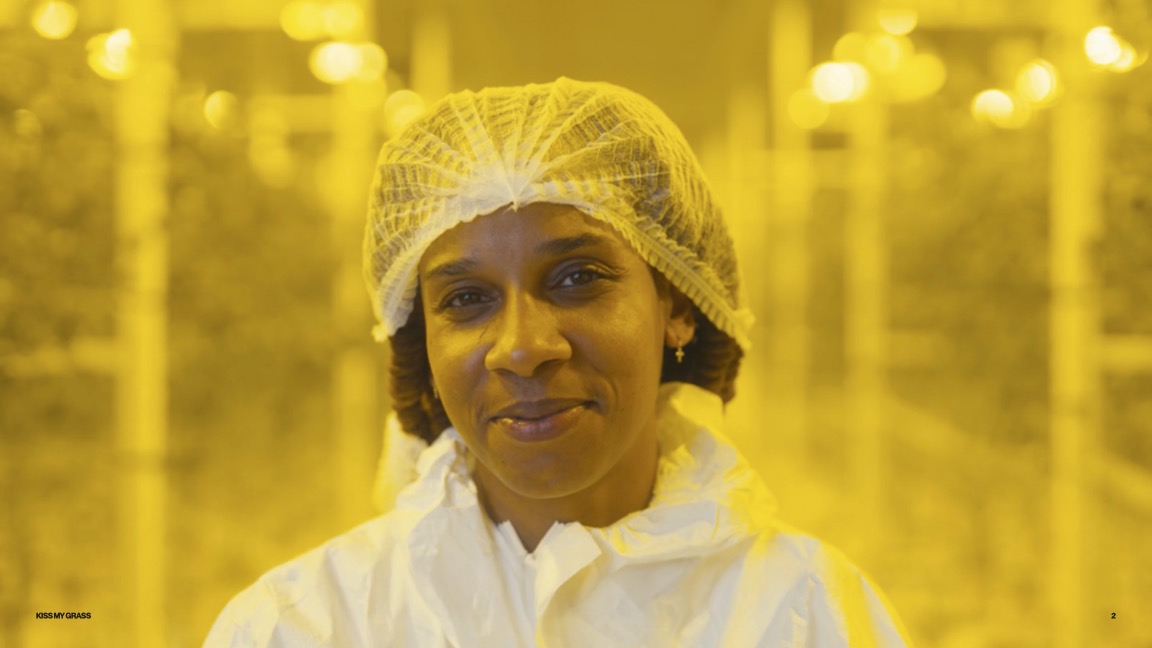
In less than twenty minutes, Kiss My Grass offers a glimpse of this circumstance. The documentary opens with a voiceover from executive producer Rosario Dawson, who addresses the struggles Black and brown business owners face in the cannabis industry. But what Dawson’s voiceover doesn’t capture is the relentless amount of false promises, predatory practices by male counterparts, and mental health risks.
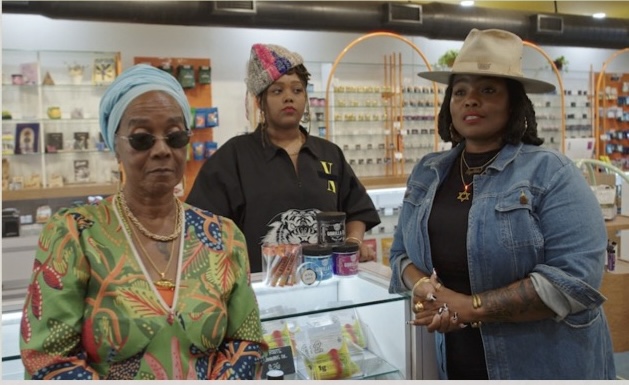
For Mary Pryor, the documentary’s co-director, community with other entrepreneurs in the cannabis business is necessary to overcome these woes, especially over the next decade. “There’s a lot that goes into this [business] that people don’t really understand when they step their foot into this [as a marginalized or formerly incarcerated person],” she told EBONY. “A lot of what it takes to be successful in this business is still changing every single year because of so many other issues, alongside government, customers, and just overall existence.”
In addition to Pryor, we’re joined on Zoom by Sahir Al-Salam and Hope Wiseman, who are featured in the film, and Jess Jackson and Kim James, two state employees who offered legal advice to Pryor. As the Director of Social Equity for Minnesota’s Office of Cannabis Management, Jackson oversees the logistics for new business owners. “It’s important to note that the amount of venture capital funding that’s going into cannabis has declined steadily since 2019, where it was in the billions, and now it’s less than half a billion dollars going into the industry,” she said in reference to a 2024 research study in Forbes. “This dream of it being the generational curse breaker and all of the language put around it to get people excited is not real.”
Since Black women are only receiving 0.34% of these allocated funds, opportunities to procure steady income — let alone breaking even — are scarce. Even though programs were created to assist Black and brown communities disproportionately harmed by racial profiling and mass incarceration as a result of the war on drugs, the promises aren’t being followed through. In Pryor’s eyes, social equity is a myth, especially under the current presidential administration. James, Detroit’s director of cannabis affairs, oversees licensing for city dispensaries and describes the process as a “challenge from day one.”
“It’s been really challenging, and it’s really hard to watch and disappointing when I see people who are trying so hard to succeed and they just can’t get there,” she said. “Nobody’s gonna loan them money. They don’t have the connections.” James points to the aforementioned social equity program for Detroiters, but the necessary moving parts for opening the dispensary are the next obstacle.
Once a cost-efficient building is found, they must network with merchants and growers to receive their store’s inventory, while navigating community versus competition. This off-putting experience is demanding, leaving mental health to suffer in return. Al-Salam chimes in on the trauma of this industry. “When I got into the cannabis industry, promises, numbers, all of these things have changed and shifted,” she said. “And as a Black woman, you try to change and shift as much as you can to keep up, to even stay and have a little bit of skin in the game.”
Exploitation by false promises from accelerator programs, accumulating debt, and predatory deals led to Al-Salam taking a brief hiatus. “It’s not the industry that’s keeping us going—it’s the camaraderie and the community that we have built with each other, because we believe in each other, ” Al-Salam told EBONY.
The community these five women have built is visible on the call as they encourage one another to continue their accomplishments, which is what led Pryor to create this documentary. Citing job insecurity, emotional distress, and devaluation of Black labor as influences for Kiss My Grass, Pryor shared her gratitude for Dawson, along with executive producer Colin Kaepernick, to fund this documentary.
With the insight offered by Kiss My Grass, Pryor hopes viewers can sit with each moment of the documentary to understand the complexities in the cannabis industry. “I don’t believe in the cannabis industry like that. I believe in the women that we have on this phone call, because I know what we have had to do to stay here,” Al-Salam said.