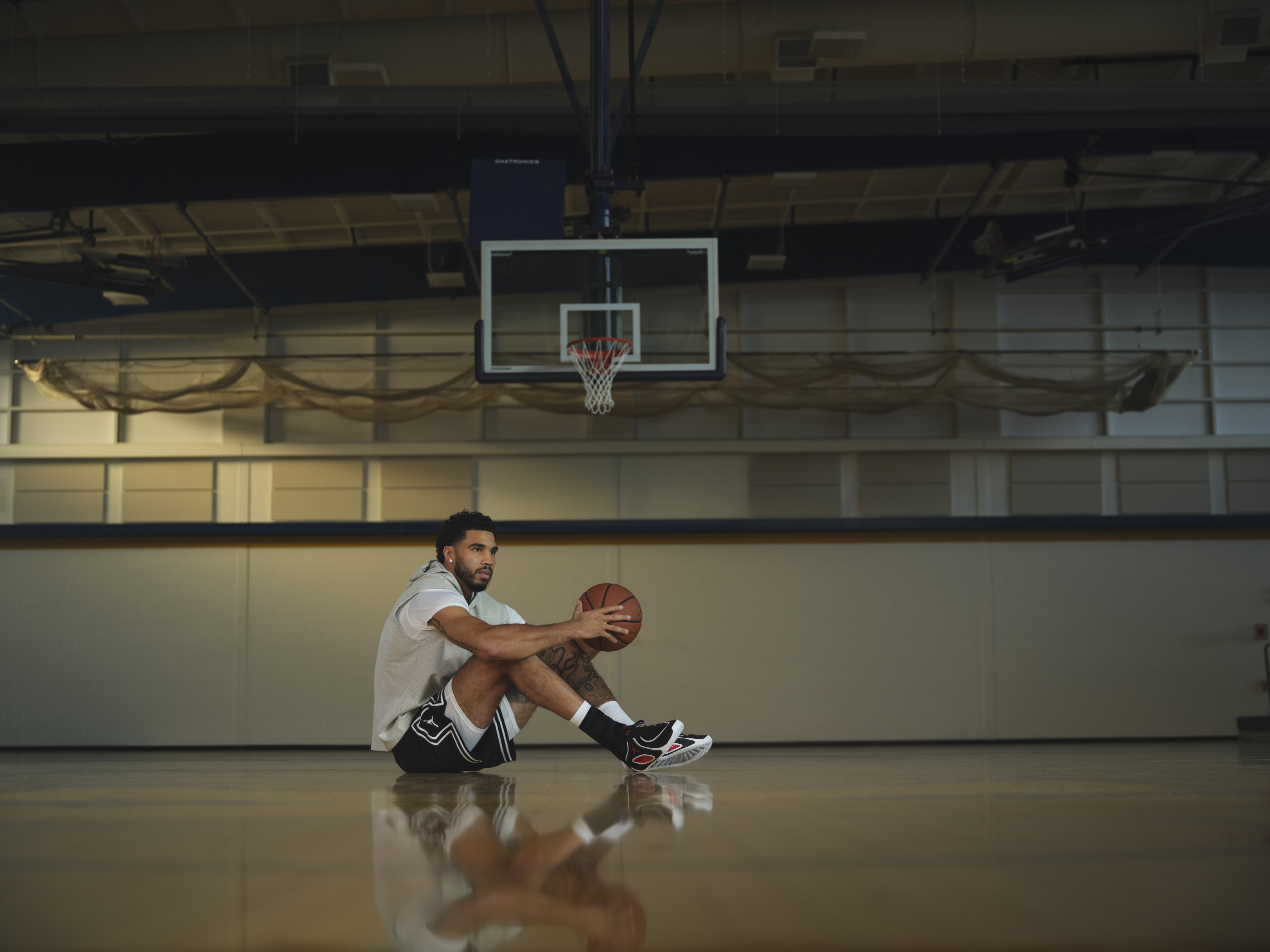
“I did a normal thing I’ve done a thousand times, and that one time, it all went wrong.”
That’s how Jayson Tatum describes the moment his Achilles tore last spring. It’s an injury that’s ended careers and derailed others for years, and it forced the Celtics star into a ten-month rebuild of his body and, by his own account, his mind. Black male athletes (or Black men in general) rarely get the space to admit they were scared. But if there’s anything that I learned about Tatum during our interview, it’s that honesty and vulnerability are his superpowers.
When we use the word “scared,” it’s worth remembering what he had to rebuild, not just physically. Tatum has been one of the league’s faces since Boston drafted him third overall in 2017. He’s made six All-Star teams, won a championship in 2024, and signed a five-year supermax extension worth $315 million, which, at the time, was the richest deal in NBA history. All of that history is what made the injury so jarring for anyone who’d followed his career.
Before we talked about any of that, though, I wanted to ask about home. I’d interviewed his mother, Brandy Cole, last year about the family’s homeownership initiative in St. Louis, and she told me her son thinks it’s the greatest city in the world, no question. So I asked Tatum whether that connection had shifted at all during a year this hard.
“I’ve been in Boston for nine years now, and the city has embraced me,” he said. “But it’s different when I go home. They’re proud of me because I’m from St. Louis. I could have gone to any college, any NBA team, and had the same career, and they’d be just as proud.” Fans there remember him as a sophomore in high school, watching him long before any of this was guaranteed. “It makes me feel really, really good, because I always wanted to put St. Louis on the map.”
The recovery is a different story, and one that most people watching him play these last nine years never actually saw up close. Surgery came first, and then months on crutches. That was a stretch of time when basketball wasn’t something his body would even let him consider, which was probably the most frustrating part. The comeback everyone saw took ten seconds of highlight footage, but what led up to it took months.
“I had to learn how to walk again,” he said, “let alone trust playing basketball, playing defense, reacting. I had to learn how to press on the gas again.” The injury messed with his head because the moment felt so ordinary. It would be different if it were something dramatic, but what he’d done, he’d done a thousand times before. “It’s like a nightmare you lived. Even when I came back to play, I was still nervous and anxious every single game, because I had that memory in my mind.”
Kobe Bryant is who he thought about most. Growing up, Tatum idolized Bryant, and the two built a real relationship before Bryant’s death. He rewatched footage of Bryant’s own Achilles recovery constantly in high school and college. This time around, he went back to it again, maybe a hundred more times.
“The one time we worked out together, the thing he asked me afterward was: How much does it mean to you? How much does winning a championship mean to you? How great are you willing to be? What are you willing to go through? What are you willing to give up?” That’s the part he remembers most. “Ten people can tell you the same message, but if it’s your favorite player, somebody you looked up to since your earliest memory, it lands different.”
Kobe’s question didn’t just live in Tatum’s head during workouts. It showed up on the nights rehab felt pointless. “It’s hard. There are tough moments. I cried a lot,” he told me. Some nights he’d leave rehab and call his grandmother, feeling like the work wasn’t adding up to anything. “Sometimes people can just feel what you’re going through, because they can’t fix it. You’ve got to go through the process. But having people to lean on, even if it doesn’t make it better in the moment, matters.”
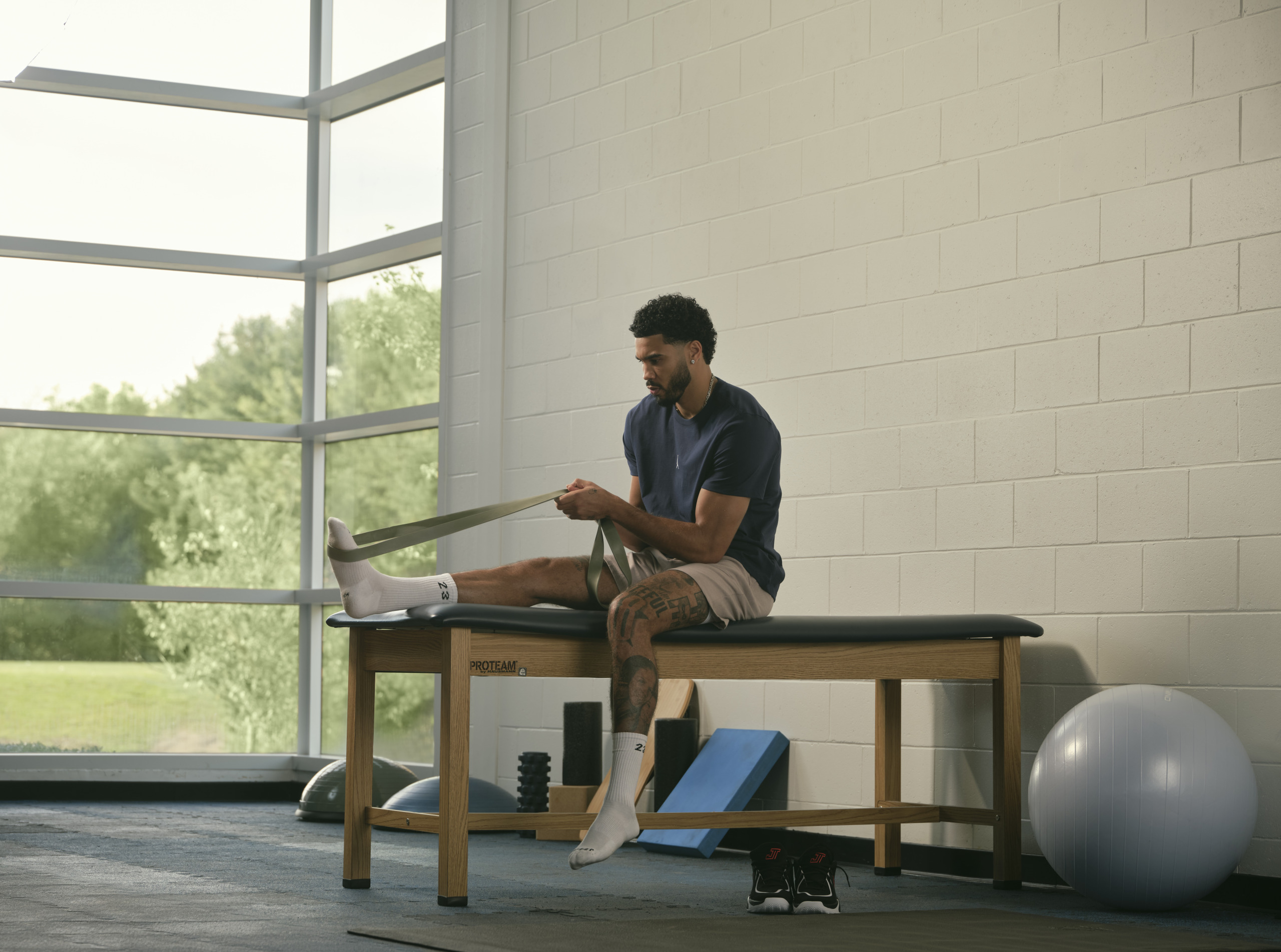
Managing the actual pain of recovery mattered just as much as managing everything else. “It was organic. This is something I actually went through,” he said. A rough first night on opioids after surgery left him nauseous and unwell. “I told my trainer I’d rather deal with the pain than the side effects.” Switching to Journavx, he said, gave him a way through recovery without those setbacks.
Medication only covered so much, though. When I asked who helped carry him through the year emotionally, and left the door open for him to name a person if he wanted to (cough, cough – his rumored partner, Ella Mai, whom he shares a son with), Tatum didn’t take the bait. He talked about his sons instead, especially his oldest, Deuce.
“Everything in his life has been peaches and cream. This was an opportunity for him to see his dad go through something that wasn’t so good, and to show him how to face adversity.” Fatherhood has changed how he approaches everything now, with two boys watching him. “I understand the platform I have. I’ve had so many people thank me for being vulnerable about what I went through. As long as I can reach one person, I did my job.”
That platform extends to the people he plays with every night, too. I asked him directly about leaning on Jaylen Brown, given how long the two had carried the Celtics together through a title and a Finals loss, and given the persistent rumors this offseason about tension between them. He didn’t address the rumors and kept his answer close to the team as a whole. “Being teammates with somebody for that long, I leaned on my teammates. I told them I was grateful for how they showed up every single day. It motivated me to get back on the court, because I wanted to feel like I was part of the team again.”
It’s not the first time Tatum has been asked about that relationship without saying much. Back in January, on The Pivot Podcast, he talked about the two of them going through “growing pains” over the years. He chalked it up to two guys close in age who both work hard and both want to win badly. Nine years into playing together, he still wasn’t naming specifics, then or now.
But whatever was or wasn’t happening between him and Brown, the roster around them kept moving. The Celtics had just agreed to a three-year deal with center Mitchell Robinson right before we got on the phone. Robinson is fresh off a championship with the Knicks, which is the same team that ended Boston’s season in the series where Tatum got hurt. I asked him what the addition meant for next year.
“Having someone who’s already won a championship, who I’ve played against for years, his presence on the defensive end, how athletic he is. Everyone’s excited.”
Neither of us knew it yet, but a few hours after we hung up, Boston traded Brown to the 76ers for Paul George, ending ten years of them playing together. Tatum had just told me he leaned on his teammates to get through the year, and by that night, the team he meant when he said it no longer existed in the same form.
But he’s already survived worse. And as the great prophet James Todd Smith, better known as LL Cool J, once put it, don’t call it a comeback. He’s been here for years.