The online book community is among one of the largest and most active communities the internet has seen across social platforms. No matter which platform you frequent it’s a good chance that you’ve encountered some book content. One of the most interesting aspects of book communities in digital spaces is that you can always find your people. Book-centered content began soaring during the Covid-19 pandemic era and has only continued to expand.
From authors to literary content creators, the internet has served as a reliable hub for connection. Even if you’re not a part of a book club in the in-person traditional sense, finding someone who is reading or has read your current read requires only a few strokes of a keyboard. And as welcoming and engaged as the community is, they’re also equally opinionated. The discourse may change from week to week, but the passion behind the dialogue remains constant.
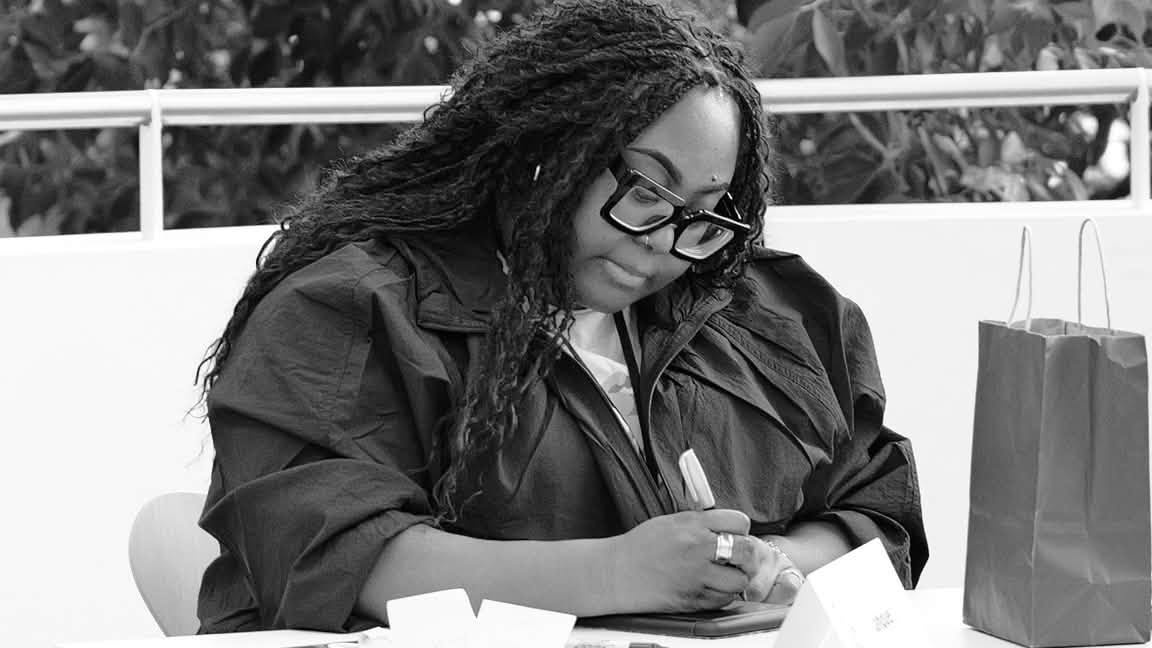
Among the many topics of discourse is the work of USA Today Bestselling urban fiction and romance author Jahquel J. In recent months, there isn’t a day that has gone by where she isn’t among the many topics of consumption for book lovers. Jahquel began her career as an urban fiction author in 2014, writing and publishing upwards of 40 plus books to date. Her most popular series Capone, initially published in 2024 and re-released through traditional publishing has upped the ante of the conversation and is transforming the overall impression of how many readers have traditionally viewed urban fiction. For most, when the topic of urban fiction is raised, even the most dedicated readers have put their noses up, limiting the genre as “ghetto” or “ridiculous”. But Jahquel’s knack for writing stories that compels readers from start to finish has led to a broader discussion about conventional opinions of the genre.
Jahquel has even received several nods from New York Times bestselling author and 2024 Power 100 honoree Kennedy Ryan, “Jahquel is a bold, bright voice in Black literature revolutionizing how so many readers consume and perceive urban fiction. What she has accomplished is nothing short of remarkable, and all while remaining absolutely true to herself and her voice. The rapport she has built with her rabid fanbase cannot be faked. Her authenticity is magnetic and we are only seeing the beginning of what she is capable of. Watch out, world!”
Yet, the ongoing consensus argues that urban fiction either perpetuates the worst parts of Black stereotypes or is wildly unrealistic — which isn’t completely untrue, but doesn’t consider the duality or nuance of it all. Yes, urban fiction can be wildly unrealistic, but who created the scale that decides what’s too far? Isn’t fiction allowed to be eccentric? Also, yes, many plots of urban fiction are based on the underground economy but consider this: doesn’t drug trafficking, money laundering, and a slew of other illegal activities happen in real life? We see it in the news cycle almost routinely and crime isn’t an exclusively Black concept. Crime is also not synonymous with Blackness.
To that Jahquel said, “How one person may write doesn’t speak for us as a whole. Some of us are literally building worlds [by] writing different things; romance, urban fiction, mafia romance, dark romance are the same thing in different zip codes.”
Jahquel is standing firmly on what she writes and it doesn’t appear that she’ll be slowing down for the foreseeable future. She’s slated to appear at the 2027 Black Romance Book Festival, has a traditionally published upcoming novel Weight For Me releasing in March of 2027, and she recently released part two of her Heart of A Goon series — which hit number one in the Kindle Store across four genres.
And if nothing else, we are in a historic literary crisis — as long as people are reading something, it is an act of resistance.