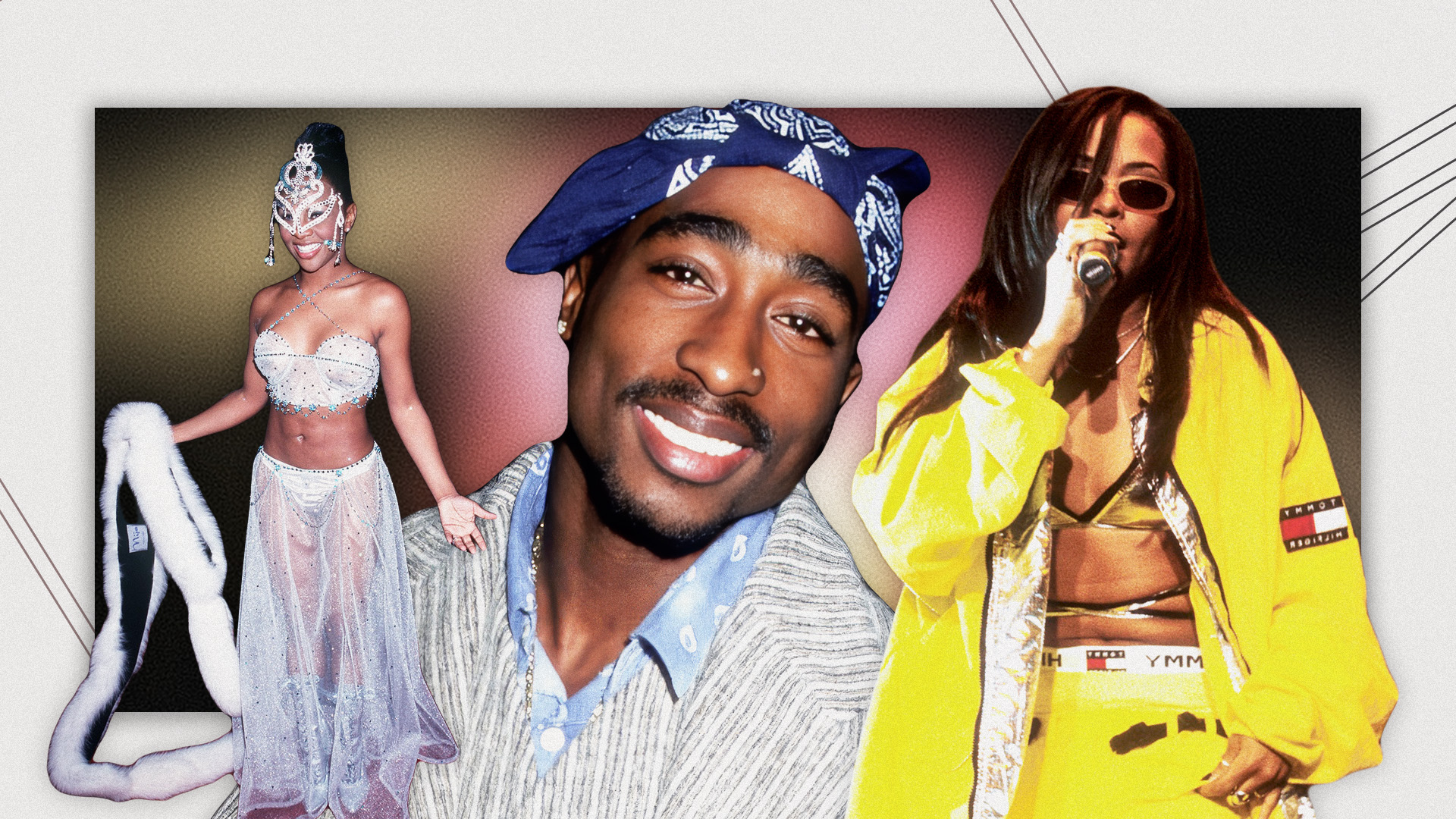
The 1990s gave fashion a vocabulary it still hasn’t stopped speaking. Baggy denim, baby tees, slip dresses, oversized leather, workwear, jerseys, varsity jackets, Timberlands, loafers, tracksuits, cropped tops, tiny sunglasses, visible underwear and barely-there dresses have all returned so many times that calling them trends almost misses the point. Look at a runway, a red carpet or what young people are wearing on the street right now and pieces of the decade are everywhere. The silhouettes may have been tweaked and the price tags have definitely gone up, but much of the blueprint remains familiar. And so much of what the fashion industry continues to pull from the ’90s was shaped, popularized or completely reimagined by Black people.
Before social media could send a look around the world in seconds, Black style traveled through music videos, television, movies, magazines, college campuses and, most importantly, each other. You saw something on BET or MTV, watched your favorite sitcom that night, picked up a magazine, went to the movies, then saw somebody at school, church or the mall wearing their version of it. By the time a trend reached your neighborhood, somebody had already remixed it. Style wasn’t dictated by one endless feed, which allowed New York to look like New York, Los Angeles to look like Los Angeles, Atlanta to look like Atlanta and Detroit to look like Detroit. We shared references, but we didn’t all look the same.
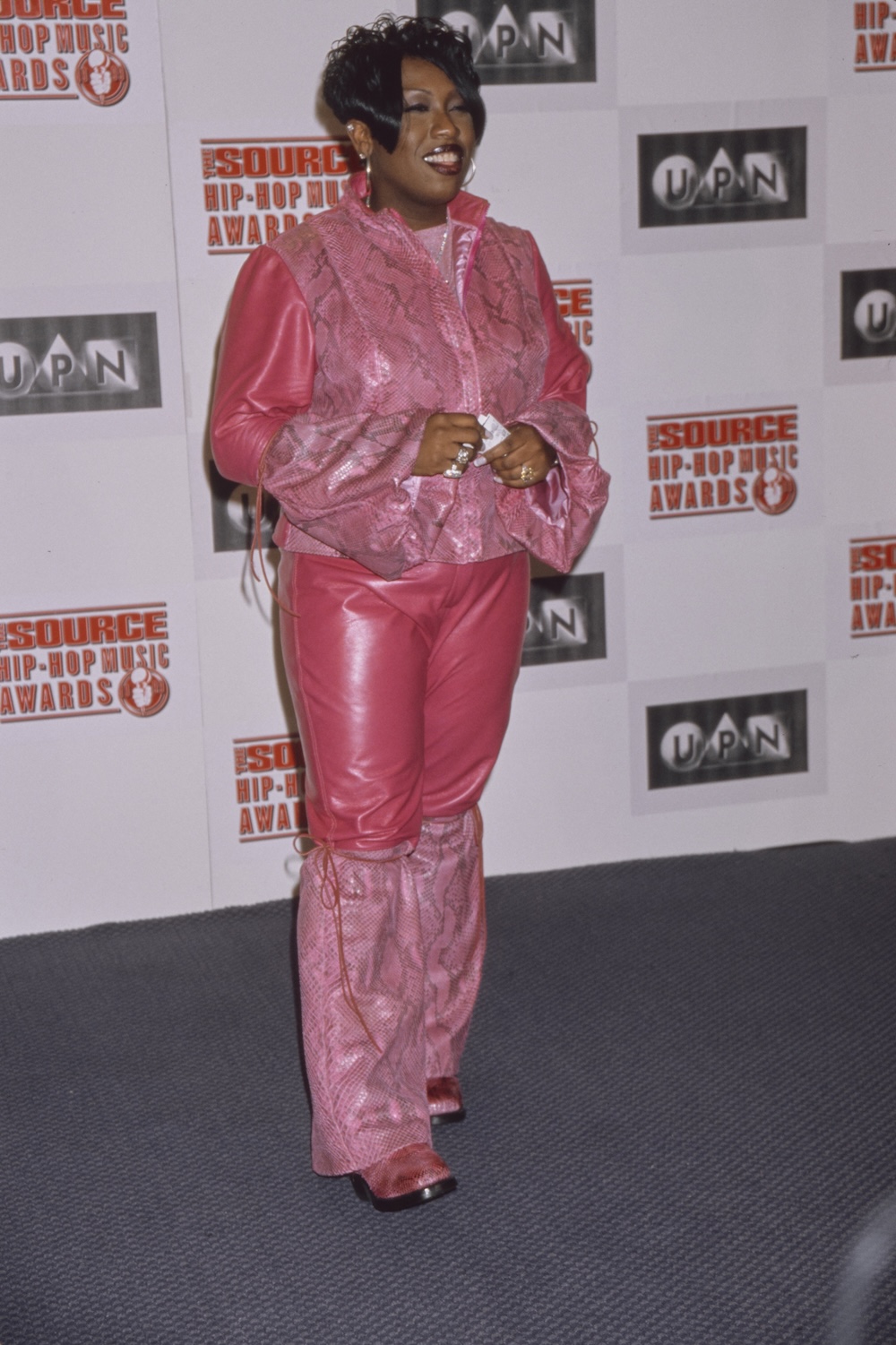
Music may have been the biggest runway of them all. Hip-hop and R&B artists weren’t simply making records during the ’90s; they were creating visual identities that became inseparable from the music. Queen Latifah, MC Lyte, Salt-N-Pepa, Da Brat, Lauryn Hill, Missy Elliott, Eve, Lil’ Kim and Foxy Brown gave Black women radically different ways to occupy space. You could be Afrocentric, tomboy, hyperfeminine, androgynous, glamorous, street, sexy or experimental. Sometimes you could move between all of those things before the album was over.
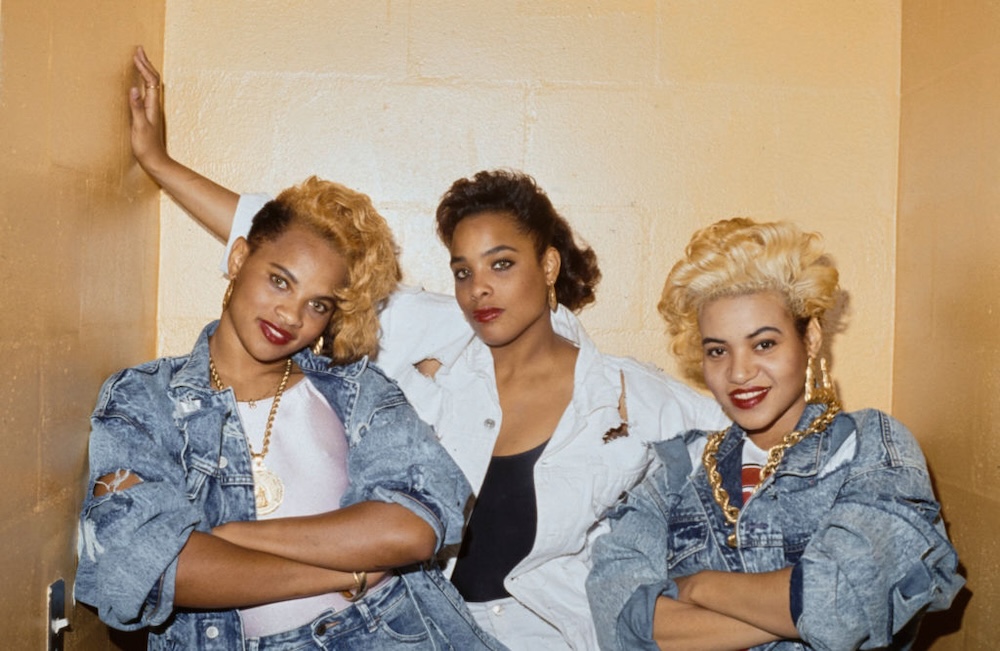
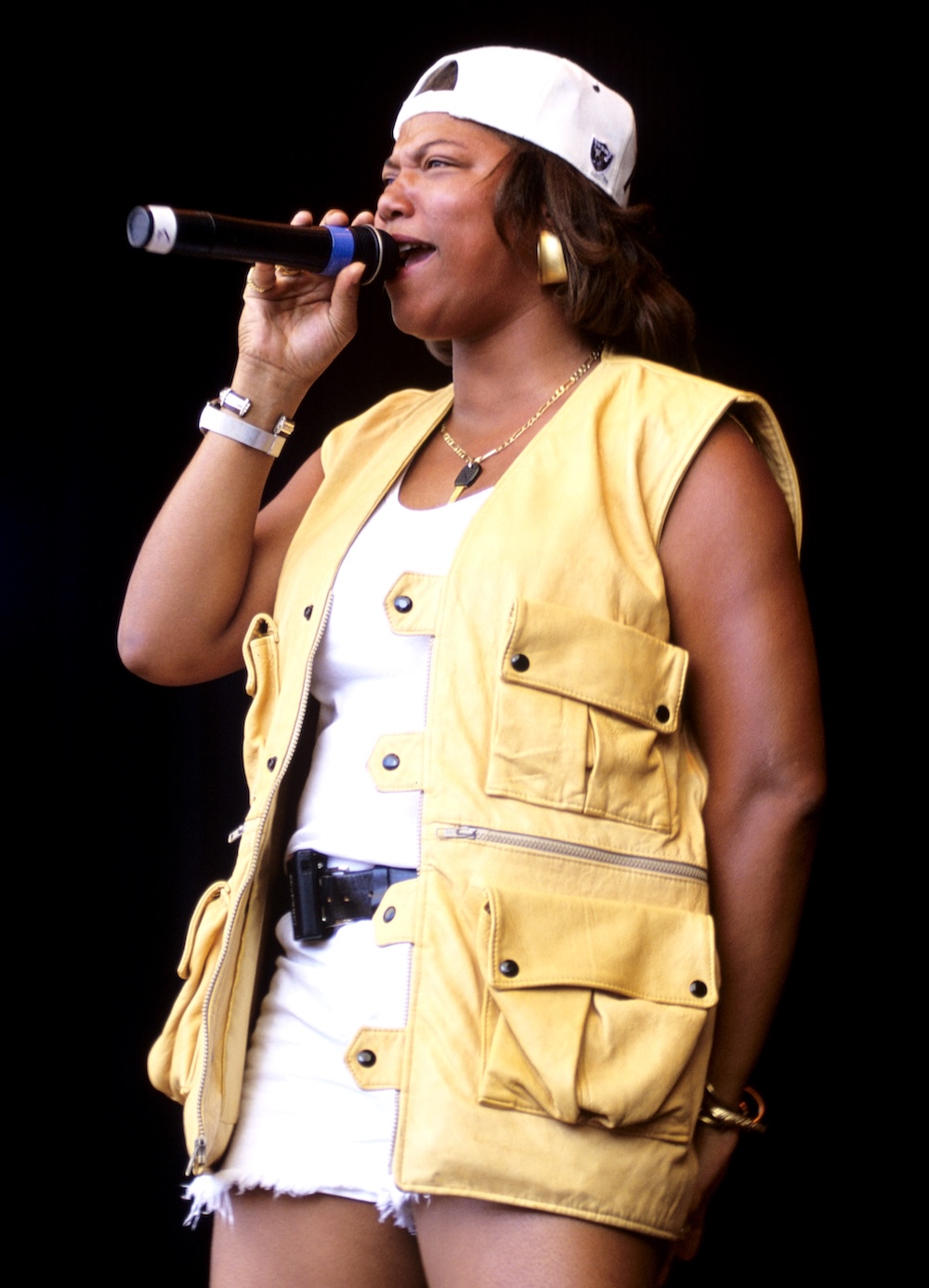
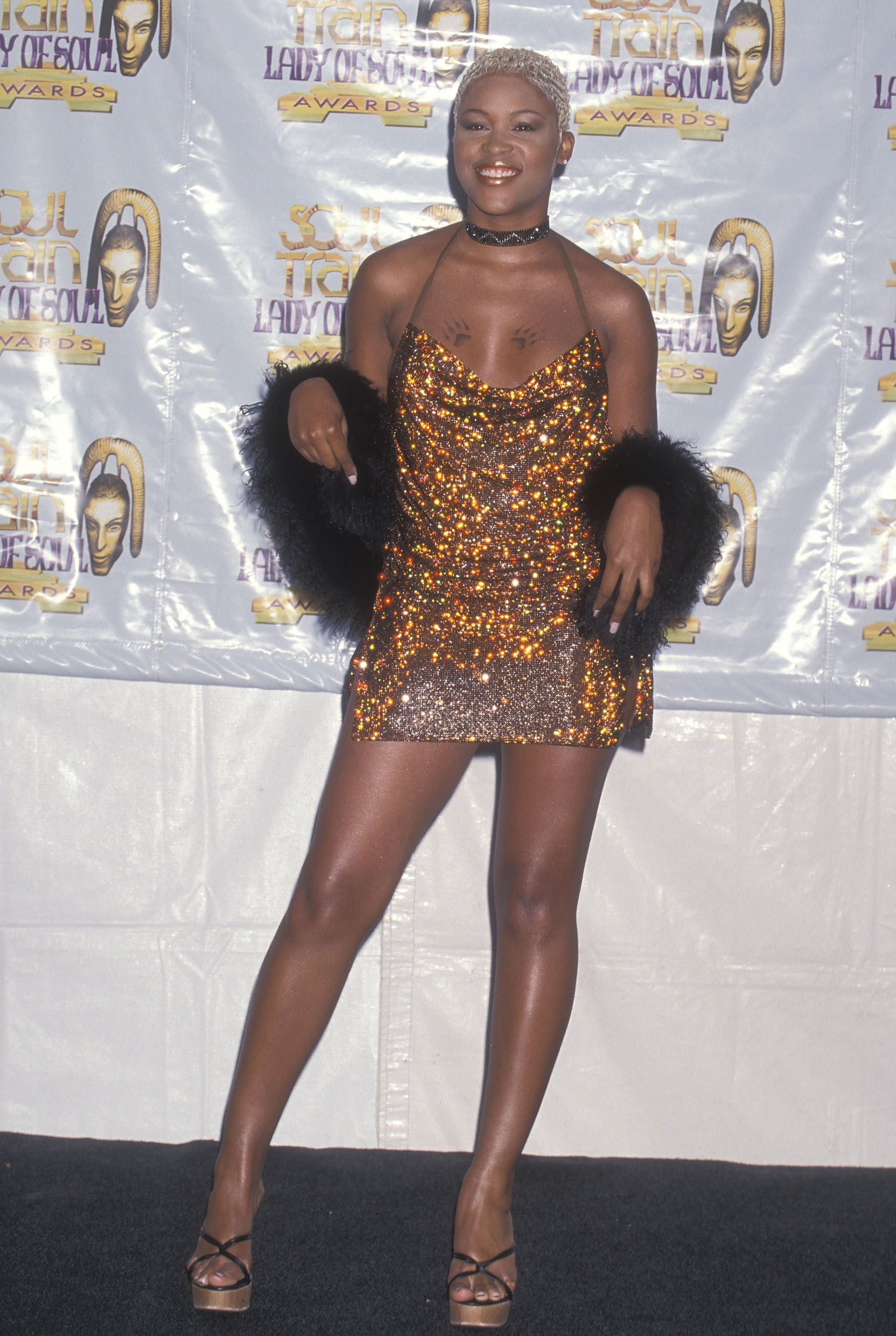
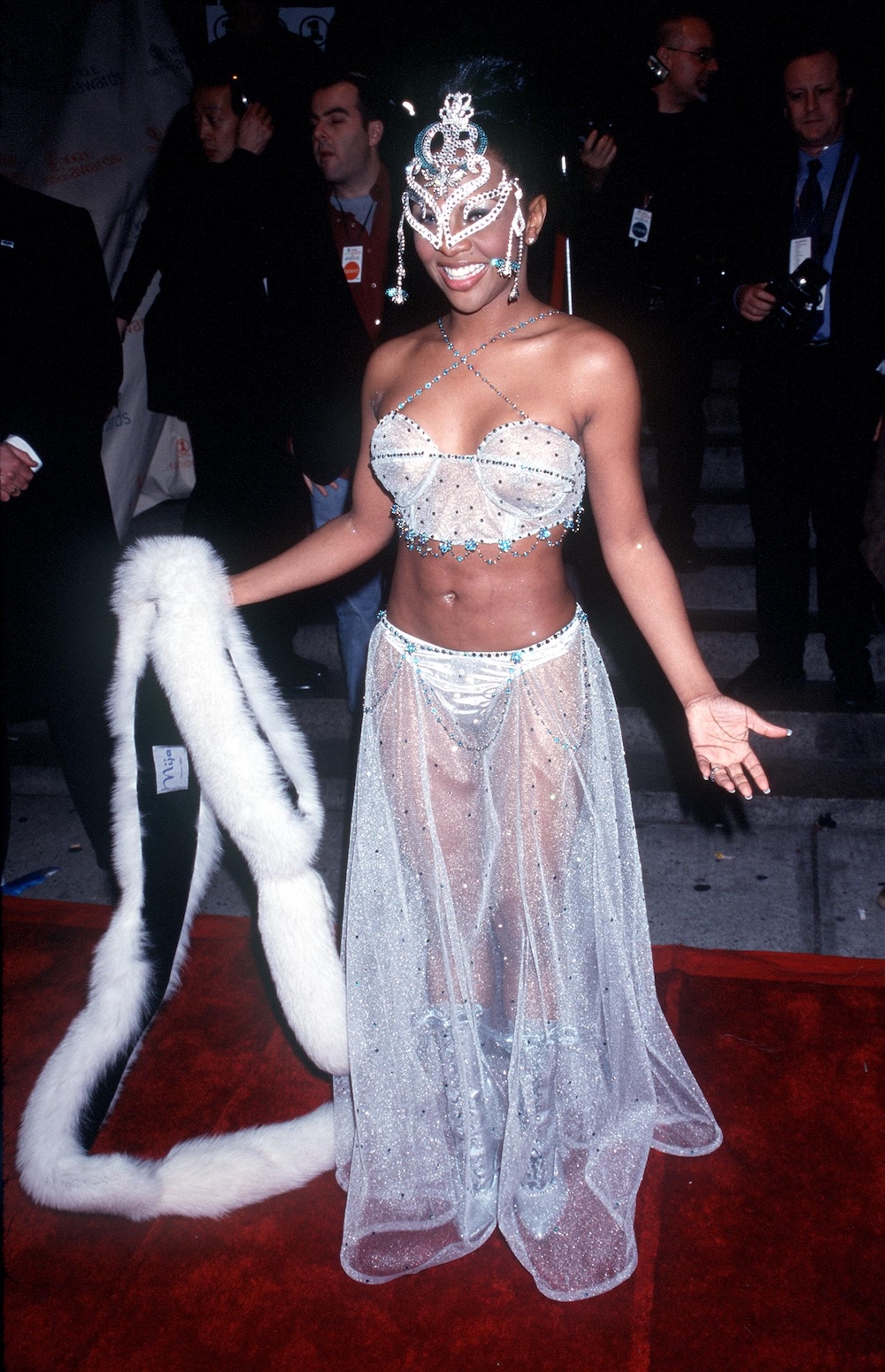
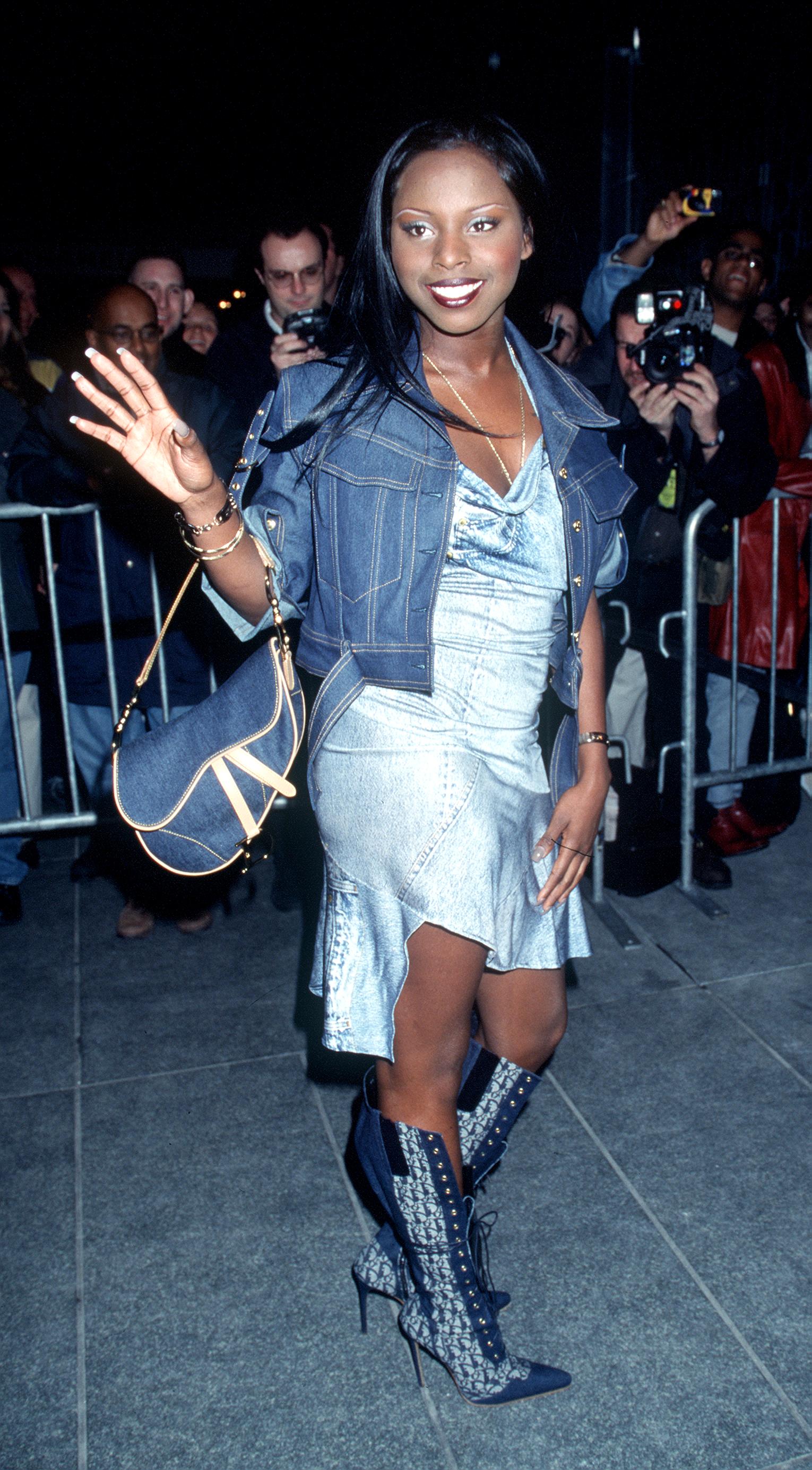
Lil’ Kim and Foxy Brown deserve particular credit because they expanded the visual possibilities available to women in hip-hop. Kim approached fashion like theater. Colorful wigs, furs, monograms, thigh-high boots, barely-there silhouettes and a fearless relationship with designer fashion weren’t accessories to her music; they helped construct the universe around it. Foxy offered another fantasy: dark-skinned, Brooklyn, West Indian, luxurious and entirely aware of her own beauty. Both women understood something fashion would eventually have to admit: Black women could be the luxury customer, the fantasy and the trendsetter simultaneously.
Behind some of those decade-defining images were Black stylists who deserve to be discussed as authors of fashion history. Misa Hylton’s work with artists including Lil’ Kim, Foxy Brown and Mary J. Blige helped establish the visual language we now recognize as ’90s hip-hop glamour, while June Ambrose approached styling cinematically, helping artists build complete worlds around their music. They weren’t simply pulling clothes. They were creating images that would outlive the videos, tours and albums they were originally made for.
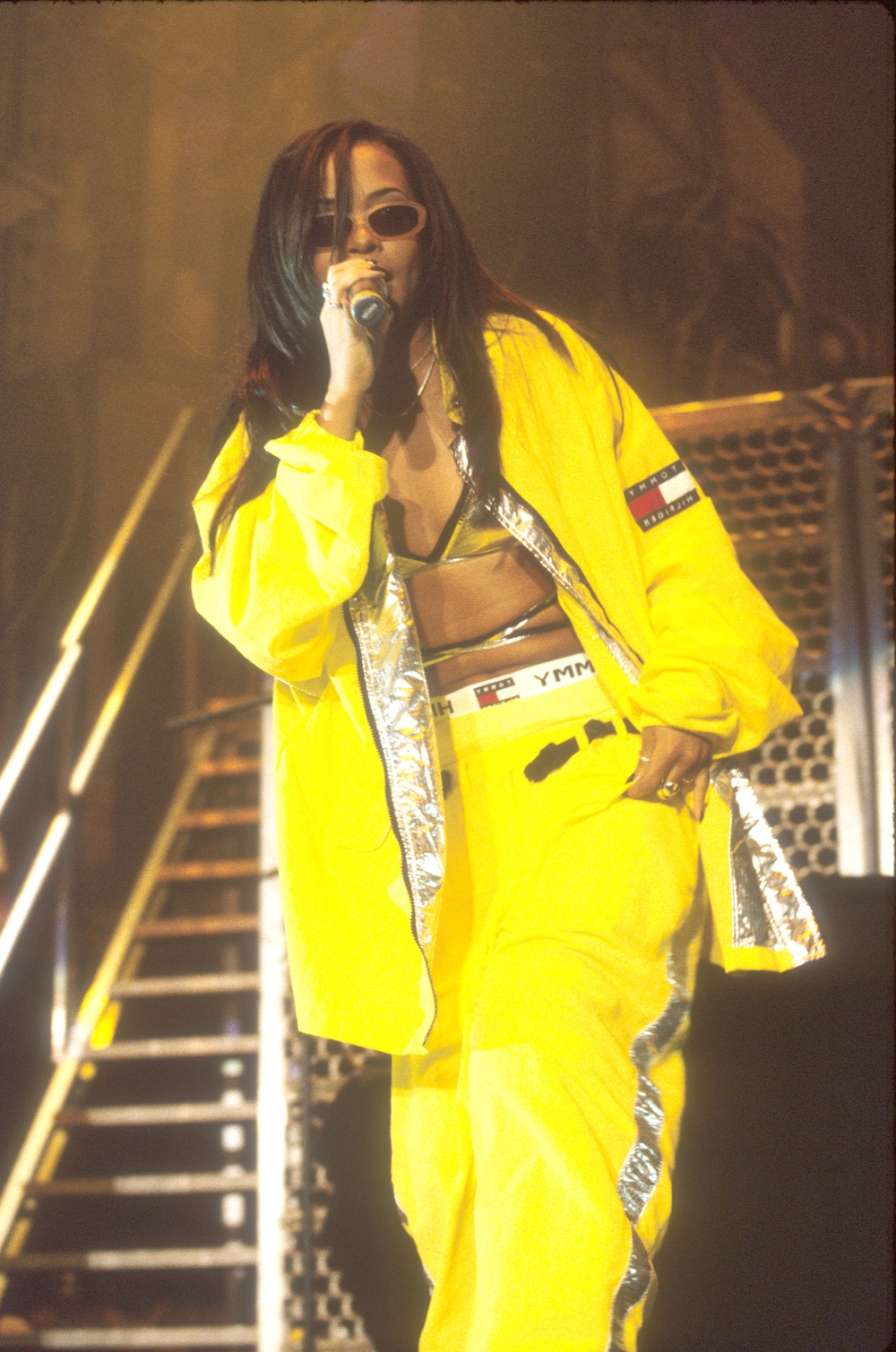
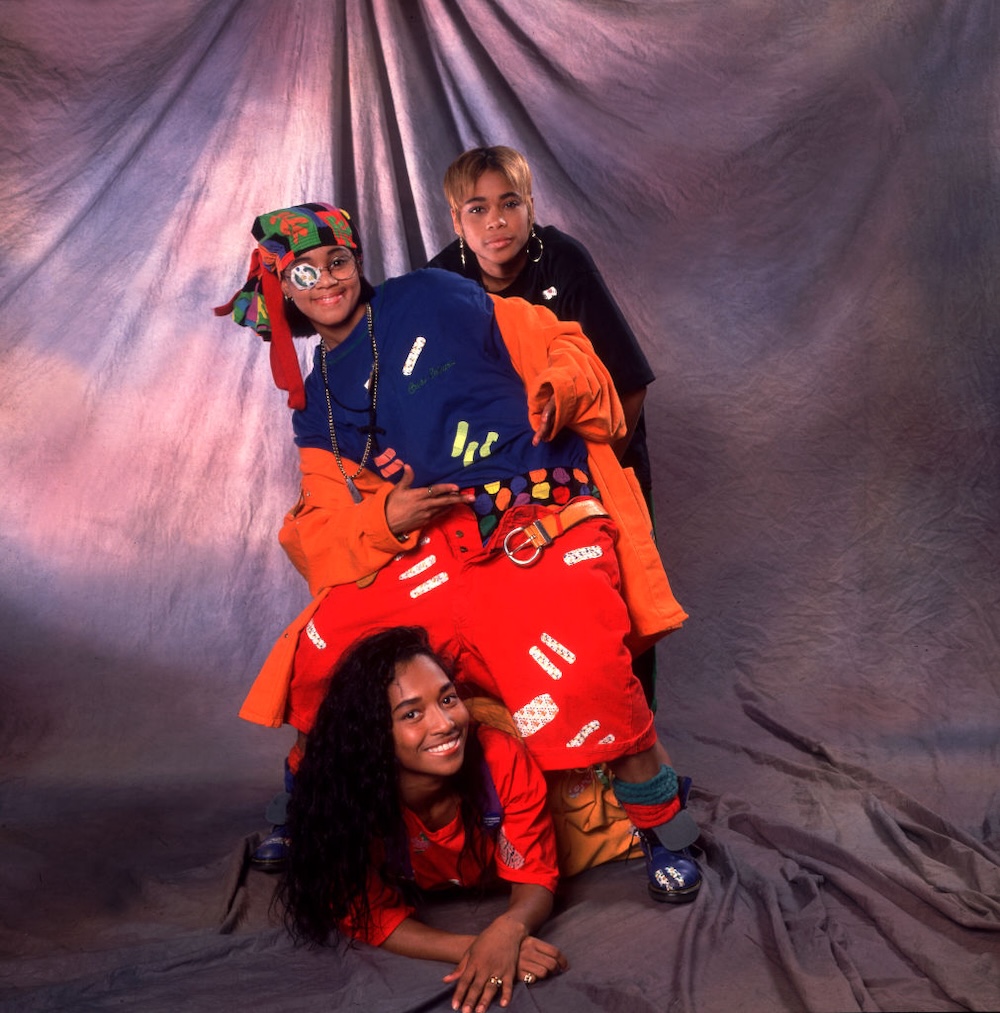
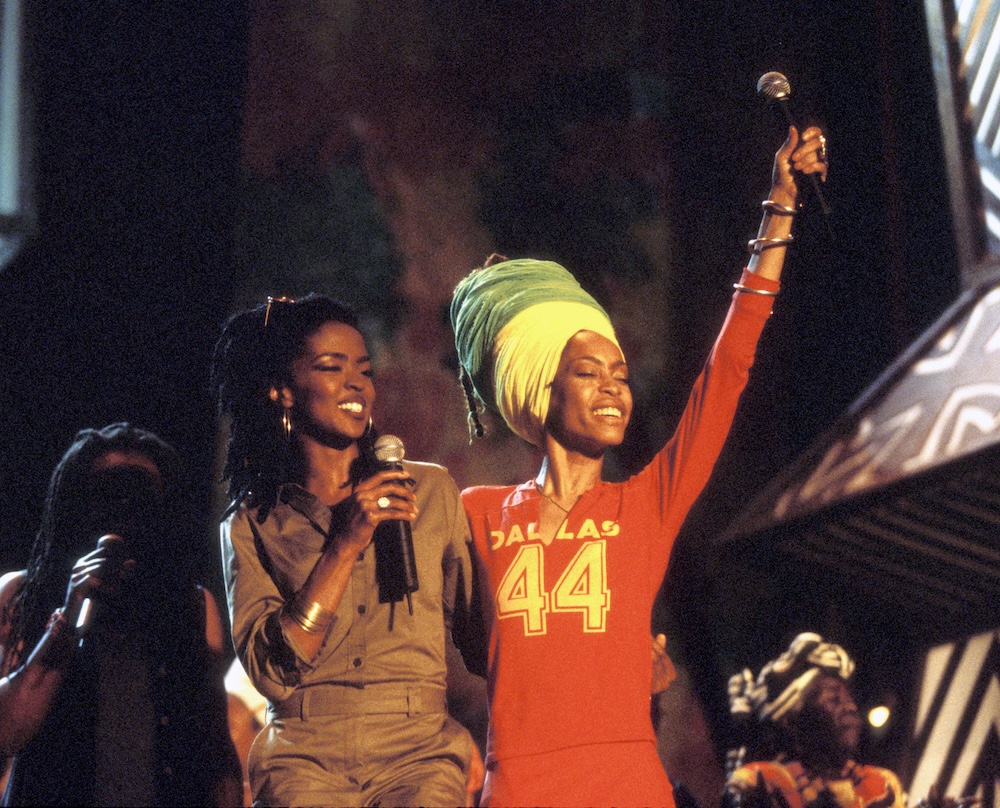
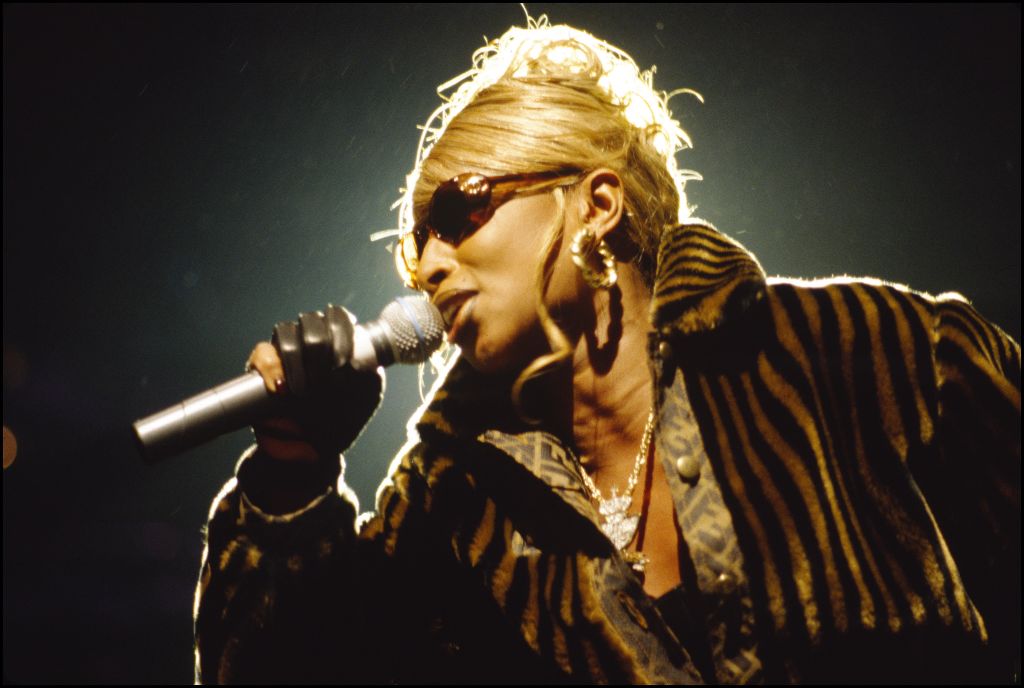
Aaliyah created another language entirely. Her oversized pants, tiny tops, dark sunglasses, bandanas and menswear-inspired silhouettes complicated the idea of what sexy was supposed to look like. TLC understood the power of that tension too, using baggy silhouettes, crop tops, color and coordinated dressing to make girl-group style feel rebellious instead of precious. Mary J. Blige gave us baseball caps, boots, leather, sunglasses, blonde hair and hip-hop soul glamour. Brandy made braids and youthful layering aspirational. Monica brought her own harder edge. Janet Jackson could move between military precision, streetwear and sensual minimalism. Missy Elliott treated fashion like special effects. And Erykah Badu’s towering headwraps, flowing layers, African-inspired jewelry and Afrocentric sensibility introduced another vision of Black womanhood that felt spiritual, Southern, intellectual and entirely her own.
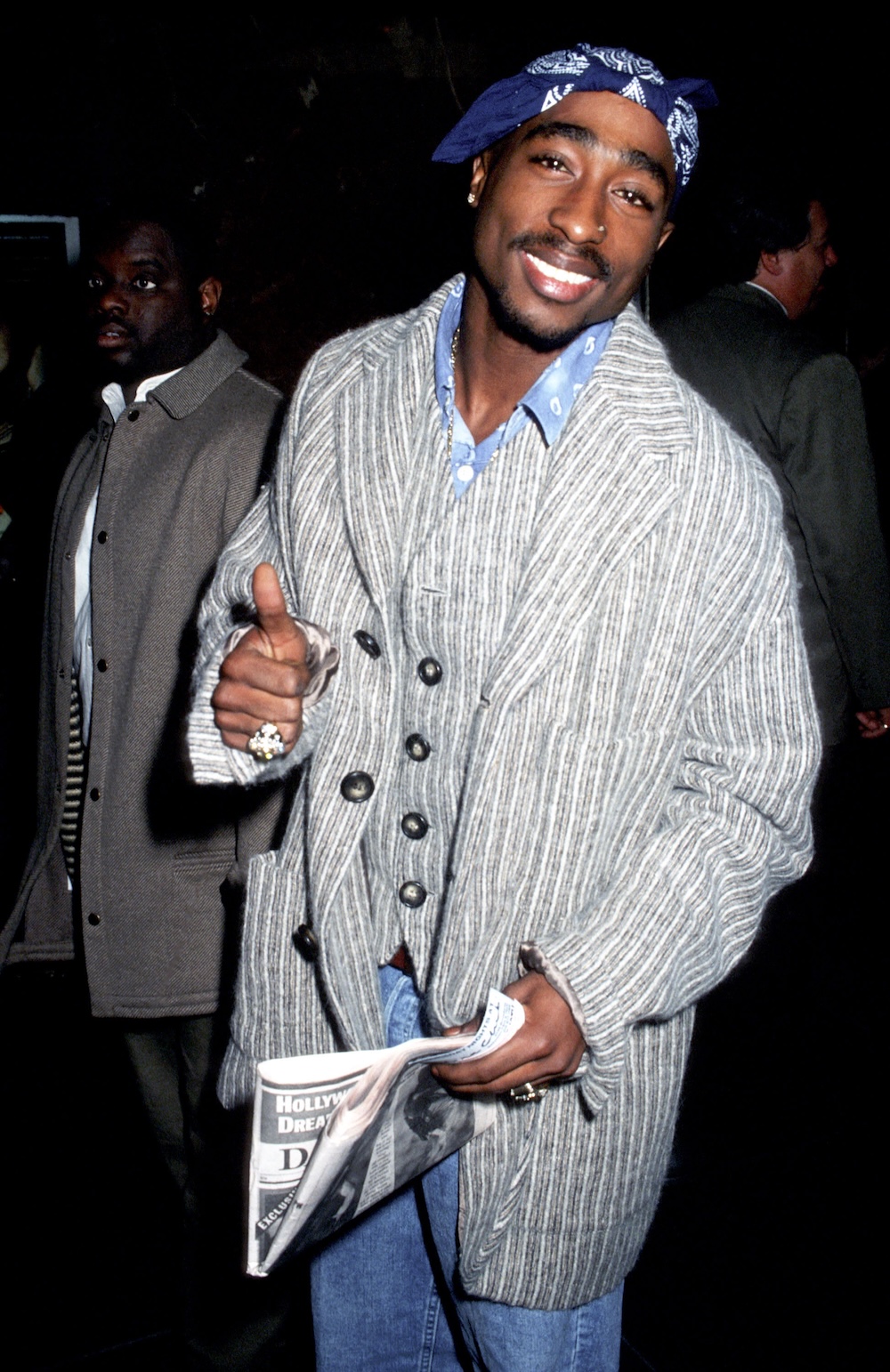
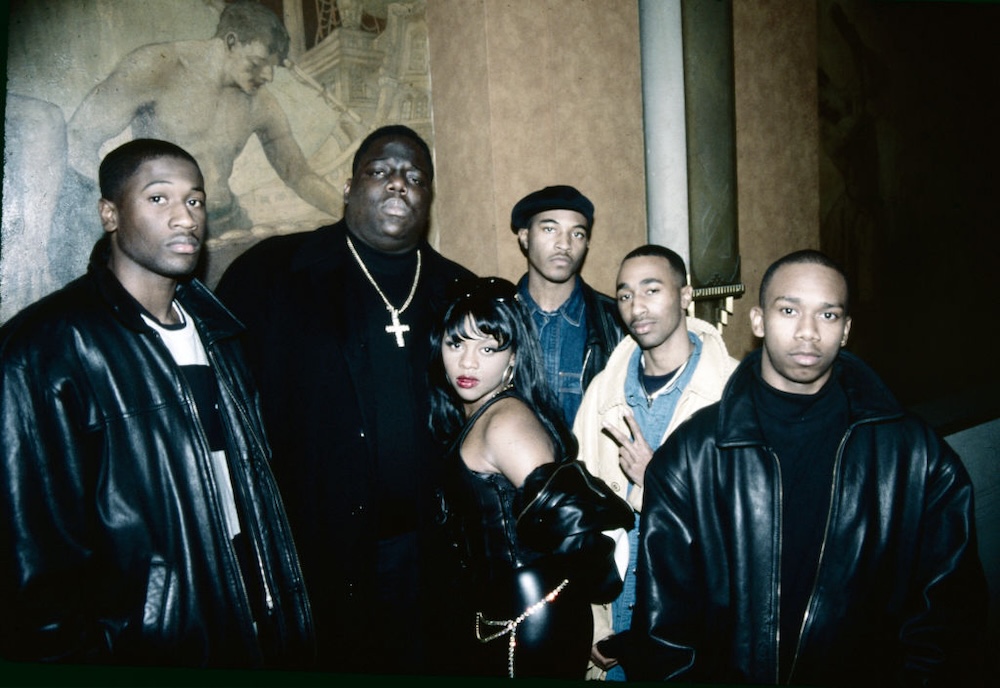
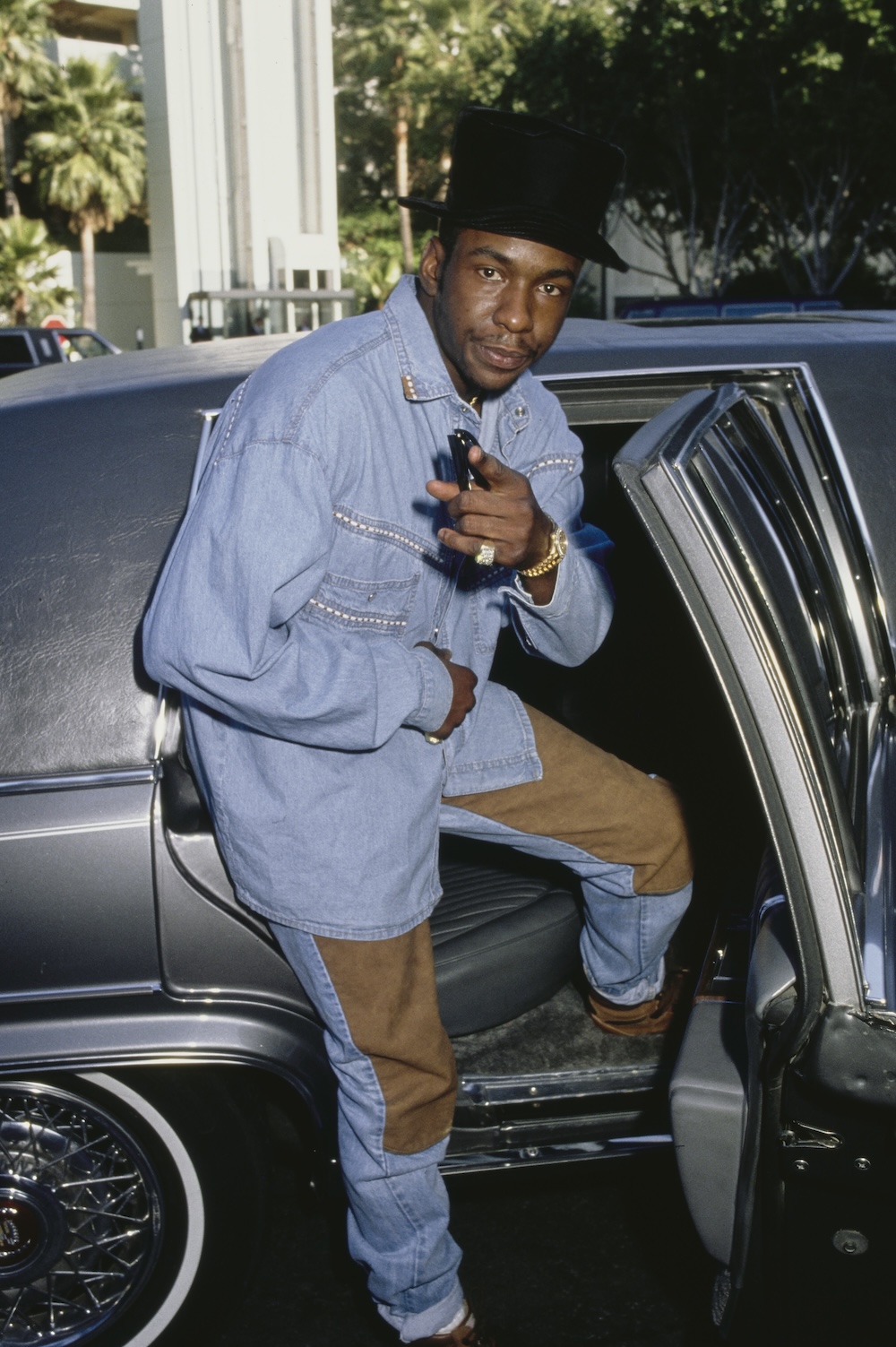
The men were just as influential and, at times, just as experimental. Biggie had his Coogi sweaters. LL Cool J had Kangols. Tupac had bandanas, vests and denim. Wu-Tang gave rugged workwear another cultural meaning. Busta Rhymes embraced color and exaggeration. André 3000 challenged expectations around what a Southern Black man could wear. Jodeci traded traditional R&B polish for combat boots, leather, baggy denim and an edge closer to hip-hop, while Boyz II Men, Bobby Brown, Usher, Ginuwine, Blackstreet, Dru Hill and 112 each offered another variation on Black masculinity and R&B style.
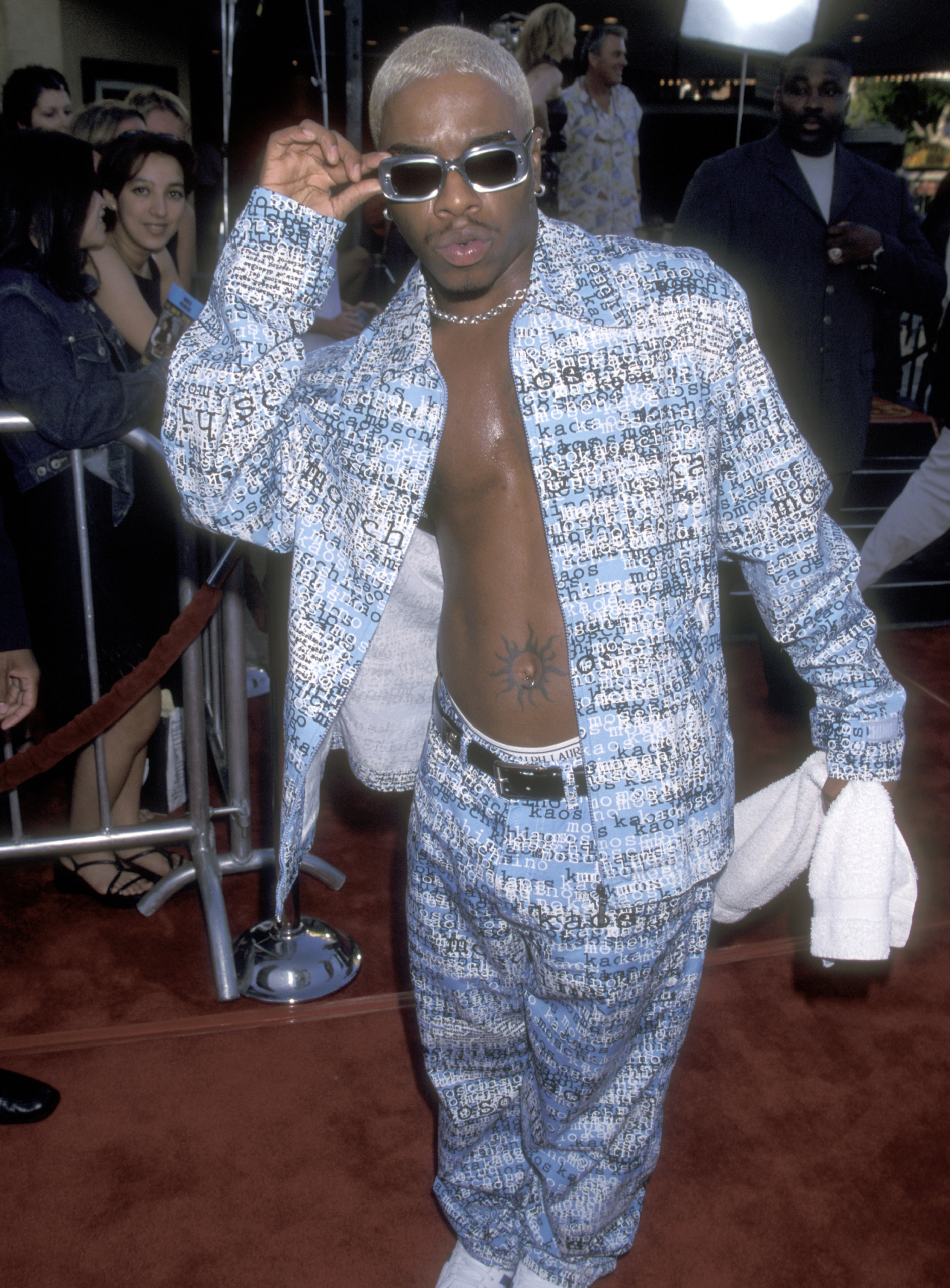
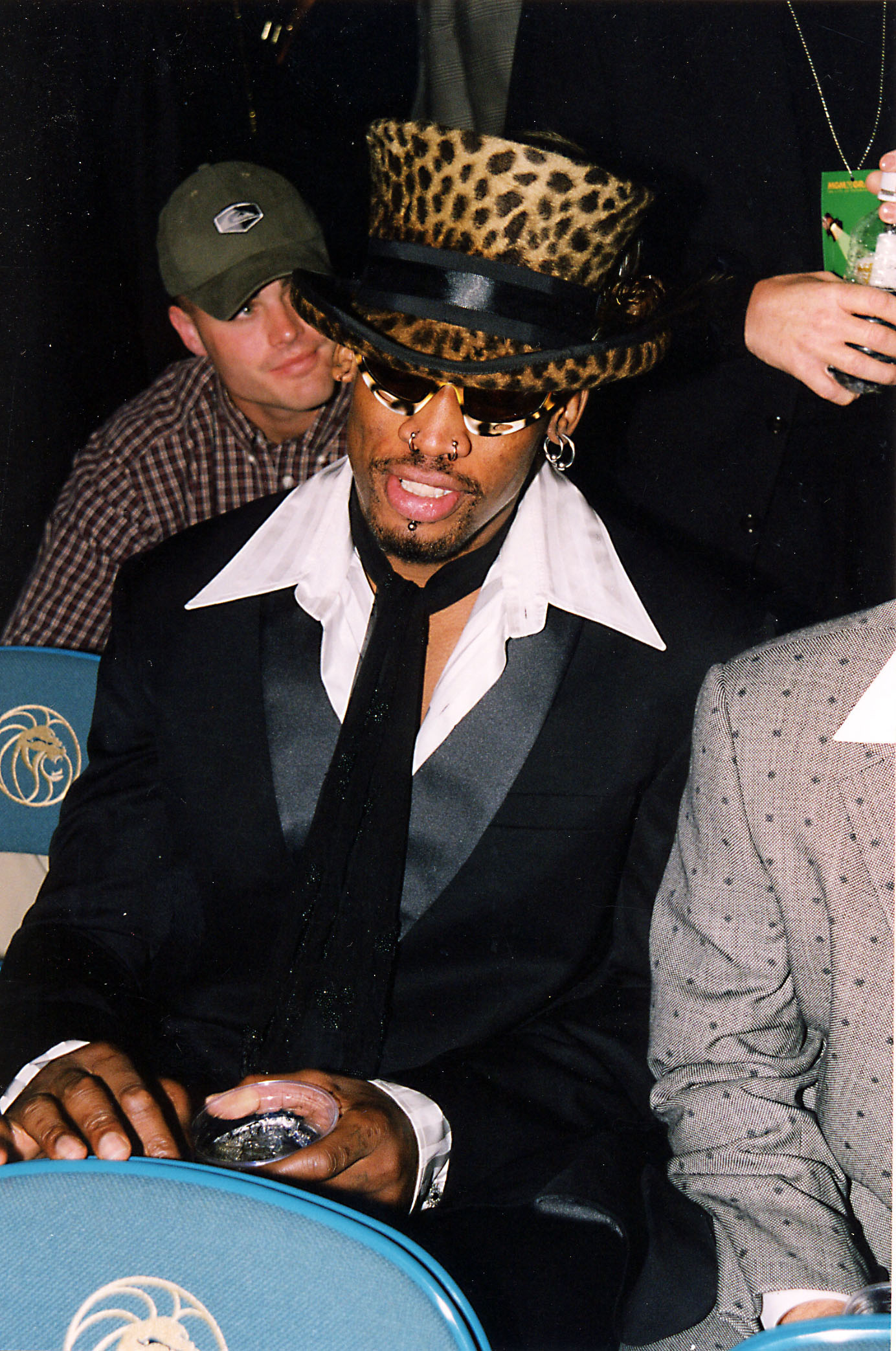
Then you had somebody like Sisqó, who entered toward the end of the decade looking like nobody else. The platinum hair, metallics, leather, sunglasses, jewelry, exposed chest and futuristic stage clothes made subtlety completely beside the point. Sisqó understood spectacle. So did Dennis Rodman, whose fashion legacy went far beyond basketball. Dyed hair, piercings, nail polish, crop tops, sheer pieces, leather, boas and gender-fluid dressing made Rodman one of the decade’s most fearless fashion figures. Long before conversations around genderless red-carpet dressing became commonplace, a 6-foot-7 Black NBA superstar was already showing up exactly how he wanted.
Television brought all of those possibilities into our homes every week and became one of the greatest archives of how Black people dressed during the decade. Will Smith deserves more fashion credit than nostalgia sometimes gives him because The Fresh Prince of Bel-Air used clothes almost like another character. His prints clashed, colors shouted, shorts were huge, hats were flipped and, yes, Will rocked cropped shirts. His wardrobe told you immediately that this kid from West Philadelphia had entered Bel-Air, but Bel-Air hadn’t swallowed him.
Across the Banks mansion stood Hilary Banks, one of television’s great Black fashion girls. Hilary didn’t apologize for loving clothes, shopping, money or herself. She was polished, feminine, spoiled, funny and sometimes gloriously out of touch. She belonged to a lineage of characters I like to think of as the unapologetically bad-and-bougie Black girl.
Whitley Gilbert walked so many of them could run. On A Different World, Whitley could be dramatic, Southern, privileged, romantic, materialistic and immaculately dressed. Her hats, suits, dresses, pearls and perfectly considered accessories made getting dressed feel ceremonial. Her Southern Black femininity was the point. Then came Hilary, followed by Dionne Davenport in Clueless, another impeccably dressed Black girl allowed to exist inside wealth, popularity and fashion without needing to justify her presence there. Dionne’s hats alone deserve their own retrospective. Whitley, Hilary and Dionne showed us Black girls who were fabulous because being fabulous was simply part of who they were.
Moesha gave teenage Black girls another closet to pull from. Moesha Mitchell’s braids became iconic, but her wardrobe mattered too: baby tees, denim, overalls, skirts, sneakers, boots and layered pieces captured the everyday style of a Black teenage girl in Los Angeles without making her look like an adult. Niecy Jackson had her own personality and style, giving the show’s friend group another version of young Black fashion, but Kim Parker regularly took things somewhere else entirely. Kim loved color, prints, minis, coordinated sets, statement accessories and silhouettes that demanded attention. The show played jokes around Kim’s body and size that read very differently today, especially considering how ordinary her body would be viewed outside the narrow beauty standards television imposed at the time. Yet Kim never dressed like she wanted to disappear. If anything, her clothes insisted on the opposite. Countess Vaughn made Kim’s confidence part of the look.
Martin offered another view of young Black style, this time through Detroit. Martin Payne lived in oversized jerseys, sportswear, denim, leather and sneakers, while Gina Waters and Pam James gave us two completely different approaches to Black women’s fashion. Gina was the polished career girl whose wardrobe could move from the office to a night out. She loved fitted silhouettes, minis, coordinated sets, great jackets and heels. Pam was bolder and more playful, with body-conscious dresses, crop tops, denim, prints, boots and statement pieces that matched Tichina Arnold’s larger-than-life energy. Gina wasn’t Pam, and that was the point. Both were fly.
And honestly, Sheneneh Jenkins was fly too. She was intentionally exaggerated because that was the comedy, but the hair, long nails, hoops, denim, leggings, bold colors, cropped pieces and unapologetic accessorizing reflected a very real Black beauty and street-style language. Some of the aesthetics played for laughs through characters like Sheneneh would eventually be stripped of their original context, repackaged and celebrated by mainstream fashion years later.
Living Single gave us yet another set of fashion personalities. Régine Hunter was fashion with a capital F. The wigs changed, the silhouettes changed and the accessories changed because Régine understood that getting dressed was part of the performance of being Régine. Maxine Shaw’s tailoring, suits, blazers and trousers reflected a woman who was ambitious, sharp and entirely comfortable taking up space. Khadijah James’ oversized denim, jerseys, boots and sweatshirts reflected a more relaxed Brooklyn sensibility, while Synclaire could be playful, quirky and feminine.
Even Kyle Barker deserves another look. Long before “metrosexual” became part of the mainstream vocabulary, Kyle represented a Black man who cared deeply about grooming, tailoring, fabric and presentation. His suits were sharp, his hair was intentional and his vanity was part of his character without his interest in fashion making him any less of a Black leading man. Put Régine and Kyle in the same room and you had two people who understood that getting dressed was serious business.
Movies widened the fantasy even further. Boyz n the Hood, Poetic Justice, Juice, Boomerang, Waiting to Exhale, Love Jones, The Best Man and Clueless captured everything from West Coast streetwear to Black corporate glamour, bohemian cool and polished young professionals. Janet Jackson’s box braids and cropped tops in Poetic Justice became inseparable from the decade’s visual memory, while Boomerang showed us Black people in beautifully tailored corporate environments and Love Jones made the Black creative class look impossibly cool.
And then there was B.A.P.S.
Nisi and Mickey weren’t interested in quiet luxury, and thank God for that. Halle Berry and Natalie Desselle-Reid gave us towering hair, gold, rhinestones, bright colors, body-conscious silhouettes, exaggerated accessories and nail art with an unapologetic excess that understood fashion could be funny, glamorous and fantastical at the same time. The looks were intentionally over-the-top, but like Sheneneh, some of what was coded as “too much” on Black women in the ’90s looks surprisingly familiar now. Long nails, maximalist jewelry, elaborate hair, body-conscious clothes and an unapologetic appetite for glamour didn’t disappear. Fashion eventually changed its relationship to them.
All of those images eventually met on the HBCU campus. Howard, Hampton, Spelman, Morehouse, Clark Atlanta, Florida A&M, North Carolina A&T and countless other historically Black colleges became meeting grounds for Black style from across the country. A student could arrive from Los Angeles wearing one thing, meet a roommate from Detroit wearing something completely different, then go to a party with kids from Atlanta, Brooklyn, New Orleans, Chicago, Houston and D.C. Everybody brought a piece of home with them. Campus became an exchange, and homecoming became a runway long before we started calling it one.
HBCU style could be collegiate and preppy one moment and deeply street the next. School sweatshirts, varsity jackets, Greek paraphernalia, denim, jerseys, loafers, sneakers, pleated skirts, suits and branded tees communicated where you belonged. Those clothes also traveled. Students brought them home during holidays and summer breaks. Younger siblings borrowed them. Artists wore them. Television characters wore them. Then somebody in another city saw the look and made it their own. HBCUs weren’t operating outside popular culture. They were helping circulate it.
You could see that casually on Living Single, where Khadijah wore HBCU sweatshirts as naturally as she wore her oversized denim, jerseys and boots. Nothing stopped so the audience could receive a lesson about historically Black colleges. The sweatshirt simply existed because HBCUs existed naturally within the world these characters inhabited. That visibility quietly communicated community, pride, aspiration and belonging.

The regional differences feeding those campuses mattered too. New York gave us puffy coats, oversized leather, denim, hoodies, jerseys, fitted caps and Timberlands, while artists from Wu-Tang Clan and Nas to Biggie, DMX, LL Cool J, Busta Rhymes and Mobb Deep broadcast variations of East Coast style around the world. Detroit and Chicago developed their own relationships with leather, fur, sportswear, denim and outerwear. On the West Coast, crisp white tees, Dickies, khakis, flannels, work jackets, Converse and Nike Cortez sneakers existed alongside Versace, leather, jewelry and Hollywood glamour.
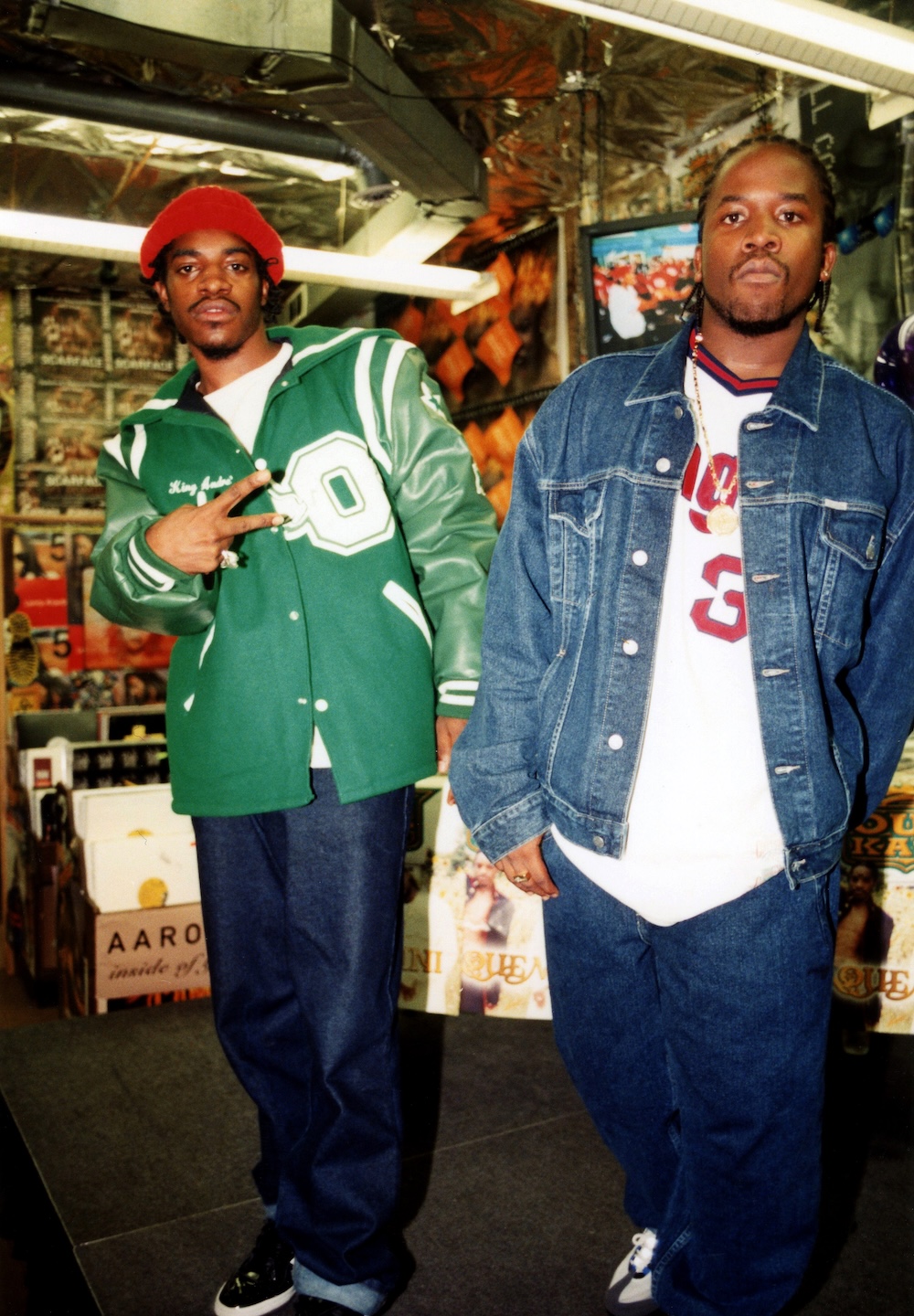
The South deserves far more credit in this conversation than it usually receives. Atlanta, Houston, New Orleans, Memphis, Dallas and Miami weren’t waiting for New York to tell them how to dress. OutKast alone demonstrated how impossible Southern style was to reduce to one uniform. André 3000 could push color, prints, wigs and silhouettes while Big Boi delivered an entirely different Atlanta swagger through denim, jerseys, jewelry and sportswear. Goodie Mob and Arrested Development offered other versions of Southern Blackness. Houston had the Geto Boys and UGK. Memphis had 8Ball & MJG and Three 6 Mafia. New Orleans had No Limit before Cash Money, Juvenile, B.G. and the Hot Boys helped close the decade with another unmistakably Southern visual language. Dallas gave us Erykah Badu. The South wasn’t following hip-hop fashion. The South was helping define it.
But perhaps the most important people in this entire story are the ones whose names we’ll never know. The fly girl at school with the perfect box braids. The guy who knew exactly how his jeans should stack over his Timberlands. The auntie who wore Donna Karan to church. The uncle with the leather coat that nearly touched the floor. The cousin who came home from Howard for Thanksgiving wearing something nobody in your hometown had seen yet. The barber. The beautician. The girl working at the mall. The guy behind the counter at the record store. Before every outfit needed to be photographed, tagged, linked and monetized, style simply existed in the world.
Maybe that’s what we’re actually nostalgic for: not simply the clothes, but the way clothes traveled before the algorithm flattened regional style into one endless feed. New York could look like New York. Atlanta could look like Atlanta. Houston could look like Houston. Los Angeles could look like Los Angeles. Detroit could look like Detroit. New Orleans could look like New Orleans. Music, television, movies, HBCUs and the people on our own blocks allowed those worlds to collide without making them all look the same.
Three decades later, fashion is still mining that archive. The oversized leather jacket, baby tee, baggy jean, loafer, varsity jacket, workwear coat, slip dress, Timberland boot, headscarf, fitted cap, cropped shirt and tracksuit keep returning because the ’90s produced more than trends. The decade produced characters, attitudes, regional dialects and entirely new ways of moving through the world.
So much of that language was written by Black people. We wore luxury before luxury fully understood what to do with us. We made workwear fashionable without needing it renamed. Black women made sexuality luxurious on their own terms. Black men played with color, proportion, jewelry, tailoring, femininity and flamboyance. Stylists like Misa Hylton and June Ambrose created images the fashion industry is still referencing. HBCU students turned campuses into cultural exchanges. Southern artists created visual codes that didn’t require New York’s approval. Television gave us Whitley, Hilary, Dionne, Moesha, Kim, Niecy, Régine, Max, Khadijah, Gina, Pam, Kyle, Will and, yes, Sheneneh. Music gave us Aaliyah, Mary, Kim, Foxy, Missy, TLC, Lauryn, Badu, Janet, OutKast, Tupac, Biggie and an entire generation of artists who understood that the image was part of the record.
Fashion may keep bringing the ’90s back, but Black culture never really put them away. The silhouettes have changed. The price tags certainly have. The runway eventually caught up, but the blueprint remains remarkably familiar.
We’ve seen these clothes before. We just called them ours.