
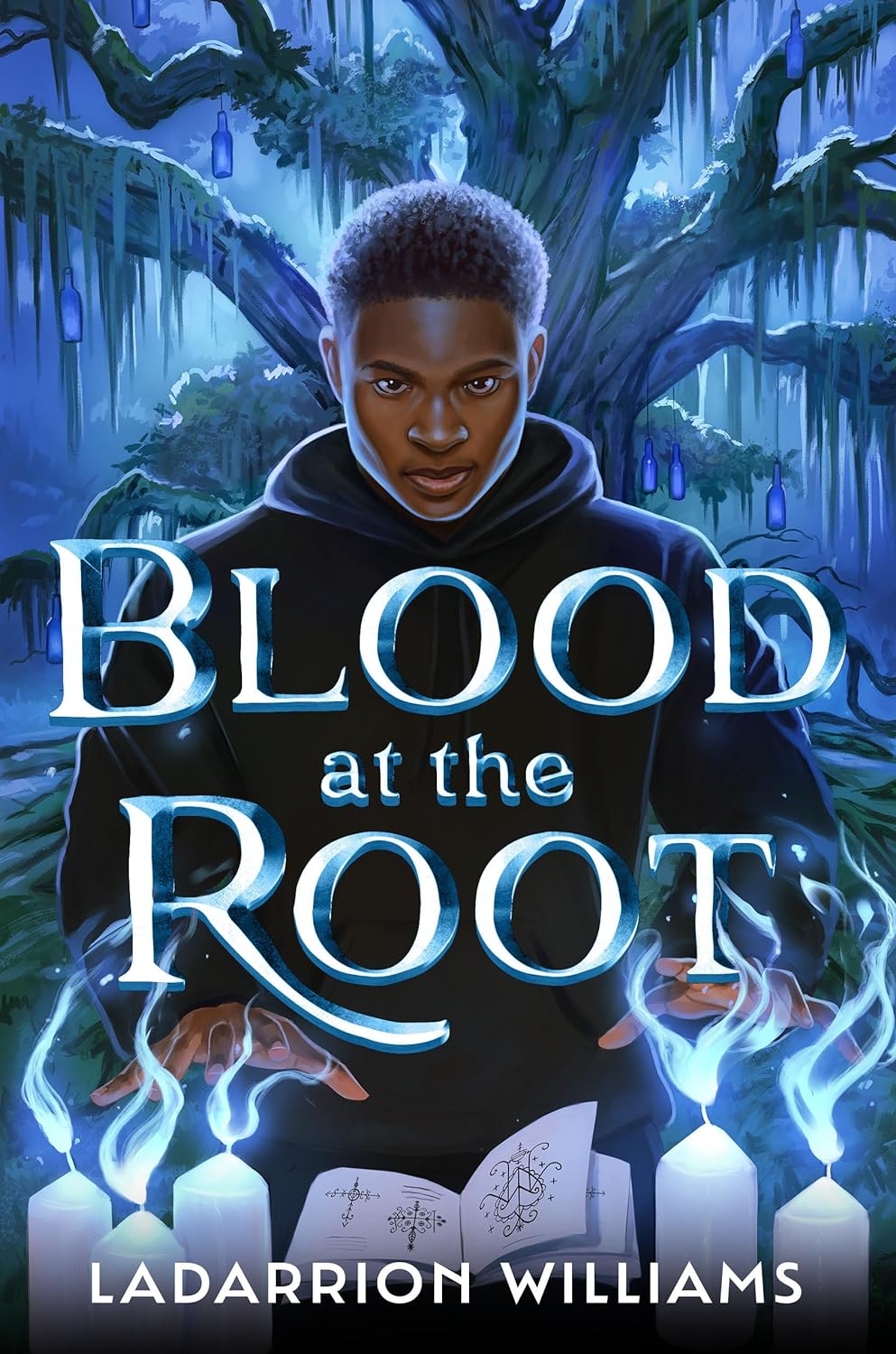
LaDarrion Williams has conjured a mystical HBCU world in his Blood at the Root trilogy. With his play Coco Queens, the author and playwright invites audiences into another kind of sanctuary: a Southern beauty salon where Black women share their lives, triumphs and tribulations.
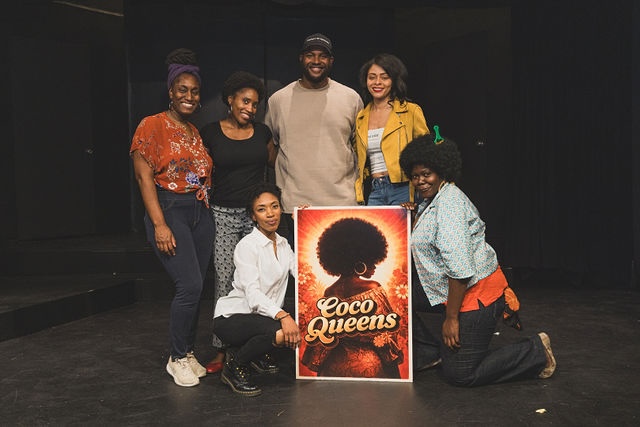
Drawing on his Southern upbringing and the sights, sounds and stories of the women who raised him, Williams centers four Black women who gather each year inside Gloria’s neighborhood beauty shop in Alabama for Coco Queens Weekend. Their sacred tradition is filled with food, music, laughter and truth-telling. But when long-buried secrets surface, the women must confront the wounds that have divided them and decide whether honesty can guide them back to one another.
The story unfolds in 1975, but its challenges remain familiar: job loss, the fight to preserve land and build generational wealth, complicated relationships and the pursuit of a life on one’s own terms.
Directed by Jessica E. Williams, Coco Queens opens October 25 at Outside In Theatre in Los Angeles and runs through November 17. Previews began October 19.
Here, in his own words, Williams shares the inspiration behind Coco Queens and why he insists that a Black woman must always direct the play.

“One of my earliest memories is of my mama and my aunties sitting on the porch or gathered around the kitchen table, greasing each other’s scalps, cackling, and talking mess. Then my mama would drag me to the beauty shop every Saturday, where I’d sit for what felt like forever and a day, watching her hair get pressed, permed, and picked.
Who knew all those trips to Christine’s Beauty Shop in Alabaster, Alabama, would plant the little seed that eventually became Coco Queens?
Back then, I didn’t realize I was witnessing anything extraordinary. I was just a little boy watching the women in my life be themselves. But looking back, those spaces held everything: the laughter, the gossip, the prayers, the arguments, the heartache, and the love. The beauty shop was where women could take care of themselves while taking care of each other. That stayed with me. I think a piece of every woman who raised me lives somewhere in this play.
The world of Coco Queens is rooted in Liberty Heights, the neighborhood where I grew up in Helena, Alabama, about 30 minutes from Birmingham. It was a neighborhood full of Black folks just living, trying to get by, and holding on to their hopes and dreams. Everybody had a story. Everybody had something they were carrying. And a lot of those memories and experiences found their way into this play.
I wanted to capture that particular feeling and the poetry of everyday Black life in the South, where you could be struggling to make ends meet and still find a reason to laugh, sing, cook, and get together with your people. Setting the play in 1975 gave me a way to explore that world. It felt like a crossroads: the Civil Rights Movement had changed the law, but Black communities were still trying to turn those promises into something tangible: economic security, ownership, and the freedom to define their own lives. Black women were carrying so much of that work, often without being given the space to talk about what it cost them. And the issues these women face certainly didn’t stay in the seventies.
We’re still talking about Black women losing jobs, fighting to hold on to land and generational wealth, navigating complicated relationships, and trying to build lives on their own terms. We’re still talking about the importance of sisterhood and what happens when women have to choose between protecting a secret and telling the truth.
Coco Queens may take place in 1975 Alabama, but these women’s struggles, dreams, and desires are timeless. I promise you, there’s something in this play that will feel familiar no matter when or where you grew up.
At the center of Coco Queens is Gloria, the matriarch of the group. She’s a strong, queer Black woman who is grieving the loss of her lover, Girlie. This is the first Coco Queens Weekend she’s preparing without her, and she’s trying to hold everything together while figuring out how to live with that kind of absence. Gloria knows how to take care of everybody else, but she’s still learning how to take care of herself.
Then there’s Chanel. Baby, Chanel is feisty, bitter (don’t tell her that), and she’s got every reason to be! She’s the singer of the group, a woman whose dreams of Hollywood have left her with a broken heart and a whole lot of feelings she hasn’t quite worked through. Sometimes her mouth gets her in trouble, but underneath all that fire is a woman who still wants to be seen and loved.
Tammie Faye Allen is actually inspired by my real-life aunt, who has the same name. I wanted to honor her and the many Black women who have had to make a way out of no way. Tammie is dealing with marital problems, financial pressure, and the fear of being judged as a “welfare queen.” She’s trying to keep her family afloat while holding on to her pride. I have so much love for women like her because the world doesn’t always see what it costs them to keep going
And then there’s Dawn, the Hollywood starlet who returns to these women’s lives after three years away. She comes back carrying secrets, hurt, and betrayals that threaten to change everything. Dawn represents that complicated question of what happens when you leave home chasing a dream, only to discover that success doesn’t necessarily mean you’ve found happiness.
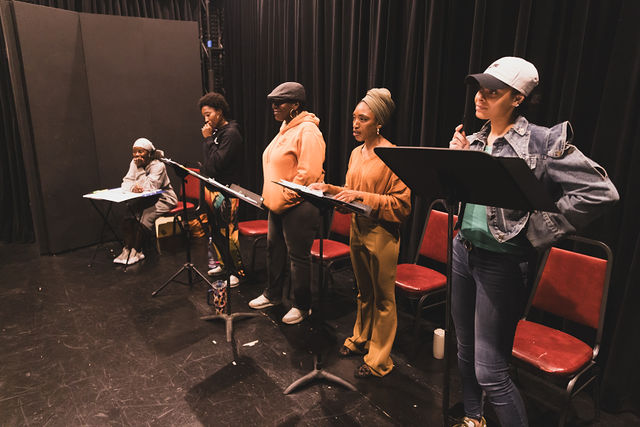
I wanted these women to feel like somebody you know. Your mama, your auntie, your sister, your cousin, maybe even yourself. They’re loving, messy, funny, stubborn, and flawed. They don’t always get it right, but they’re trying to figure out how to live, love, and forgive each other. And to me, that’s what makes them human.
I’m a Black man, but from the women in my life, I’ve learned that the beauty shop is sacred. It’s a place of healing, self-care, and sisterhood. It’s where you can sit down, get your hair done, and unburden yourself from everything the world has been trying to put on your shoulders.
You might walk in carrying the weight of your marriage, your job, your children, or just the exhaustion of trying to make it through another week. And somewhere between the dryers humming and somebody telling a story, you find yourself laughing again. Maybe you get some advice. Maybe somebody fusses at you because you need to hear the truth. Maybe you just sit there and listen.
The beauty shop gives women room to be honest, to be vulnerable, and to be held by other women who understand. And when you leave, you might look a little different on the outside, but hopefully you feel a little lighter on the inside, too.
That’s what I wanted Gloria’s beauty shop to represent in COCO QUEENS. Not just a place where women come to get beautiful, but a place where they can come as they are and be reminded of their beauty, even when life has made them forget it.
I have fallen short many, many times writing this play. And I think the most important thing I’ve learned is that loving Black women and being raised by Black women doesn’t automatically mean I understand every part of their experience. I can listen, I can observe, and I can write, but I also have to be willing to admit when I’ve gotten something wrong.
Shout-out to our directoress, Jessica E. Williams, and to my friend Mildred Marie Langford, who has been with this play since its inception, along with Sierra Nicolette Smith and Chanell Bell. These women have challenged me, guided me, and held my feet to the fire to make sure we’re telling this story with as much honesty and authenticity as possible.
I have done so many rewrites with Black women in the room. And best believe, they have looked at me and said, “Nah-uh. That ain’t right. You gon’ have to change that!” Ha! And you know what? They were right.
Jessica has brought a depth of understanding, emotional truth, and cultural specificity to this production that I could not have reached by myself. She sees things in these women that I might overlook, and she creates room for the actresses to bring their own wisdom and lived experiences into the work. That collaboration has made the play stronger.
My decision that Coco Queens must be directed by a Black woman and performed by Black women comes from that understanding. It’s about honoring the interior lives of these women and recognizing that the people telling their stories matter. I don’t have to be the only voice in the room. In fact, the play is better when I’m not.
I’m grateful to have women around me who love this work enough to tell me the truth. That’s how we grow. That’s how we get closer to the story we’re trying to tell.
Broadway Bound? In Tokyo Toni’s voice: “Well, yes!” Ha! Listen, can you imagine Coco Queens on Broadway? Four Black women, a beauty shop, the music, the mess, the secrets, the sisterhood? Baby, I would love that!
But honestly, producing this play in Los Angeles is already a huge leap of faith for me. A lot of theatres said no to Coco Queens. And after hearing no enough times, I had to make a decision: Was I going to keep waiting for somebody else to give this play a chance, or was I going to give it a chance myself?
So I said yes. I took money from my book advance and invested it into bringing this production to life through my company, Blackgical Productions. That was a real risk, but I believe in this story, and I believe these women deserve to have their stories told onstage.
Broadway is absolutely a dream. But right now, I’m focused on building something that can grow beyond one production. I want Coco Queens to travel, to reach different communities, and to remind people everywhere of the power of Black women’s stories. If Broadway is part of that journey one day, then baby, we’ll put on our good clothes and go!”