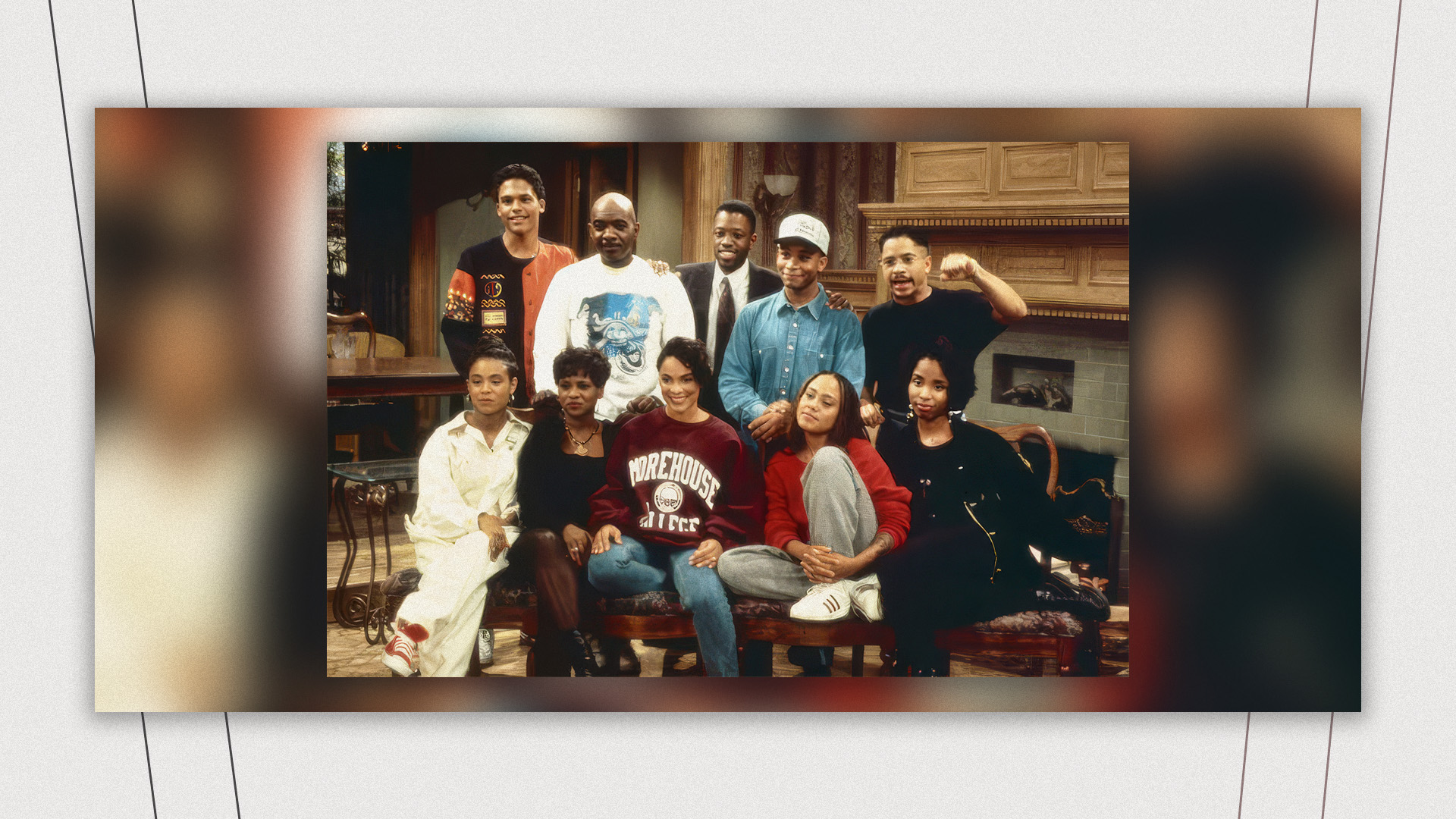
When Netflix opens the doors of Hillman College again this September, it will do more than revive a show. It will test a theory Black television has been quietly proving for forty years: our stories rarely end when a series does. They migrate. They take on new shapes and new names. They find new audiences and keep walking long after the original cast has left the building.
Why A Different World Is the Perfect Case Study for Black TV Legacy
A Different World sits at the intersection of everything complicated and everything beautiful about that migration. It was born as a spin-off of The Cosby Show, following Denise Huxtable’s decision to leave home for college. Almost immediately, however, it became something its parent show never was and perhaps never could have been. It gave America its first sustained, intimate portrait of Black college life. It made an HBCU the center of the universe, not its backdrop. In previous interviews, Debbie Allen has said the show changed lives and helped triple real enrollment at historically Black colleges. That brings about more than nostalgia. It allowed television to function as cultural infrastructure, sending real students toward real campuses they might never have imagined for themselves.
A Different World inherited a premise from its parent show. However, it did not inherit its purpose. Once Debbie Allen and a room of writers got their hands on Hillman, they built something that exceeded the man whose sitcom made the spin-off possible. After the first season many fans ignore, Allen notably added key elements that were missing from that show that are crucial to the life and culture of HBCUs. Things like hot sauce bottles on tables, Greek-lettered organizations in the background, and the inclusion of fashion, deep politics, and the unique nuance of coming of age that many Black college students navigate.
Then there are the storylines. The marriage of Whitley and Dwayne. A storyline that confronted the AIDS epidemic and reached young Black viewers when few other shows would touch the subject. The particular joy of watching Black students argue, flirt, wrestle with themselves, and grow inside a world built entirely for them. None of that belongs to Cosby. It belongs to Allen, the writers, the cast, and the people who looked at Hillman and saw a piece of their own future. And that distinction between Cosby and Allen is central to the life and legacy of A Different World because it shows the dichotomy between what a person authors and what a community stewards is essential to this conversation. Cosby’s crimes indict the man, fully and without qualification.
The legacy of A Different World, however, was never his alone to hold, which is precisely why it can survive him. Authorship can begin with an individual, but stewardship passes from hand to hand. Black culture has long understood that something can outgrow the person who first put their name on it.
How Black TV Spin-Offs Prove the Power of Representation
You can see that same instinct across the shows this new Hillman generation is joining. Black-ish did not simply end when its children grew up. It gave them a campus of their own in Grown-ish and a separate lens in Mixed-ish. Moesha didn’t disappear so much as widen, letting the Parkers shift the spotlight from a teenager to a grown woman returning to school later in life and proving the audience had room for more than one kind of Black woman’s story. The Power universe took a single crime drama and multiplied it into a franchise, making its own quiet argument that Black-led television can sustain more than one hit at a time.
Each represents a direct handoff. Shared characters, shared canon, and a key passed from one show to the next like a family heirloom.
Beyond Spin-Offs: How Living Single Influenced Girlfriends, Insecure, and Harlem
Another pathway matters just as much, perhaps more, because nothing can legally or reputationally complicate it later. Call it influence rather than inheritance.
Living Single did not spin off into Girlfriends, and Girlfriends did not spin off into Insecure or Harlem. There is no shared canon or intellectual property connecting them, and sometimes decades separate their premieres. What passes from one to the next is proof. Proof that Black women’s friendships could carry a show. Proof that Black women’s careers, desires, mistakes, and dating lives deserved the same texture and patience television had long afforded white leads. Kenya Barris, Issa Rae, and the writers of Harlem weren’t continuing someone else’s story. They were creating in a cultural landscape where the bet had already paid off once, making it easier for someone to place it again.
That is the harder truth for anyone attempting to complicate Cosby’s legacy by attaching him to everything downstream. A spin-off can remain entangled with its root. Influence is far more difficult to contain. Nobody can revoke what Living Single made possible for Issa Rae because that influence never lived inside a contract. It lives in the culture, and culture has no rights holder.
What makes A Different World particularly fascinating is that it managed to do both. It was a direct spin-off, structurally tangled at the root with Cosby, while simultaneously becoming a genre pioneer whose influence moved far beyond him.
A depiction of Black intellectual and social life expansive enough to hold politics, friendship, sex, class, activism, love, and becoming. Some of what Hillman built escaped into the culture decades ago. It cannot be pulled back now.
Can the New A Different World Live Up to the Original? Bel-Air Already Answered That
Which brings us to the anxiety underneath all of this, the question few people want to say plainly: Can the new A Different World live up to the original, and can it be good while sitting on top of something this uncomfortable?
We already have an answer, and it did not come from a college campus. It came from a mansion in Bel-Air.
When The Fresh Prince of Bel-Air was reimagined as a drama, nobody expected it to match the original joke for joke because it was never trying to. It preserved the world, a Philadelphia kid recalibrating his understanding of Black identity across lines of class, access, and privilege, then allowed a new generation of writers to ask what that story means with today’s stakes. It didn’t try to replicate Will Smith’s performance or the original show’s comedic rhythm. It earned critical respect and multiple seasons by remaining faithful to the premise without becoming captive to the original’s tone.
That is a model A Different World can follow: reverence for the world without imitation of the show.
Bel-Air’s baggage was reputational, tied largely to nostalgia and the burden of living up to something beloved. Cosby’s is moral, and no amount of clever reinvention resolves that tension on its own. Reports suggest he still holds a creator credit on the new series and may be receiving payment in exchange for his name staying out of the credits, meaning the root and the branch remain, quite literally, financially entangled. That deserves to be confronted, not explained away. Culture can walk away from a man, but contracts are often slower to let go.
Does Cosby’s Legacy Invalidate A Different World?
So does the rot at the root invalidate everything that grew from it?
I don’t think it does, and that conclusion doesn’t require looking away from what Cosby did. Rather, it should force us to be more precise about where the legacy actually lives.
When people say A Different World changed their lives, they are rarely talking about Bill Cosby. They are talking about Whitley, Dwayne, Ron, Kim, Freddie, and Mr. Gaines. They are talking about Debbie Allen’s direction. They are talking about a fictional campus that made something real feel possible, a place that told a generation of Black kids there were spaces built for their brilliance, complexity, joy, ambition, and becoming.
That legacy was stewarded into existence by people other than Cosby. People other than him can steward it forward, whether or not his name still appears in a ledger somewhere.
Hillman is opening its proverbial doors again. And as a new class walks through Hillman’s doors, they inherit an opportunity to tell the story of Black college life in 2026, with all the realities, tensions, and possibilities the class of 1987 did not yet have language for.
Because if the history of Black television has taught us anything, it is that the door can become bigger than the person who first opened it.