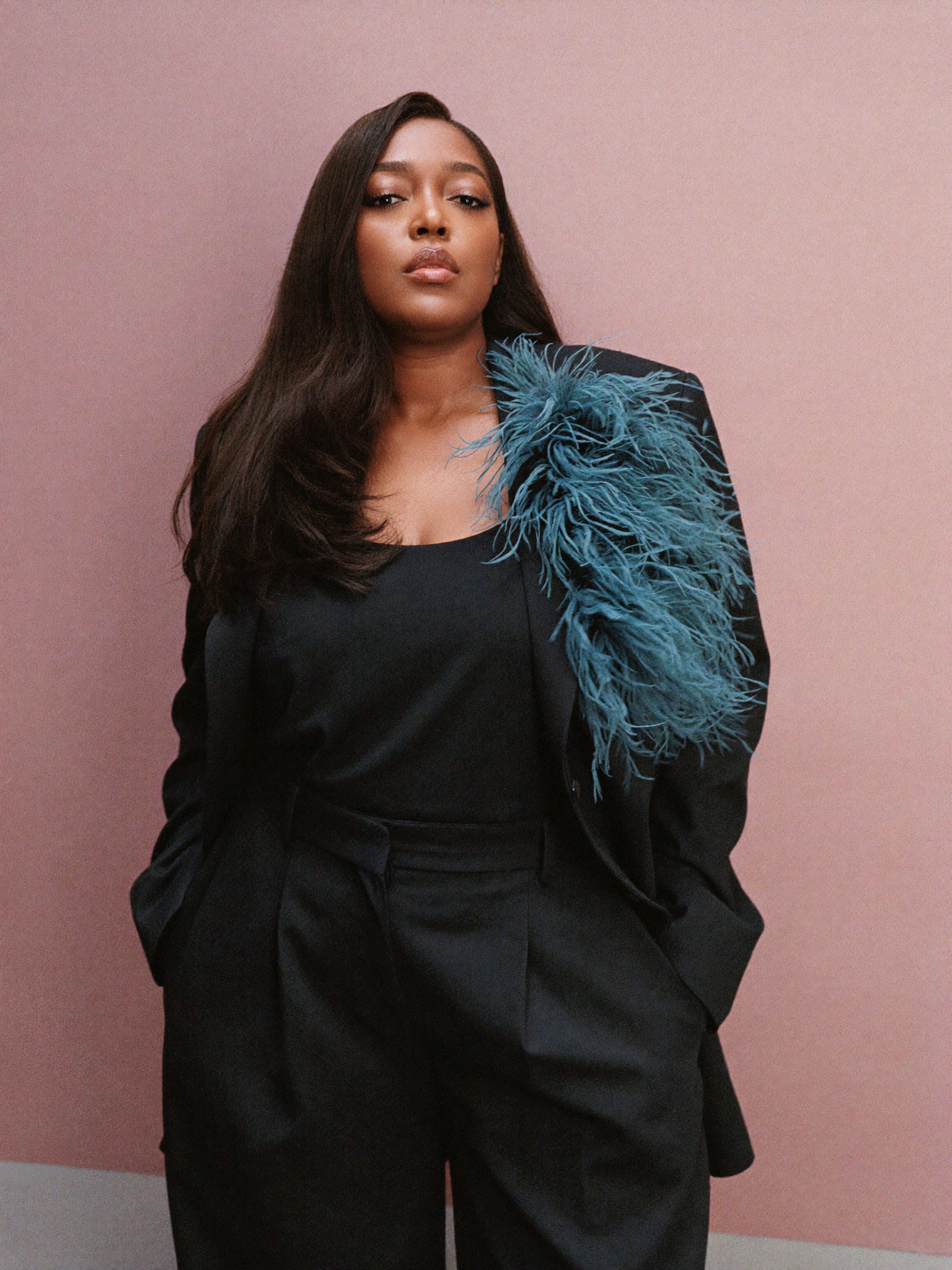
Hanifa is entering a new era, and the woman behind the brand has a few things to get off her chest. Fifteen years after launching one of fashion’s most recognizable independent Black-owned labels, Anifa Mvuemba is returning with a collection that reflects just how much life, business and personal style can change in a decade and a half. The clothes are still unapologetically feminine, the silhouettes still know how to command a room and the Hanifa woman is still very much that girl. Only now, she’s grown, her priorities have shifted and she’s dressing for a life that extends well beyond the next big occasion.
The return arrives at a pivotal moment for the designer, who stepped away from normal business operations earlier this year following a period of public criticism and customer frustrations. While the pause raised questions about the future of the brand, Mvuemba was navigating a transition of her own, having recently welcomed her second child while reassessing the demands of running an independent fashion business. Now, with a new collection and changes to Hanifa’s operations, she’s ready to introduce the next chapter.
“I started Hanifa when I was 21, and I have evolved so much over the years, not just as a creative director and entrepreneur but as a woman who is now a mother and a wife,” Mvuemba tells EBONY. Over the past 15 years, she’s learned what it means to lead a company while showing up for herself and her family, a balancing act that has reshaped her understanding of success. The biggest lesson? Ambition and rest don’t have to exist on opposite sides of the conversation.
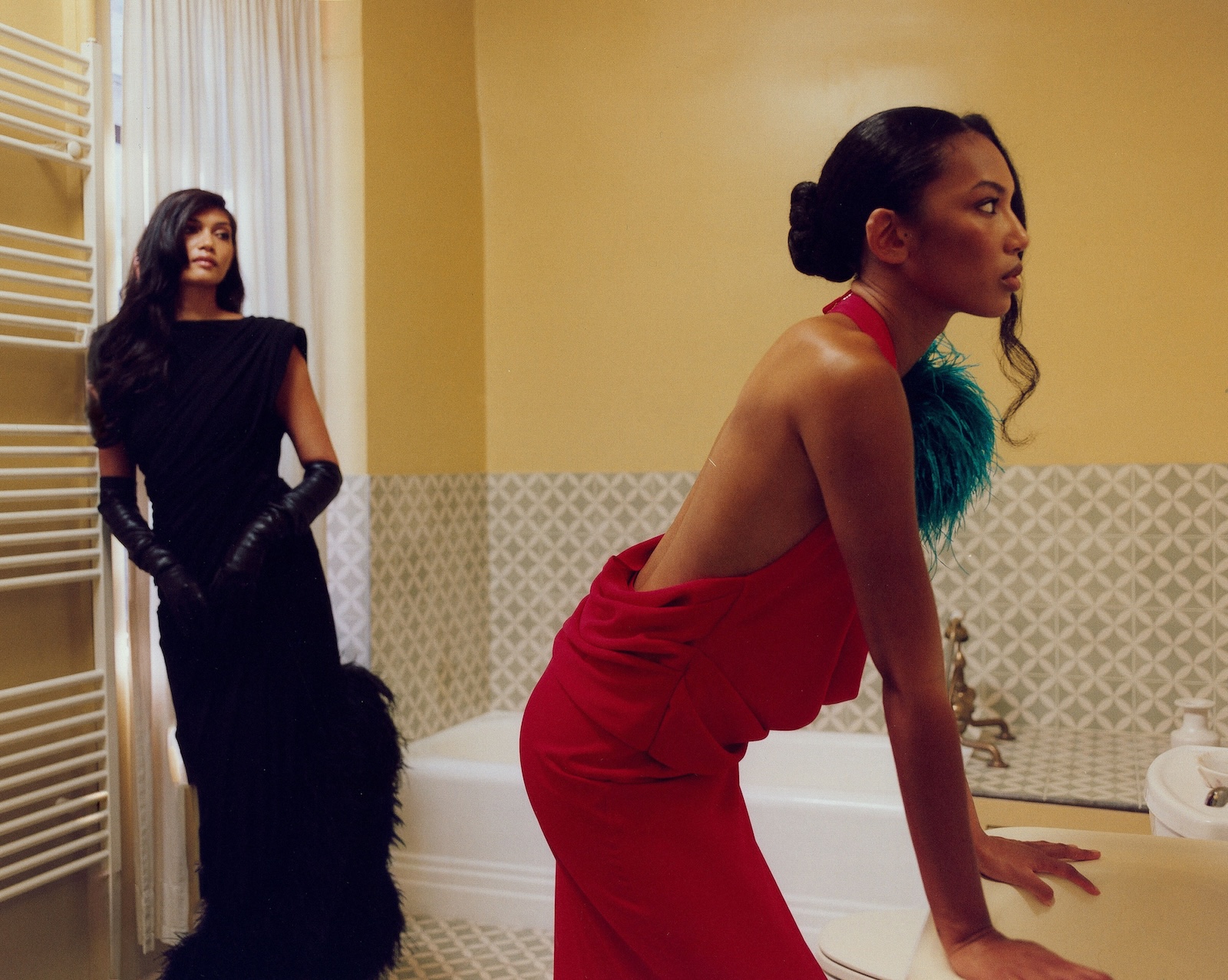
That personal evolution is woven throughout the latest collection, which builds on Hanifa’s signature celebration of the female form while introducing a more considered approach to everyday dressing. Sculpted volume meets fluid draping, textured knitwear is reimagined through unexpected construction and fringe and feather detailing bring a sense of movement to dresses and separates. The collection explores the relationship between structure and softness without sacrificing the sensuality that has become synonymous with the brand.
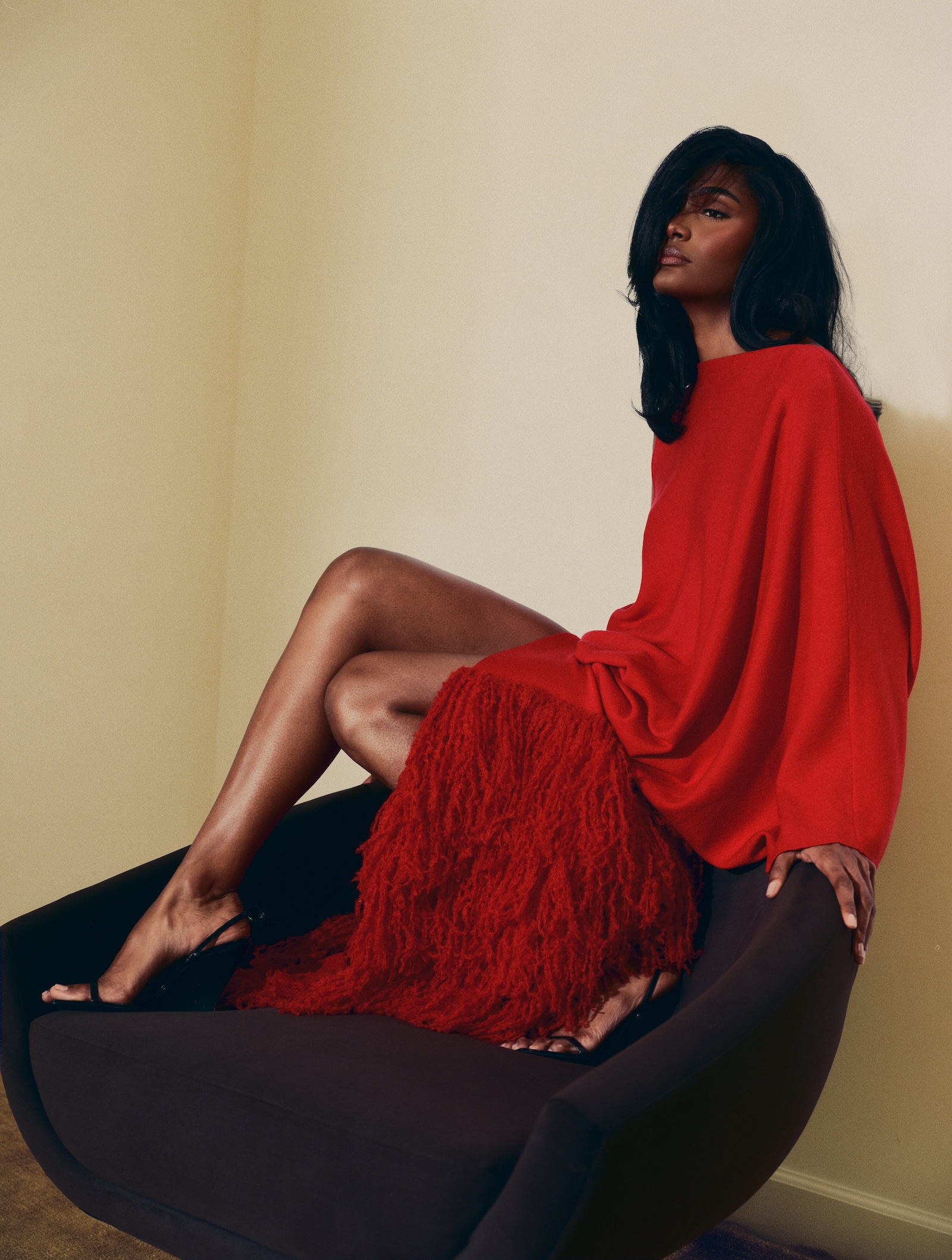
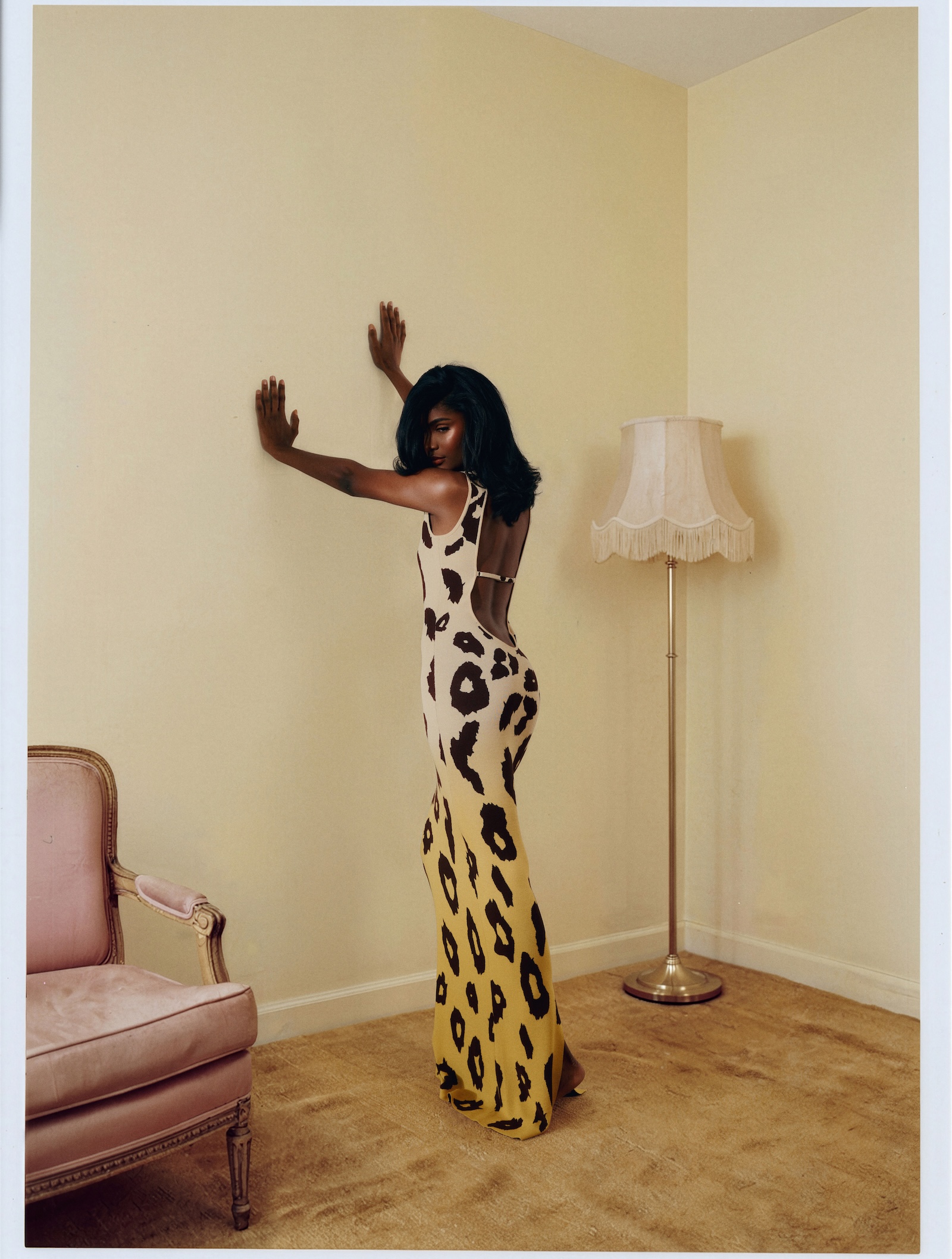
A vibrant red look pairs an oversized, softly draped top with a dramatic fringe skirt, creating a striking contrast between ease and extravagance. A floor-length patterned dress follows the body’s natural curves before falling into a fluid silhouette, while other pieces experiment with exposed backs, sculptural construction and bold textures. It’s a wardrobe designed for women who appreciate a little drama but understand that getting dressed shouldn’t feel like a production.
“As I have evolved and shifted in the last 15 years, so has the Hanifa woman,” Mvuemba explains. “She is now a mother, a wife, an entrepreneur, a leader, and more. She is in her ‘becoming’ era, and that means her style has adapted to meet her where she is in her life now.” That thinking informed everything from versatile separates and office-ready pieces to eveningwear designed to help women “stunt for those special occasions.” It’s an expansion of the Hanifa wardrobe that acknowledges the many versions of womanhood without asking anyone to compromise their personal style.
For Mvuemba, developing the collection also meant revisiting the past. She returned to Hanifa’s archives, studying the silhouettes that resonated with customers and considering how to reinterpret them through new fabrics, construction techniques and proportions. That exploration led to experiments with bouclé wool, textured fringe and structured knitwear, alongside an expanded focus on outerwear and elevated loungewear. Rather than reinventing the brand entirely, she wanted to refine the design language that made Hanifa recognizable in the first place.
“I took note of the pieces that spoke to both me and our customers and thought about how I could elevate them without losing the essence of the design,” she says. The objective was to create clothing that felt more sophisticated without becoming less wearable, especially as the women shopping Hanifa continue to experience changes in their bodies, careers and lifestyles.
Of course, Hanifa’s return isn’t just about what’s hanging on the rack. The brand’s time away came amid conversations about its operations and customer experience, putting the less glamorous realities of fashion entrepreneurship into focus. While Hanifa has built a loyal following and a distinct place in contemporary womenswear, sustaining that success has presented challenges that Mvuemba acknowledges were not always visible to the public.
“Scaling the business and maintaining an engaged customer base have been some of the most challenging parts in sustaining a successful business,” she shares. The pause allowed her to reevaluate production, manufacturing, customer engagement and the systems supporting the company. Rather than treating the time away solely as a creative reset, she approached it as an opportunity to examine what needed to change behind the scenes.
And she isn’t pretending that the criticism didn’t happen.
“There was so much conversation during that time, and I understood where some of the frustrations in our community stemmed from,” Mvuemba says. After reviewing business data and assessing the company’s operations, Hanifa introduced an external customer service team, new manufacturing partners, a third-party logistics provider and a direct purchase model intended to provide customers with more immediate access to products. The changes represent an effort to address concerns and create a more efficient shopping experience, although their success will ultimately depend on how well the new systems perform.
The experience also opened up a larger conversation about the expectations placed on independent Black-owned luxury brands. Fashion has become increasingly comfortable celebrating Black designers, particularly when their work generates cultural excitement, but the conversation around long-term investment, operational infrastructure and sustainable growth remains far less visible.
“Black-owned brands require investment in all aspects of the business,” Mvuemba says, pointing to what she describes as a lack of education surrounding the needs of Black-owned businesses and their customers. “Many of us build our own brands to fill gaps in the market, but don’t have the same access to support as other brands do to manage all that comes with sustaining our growth.”
It’s a distinction worth examining. The fashion industry can turn a designer into a name to know overnight, but recognition doesn’t automatically translate into the resources needed to operate a successful business. Manufacturing, logistics, customer service and access to capital are just as essential to a luxury house as the creative vision behind its collections. For Black designers navigating those challenges independently, the pressure to deliver can be especially intense.
Still, the responsibility to maintain customer trust remains an essential part of the equation. Mvuemba recognizes the role Hanifa’s community has played in the company’s success and says she is grateful for the customers who continued supporting the brand during its pause. As she looks toward the future, balancing creative experimentation with the needs of that audience is a priority.
“As an independent business, I have the creative freedom to experiment and explore designs for the brand because of how supportive our community has been over time,” she explains. “However, with any business, you have to consider your audience in every decision, ensuring that as you grow and scale the business, you don’t lose that core customer.”
Beyond the business adjustments, the time away offered something Mvuemba hadn’t always allowed herself: room to simply exist outside of Hanifa. Following the birth of her second child, she spent time with family, rested and found inspiration away from the demands of constantly producing something new. For a woman who has spent nearly her entire adult life building a brand, the experience shifted how she thinks about boundaries, leadership and the importance of protecting her peace.
“I’ve been good,” she says of her time away. “The pause came directly after I had my second child, and so that time resting, connecting with my family, and processing was very important for me.” She describes the experience as essential to preparing for the company’s next phase, adding that taking time for herself has made her a more intentional creative director and business leader.
“I’ve learned that taking time to rest does not diminish all that I have built, but gives me space to be a creative and the best leader Hanifa needs.”
Fifteen years is a significant achievement for any fashion label, particularly one that has remained independent while developing a recognizable identity and a community of women who see themselves reflected in its clothes. Hanifa’s next chapter will test how successfully Mvuemba can translate that creative influence into a stronger, more sustainable business, but the collection makes one thing clear: she isn’t interested in abandoning the woman who brought her this far.
Instead, she’s giving that woman room to evolve. The confidence is still present, the silhouettes still celebrate the body and the clothes still understand the assignment. What’s different is the perspective behind them, shaped by motherhood, business challenges and a renewed understanding that longevity requires more than constantly moving forward.
When asked what she would tell the 21-year-old who started Hanifa, Mvuemba’s response reflects the lessons of the past 15 years: “I would tell my younger self to never lose sight of her dreams and that it is ok to rest as you strive to make those dreams a reality.”
For Hanifa, the return is about more than another collection. It’s an opportunity to show what growth looks like when a designer is willing to revisit her foundation, address what isn’t working and create space for what comes next. And as Mvuemba prepares to write the next chapter of her fashion story, she’s doing so with a clearer understanding of the woman she is today and the business she wants Hanifa to become.