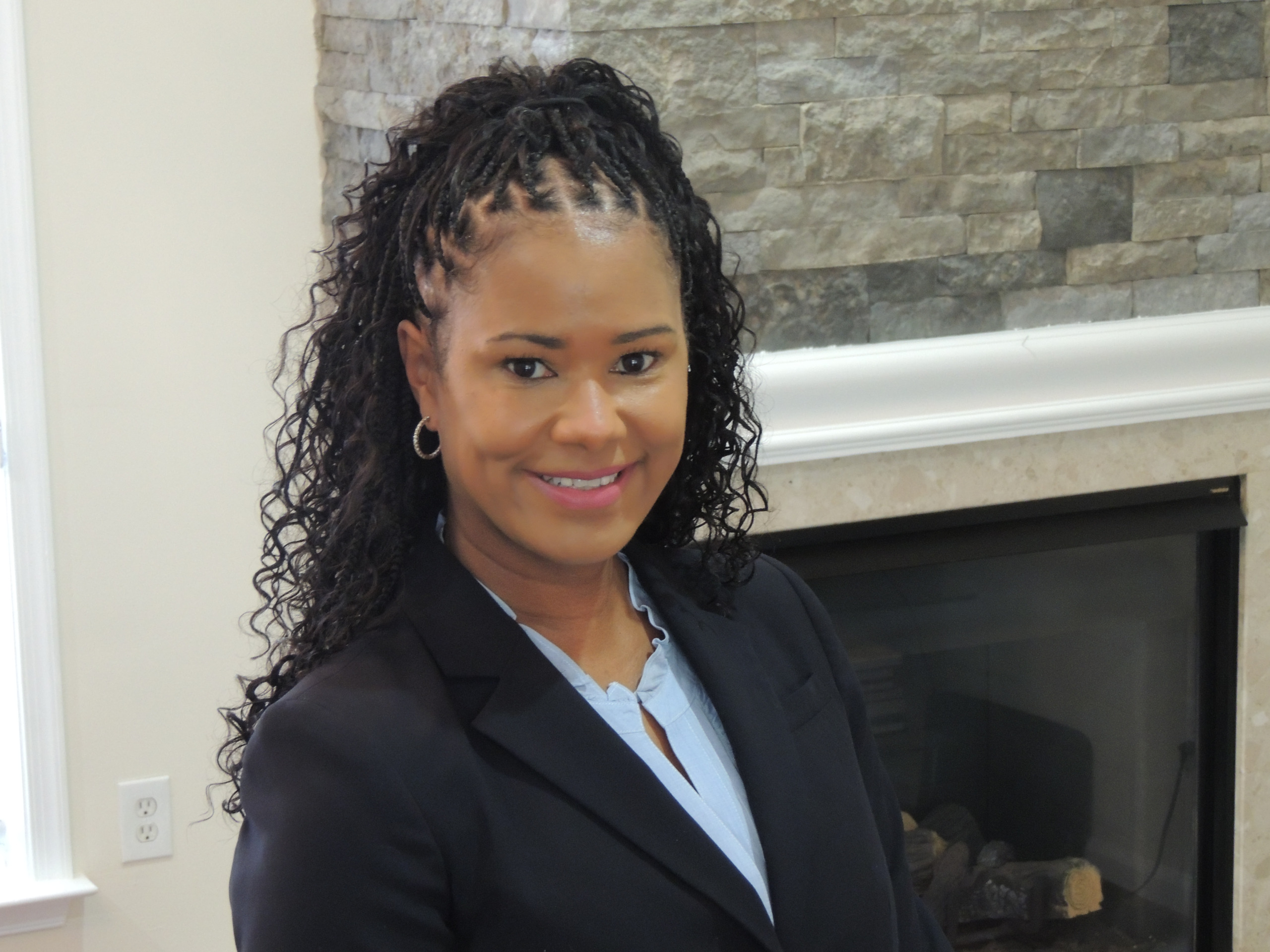
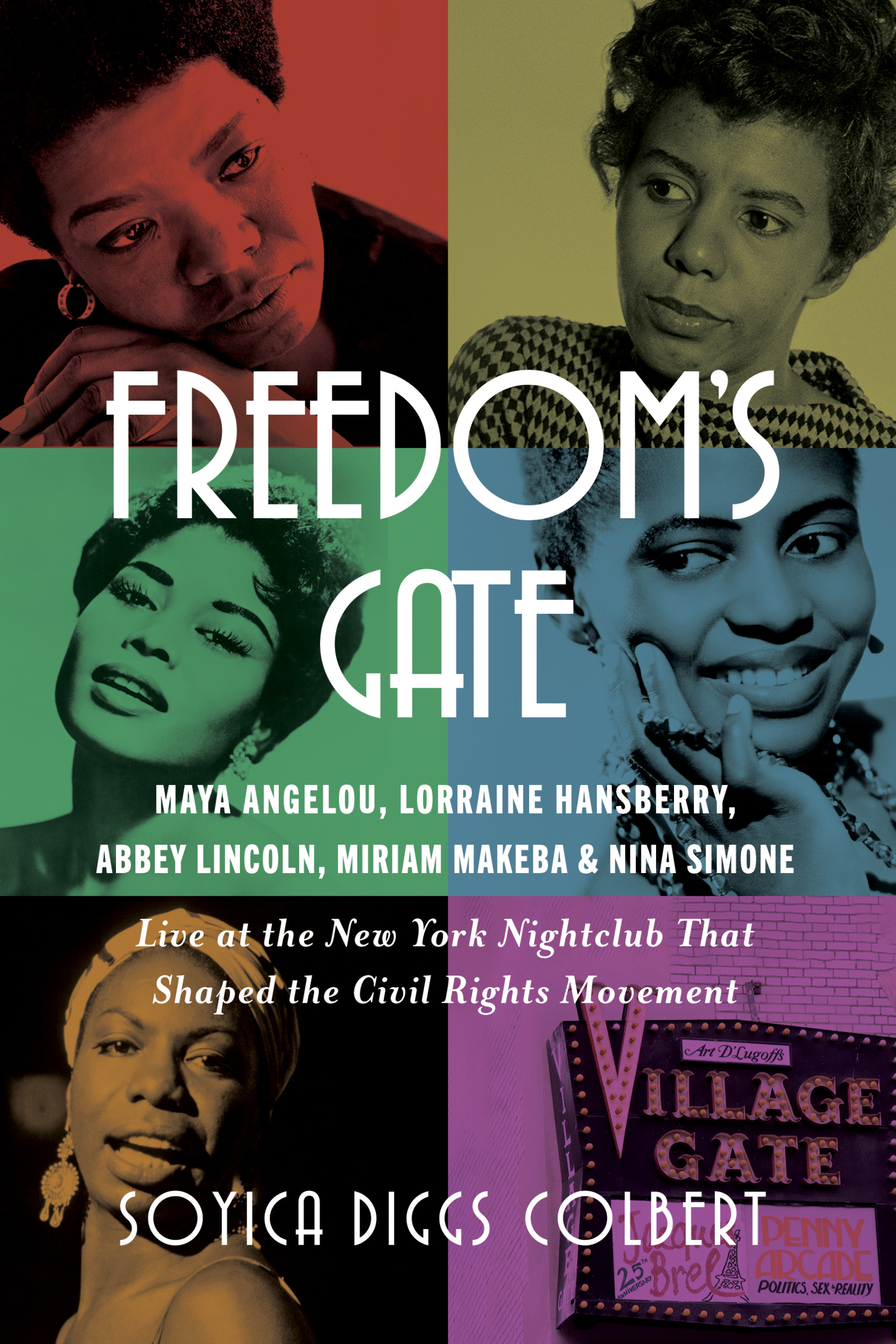
Maya Angelou, Lorraine Hansberry, Abbey Lincoln, Miriam Makeba and Nina Simone are each celebrated as icons in their own right. In Freedom’s Gate: Maya Angelou, Lorraine Hansberry, Abbey Lincoln, Miriam Makeba, and Nina Simone Live at the New York Nightclub that Shaped the Civil Rights Movement, scholar and author Dr. Soyica Diggs Colbert examines how their artistry and political convictions grew alongside one another in the orbit of the Village Gate, the New York nightclub that opened in 1958 and became a gathering place for artists and activists. Drawing on archives, letters and interviews, Colbert, who previously wrote a biography of Hansberry, shows how friendship, collaboration and shared space shaped some of the most influential Black women of the 20th century. EBONY spoke with Dr. Colbert about what their story teaches us today.
EBONY: What did examining these women through the shared space of Village Gate reveal about their influence that we might miss when looking at them individually?
Dr. Soyica Diggs Colbert: All of the artists in the book are acclaimed in their own right as individuals in their own genres. But one of the things the book helps us to see is how they influence one another. So a concrete example of this is once Miriam Makeba comes to the United States from South Africa, she starts performing with Nina Simone at the Village Gate and elsewhere, and you see Nina Simone starting to incorporate African instruments and African soundscapes into her music. There are moments where they perform together on stage, and then you see their work evolving over time. And then there’s also how their music, their writing, their dance evolves after that moment, and you see them incorporating things that have been the signature of the other person into their own work.
EBONY: How did these women use their creative work to push back against the limitations placed on them, and what did freedom look like for Black women artists during this period?
They were able to carve out space in what, at the time, and continue to be, male-dominated industries. So just their presence alone was an act of freedom. The fact that they were able to achieve such heights, as women artists, as Black women artists, is an act of freedom on its own. But the other thing that I think is important for us to note is that this is late 1950s, early 1960s America. And the ideal of womanhood is the housewife. These women are the breadwinners of their families. They are the leaders in their different industries, and they are breaking every model of what it means to be a woman at this time.
I would say that freedom is temporary, that they snatch it away, that it is iterative, and that they are creating foundations that other artists will build on. Part of what the book is trying to understand is how they were able to support one another, even within these complex contexts, and how they were able to snatch out these bits of joy and happiness and togetherness and support, even in contexts where they were anomalies and unheard of, even in their own households.
EBONY: What can we learn from the ways these artists used their platforms to confront racial injustice, and how did their work shape the relationship between Black art and activism?
That is at the center of the book. One of the things that’s fascinating about the Gate is that it was not only a performance space, but it was also a space that had benefits for the civil rights movement. The Cabaret for Freedom, which was curated by Maya Angelou, was a benefit for the SCLC, Martin Luther King’s Southern Christian Leadership Conference. Angelou got the idea for the benefit after seeing Martin Luther King speak in Harlem and being overtaken by his call to action. The “Freedom Now Suite”, Max Roach and Abbey Lincoln’s album, which was also a performance piece, was to benefit civil rights activists in the South, and on the front of the album cover, the original album cover is a sit-in. So there’s this constant calling forth of what’s happening geopolitically.
I think we should learn that if they had not done so, we would be in even more dire straits than we are now. Sometimes we think of freedom as a feeling or as a state of being rather than as something that is a practice that we have to build on and create every day as we’re making our choices, but that is also enabled by those that came before us. Knowing their stories, at least for me, makes the world feel a little bit less lonely, and I hope that that is also what is provided for the readers.
EBONY: How did Village Gate become a meeting point for these movements, and what does its history tell us about the role Black cultural spaces play in building political solidarity?
Art D’Lugoff, the owner of the Village Gate, was a family friend of Lorraine Hansberry. Even though Art says in interviews that he was just cultivating what he thought was good art, you see all these choices he made to enable the movements to flourish. So, for example, he doesn’t charge Maya Angelou any use of the space when she has the Cabaret for Freedom. The club opened in 1958. Many of the similar clubs in the Village had been adversely impacted by the Red Scare. Because the Gate doesn’t open till ‘58, D’Lugoff misses a lot of this, and some of the artists that have been blacklisted, so Paul Robeson, Langston Hughes, Alice Childress, are all hanging out at the Gate. So even though sometimes historians like to make a rupture between these leftist, cultural front artists and the civil rights activists, we see them interacting in this club. So you see the intergenerational transfer, and the political impact happening in the club.
Human contact is still important. We are blessed to have digital spaces now where we can gather, but there’s still an importance for actual in-person contact. Much of the civil rights movement is thinking about how we can transform space to be more open and have space where we can exchange. And so it makes sense then that a physical space, a gathering space, becomes the locus for this activism. The Gate is not singular. But I do think the mixture of it being downtown and an experimental and avant-garde art scene, which allowed the artists to experiment, and because they were also young at the time, that makes a lot of sense. Two, it was an integrated space. And three, that it was a space where it was open to not only the young activists, but activists of previous generations. I think all of that mixes together to make it really special.
EBONY: What does their collective story teach us about the importance of community among Black women, and what might we take from their example today?
The women are outliers in society in terms of their success as Black women, and as women broadly speaking. And as a result, they often find themselves as the only one. The thing that they were able to provide for each other was a sense of understanding, because they were similarly situated, and able to lean on each other because of that. Maya Angelou and Abbey Lincoln meet in Chicago on the road. They’re both the only women in their bands. And so they cling to each other. At one turn, they are providing a soft space for each other to fall, and at the other turn, they’re challenging each other to think bigger and broader, and to consider what they’re doing to advance their collective wellbeing.
We should understand that any individual artist did not get there on their own, that there is a whole group of people who are helping them to achieve what they achieve. Nina Simone is an iconic artist full stop. But I do think we learn and understand her better through the relationships that I chart in the book. These women would not have survived, I think I can make that bold a statement, without each other. We do ourselves a disservice to not understand and not cherish friendships as an important part of what enables us to become the people we want to be in the world. That was the gift of the Gate. It became this incubator for the work they wanted to do.
Colbert will discuss Freedom’s Gate at an event at the Schomburg Center in New York this December, which is open to the public.