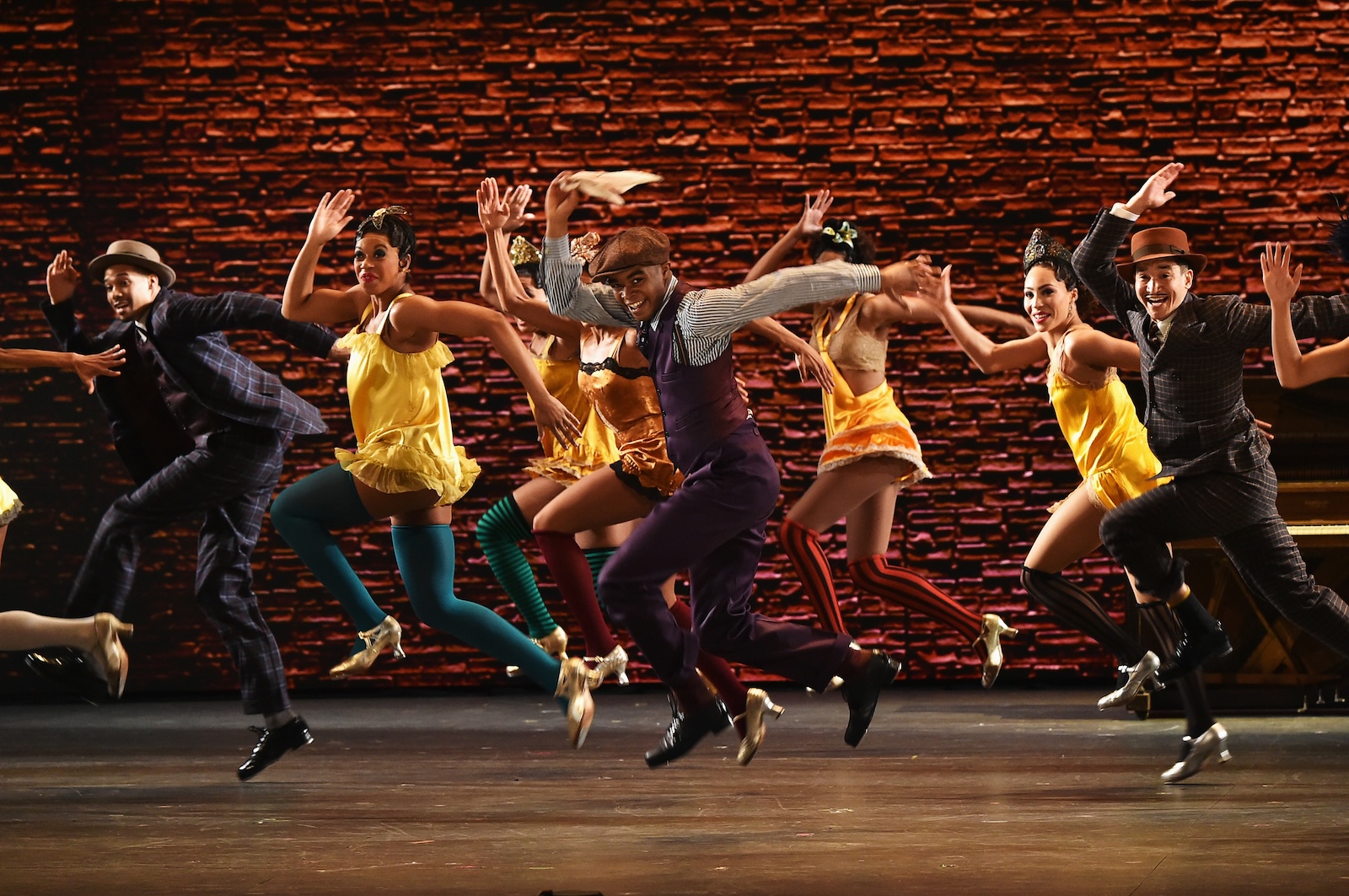
Before the tap shoe became polished leather, metal plates and the unmistakable click-clack that could fill a Broadway theater, rhythm lived in the body. Feet struck the ground. Hands kept time. Movement became percussion. What eventually became one of America’s most recognizable forms of dance grew from Black people’s ability to turn restriction into invention, carrying African diasporic traditions forward even when the instruments used to make music were taken away.
That history makes the tap shoe more than footwear. It is an instrument, an archive and, perhaps most importantly, evidence of Black creativity surviving long enough to become American culture.
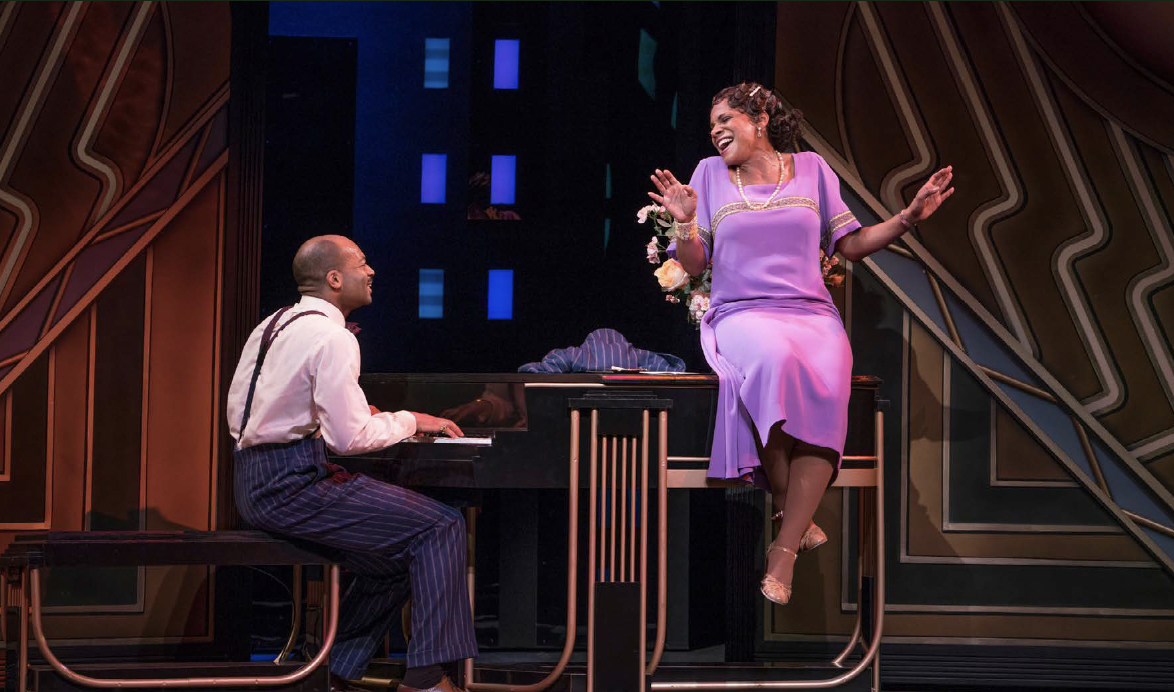
That legacy takes center stage September 27 and 28 when Lincoln Center presents six-time Tony Award-winning writer and director George C. Wolfe’s Shuffle Along, or, the Making of the Musical Sensation of 1921 and All That Followed as part of its Legacies of San Juan Hill Festival. The festival honors the predominantly Black and immigrant neighborhood that once occupied the area where Lincoln Center now stands, a community that played an essential role in shaping New York’s cultural landscape. The production revisits the groundbreaking 1921 musical Shuffle Along, with a cast including Billy Porter, Audra McDonald, Adrienne Warren and Savion Glover.
The timing feels especially poignant because Shuffle Along sits at the intersection of nearly everything the tap shoe represents: Black performance, migration, style, innovation and the complicated question of who gets remembered when Black culture becomes popular culture.
“Shuffle Along contributed greatly to legitimizing tap dance in a narrative, theatrical setting,” Jenai Cutcher, interim curator of the Jerome Robbins Dance Division at the New York Public Library for the Performing Arts, tells EBONY. Its influence, she explains, can be traced through productions including Blackbirds, Jelly’s Last Jam, Black and Blue and Bring in ’Da Noise, Bring in ’Da Funk. “Tap dance is integral to the telling of these stories because it is integral to Black culture and its expressions.”
Before the Shoe, There Was the Rhythm
You cannot properly tell the story of the tap shoe by starting with the shoe.
When enslaved Africans in the American South were denied access to drums, rhythmic traditions did not simply disappear. Percussion moved into the body. Cutcher describes enslaved Africans translating those rhythms through physical movement, creating a precursor to what would eventually develop into modern tap. As those traditions entered urban entertainment spaces, hard-soled shoes became part of the vocabulary.
William Henry Lane, better known as Master Juba, became one of the earliest figures credited with establishing and popularizing the form during the nineteenth century. Later came artists who developed sounds so individual that their feet became something like signatures. Bill “Bojangles” Robinson danced high on the balls of his feet, while John Bubbles dropped his heels, creating a deeper, bass-heavy sound. The Nicholas Brothers, Jeni LeGon, Jimmy Slyde, Charles “Honi” Coles, Clayton “Peg Leg” Bates, Buddy Bradley, Mable Lee and countless others continued expanding what tap could look and sound like.
That individuality would become one of tap’s defining characteristics, and the shoe evolved right alongside it.
The Shoe Became an Instrument
As tap moved through vaudeville, Broadway, clubs and eventually Hollywood, dancers needed shoes capable of carrying their rhythms farther. Soft footwear and hard soles eventually gave way to the metal taps we recognize today, amplifying the dancer’s footwork and transforming footwear into percussion.
For dancer and choreographer Lisa LaTouche, who performed in Wolfe’s 2016 Broadway production of Shuffle Along, the evolution of the tap shoe is ultimately less about what is on someone’s feet than what comes out of them.
“It’s a sound,” she tells EBONY.
LaTouche remembers beginning her career when dancers had far fewer choices in tap footwear. Today, dancers can select different brands, silhouettes and customizations, from traditional shoes and loafers to heels and boots. Yet aesthetics are secondary for her. A worn-in shoe capable of producing her sound can mean more than something pristine and fashionable.
“The ability for somebody to have their own sound,” she says, is what the shoe’s evolution represents.
That idea turns the tap shoe into something much more intimate than costume. Like a musician selecting an instrument, dancers search for the construction, weight, sole and fit that allow their particular rhythm to come through. Over time, those choices can become visual signatures too. A loafer, boot or heel becomes associated with an artist because of how they inhabit it.
In Black style, we know that story well. Function becomes customization. Customization becomes identity. Identity becomes culture.
Hollywood Didn’t Invent Tap
American pop culture has often told tap’s history through the people Hollywood made most visible. Fred Astaire and Gene Kelly became household names, their tailored suits and camera-ready footwear helping transform tap into cinematic spectacle. Their contributions are part of the story, but beginning there leaves generations of Black innovation on the cutting-room floor.
LaTouche puts it plainly: “There’s no Fred Astaire without someone like John Bubbles and Buddy Bradley.”
Even Bob Fosse, she notes, publicly acknowledged inspiration from the Nicholas Brothers. The issue is not whether white performers contributed to tap. They did. The issue is what disappears when the lineage that made those contributions possible is omitted.
“You’ve got to tell the truth,” LaTouche says.
For her, understanding that lineage became deeply personal while working on Shuffle Along. She had always understood tap’s relationship to African American history, but embodying the material forced her to confront just how easily cultural memory can be erased.
“It changed everything,” she says. “It made me really process what erasure felt like.”
That reclamation also includes Black women. LaTouche points to the significance of women in Shuffle Along being allowed to dance with the same physicality and virtuosity as men rather than simply functioning as decorative figures onstage. Behind them stood earlier trailblazers including Ada Overton Walker, whose work at the beginning of the twentieth century asserted the dignity and sophistication of Black theatrical performance.
The history complicates the insult still casually thrown around in Black culture about “tap dancing” for someone’s approval. Tap itself was never the degradation. The conditions Black performers were forced to navigate were.
As LaTouche explains, Black performers did not create the minstrel framework in which many were required to work. They survived it, challenged it and created something enduring in spite of it. In that context, the continued existence of tap becomes less a symbol of submission than one of resilience.
From Bojangles to Savion Glover
A century of innovation has also changed what a tap shoe can look like.
Contemporary dancers have increasingly shaped the footwear created for them. LaTouche points to artists including Jason Samuels Smith and Derick Grant, whose influence has extended into tap shoe design and branding. A dancer’s footwear can now travel globally because audiences want access not simply to a shoe, but to the sound and style associated with the person wearing it.
And then there is Savion Glover.
His approach helped another generation understand tap as something alive, muscular and thoroughly contemporary. The shoe did not have to exist as nostalgia for Broadway’s past. It could converse with jazz, hip-hop and everything Black music had become.
That constant reinvention may be the most Black thing about the tap shoe.
Black people have always known how to take what is available and make it speak in our own language. Tap dancers did it with leather, wood and metal. One performer danced higher on the foot; another dropped into the heel. Someone chose a loafer. Someone else needed a boot. The shoe changed because the people wearing it refused to sound exactly like everyone who came before them.
More than a century after Shuffle Along premiered near San Juan Hill, its return to the neighborhood carries another layer of meaning. Lincoln Center’s Shanta Thake describes the festival as an opportunity to honor the artistic innovation of the Black and brown communities that existed there before the institution itself. Bringing the music back, she says, means returning it to a place where it “once rang out so beautifully.”
That makes the sound of a tap shoe particularly powerful.
Listen closely enough and you are hearing more than metal meeting a stage. You are hearing generations of Black artists refusing to let rhythm disappear. You are hearing dancers whose names Hollywood remembered and countless others it did not. You are hearing Black women who demanded space on the stage, Black men who developed sounds entirely their own and contemporary dancers who continue to push the form forward.
The tap shoe may have changed considerably over the last century, but its greatest technology has always been the person wearing it. Before Broadway, before Hollywood and before America decided tap belonged to everybody, Black feet were already keeping time.