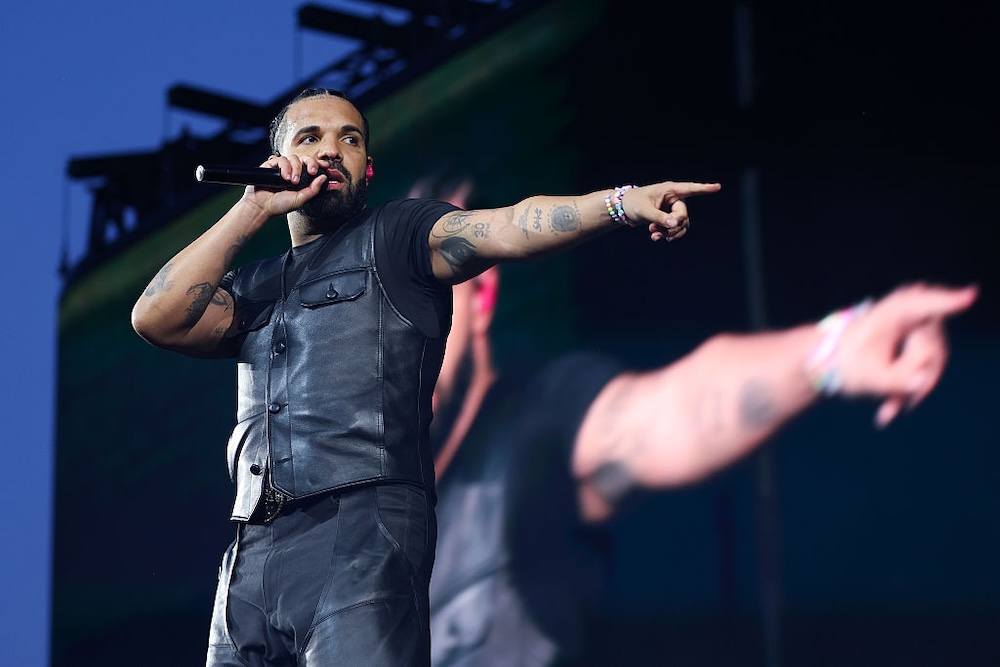
On a @champagnepapi Instagram Story posted Sunday morning, featuring a mysterious blue glowing object encased in blocks of ice, a text bubble contained the cryptic message, “Its in”—meaning, presumably, Drake’s long-awaited new studio album. Yes, OVO fans received the exciting news that the Iceman finally cometh.
The drop will be his first major release since his fierce 2024 battle against Kendrick Lamar (and its questionable legal fallout), and Team Drizzy will no doubt rally behind him this year. But the way social media platforms and Stan culture provided echo chambers that fed the Drake vs. Kendrick conflict is nothing new.
Consider the ultimate Gen X rivalry between Michael Jackson, whose latest biopic drops April 24, and Prince.
Long before the likes of Twitch and TikTok, teen-targeted magazines like Right On!, Black Beat and Word Up! operated as platforms for Black youth of the 1980s to connect around shared opinions, interests and identity. These so-called monthly “fanzines” included up-to-the-minute celebrity gossip, interviews, and ready-made posters of teen idols like New Edition and LL Cool J (or, for the guys, heartthrobs Janet Jackson and Vanity) to tape up on bedroom walls.
But in the mid-’80s, no stars loomed larger than Prince and Michael Jackson.
With MTV rolling hit music videos like “Billie Jean” and “When Doves Cry” in regular rotation, fanzines would devote entire issues to each pop icon during their heyday.
In September 1984, when MJ ruled the zeitgeist with Thriller (ultimately the biggest-selling album of all time), and Prince rode the wave of his own commercial peak, the Purple Rain movie and its soundtrack, Right On! released an infamous issue featuring photos of them both, posing the musical question, “Who Rules the Music Kingdom? Prince or Michael?” (eBay wants $375 for the issue as we speak.) If not for the “Beatles vs. Rolling Stones” boomer debate of the 1960s, you could almost say the issue singlehandedly created Stan culture.
As if debating the original Verzuz, high schoolers fell in line with heated cafeteria arguments about the sex appeal of Prince and Michaelmania’s roots in their Motown memories of the Jackson 5. Decades later, DJ Spinna would launch his first Soul Slam party at the Manhattan nightclub Peppers, pitting the music of MJ and Prince against each other all night long.
The party still goes strong in 2026.
But the irony? Just like partygoers indiscriminately shake their bodies down to the ground to “Erotic City” (Prince) and “Don’t Stop ’Til You Get Enough” (MJ) alike, fans never actually chose one performer over the other. Nearly everyone of a certain age has both Off the Wall and 1999 in their vinyl record collections from the era.
The impulse to stan for our favorite artists has grown even more fervent, aided and abetted by our social media silos, which polarize our tastes and encourage division. The UK recently banned Kanye West from entering the country to perform, but he was able to sell out shows at the SoFi Stadium in L.A., courtesy of his forever-devoted fan base. Nicki Minaj currently aligns with the MAGA movement, but her 2012 hit “Beauty and a Beat” with Justin Bieber is #1 on the Global Spotify chart after a clip of the song was played at his Coachella performance. We seem to dig in deeper for our faves, showering them with our love… and our dollars.
Does it have to be one or nothing? I predict that, just as they did nearly 30 years ago, fans will look back and see that, even amid online beefs, they had Drake and Kendrick on their playlists. And let’s be real:
We all listen to Beyoncé and Rihanna, right?