
There is a particular discomfort in hearing an old stereotype arrive in a familiar voice.
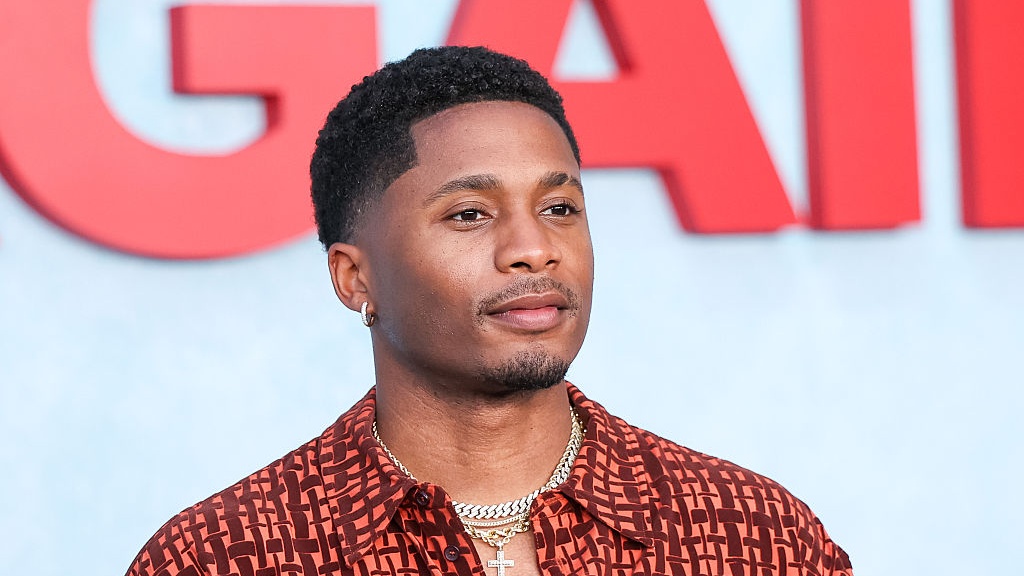
That discomfort has followed actor Da’Vinchi, born Abraham D. Juste, since clips from his appearance on Cam Newton’s Funky Friday podcast began circulating online. The Haitian American star of BMF, Why Did I Get Married Again? and All American spoke candidly about work ethic, American culture, enslavement, immigration, and tensions across the Black diaspora. Social media quickly turned his comments into another debate over whether he was right, wrong, or misunderstood.
For many Black Americans, however, the response carries more than disagreement. There is exhaustion here.
There are people who simply no longer want to debate whether Black Americans work hard enough, value education enough, understand slavery correctly, or have adequately overcome the past. They are tired of conversations in which their history begins from a position of accusation and must be explained before anything meaningful can follow.
That is where Da’Vinchi’s comments become relevant beyond the proverbial group chat. Beneath a conversation about actors, discipline, and cultural differences sits something much older: America’s habit of assigning moral value to labor, measuring Black people against one another, and treating proximity to a particular definition of success as evidence of cultural superiority.
The challenge is recognizing when a conversation about our differences is being conducted through ideas about Black worth that none of us created.
When Work Ethic Becomes a Measure of Worth
The controversial part of the conversation began with a legitimate question: Why are Black British and other overseas actors increasingly landing prominent roles portraying Black Americans?
Da’Vinchi suggested producers may perceive overseas actors as more focused or dependable. From there, he expanded his argument beyond Hollywood.
“In America, no shade to you guys,” he said, “it’s like you’re just incompetent for a really long time.”
He contrasted that perceived incompetence with his upbringing. Raised by a Haitian grandmother who spoke no English, Da’Vinchi described learning independence early and caring for himself by age 8. Newton complicated the argument, suggesting Americans may be shaped by a culture of convenience rather than an inherent lack of capability.
But the exchange revealed how quickly a personal story about discipline can become a cultural diagnosis.
For centuries, Black labor helped build American wealth while Black people were denied its full economic benefit. After emancipation, Black Codes and vagrancy laws coerced freed people back into exploitative labor arrangements. Later came sharecropping, employment discrimination, exclusion from wealth-building opportunities, and housing policies that restricted where Black families could live and what they could accumulate.
Historical context matters when words such as “lazy,” “incompetent,” or insufficiently ambitious enter the conversation.
The Diaspora Carries Different Histories Into the Same Room
One of the interview’s more revealing moments came when Newton raised the perception among some Black Americans that Caribbean, African, or other Black immigrant communities sometimes view themselves as culturally superior.
Da’Vinchi acknowledged that such attitudes exist and condemned them. Yet many of his anecdotes, from the trustworthy overseas actor and “incompetent” American, seemed to reinforce the hierarchy he rejected.
He may have never said “Black Americans.” But on a Black podcast, in a conversation that began with Black American actors losing roles, no one had to guess who he meant.
The Black diaspora is connected, but it is not culturally interchangeable. A Haitian family carries a different national memory than a Black family from Mississippi. Nigerian, Jamaican, Haitian, and Black American communities enter conversations about race carrying distinct relationships to colonialism, nationality, migration, class, and American racism. Difference becomes dangerous when it is arranged into hierarchy.
What “Everybody Enslaved Everybody” Leaves Out
The conversation became more historically charged when Da’Vinchi turned to enslavement (He wouldn’t stop talking!).
He noted that white people enslaved white people, Black people enslaved Black people, and slavery existed long before the United States, suggesting Black Americans should become “smarter and more informed” and move forward.
Enslavement has existed across civilizations. But historical literacy requires more than identifying similarities.
American chattel slavery became a racial and hereditary legal system in which Blackness itself was associated with enslavement and inferiority. The ideas created to sustain it survived abolition through Jim Crow, racial terror, housing discrimination, employment exclusion, and other institutions that shaped American life long afterward.
“Everybody enslaved everybody” may be historically true, but it is often used to rush Black Americans past history without confronting what that history left behind. There is a persistent demand for Black people to forget, move on, and stop looking backward, even as the country has never fully created the material conditions for them to live beyond what happened.
You cannot demand historical amnesia while leaving the economic, social, and institutional inheritance of that history largely intact. The question is not simply who practiced slavery. It is what American slavery built, what survived it, and why Black Americans are so often asked to move on before America has meaningfully moved with them.
When Black Success Becomes a Measure of Someone Else
The largest measurement rooted in the differences between Black immigrants and Black Americans is too often hardened into a ranking system, argued out daily in comment sections, group chats, and podcast clips.
Black American frustration is not defensiveness. It is weariness caused by a world that borrows our music, our slang, our style, and our holidays, then treats our history as an excuse and our struggles as a discipline problem. Everybody wants the culture, but fewer want the context. That is why so many have stopped engaging in the diaspora wars; years of accusation and defense have produced nothing.
When Da’Vinchi talked about his grandmother’s sacrifice, it deserves honor, as do the cultures immigrant families carry here. But pride in one community should never need another as its cautionary tale. The diaspora holds revolution and enslavement, colonialism and Jim Crow, migration and resistance, histories that can sit at the same table without a seating chart.
So the question is not who worked harder or fought better. It is who handed us the measuring stick, and why we are still using it on each other.