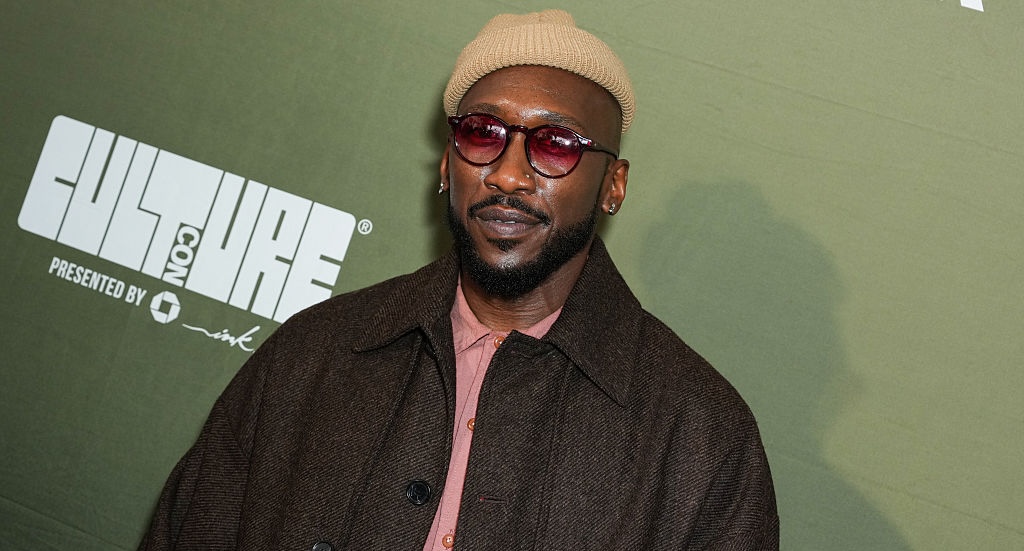
“Sometimes you give your all to something, it doesn’t come out like you wanted it to, or it comes out and people are like ‘ehh, I’m not really feeling it.’ I feel like this particular project, it resonates with people and it has legs to stand the test of time.”
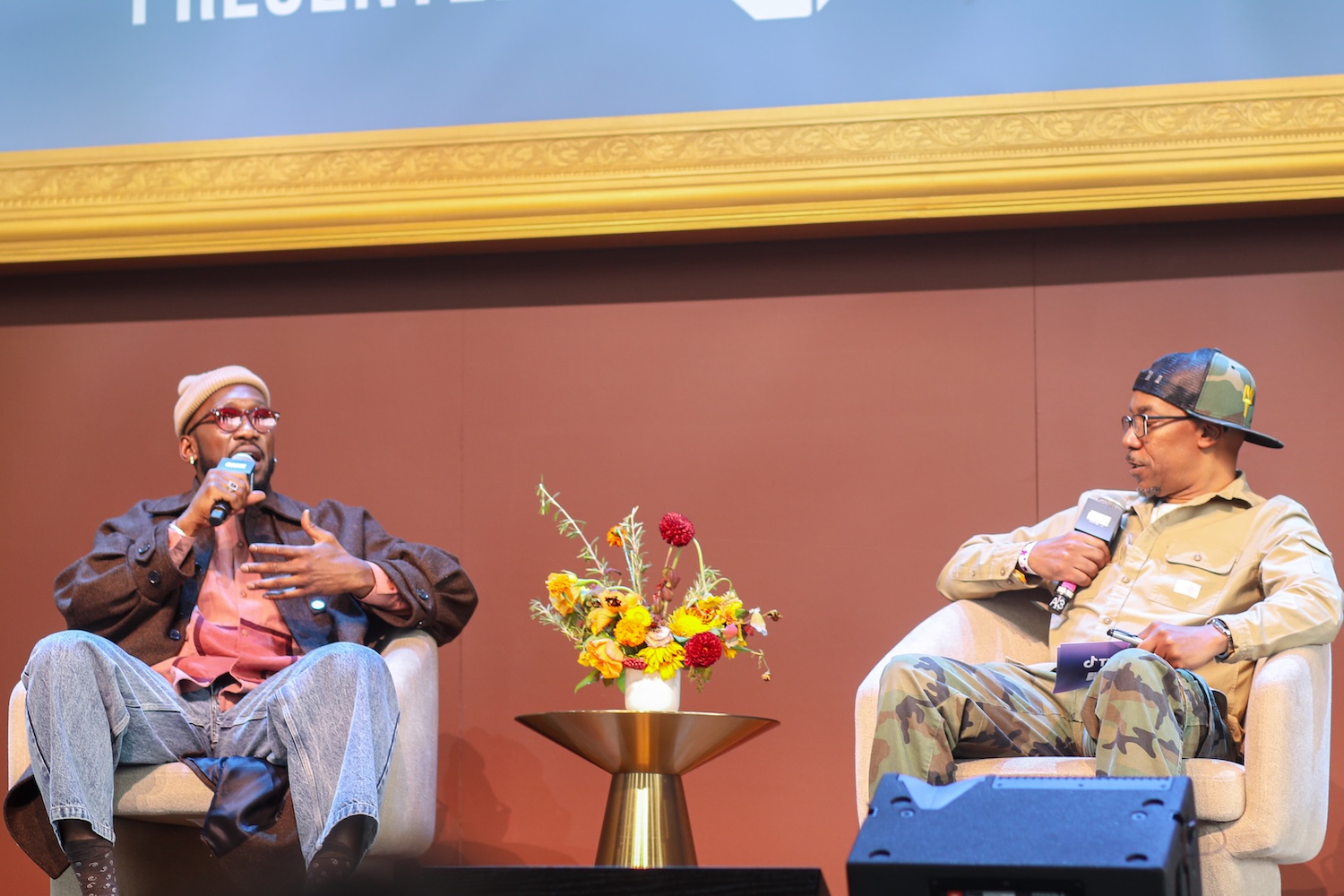
That’s what Mahershala Ali shared about his latest role during a Creative Genuis panel hosted by the Muslim House at CultureCon, held this past weekend in Brooklyn, New York. In Your Mother Your Mother Your Mother, he offers a nuanced portrayal of fatherhood, giving Black fathers in particular room for complexity that isn’t always afforded to them on screen. The glitch is that it’s through the eyes of a hitman.
Latif, played by Ali, is a complex mix of contradictions: He works as an oil merchant. He supplements his income as an assassin for hire. He’s also a devout Muslim with a family at home. The actor, who is Muslim, spoke about playing a character who shares his beliefs. “I always want to play a full human being, but the element of them also being Muslim felt really beautiful.”
Latif isn’t your average killer. He follows a strict code. He never uses a gun. Instead, his weapon of choice is a long-bladed sword. He only targets victims he believes the world would be better off without. He is thrust into the challenges that come with being a single parent after the unexpected death of his wife leaves him to care for their three children. He’s juggling his faith, his growing responsibilities as a father, and the violent nature of his profession, which makes Latif’s journey compelling.
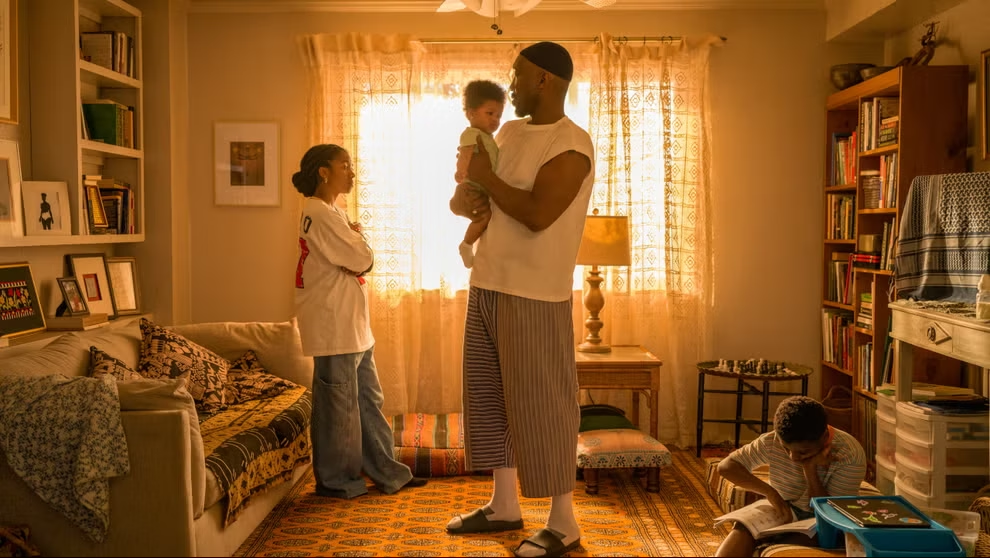
Latif hasn’t always been the most attentive father. But following his wife’s death, he is suddenly forced to take on the responsibility of raising a teenage daughter, a preteen son, and a newborn on his own. When his infant daughter is about to run out of the stored breast milk she needs because she can’t take formula, Latif immediately goes into provider mode and embarks on a desperate quest for more milk.
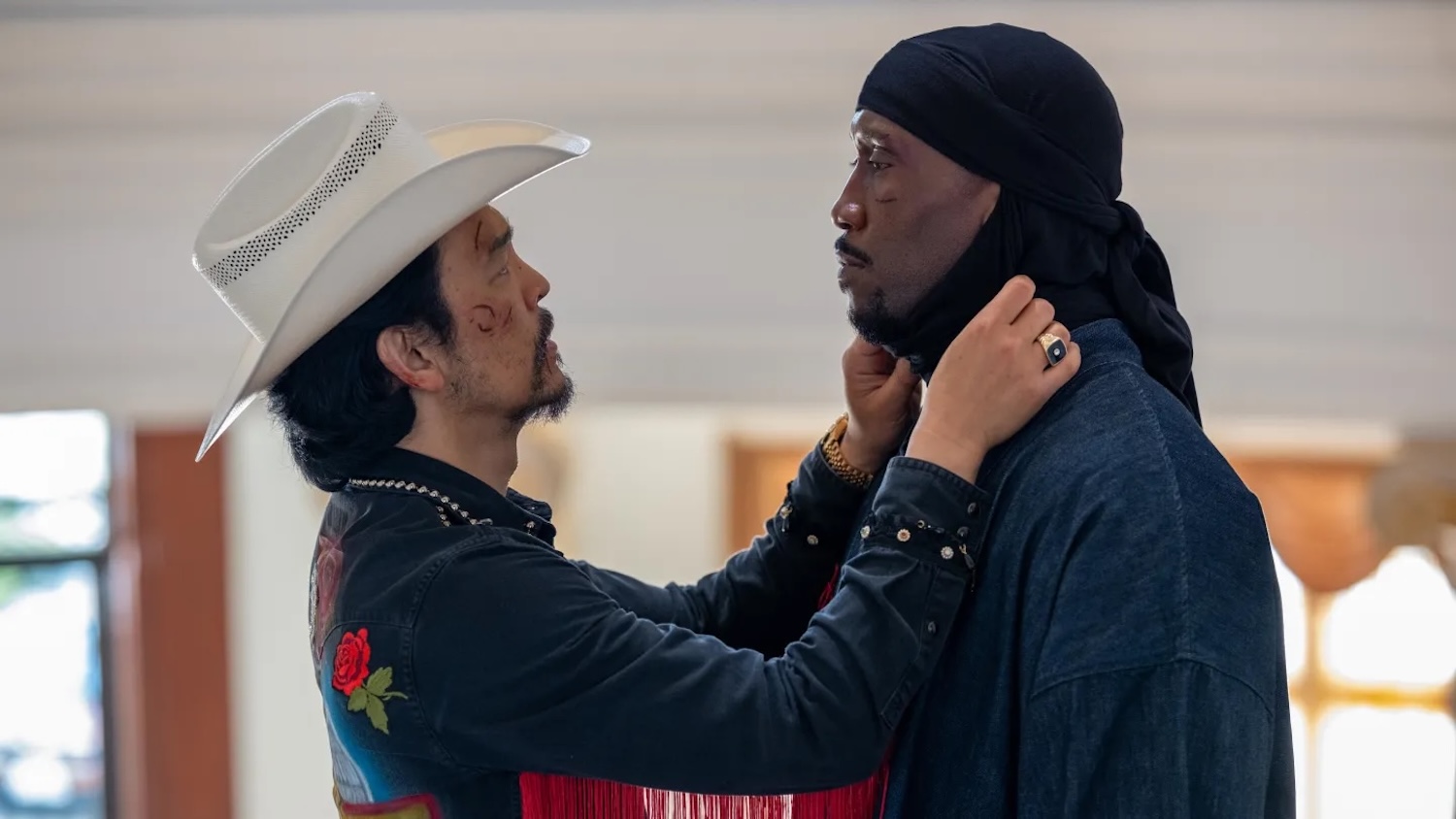
Amid his search, Latif’s handler orders him to protect his nephew, Hatty (Abubakr Ali), an online pornographer being targeted by a porn-hating Christian pastor, Hwan Yoon, who is on a violent anti-porn crusade. Portrayed by John Cho with chilling precision, the gun-loving former military man is as charming as he is terrifying. He also shares Latif’s belief that society should be cleansed of certain people the world would be better without. Cho’s captivating performance adds another layer of tension to Latif’s journey, especially when the two clash.
Caught between being at odds with Yoon and his desperate search for breast milk, Latif is forced to reckon with the reality of his wife’s absence, along with the guilt of being unable to provide the one thing his child needs most. That guilt, combined with the determination to care for his infant daughter, becomes the catalyst for a series of unfortunate events that follow. But within that struggle, audiences also get a window into Latif’s humanity.
Instead of solely focusing on his shortcomings, the film allows audiences to witness a man continuing to show up for his children while grappling with grief, his faith, and the consequences of building a livelihood around violence.
“As a father, the hardest thing sometimes is that when I make mistakes I feel as if ‘That’s it, I broke it,’” the film’s writer-director, Bassam Tariq, told EBONY. “But you don’t. You have to keep showing up because they’re [children] programmed to love you. And you’re programmed to love them. Just keep showing up. Be present however you can.”
Latif has his faults when it comes to not being fully present for his children during the earlier stages of their childhood. But when given a second chance, he doesn’t take it for granted. Instead, he makes an effort to show up for them in the best way he knows how. Taking on the responsibilities traditionally associated with the maternal role may be unfamiliar territory, but his wife’s absence doesn’t deter him from finding a way to give his children what they need.
This is especially evident in his slightly strained relationship with his 15-year-old daughter, Fatiha, played by Adia. Like many teenagers, Fatiha and Latif have their disagreements, but their relationship is more complicated than typical parent-child friction. Fatiha is grieving the loss of her mother, wrestling with her faith, and navigating resentment toward her father for not being present during her childhood.
As Latif’s emotional anchor throughout the film, Fatiha begins to view her father differently when she unintentionally witnesses him carry out an assassination in their home to protect them. In that moment, she comes to understand Latif as more than just her father. She sees him as a flawed human being carrying a deep burden of his own.
While it was captivating to finally see Ali use the knife skills he originally practiced for his role as the titular character in Blade, watching the evolution of Latif and Fatiha’s relationship is far more compelling. In an instant, audiences see a shift in Fatiha’s perception of her father. She no longer sees him solely as an authoritative figure, but as a person who is also deeply struggling.
“There was a lot of humanity brought to her heart for him,” Adia said about her character’s relationship with her father. “She was terrified of the situation, but for him and not of him. She was terrified of the path that he’d chosen for himself and whether or not it would lend itself to her, her siblings, and their family dynamic.”
Beneath the film’s high-paced thrills and relentless pursuit of breast milk, Your Mother Your Mother Your Mother is, at its core, a story rooted in love. At the center of it all is a father trying to step into a role he never expected to fill while navigating the heartbreaking loss of his wife and the needs of their children who feel the weight of her absence.
It’s a story about a concerned father embracing the responsibilities traditionally associated with motherhood. It’s about faith and finding your way back to a belief system after feeling betrayed by it. It’s about a father and daughter learning to see each other not solely through the roles they play in one another’s lives, but for the grief they’re carrying after an immeasurable loss.
Most of all, Your Mother Your Mother Your Mother is a story about mercy and the belief that no matter how lost you become, you can always find your way back.