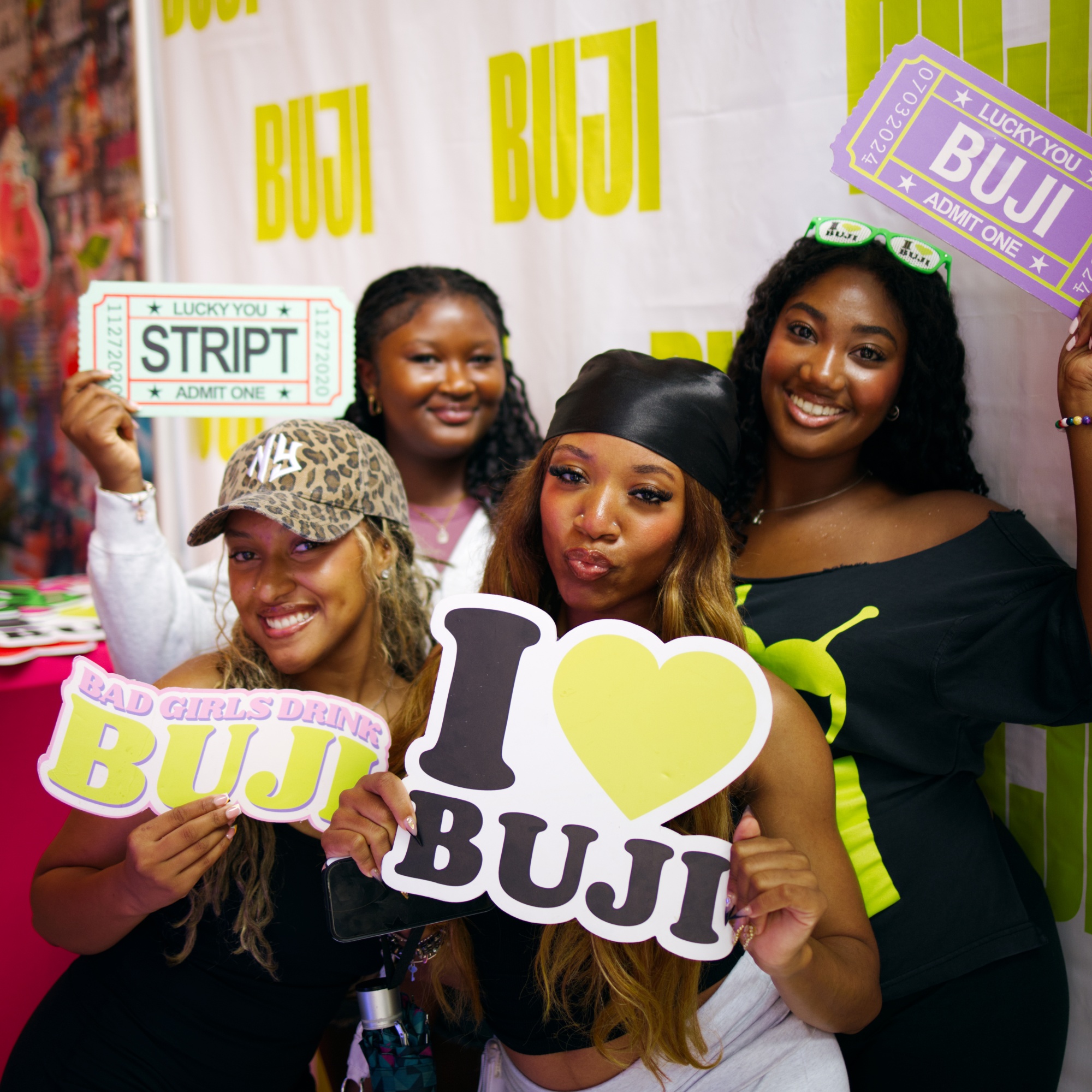
The “BUJI Baddies” have taken over timelines nationwide. From their pop-up matcha carts in cities around the country to their Stript merch, BUJI Matcha has expanded what getting an iced beverage can mean—it’s not just about the caffeine, but about the experience.
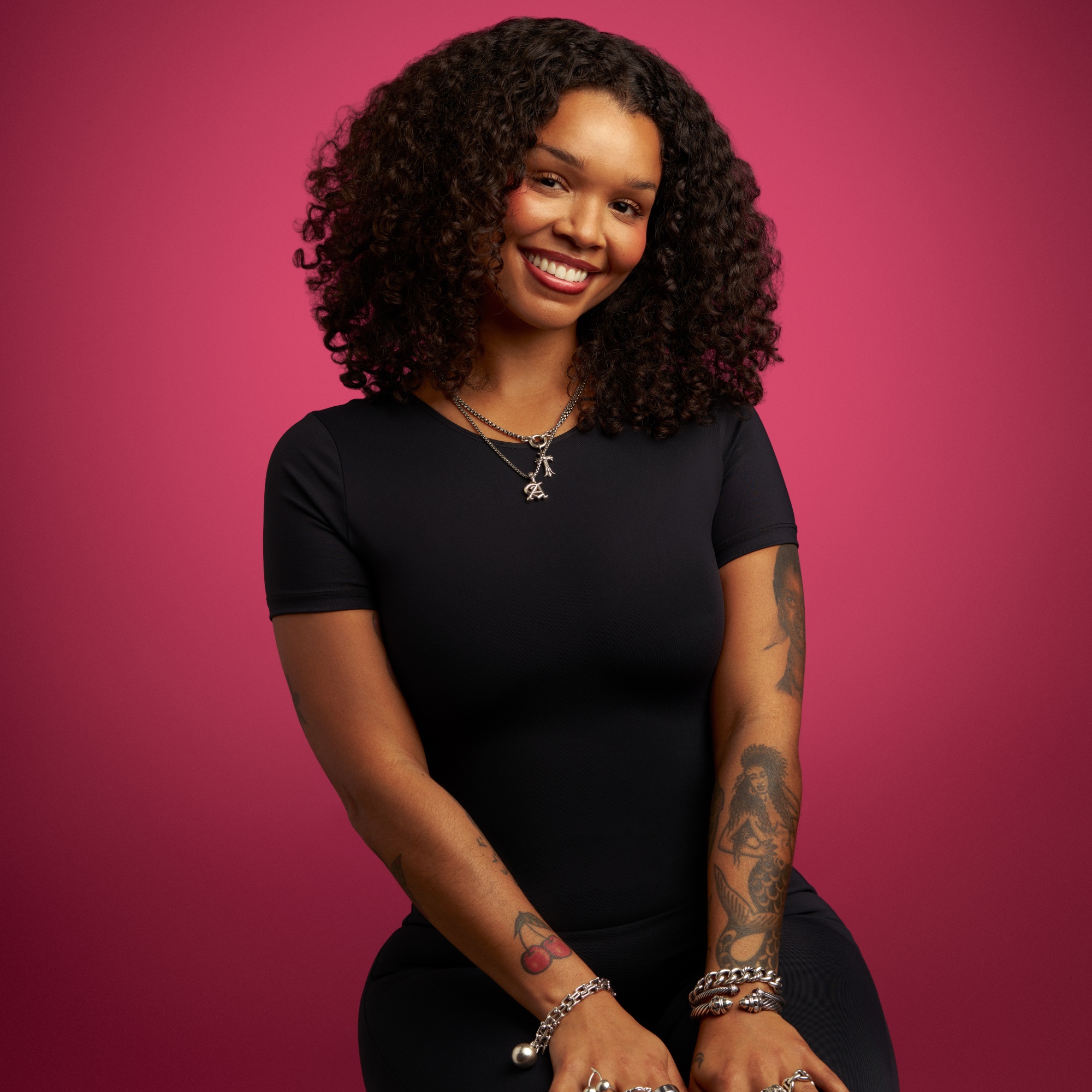
EBONY got the chance to sit down with Ari Davis, Founder of Stript and BUJI Matcha, to talk about why she does what she does. Being a Howard alumna, Davis has intentionally marketed both of her brands toward Black women, centering their bodies and experiences in industries where they are often not the focus. Not only does Davis create fashion basics and delicious bevs that all the girls want, but she also creates intentional space for them to find community.
BUJI’s pop-up event series, featuring far more than just a beverage bar, has created spaces for women to get out of the house, meet friends, and feel welcomed. They have hundreds of well-dressed Black women gathering to drink matcha—something you don’t see the opportunity to do very often.
The matcha industry does not often center Black people’s experiences, but BUJI is proof that when you do, you can see success.
EBONY: Can you tell me a little bit about your background? Who is Ari? Where did your entrepreneurial spirit come from?
Ari Davis: I grew up in DC. I was born in DC, raised in DC, and I spent a little time in the Virgin Islands. I’m the daughter of two Double-Bison HBCU graduates. I ended up going to Howard, and I’m a Double-Bison—I went to Howard for undergrad and Howard Law. I actually have no entrepreneurs in my [family]; my parents are not entrepreneurs, but one is a lawyer, and one is a doctor.
My mom’s a doctor, and that’s who I attribute a lot of my grit to because she raised my sister and me while going through medical school and residency. I watched her entire journey and ultimately her success as an OBGYN, like she delivered my baby. So I really attribute that to my ability to grind, and obviously her success platformed me to be able to take the risk associated with being an entrepreneur. I was an attorney for a little while, and then I quit. I was only an attorney for three years. So at this point, I’ve been a full-time entrepreneur almost as long as I was working as an attorney.
Stript, your clothing line, has been successful for some time. What inspired the creation of BUJI Matcha?
As you said, I already had a business that was in one community, but I wanted to do another—something different. I traveled to Japan, I met the farmers, I fell in love with matcha. I became absorbed in the matcha world.
And I wanted to be able to create in-real-life experiences with my customers and my community that I had online for so long. The pairing of clothing and retail with a cafe vibe is what made it possible and why I wanted to do it. The launch coincided with the boom of matcha; everyone was talking about the matcha shortage and all of that, and everything just kind of fell into place.
On paper, these businesses feel very different, but they obviously work incredibly well hand in hand. Can you talk a little about the relationship between the two brands? Where is the overlap between apparel and matcha?
Matcha brings people into the space. In order to shop for clothes, you can just do that online. In order to drink a matcha, you have to physically go somewhere and drink. It becomes a hub for seeing people in your community—Stript is really more of a community than a brand, so you get to see the girls at the pop-up in Stript. You get to shop with a matcha in your hand. It creates a physical space for the brand, since I’m not in stores and don’t have my own store yet. It creates a physical hub for people to enjoy matcha.
In my community, matcha is still novel; a lot of people haven’t had it, or if they have had it, they’ve only had bad matcha. So it’s a fun experience. We all like to say it’s a day party for $9… there’s a DJ, a bunch of pretty women, and you can chat and make friends, and shop. They just fit together.
It sounds like a third space. In a time when we’re trying to find places to go that aren’t the club, it sounds like you’ve created an environment for people to just be. What is it about BUJI that you believe resonates so strongly?
We’re creating a space for the communities we appreciate. We’re creating activations for the average girl, as opposed to for an influencer on a brand trip. There’s no RSVP, no ticket price. You don’t even have to get a matcha. You honestly can just come and vibe.
I think that appreciation and the small details, like having a tattoo station and a photo booth, resonate with the audience and show that this is really about creating a space as opposed to just selling matchas, and I think that resonates with the girls.
I think the connection between Stript and BUJI is the fact that the “BUJI Baddie” is a girl who likes to get dressed and do something cute and different—and that connects with our audience. We make sure that the social media photos [include] the things we like and the girls that look like us.
Black women are obviously at the center of what seems to be all of your business decisions, specifically with your marketing and activations. Can you speak to how that affects your clientele? How do the “BUJI Baddies” inform how you expand your business?
We want to meet our customer where they’re at. We’re very clear on who our target is, which is Black and Brown people. Anyone is welcome, but where we target [is intentional]. For example, in October, we’ll have a homecoming tour because homecoming is so special. I’m an HBCU grad; lots of our audience is HBCU students, grads, or Black people, so we know that’s a culturally significant moment for us. So when we do pop up, we want to pop up in cities where an HBCU is having its homecoming weekend.
Even the markets that we go to—we just did Detroit, Cleveland, and Virginia Beach—are places that might not be on everybody’s primary market list. But for us, we end up having a huge turnout in Richmond because we know that people like us are there, so we’re showing up for them. We’re following the customer and connecting to cultural moments for our audience.
It feels authentic. It doesn’t feel like you’re trying to pander. This is your lived experience, and it’s your consumer’s lived experience, so it feels like there’s a trust there for sure. You’re currently on a matcha tour. Can you talk about the decision to test out a variety of markets across the country as opposed to sticking with one singular home base?
Because of the age of social media, we had our first car in the DMV…but the girls are seeing it everywhere on their timeline, and they want it. They’re like, “Please come to this city,” and that’s how we end up in those cities. We want them to experience it. We create Stript shirts for each city, and it just flows. It makes so much sense and helps us grow brand awareness, and it’s fun.