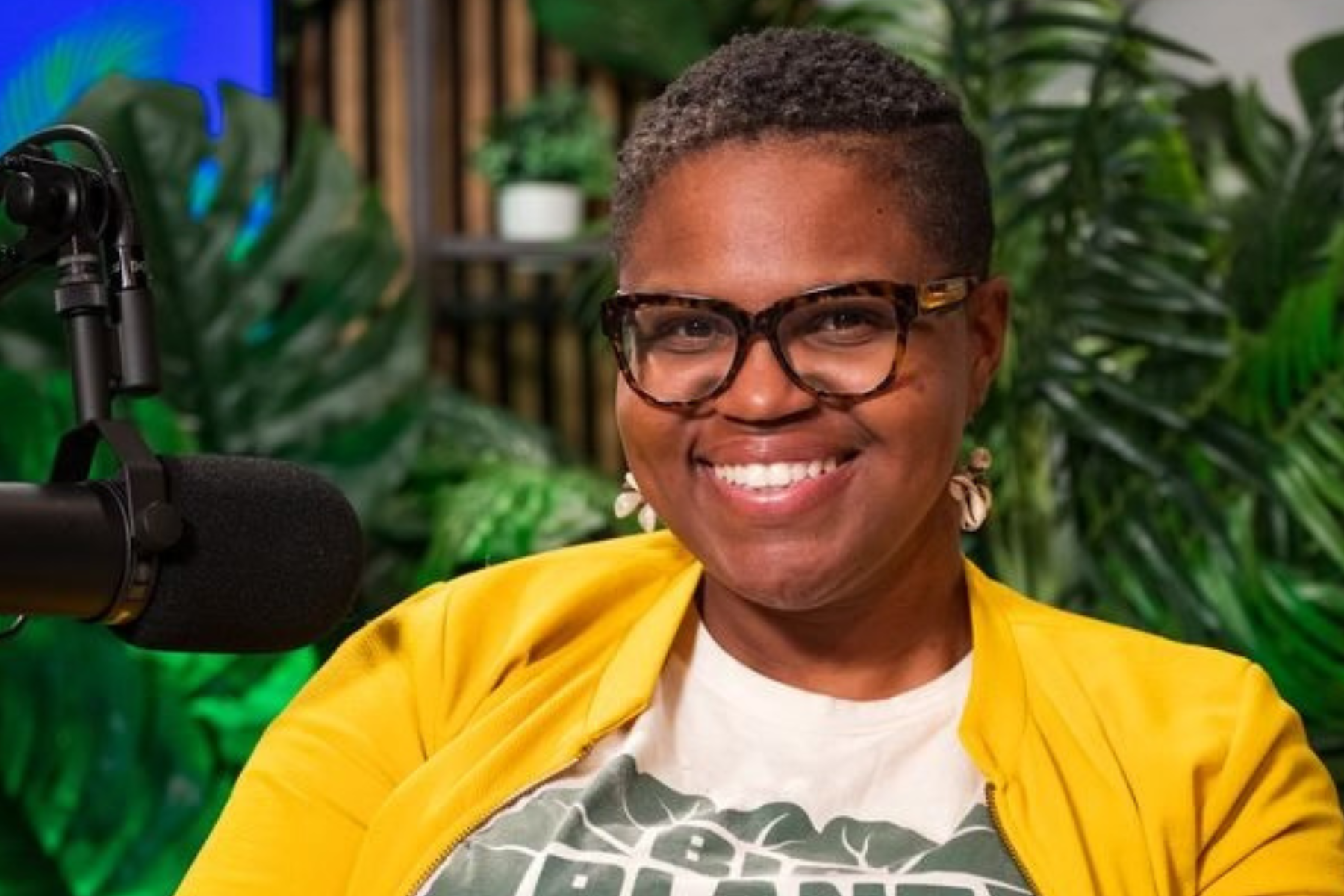
By the time fall arrives, you may be swapping iced lattes for pumpkin spice or scrolling through your friends’ apple-picking photos. But for Colah B. Tawkin, the Atlanta-based host of the Black in the Garden Podcast and founder of Underground Arborist, harvest season means something far deeper. It’s not about hayrides or décor; it’s about memory, migration and lessons in survival from the earth.
Colah is the type to have never met a stranger. She greets you with a smile warm enough to distract a sunflower away from the sun itself. It’s that same warmth that draws thousands of listeners from more than 90 countries to her podcast, all who tune in to hear this garden futurist use the power of storytelling and the language of plants to reclaim history and reimagine belonging.
“Everything I do is about reconnecting Black people to the land,” she said. “We’ve been intentionally pushed out of agricultural and plant industries for generations. My work is about saying: we’ve always been here.”
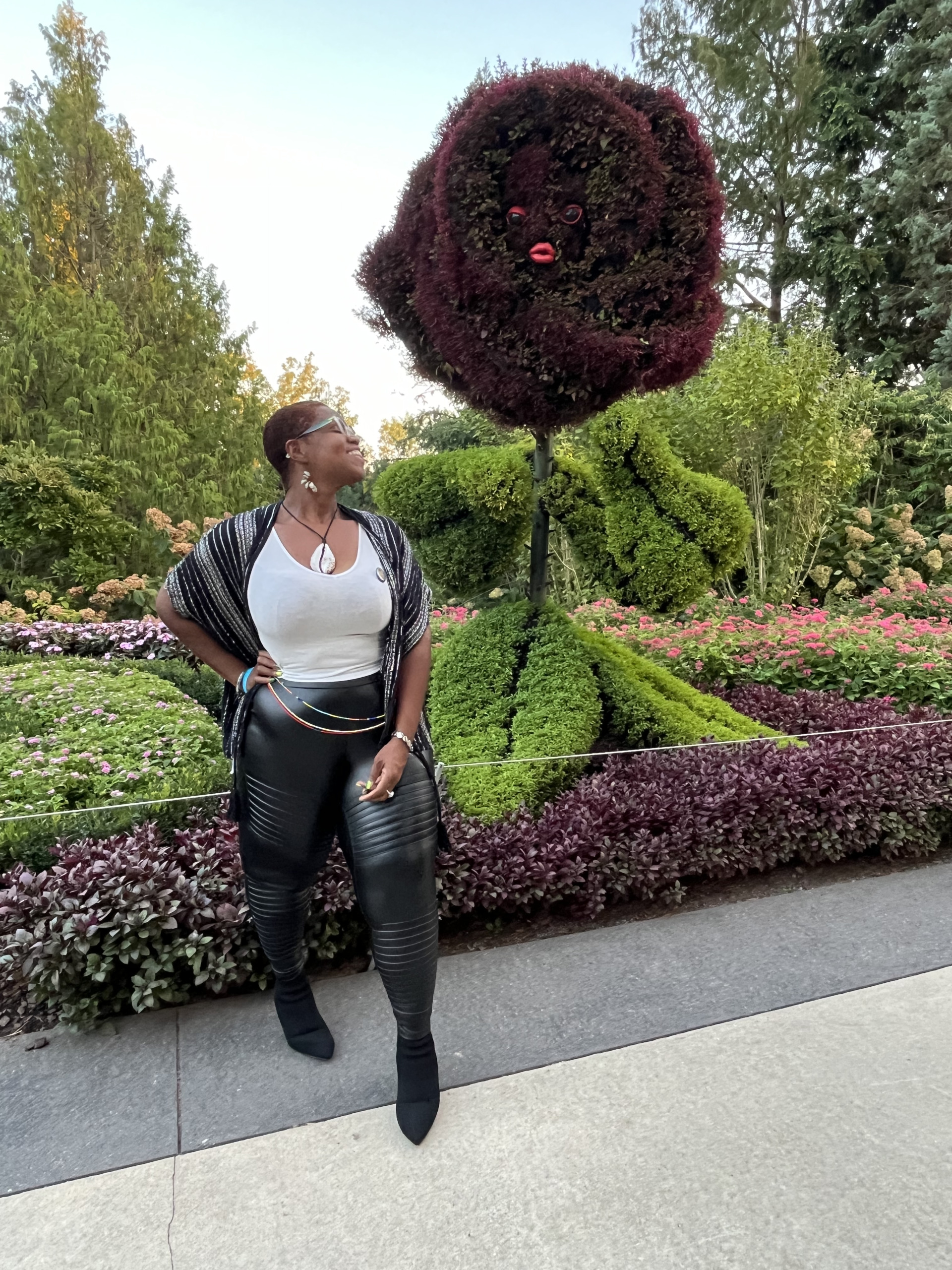
That reclamation didn’t start in a garden. It started with her hair. Growing up in Jacksonville, Florida, Colah says her origin story towards the garden was very “Black girl” when she stopped using relaxers in college. That choice, simple as it sounds, was radical in her household. “It was controversial,” she recalled, laughing. “But it led me down a path of asking: what else can I do naturally?”
Years later, after giving birth to her youngest daughter at home, she started thinking more deeply about what “natural” meant, not just in body, but in lifestyle. “I was learning about the food system and what we were really eating,” she said. “So, I thought, I’ve got to grow my own food.”
That decision changed everything.
In her voice, there’s a rhythm, equal parts humor and truth-telling. She speaks about plants the way some people talk about prayer. When asked why gardening, she beams. “You can’t shortcut the process. When you plant something, you have to see it through. You’ve got to water it, give it light, deal with the bugs, deal with the weather. There’s no fast-forwarding through growth.”
And isn’t that just like life?
Before the podcast, before the nonprofit, there was the road. Colah spent several years as a long-haul trucker, an unexpected chapter that shaped her philosophy on life. “Trucking taught me everything about patience and endurance,” she said. “If I had a load to deliver from Virginia to Arizona, I had to drive every mile. There’s no skipping the journey.”
This metaphor has stayed with her. When she eventually started Black in the Garden in 2019, the idea was simple: make horticulture accessible, engaging and unmistakably Black. “I didn’t see anyone who looked like me talking about this,” she said. “So, I made the thing I wanted to see.”
The podcast, equal parts education and vibe, quickly grew into a cultural phenomenon. Episodes explore topics like the “dark side of pumpkin spice” or “the history of palm trees” through a “Black botanical lens. The conversations blend humor, history, and heart, often touching on identity, sustainability, and the ways Black people have always cultivated beauty out of struggle.
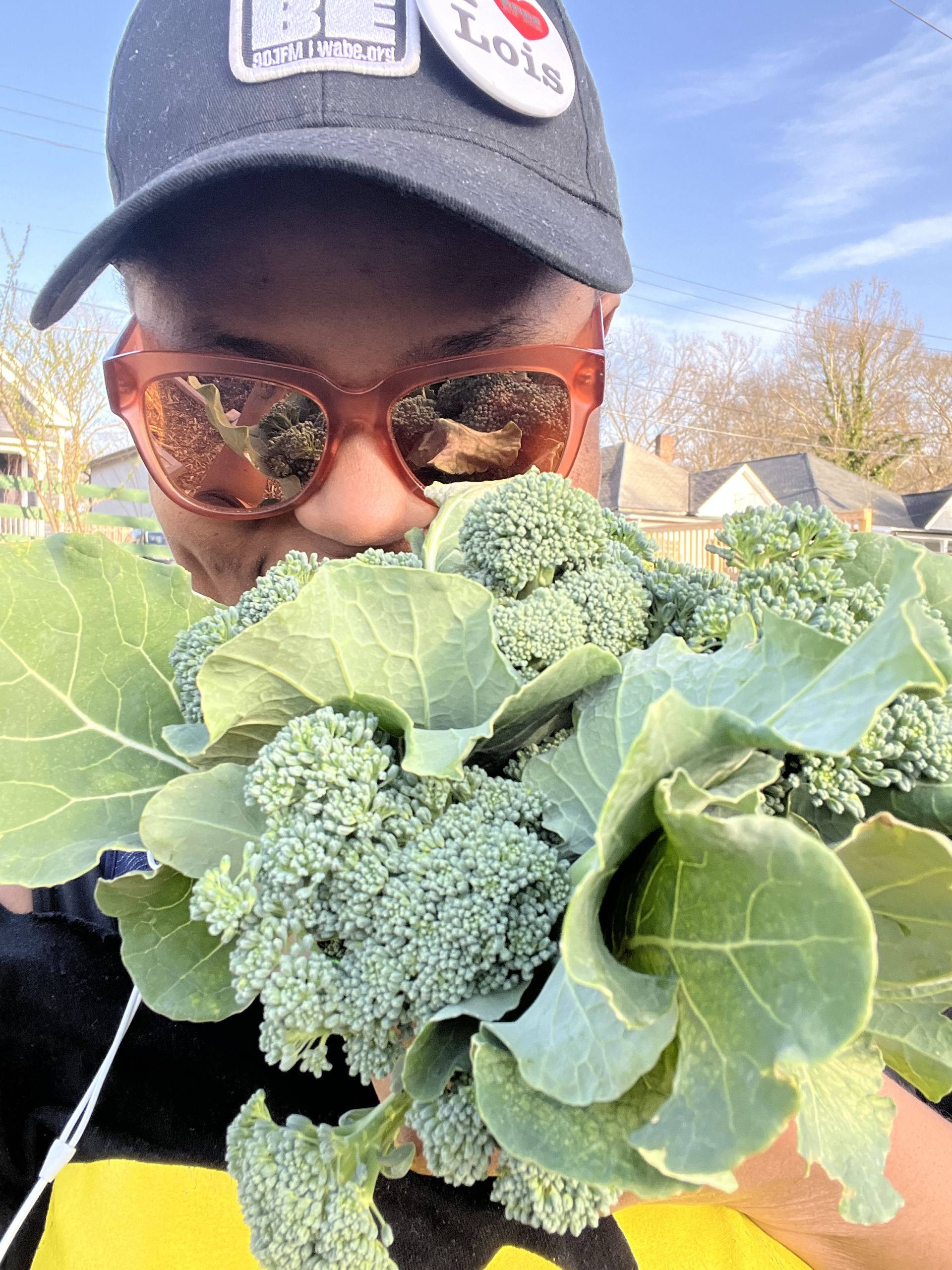
Her audience, whom she affectionately refers to as “Soil Cousins, ”isn’t just a reflection of her fanbase; it’s a community. “I don’t like the word ‘fans,’” she said. “That’s transactional. ‘Cousins’ feels like kinfolk. We’re related through the soil.”
That idea of kinship and chosen family runs deep. Whether through the Compost Society — a community that diverts pumpkins from landfills to community gardens to enrich the soil — or through Underground Arborist, her national tree-planting nonprofit inspired by Nobel Prize winner Wangari Maathai, Colah aims to plant a tree in every U.S. state with her kids while inspiring more people to take part in environmental stewardship. “Planting trees is both activism and prayer,” she said. “Every tree we plant says, ‘we were here, and we’re not going anywhere.’”
As she prepares to celebrate the sixth anniversary of the “Black In The Garden” podcast, I asked what she’s harvesting these days. “Awareness,” she answered. She then added, “and curiosity. I want people to understand that Black people are not new to this; we’re true to this. People have forgotten that many of our ancestors were brought here because they were experts at growing. We’ve always had this knowledge; we just need to remember.”
You can find “Black in the Garden” on Spotify, Apple Podcast, iHeart Radio or wherever you listen to podcasts.