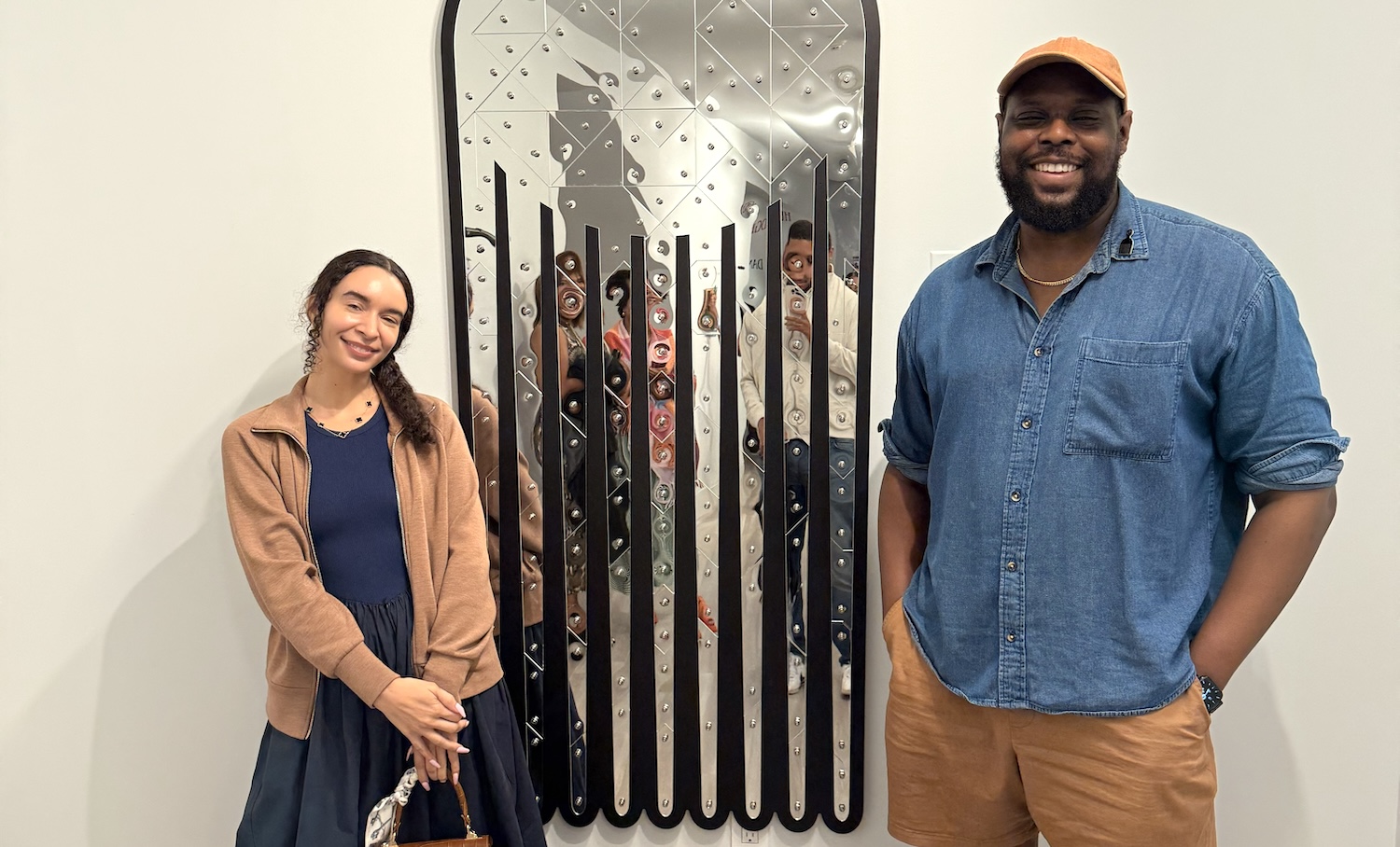
Clippers tightened fades. Oils nourished tresses. And conversations about life, liberty and justice filled the air. Barbershops and hair salons have always been spaces where Black entrepreneurship boomed, offering services that cultivated looks and fostered community. Barbershops and beauty parlors became a natural gathering place to stay connected to culture and ideas.
The Southampton African American Museum, housed in the building of Southampton’s first African American historic landmark, was one such space. And now, it revisits those entrepreneurial roots with its latest exhibit, artist Damien Davis’ “Hedges and Edges: Barbershops, Community Gardens, and the Architectures of Care.”
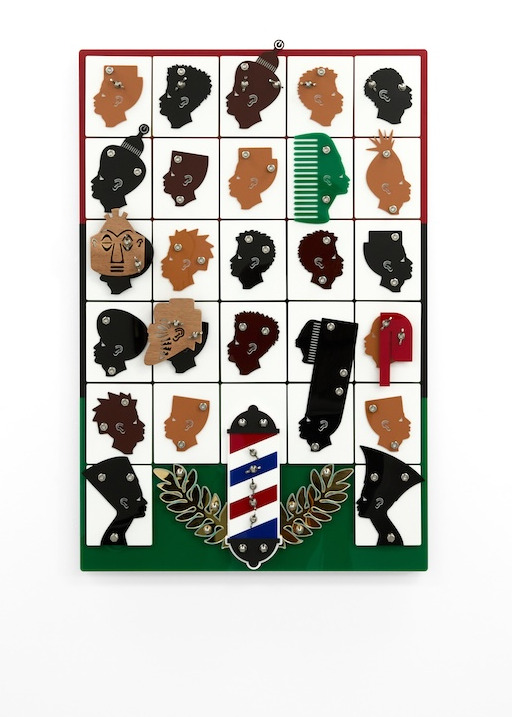
Presented by Hamptons Black Art Council, which was founded by artist, curator and writer Storm Ascher, Davis’ exhibition explores the social histories of Black barbershops, salons and community gardens as spaces of care, maintenance, ritual and collective gathering through sculpture and live activations.
“Growing up, there was a barbershop adjacent to the church I grew up in. So, we would almost always get our hair cut there,” Davis shared with EBONY. “What I loved about that space, which is also similar to the museum, is that it was a barbershop/beauty parlor. So, it was Black men and Black women caring for themselves.”
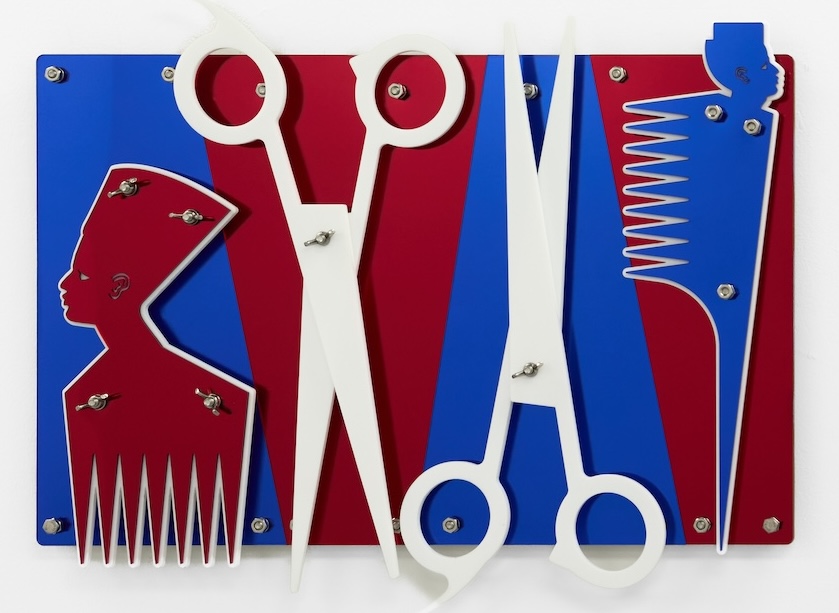
In this reexamination of the business of relaxation, restoration and rejuvenation, Davis explores how the Black barbershop can be a space where masculinity is exhibited to a heightened degree, but also one of intimacy for Black men.
“Historically, Black men have not been given as many opportunities to be fully themselves, or to not feel like they have to perform for an audience or for a public that’s over-surveilling them, over-policing them. I tend to think of these spaces as the space for all this possibility of liberation,” he revealed, adding, “where we’re able to be ourselves and hopefully be comfortable.”
The GLAAD Equity in Media fellow is also questioning how these spaces extend to the queer community. “As a queer Black man, I can sometimes feel like those spaces are not as liberatory as I would hope them to be.”
Presenting tools and imagery associated with these spaces, the exhibit explores the past and highlights the building’s entrepreneurial roots. The pieces presented are primarily made out of laser-cut acrylic and stainless steel hardware. “Almost everything I make is out of those materials. I just really like the honesty of it,” Davis declared.
“I love the idea that these different shapes can mean different things to different people based on their lived experience. And the work, in a lot of ways, is about challenging the viewer to make sense out of what these shapes mean in relationship to each other to build a larger narrative.”
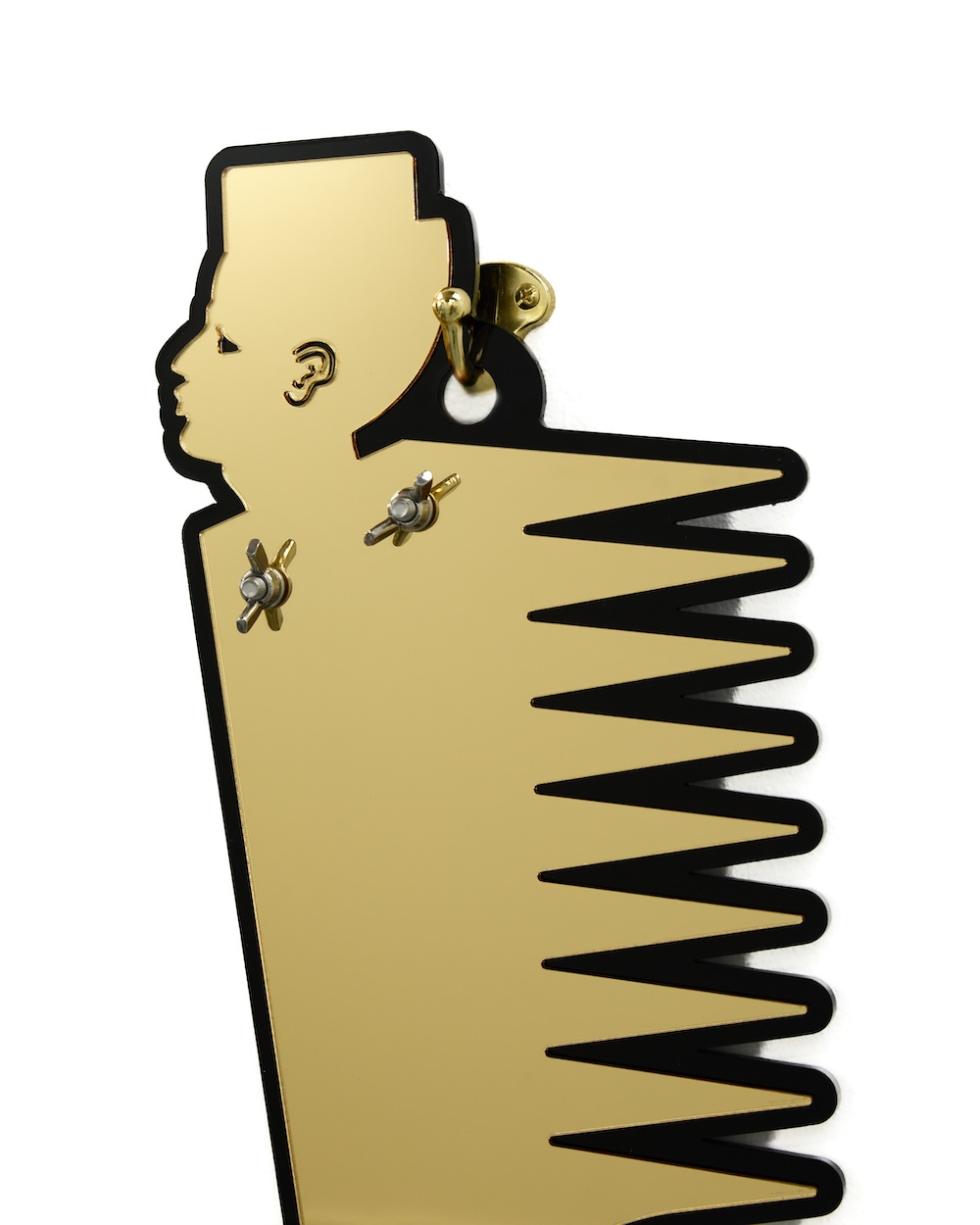
Almost all of the pieces have fluorescent acrylic and are illuminated with black lights. “The pieces are all designed so the edges on a lot of the works will literally glow.”
With designs resembling hairstyle posters you’d see on the walls of a haircare establishment, Davis challenges “how you organize yourself, how you look at different options and build your identity through the menu that’s presented to you.”
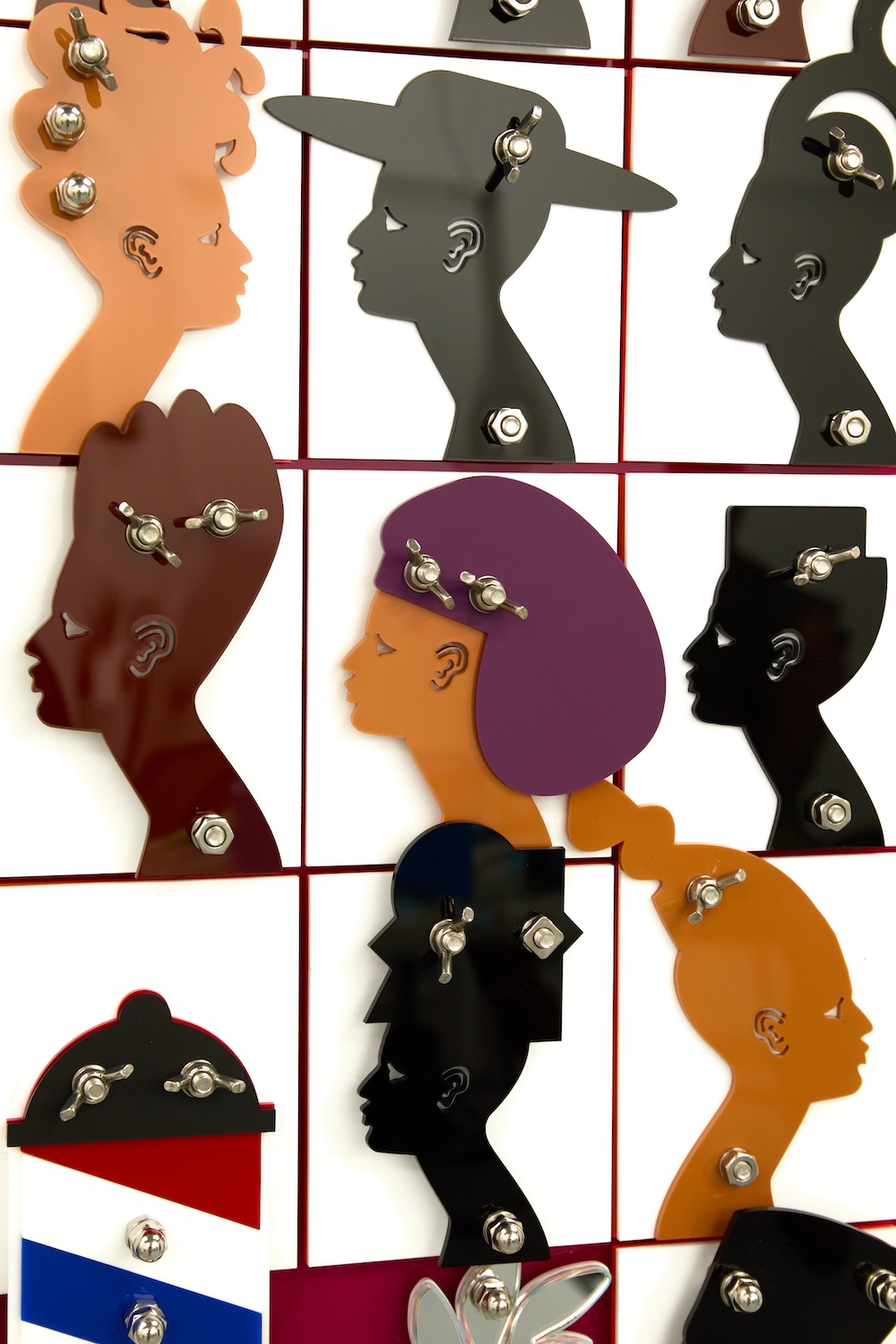
The exhibition also includes a live component: actual haircuts happening on the premises. “This becomes an opportunity for us to revert the space or transform the space back to its original use, as a way to open up conversation about these third spaces where Black Americans would not just make themselves beautiful, but also share political information, find community and chosen family.”
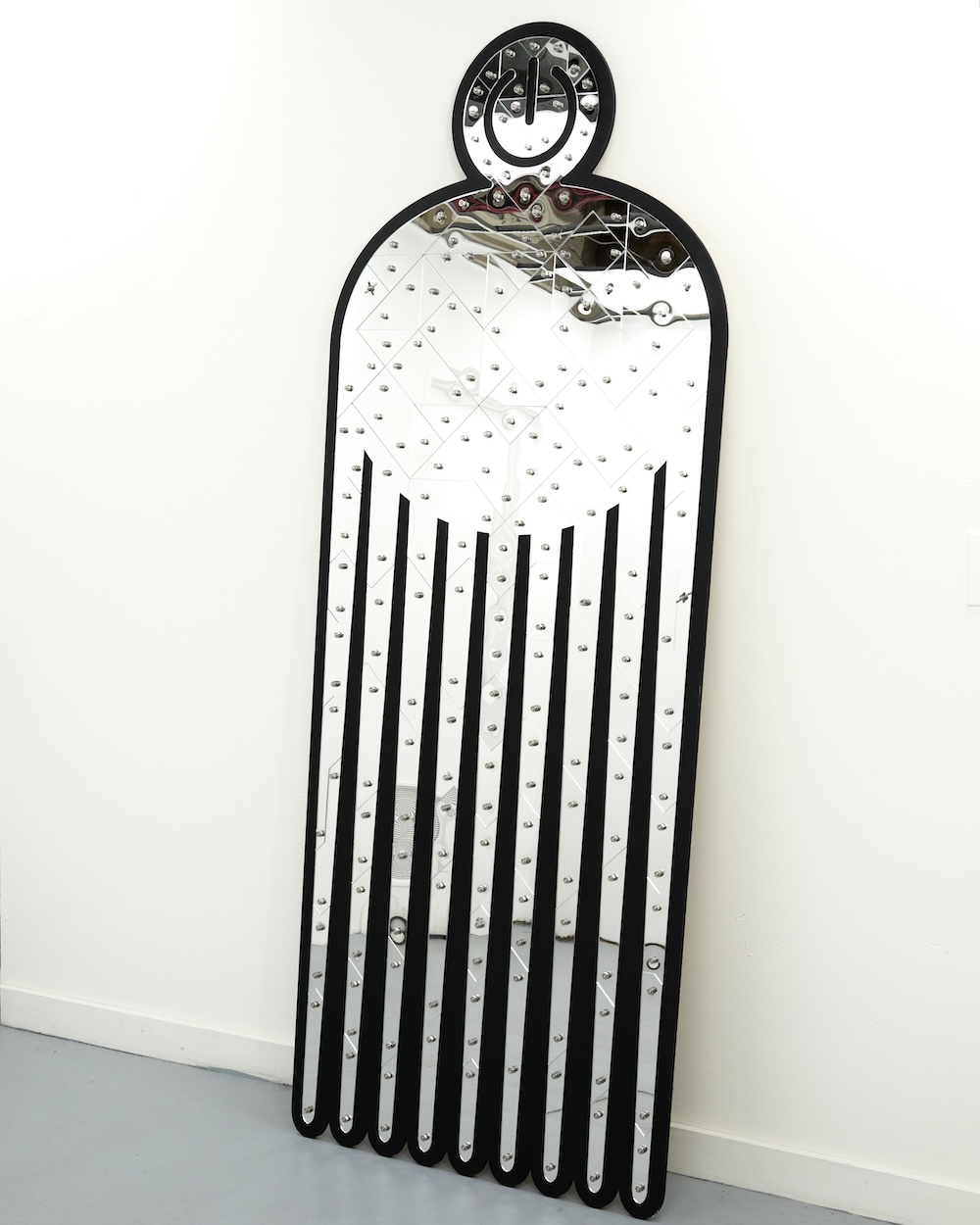
Davis hopes the exhibit leaves visitors recognizing that the spaces we create for ourselves and our communities are open to interpretation, interrogation and improvement: “These spaces that have held us and allowed us to be ourselves, how do we further work towards making those spaces feel more liberatory for more people?”
“Hedges and Edges: Barbershops, Community Gardens, and the Architectures of Care” is open to the public through November 11, 2026.