Fifteen minutes before showtime, the energy backstage at Advisry was already building. Models moved through the room as designer Keith Herron made his final inspections, surrounded by everything from glossy leather and shimmering knits to dramatically draped eveningwear. For Spring/Summer 2027, Herron wasn’t interested in simply making beautiful clothes. With America, Still, Advisry looked backward to ask a far more complicated question about the present: nearly 50 years later, how much has America actually changed?
Framed by the voice of James Baldwin speaking in 1969, the collection unfolded in three acts: reaction, dignity and transformation. Herron looked to the social tension of the 1970s to consider a familiar American cycle, one in which instability can produce fear and restriction, but also creativity, community and reinvention. Rather than promising which direction the country is headed, America, Still documented the people who emerge under that pressure and dressed them accordingly.
“Showing is still always the best opportunity to do the storytelling of a collection, and it’s honestly probably my favorite part of it, because beyond making wearable clothes that can exist in people’s lives, I also love to tell these fun narratives and build these big worlds,” Herron told EBONY backstage before the show.
And there was a world to enter. Church fans took the place of traditional programs, The Isley Brothers filled the room and Baldwin’s words brought another generation into conversation with our own. That sense of Black cultural familiarity mattered, particularly for a designer whose presence on the official NYFW calendar comes during another season in which Black designers remain underrepresented.
At only 25, Herron has become a familiar presence at New York Fashion Week, but he isn’t interested in treating that visibility as an individual victory. “It makes me proud to be able to exist and be on the calendar and represent, you know, what may be lacking presently,” he said. “But there’s a lot of great talent out there, and there’s a lot more designers that deserve to be on this calendar.”
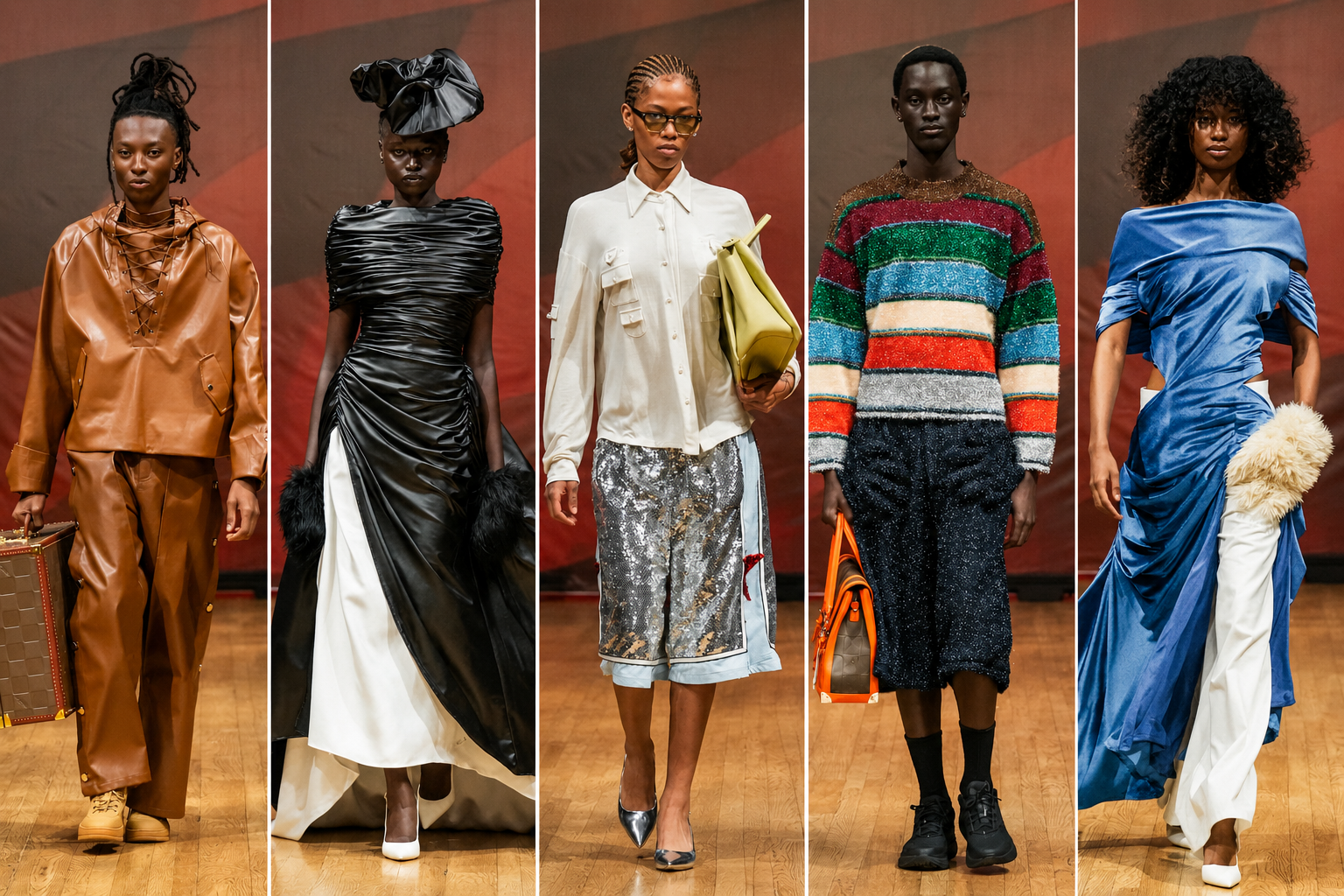
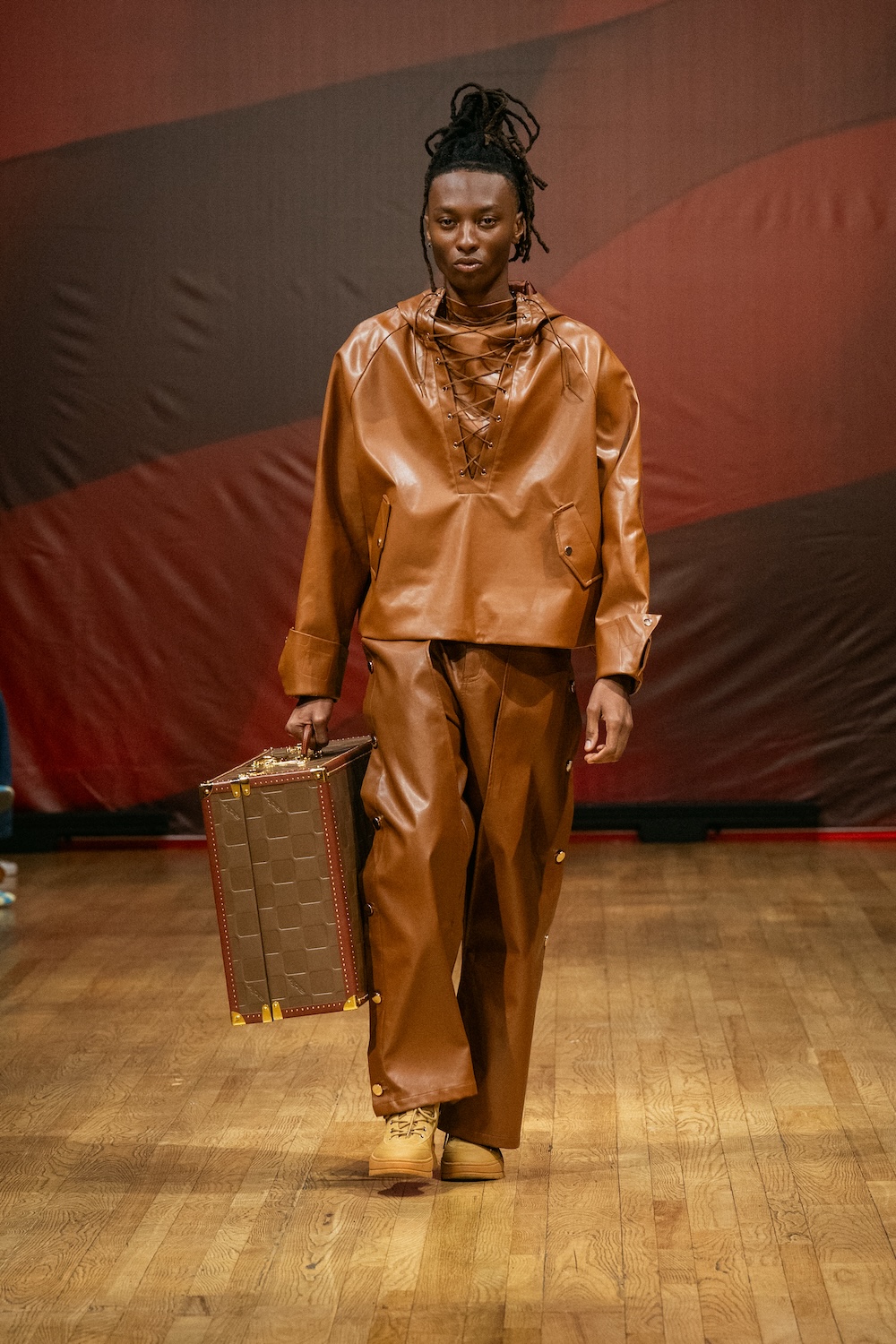
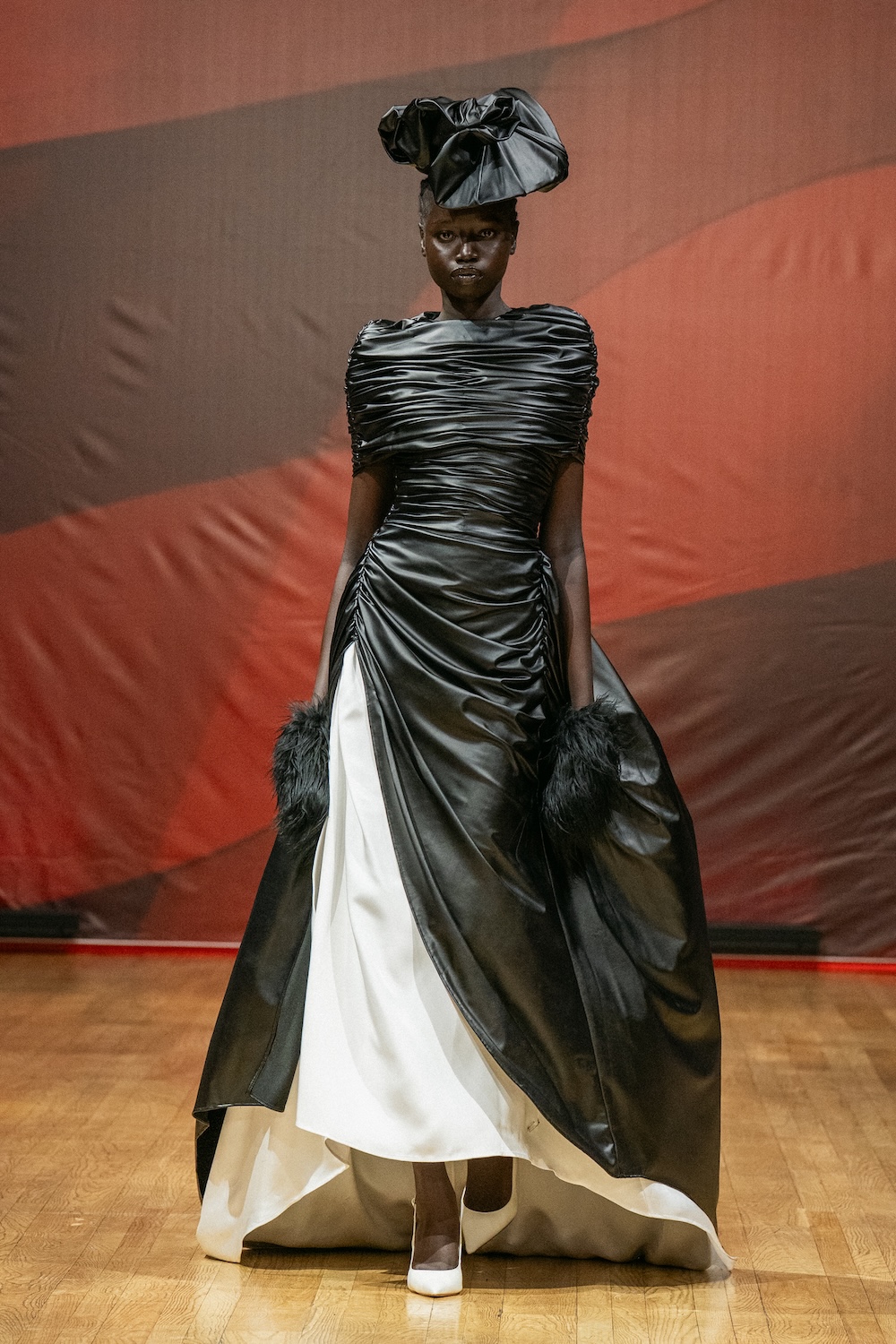
The clothes gave Herron’s larger argument its clearest language. Early looks carried a feeling of containment. Brown leather was worked into an oversized lace-up pullover and wide trousers, its polished surface offset by hardware, cords and a structured trunk-style bag. The silhouette was relaxed, but the crisscrossing neckline suggested restriction, an idea that appeared elsewhere through straps, buckles and pieces that seemed to hold the body in place. In another striking moment, black leather was ruched tightly across the torso of a floor-length gown before opening over a contrasting ivory skirt. Paired with furry cuffs and an exaggerated sculptural headpiece, the look took something severe and gave it grandeur.
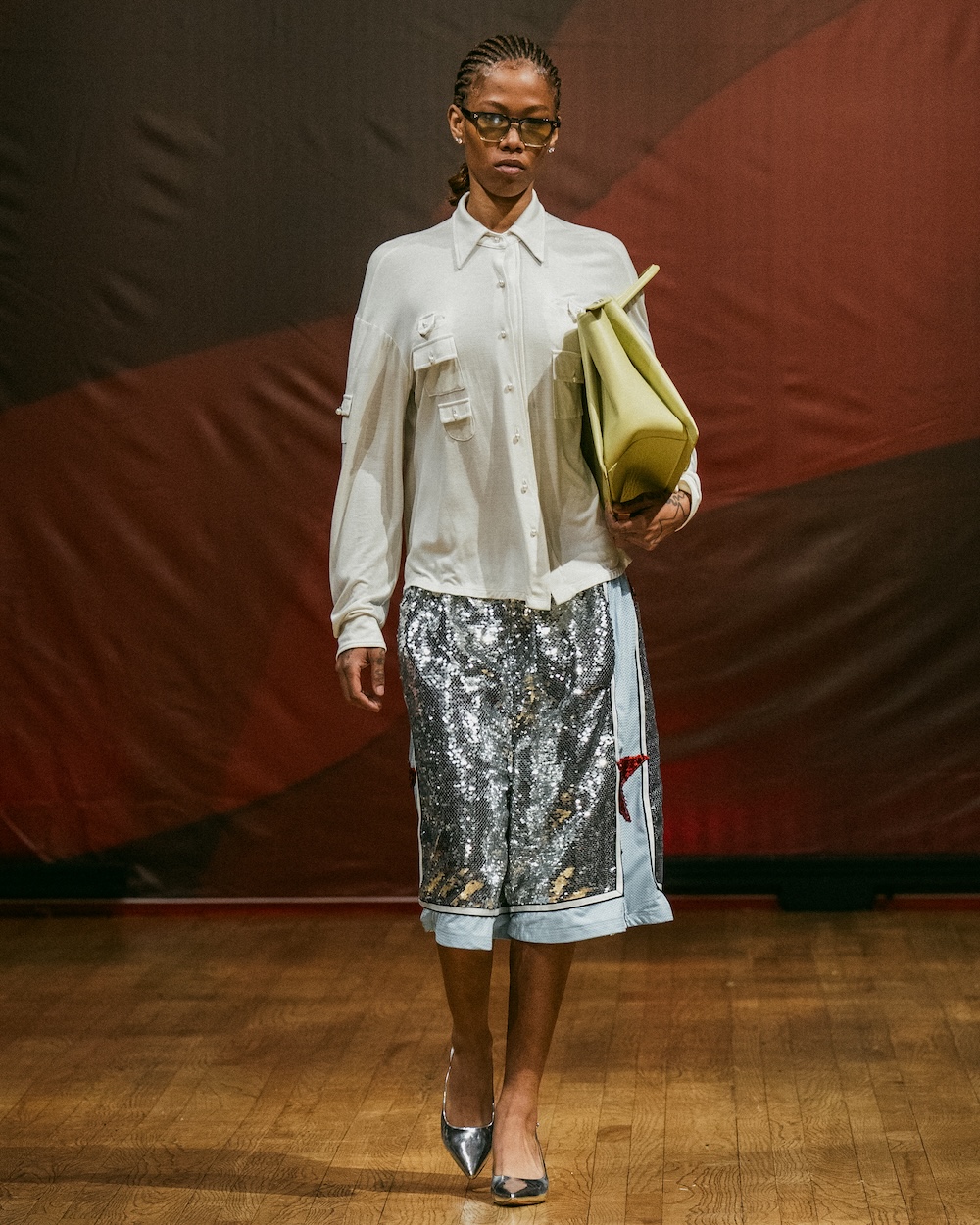
As the collection moved from reaction toward dignity, that tension loosened. A pale utility shirt with multiple pockets was paired with knee-length shorts covered in mirrored silver sequins, collapsing the distance between workwear and glamour. The combination could have easily felt like two different wardrobes competing for attention, but that friction was precisely what made it interesting. Advisry’s longstanding streetwear instincts were still present, only now Herron was allowing them to coexist with a much broader vocabulary.
“Streetwear has always met and represented how people interact with their daily lives and wear on the street, but it also represents community,” Herron said. “I think community can be built in ways beyond just T-shirts and hoodies, and I don’t think that part of it has died. It’s simply evolved.”
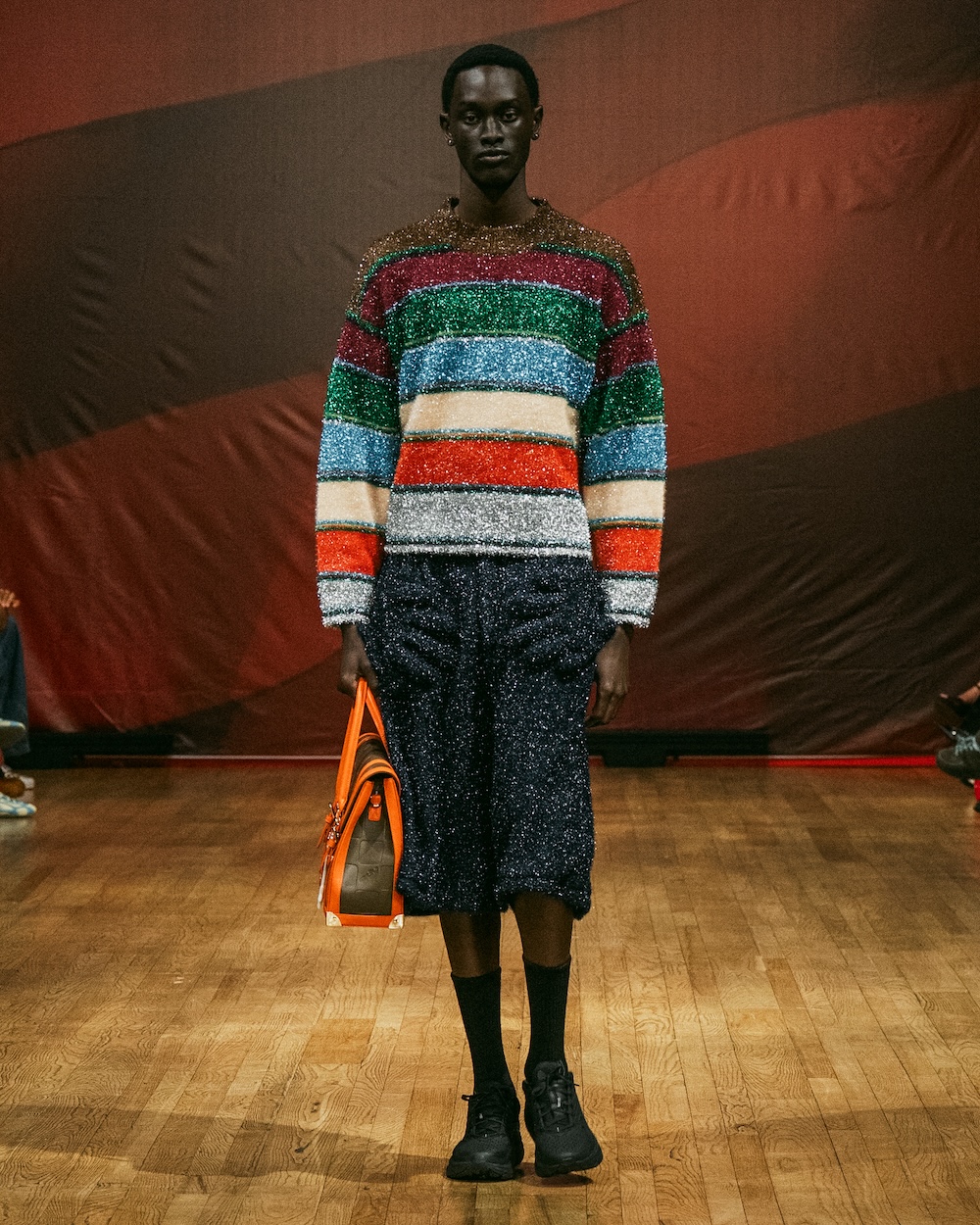
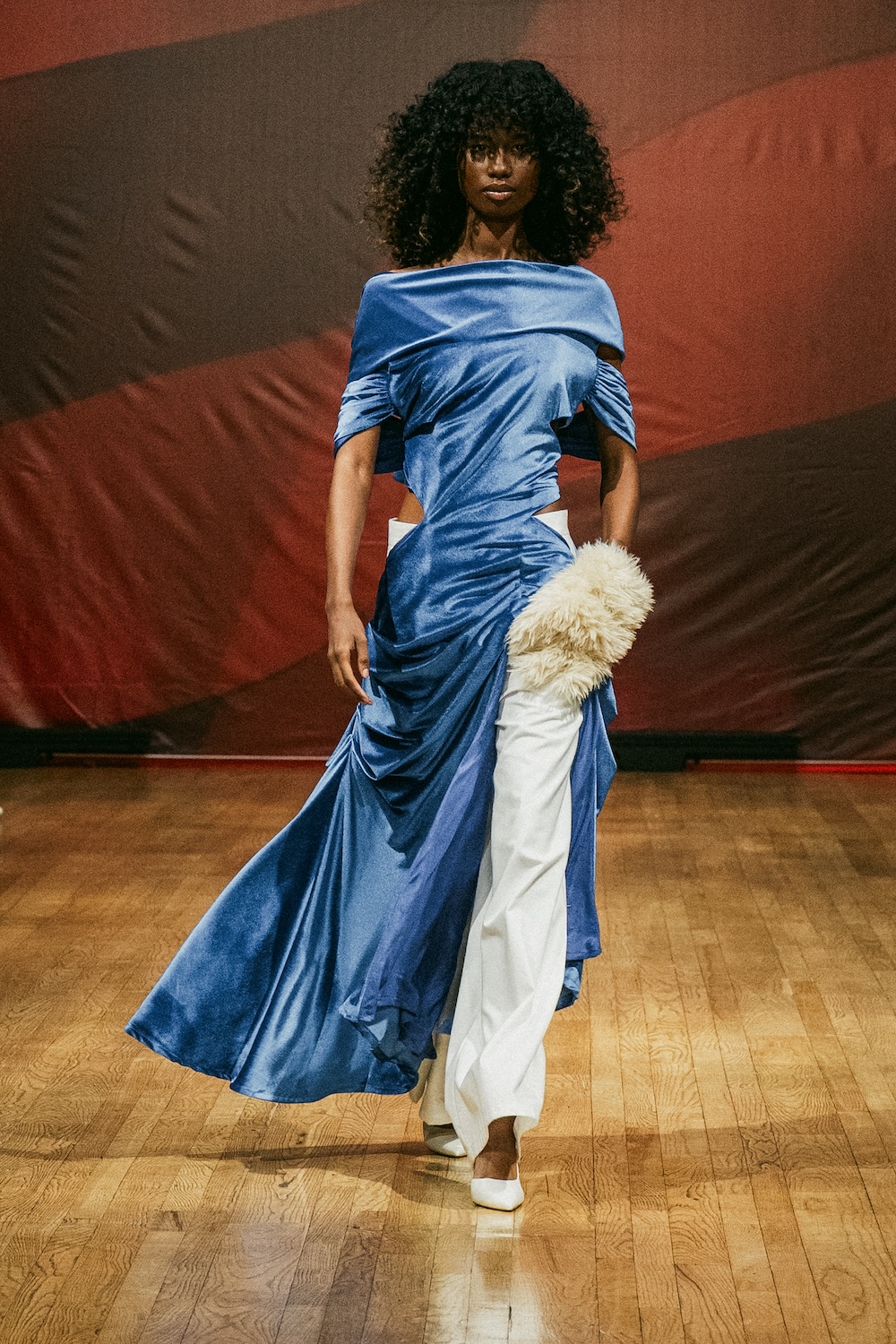
That evolution became increasingly apparent as the runway progressed. A glittering striped sweater arrived with equally sparkly cropped trousers, transforming an everyday knit-and-shorts combination into something almost celebratory. A cobalt-blue draped top swept asymmetrically across the body and continued into a fluid skirt worn over crisp white trousers. Finished with a shaggy cream accessory at the hip, the look had movement, sensuality and a welcome softness that pushed Advisry beyond the expectations often placed on a streetwear-rooted label.
Even the show’s commercial partnerships were absorbed into that wardrobe rather than distracting from it. Hoka sneakers appeared alongside tailoring and relaxed separates, while wearable Cash App tags were integrated into the collection. For Herron, the spectacle ultimately has to lead back to clothes people want beyond Fashion Week. “It’s about making sure the clothes are seen and then sold,” he said. “The goal is always to just make things that people actually want to wear.”
By its final act, America, Still had traded much of its early restraint for shine, saturated color, sequins and exaggerated texture. But Herron resisted giving his audience a tidy answer about what that transformation means. That’s what makes the collection more interesting than a simple exercise in nostalgia. Baldwin’s voice may have come from 1969 and Herron’s references may look toward another politically turbulent American decade, but the clothes belonged firmly to the present. America, Still asks us to recognize the repetition without pretending we already know the ending.