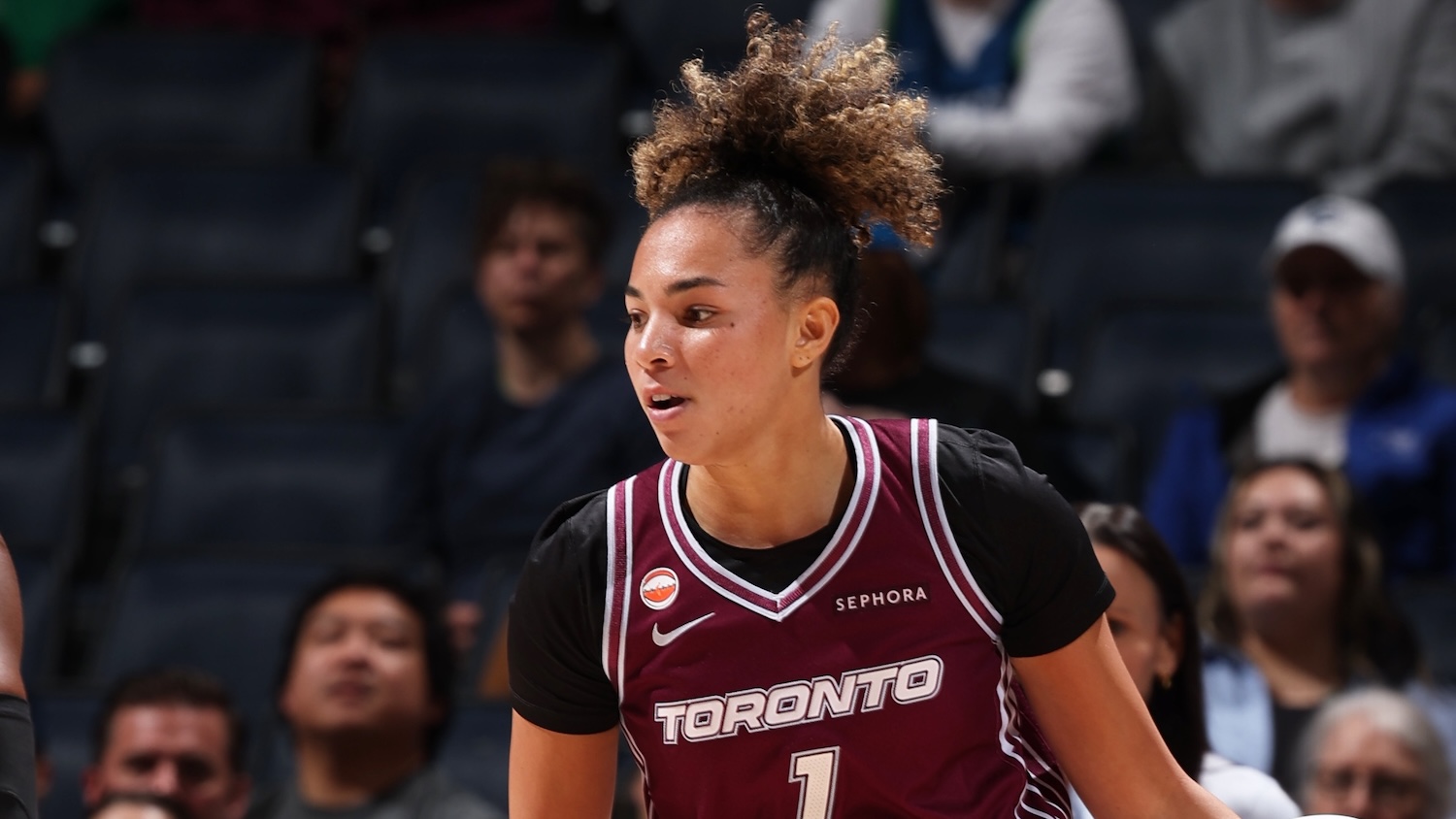
If there’s one word I would use when it comes to Kiki Rice, it would be legacy.
And no, not because her grandfather was a Tuskegee airman and Federal Reserve board member. And no, not because her grandmother is known as the mother of the Pell Grant. And no, not because her cousin is Knicks legend Allan Houston, or her aunt is Susan Rice.
But yes, those things are all true. And honestly, just doing research in preparation for the interview makes you realize how iconic the Rice name is altogether.
But Rice is carving out a legacy of her own, and anyone who has watched her play for even just a couple of minutes would recognize it. Her history includes leading UCLA to its first-ever women’s NCAA championship and being drafted as the first pick in Toronto Tempo history.
Though she has been off the court since early June due to an ankle injury, she still rises. The point guard and combo guard returned to full team practice on July 26 and may return to official game play as early as next month.
What makes Rice different from the standard rookie phenom profile? She knows exactly where she comes from, and she carries the torch proudly.
Mainly because Rice, 22, grew up in a household where excellence was not celebrated as exceptional; it was simply the baseline. With both parents as Yale athletes and her brother Teo currently playing basketball there, the expectations that came with being a Rice were made clear early: whatever you do, you do it all the way. And that standard did not start with her parents. There are names on her family tree you may not know, but should.
Her grandfather, Tuskegee Airman Emmett J. Rice, went on to become the second Black member of the Federal Reserve Board of Governors, appointed by President Jimmy Carter in 1979. Her grandmother, Lois Rice, is known as the mother of the Pell Grant, the federal financial aid program that has sent generations of Americans to college who otherwise could not have gone.
“I vividly remember at the dinner table, my parents with my grandmother there, having a conversation about that stuff when I was younger,” Rice shared. “I’m like, ‘Oh my gosh, this is so boring. Can we talk about something else?’ And then later on, when I started learning about it in school, and I fully understood the gravity of what she did, I’m like, I should have listened to more of those conversations.”
It took some time, but she pieced it together slowly. Her grandfather passed away when she was nine or ten, and though she knew he was important, the full gravity of it did not land until she was sitting in a classroom learning about the Tuskegee Airmen and suddenly connecting the dots.
“I was like, oh my gosh, my grandfather was part of this group,” she said. “I didn’t understand that at the time when I would hear about it. But now, it’s just incredible what he was able to do and what he meant to an entire community of people.”
But wait, there is also the matter of her cousin Allan Houston, who spent 12 seasons in the NBA and was in the building this past June when the Knicks finally won it all. What struck her most was not the championship itself, but a text she got from him the day before Game 7. Hours away from that game, he still took the time to congratulate her on graduating from UCLA. “I couldn’t believe that he was still focused on that and congratulated me for graduating when he had such a big thing going on,” she said.
That is the thing about this family. Even at the top, they keep track of each other. And Rice, for her part, was about to give them all something to keep track of.
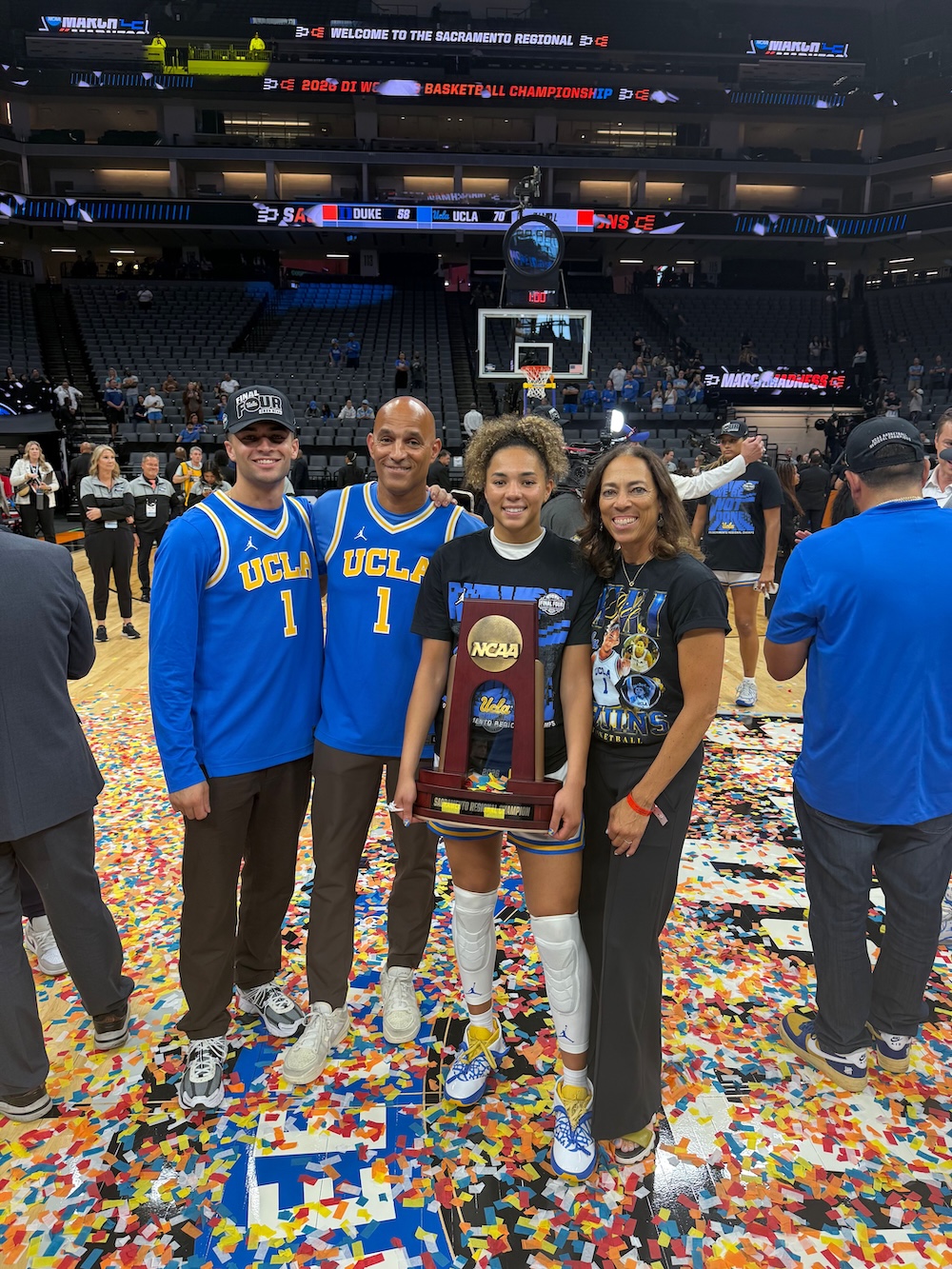
She arrived at UCLA as the highest-ranked recruit in program history (turning down UConn, Stanford, Arizona, and Duke to do it), and spent four years trying to win UCLA its first national championship. This past March, they got there. The Bruins went 37-1, won the Big Ten title, and cut down nets in the national championship.
I asked about the moment the pressure felt most real: that free-throw line in the semifinal against Texas. “I stepped up, and I’m like, ‘This is what I’ve been dreaming of for my entire time at UCLA,’” she recalled. “Take a deep breath, knock these down, and we’re gonna get there.”
She knocked them down.
A few days later she was in New York for the draft, sitting at a table with her family, wearing custom Coach (like the budding fashion icon that she is), trying to be present for something she knew she would never get to do again. “This is a once-in-a-lifetime moment,” she told herself. And when they called her name, she became something no one else ever will: the first draft pick in Toronto Tempo history.
Now in Toronto, she’s been figuring out the tunnel, learning when to dress up and when to just show up in a sweatsuit and save the energy for the court.
She is also building, though. Her first equity stake came through MiniLuxe, a clean nail care brand where she is both ambassador and investor, and she is already thinking about where else to put her money to work. Her parents were clear about this growing up: rich people have their money make money for them. And she got to witness this firsthand by watching other athletes like Serena Williams build a venture portfolio, and newly crowned Philadelphia 76ers small forward LeBron James turn partnerships into ownership.
“Where you really make generational wealth,” she stated, “is off the court.” She also wants to be a GM one day, and she has already started thinking about how to get there.
Legacy, it turns out, is not something you inherit but something you build. And Rice? Baby, she is just getting started.