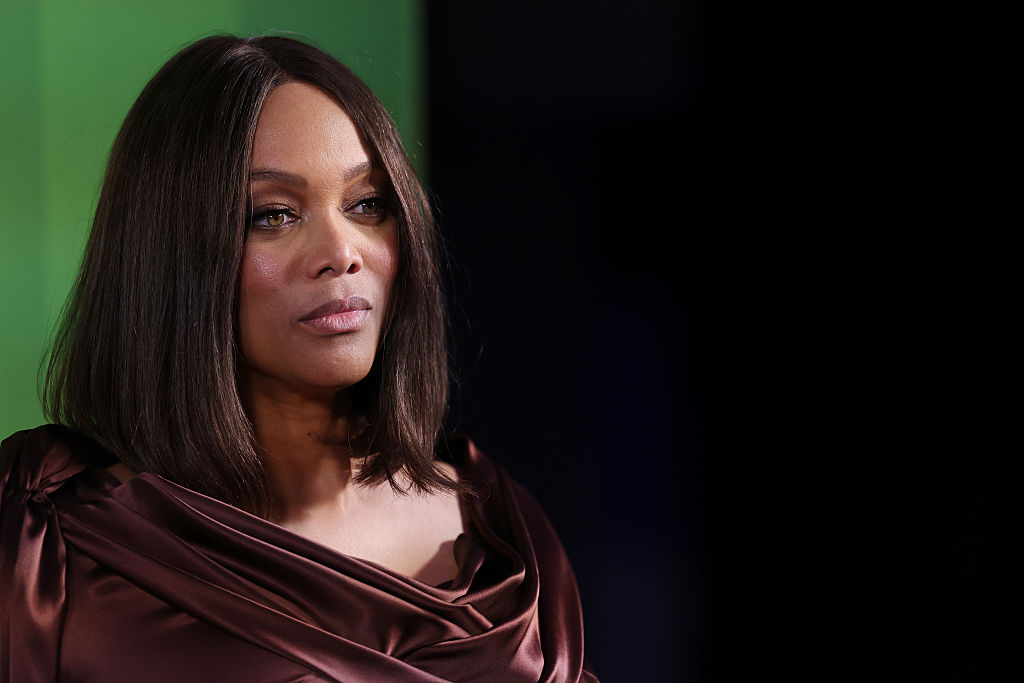
Tyra Banks has sued Netflix, EverWonder Studio and the directors of the docuseries Reality Check: Inside America’s Next Top Model, alleging defamation, breach of contract and false endorsement.
The lawsuit centers on claims that the three-and-a-half-hour interview Banks gave for the three-part documentary, which first aired on Netflix on February 16, was edited down to roughly 16 minutes. Those 16 minutes were then rearranged to create a false narrative about her role in controversies surrounding America’s Next Top Model.
Banks is seeking damages, a jury trial, and an injunction preventing the use of her image in connection with the documentary soundtrack, scheduled to be released soon. Her team claims that the documentary’s release has negatively affected her SMiZE & DREAM business, the ice cream shop she started in Sydney, Australia.
Is Selective Editing Defamation?
Banks has argued that the documentary used selective editing and omitted key portions in which she accepted responsibility for mistakes made during the show’s run. She has stated that those omissions changed the meaning of her interview and presented viewers with a false version of what she actually said.
“Legally, the case may come down to whether the documentary merely presented opinions and personal experiences, or whether the editing and omissions created a false impression about Tyra’s conduct that would be understood by viewers as fact,” former entertainment lawyer Lydia Agu, who has not worked on the case, stated to EBONY.
How Could Netflix Position Its Defense?
One of Banks’ lawsuit’s strongest allegations is that the documentary implied she knowingly allowed a contestant to be sexually victimized during production, and that incident was later exploited for ratings, as recounted by the participant who was featured in this ordeal. Banks has responded that the narrative is completely false and that she was never given the opportunity to fully respond to those allegations.
“On one hand, the documentary includes former contestants sharing their own experiences and perceptions of what occurred during their time on America’s Next Top Model. Their voices and experiences matter. On the other hand, Tyra appears to be arguing that the documentary’s editing and presentation created a misleading narrative that painted her in a false and defamatory light,” Agu said.
“Netflix will likely argue that it accurately presented the contestants’ accounts and that many of the statements are protected opinion. Tyra, in turn, appears poised to argue that the documentary selectively edited content like this in a way that distorted the truth and damaged her reputation,” Agu continued.
“Defamation by implication” doesn’t necessarily argue that a statement is literally false, but argues that the overall message created by the presentation is false. Courts do generally recognize defamation by implication, but they set a very high bar—one that can be especially high for public figures like Banks.
Does Netflix Have Any Protections?
A consent contract granting a production company permission to use someone’s likeness usually accompanies any videotaped appearances intended for large-scale distribution. That case is likely no different for Banks’s appearance in the documentary.
“Often agreements for documentaries/unscripted programming give the network/producers broad editorial discretion, granting producers the right to edit footage however they choose, even acknowledging the content may present them in an unflattering manner,” shared attorney Donald M. Woodard, a partner with Carter + Woodard Entertainment and Sports Law, who is also not on the case. “These agreements will include a waiver of claims and release of liability covering defamation, invasion of privacy and related claims.”
In relation to the sexual misconduct storyline outlined above, Woodard noted that “the agreement will not cover deliberate fabrication of a sexual assault narrative. That is, consent to editing is not consent to defamation.”
Banks has stated she was not called for fact-checking, given a chance to respond to allegations presented by others in the documentary, or explicitly told about the sexual assault line of questioning.
Who Will Prevail?
Whether Banks or Netflix and the attached production outlet ultimately prevail may come down to two questions: what Banks agreed to when she participated in the documentary, and whether she can prove the final product crossed the line from critical storytelling into defamation. Documentary participation agreements are typically written to give filmmakers broad discretion over how interviews are edited and presented, which could provide Netflix with a strong defense.
As a public figure, Banks also faces the added challenge of proving actual malice, which is a notoriously difficult legal standard that requires showing the filmmakers knew a portrayal was false or acted with reckless disregard for the truth.
But contractual protections are not absolute. If Banks can demonstrate that the documentary’s editing created a materially false impression about her conduct, her claims could gain traction.