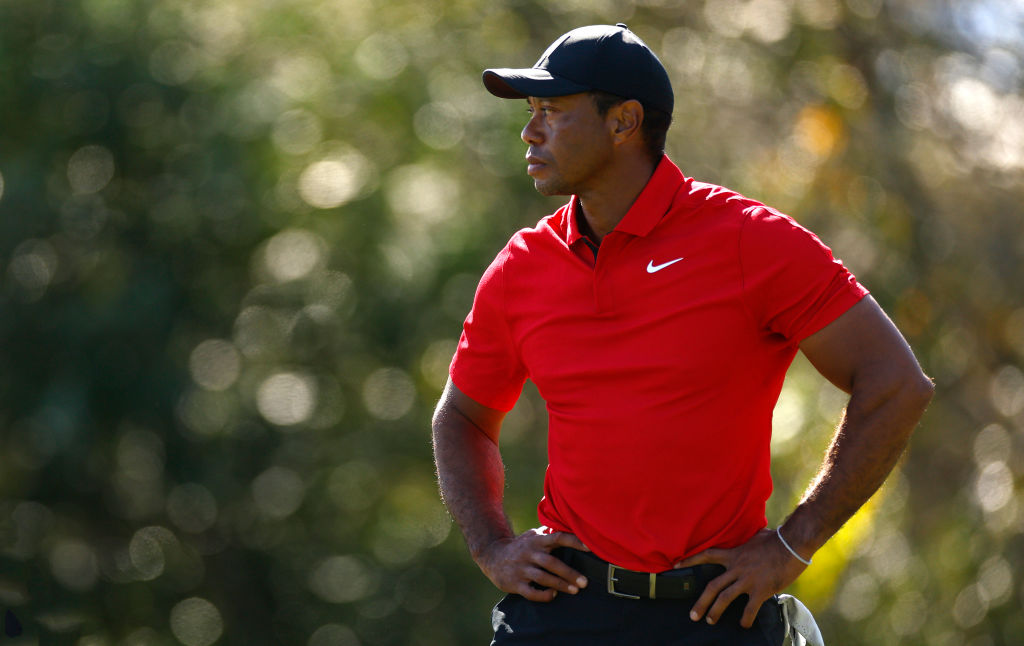
For a generation of Black golfers, Tiger Woods was not just a champion. He was proof that someone who looked like them could step onto the most exclusive courses in the world and dominate. Proof that golf, a sport long associated with exclusion, could be disrupted.
But proof is not the same as permanence. And decades after Tiger’s rise, the question is no longer what he changed. It is what still has not.
Before Tiger, There Was a Fight to Even Belong
Tiger’s dominance can make it easy to forget that golf did not open its doors willingly. It had to be pushed and challenged. And long before Tiger ever picked up a club on a professional stage, Black golfers were already doing that work.
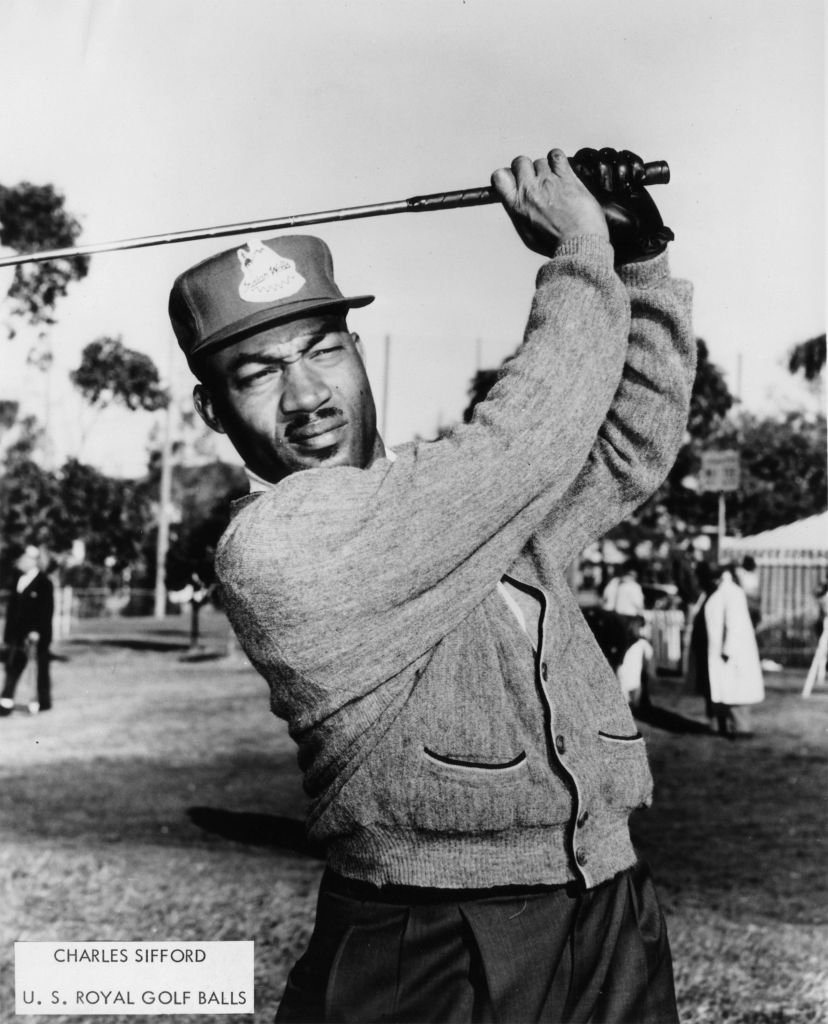
Charlie Sifford did not just integrate the PGA Tour. He endured harassment, exclusion, and hostility to earn his place, becoming what many call the Jackie Robinson of golf. Lee Elder stepping onto Augusta National in 1975 was not simply a milestone. Rather, it was a disruption of one of the most exclusive traditions in sports. And then there is Ann Gregory, who carried that same defiance into women’s golf, dominating on the international stage while navigating both racial and gender barriers in spaces not designed for her to succeed.
Even beyond the professional ranks, access to golf has always been shaped by who could afford to play, who had proximity to courses, and who felt culturally welcomed into the sport. By the time Tiger arrived, the ground had been broken, but it had not yet been leveled.
The Tiger Effect and the Myth of Transformation
When Tiger turned professional in 1996, everything about golf seemed to accelerate. He brought a new audience, new energy, and a level of dominance that forced the sport to evolve. Prize money increased, television ratings climbed, and youth programs targeting Black communities expanded across the country.
This surge became known as the “Tiger Effect,” a belief that his presence would create a sustained pipeline of Black golfers rising through the ranks. And in many ways, it did expand participation. Millions of Black players entered the game at the recreational and junior levels.
But the transformation stopped short of the professional stage.
Research examining African American participation in golf found that while engagement grew, representation at the highest levels remained limited. Tiger did not usher in a wave of Black PGA Tour players. He stood largely alone, not because others lacked talent, but because the structural realities of the sport never shifted at the same pace as its visibility.
The expectation was multiplication, but the reality was exception.
Identity, Distance, and a Complicated Relationship
Tiger’s impact on golf is undeniable. However, his relationship to Black identity has always been more layered.
In 1997, during an interview with Oprah Winfrey, Tiger described himself as “Cablinasian,” a term he created to reflect his mixed heritage. For many in the Black community, that moment introduced a tension that has never fully resolved. Tiger was embraced as a symbol of Black excellence. At the same time, he resisted being defined solely within that identity.
Because representation is not only about who people see, it is also about who they feel seen by. Tiger carried the hopes of a community that claimed him, even as he defined himself on his own terms.
Legacy, Grace, and the Weight of Expectation
Over time, Tiger’s personal life has added further complexity to the understanding of his legacy. His 2017 DUI arrest and another just weeks ago, followed by his public statement acknowledging the seriousness of the situation and his decision to step away and seek treatment, reinforced a pattern that has been difficult to ignore.
And yet, the response has often reflected something deeply familiar within the Black community. There is grace, there is patience, and there is a willingness to allow space for recovery and redemption. But grace does not remove the question of accountability.
At what point does the community continue to hold Tiger as its central symbol? At what point does it allow him to exist simply as a golfer, a flawed individual, rather than the sole standard-bearer for representation in the sport? And perhaps most importantly, has the weight placed on Tiger delayed the urgency of building something broader?
The Game Today Still Tells the Truth
For all that Tiger changed, the current state of professional golf remains a stark reminder of what he did not.
According to Golf Digest, for the second consecutive year, there were no African American golfers in the 123-player field at The Players Championship, marking the first time in the event’s 52-year history.
Of the four Black players who competed on the PGA Tour this century, none were present. Some have shifted tours, and others are inactive.nTiger himself, now 50, is recovering from injury and no longer holds an exemption into the event.
The visibility Tiger created did not translate into sustained representation at the highest level.
Beyond Tiger, The Game Is Expanding
Still, the story of Black golf is not one of disappearance.
Players like Tony Finau and Cameron Champ have carved out space as consistent competitors at the highest level. Mariah Stackhouse and Cheyenne Woods continue to bring visibility and intention to women’s golf, expanding what representation looks like across the sport.

At the same time, golf itself is becoming more globally diverse. Players like Collin Morikawa and Sahith Theegala reflect a broader shift in who the game belongs to, signaling that a single demographic or narrative will not define its future.
And then there is what comes next. Emily Odwin, a collegiate golfer from Barbados, is emerging on one of the sport’s biggest amateur stages, carrying both her national identity and her identity as a Black woman into spaces where that visibility still matters. Her presence represents something different from Tiger’s era. She is not breaking in alone but showing up fully.
Life After Tiger
Tiger Woods changed golf. That part is not up for debate. His dominance, his presence, and his cultural impact place him in the same rare air as Michael Jordan and Serena Williams, figures whose influence reshaped their sports in ways that cannot be replicated. Even Rory McIlroy’s latest back-to-back run is a reminder of how rare sustained greatness in golf really is.
Tiger Woods remains one of the few players whose dominance did not just win tournaments, but reshaped the sport’s imagination of who could own it.
But legacy need not be singular to be lasting. What comes after him is not about replacing that legacy. It is about expanding it and building a game where representation is not carried by one name, one story, or one moment, but by many.
The future of golf will not be defined by whether another Tiger emerges. It will be defined by whether there is finally room for more than one.