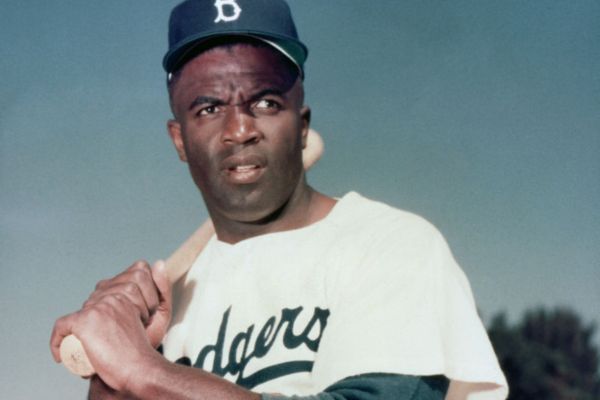
America loves a first. We put it on magazine covers. We turn it into a slogan. We celebrate it during Black History Month. But at times, the concept of celebrating those who have made history can feel a little too neat, because what we often leave out is what did being first cost?
The first person through a door is rarely celebrated. They’re often judged. Their mistakes do not belong only to them. Their stumbles are reviewed under the microscope of public scrutiny, as trolls proclaim it as evidence for the limits of a whole community. Whether the stage is the Oval Office, the Olympics, or one person’s call for social justice, being first always arrives with an unspoken assignment.
Do not just succeed, prove the door should have been opened to begin with.
That is what makes the legacy of Jackie Robinson still feel so crucial, even 79 years after he broke baseball’s color barrier on April 15, 1947. Jackie Robinson was not just the first. He was first in a country that was looking for a reason to tell him — and other Black athletes — to “stay in your lane,” you don’t belong here.
Major League Baseball (MLB) has honored that history in visible ways for decades: retiring No. 42 in 1997, dedicating April 15 as Jackie Robinson Day each year since 2004, and having every player and on-field staff wear 42 on the day since 2009.

But honoring the number is the easy part. The harder part is sitting with the truth that Robinson knew failure was not an option.
That’s not just an inspiring thought. It is a whole burden in one sentence. He understood that failure would not be read as one man failing. It would be used as an indictment of everybody who looked like him, dreamed like him, or hoped to follow his path.
What makes Robinson’s story even more staggering is how unlikely it really was. He did not merely endure history. He excelled inside it.
That is why Jackie Robinson Day should never be reduced to nostalgia. It is not a sepia-toned holiday only to be remembered as a moment on the baseball history reel. It is a yearly confrontation that follows every barrier-breaker, asking the question of what it costs to be the first, and what do institutions owe the people they celebrate after the fact?
Major League Baseball’s “We Are Jackie” Campaign
For April Brown, MLB’s Senior Vice President of Social Responsibility & Diversity, the question of what is owed is not abstract. For her, it’s family history before it became a professional calling.
Brown, a Queens native, traces her love of baseball directly to her grandfather, who grew up in South Carolina. Brown’s very own soundtrack of summer was baseball on the radio with her grandfather as he regaled her with stories of watching Robinson play in person.
As she shared these memories with EBONY, you could hear in her voice that Jackie Robinson is not just a civic icon to her. He is part of her memory, part of her inheritance, and is at the center of her purpose.
In its present tense, on Jackie Robinson Day, fans tune in on April 15 and see the pageantry: the 42s, the tributes, the unified visual reminder that baseball pauses to honor the man who changed it. But for Brown the spirit of MLB’s “We Are Jackie” campaign is not just a one-and-done activation.
“The work is done all year long,” she said.
Brown pointed to the work done with the Jackie Robinson Foundation, founded by Rachel Robinson in 1973, which includes support for college scholarships and year-round engagement with Jackie Robinson Foundation scholars.
MLB also has a broader commitment to access for youth through free baseball and softball initiatives, refurbished fields in communities historically underserved, and workforce pathways for students who may not play professionally but are looking for their own route into the business of baseball.
For Brown, honoring Jackie Robinson is not just about reverence, it’s about reach.
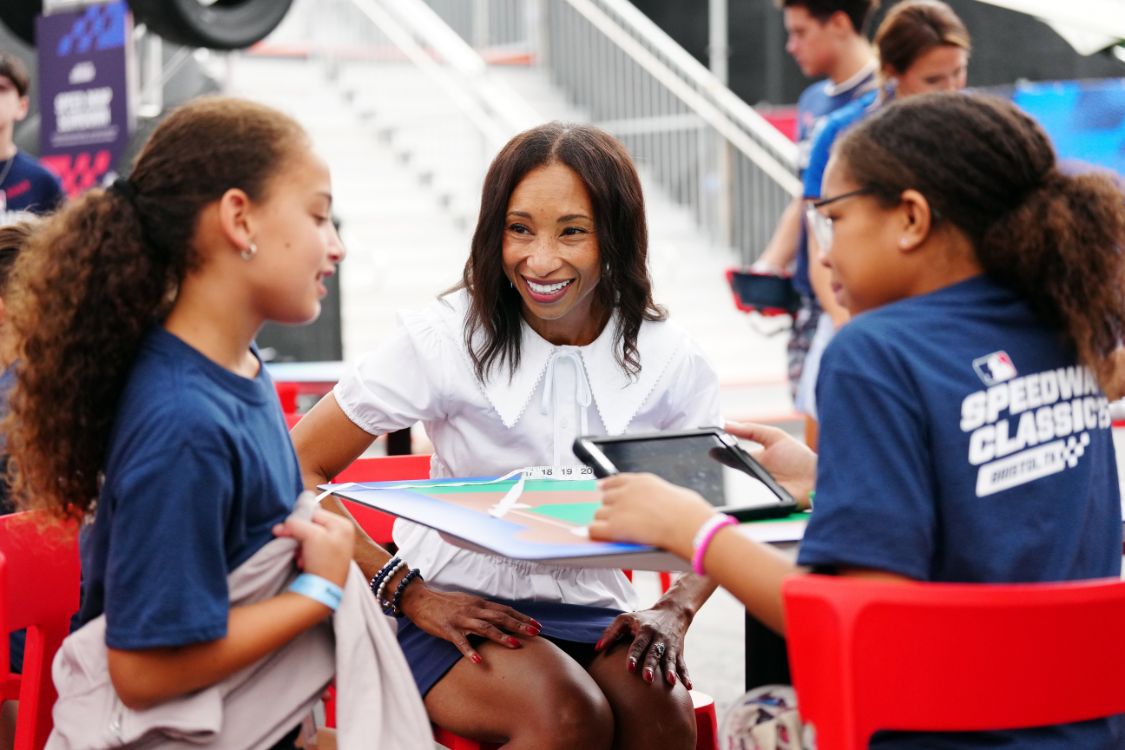
And MLB’s own Jackie Robinson Day, at least on paper, supports that view with its field-level symbolism sits on top of a much broader ecosystem of service, education and access. This is important because if honoring Jackie Robinson is going to mean anything, it has to show up in a tangible way.
Forty-two looks beautiful stitched across a jersey in Dodger blue. It looks even better attached to a scholarship, a refurbished field, a free clinic, a mentoring lunch, an internship, and a kid who now believes baseball belongs to them, too.
If Robinson’s legacy is only aesthetic, then we have missed the mark. For those who brought him into the game, it may have been just for looks, but Jackie Robinson was so much more. He was disruptive. He was demanding. He forced America to look beyond baseball and to look at itself. No flattering camera angle. No filter.
This is why being “the first” in any situation is not the whole picture. Media, especially in sports, like to tell those stories as a celebration of “being on the right side of history.” As if the breakthrough is the whole point.
But a breakthrough is only the beginning.
More Than Admiration. It’s an Obligation
The real question is what happens after the first person arrives. Do we build the scaffolding to continue to support them? Do we widen the path? Do we make it less lonely or less miraculous for the next person to follow them through the door?
Or do we just keep recycling the narrative of one person’s courage because it is easier than changing the systems that require that courage in the first place?
Jackie Robinson Day challenges baseball on that front every year. Not because baseball has done nothing, but because Jackie Robinson’s life moves beyond complacency.
It moves beyond a creative logo on a T-shirt or a ceremonial first pitch. Robinson’s legacy asks not only for imagination but for investment. It asks for the kind of year-round work Brown described.
It is less about the walk-off home run and more about the sacrifice bunt; the small, necessary plays that move someone else closer to home.

“There is a part of Jackie living in each one of us,” Brown said. It is a lovely sentiment, but it is also a risky one. If not used intentionally or with caution, it approaches marketing speech, too universal, too easily crafted for the headline.
But she’s right; Jackie Robinson does live in the courage of everyday people who step into rooms never designed for them. He lives as the first child in a family to graduate from college, and the entrepreneur who leaves the security of their day job to bet on themselves.
Here’s the real assignment on Jackie Robinson Day. Remember the man, yes. Watch the movie, 42, absolutely. But do not stop at tribute. The truest way to remember Jackie Robinson is to move from admiration into obligation.
Because for Jackie Robinson, the moment was bigger than baseball, and he knew he could not fail… and neither should we.