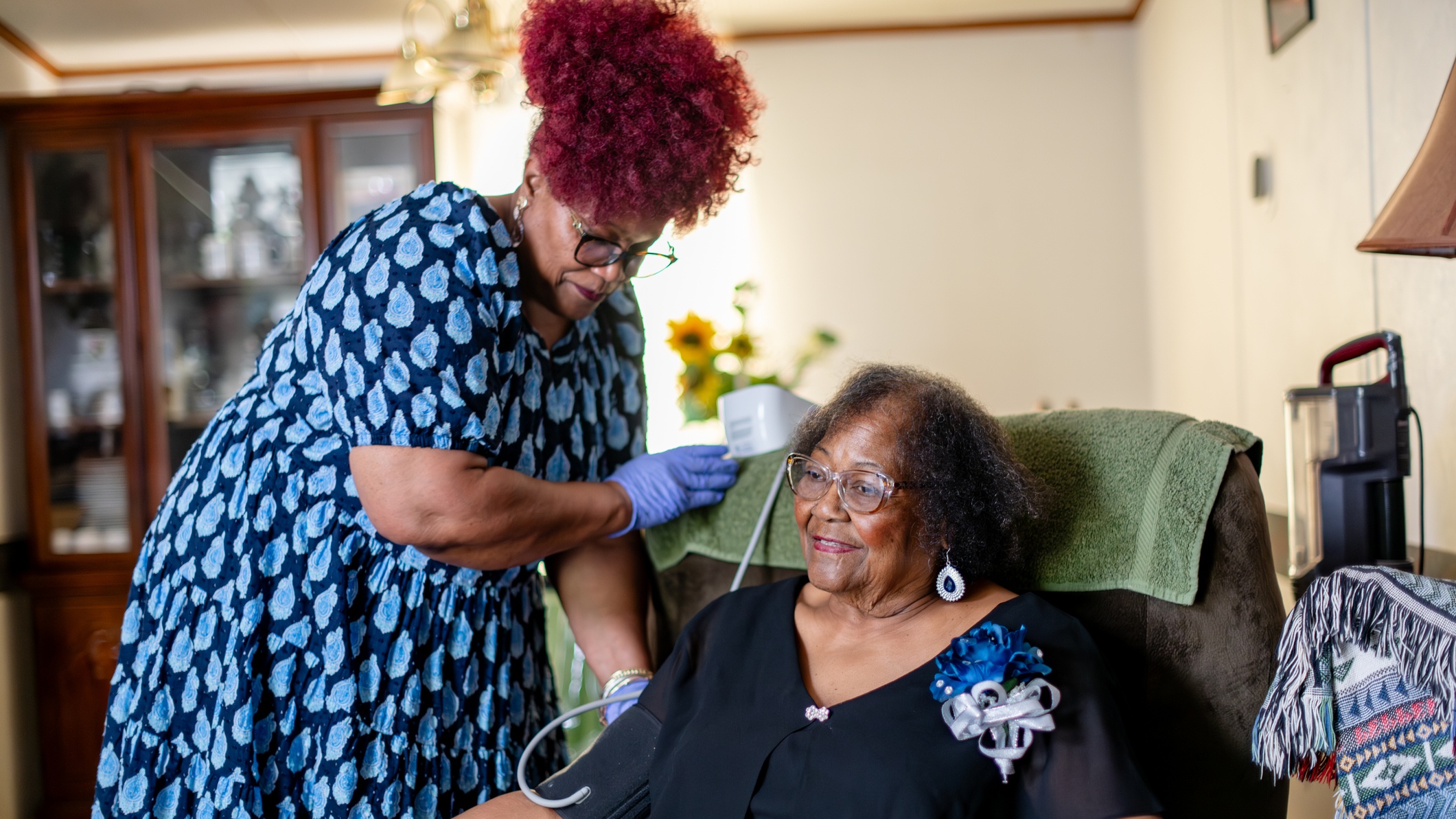
As adults, one of the most life-changing things we can encounter is watching our parents and grandparents grow older and not be the superheroes we grew up with. Aging is real, and while it is a beautiful journey, it can also be a major shift for everyone around. As an eldest daughter and granddaughter, I’ve had my fair share of caregiving for the elders in my family, which is why Saturday Night Live‘s latest sketch, Sister, hit super close to home for me during this National Family Caregivers Month.
In the bit, host John Mulaney presents a common issue for people who aren’t ready to source outside help for aging elders. “My dad means the world to me. So when I noticed him start to slow down, I knew I needed to get him the best care possible,” he said. “I didn’t want to put him in a nursing home, but a private health aide could cost thousands a week. I didn’t know where to turn. That’s when I heard about ‘Sister.’”
‘Sister’ represents a 24-hour, round-the-clock service from your actual sister, which feels both ironic and spot on as to what many families face daily. According to data, 60% of Gen Z and Millennials were reported as first-time caregivers in 2021, and this number has not only grown but has also sparked new conversations about what the next generation of caregivers looks like.
“To every SISTER watching SNL this weekend, I see your quiet tears masked in a soft smile,” a user shared on Threads. “Although you’re pouring yourself into helping your loved one, remember to take care of yourself every single day. Plan some time off, protect your peace, and continue to give yourself grace. You deserve to be cared for, too.”
The sketch highlighted the harsh reality of what it means for many eldest daughters who continue to make sacrifices and hard decisions for the sake of their elders due to “years of internalized sexism” that can “warp a sister’s brain into thinking caretaking is her responsibility and somehow not yours,” said Mikey Day’s character in the sketch. Often, there’s not just the central unfairness of women taking on this kind of care work, but also the hurtful resentments that build over time in these situations from others who aren’t contributing as much.
“I felt seen, triggered, and laughed. If SNL made a skit, I guess I’m not the only sister,” Danielle Washington said on Threads. “Sisters: any tips for getting your brothers to help more with caregiving?”
According to the National Institute on Aging, one main step is to prepare a list of things that need to be done and let the other person choose what they’d like to do. This allows for streamlined communication, and you can prioritize what’s most and least important. All in all, SNL’s Sister sketch highlighted an unfortunate universal experience that many oldest daughters face: they often bear the brunt of these responsibilities.
“I’ve been trying to articulate why I had such a visceral reaction to it, and I think it’s because there’s nothing fictional about it,” said Political Analyst Jennifer Taylor Skinner on Threads. “There’s no parody here. The glibness, the nonchalance with which *some men hijack a woman’s life and take her unpaid labor for granted—that’s precisely what happens in real life. It hits too close to home. And also (and brace yourself for nuance) I’m glad they did it.”
It sheds light on the societal pressures that can lead to feelings of resentment and isolation among caregivers, while also reminding us of the importance of self-care for the eldest daughter. As the conversation around caregiving continues, it’s vital that we acknowledge and support one another in these challenging roles. Whether through humor or heartfelt conversation, recognizing our shared experiences can help alleviate the burdens we carry and promote a healthier, more equitable approach to family care.