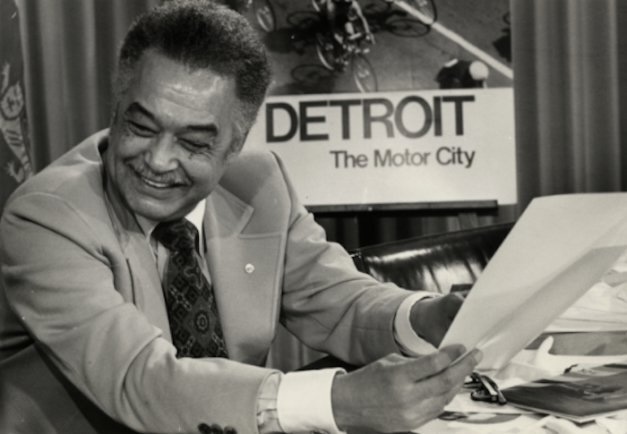
Archival images of the late Coleman A. Young flashed across the screens in the General Motors Theater at the Charles H. Wright Museum of African American History at the Coleman A. Young Statue Initiative announcement ceremony last month. He was Detroit’s first Black mayor, serving as its 66th from January 1, 1974, to January 3, 1994.
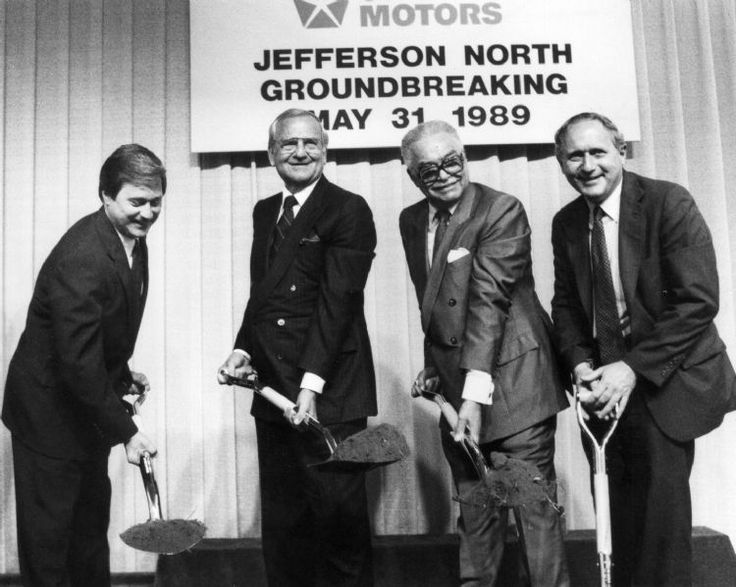
There was Young in his Army uniform. Photos from when he won the mayor’s race. Young cutting ribbons and digging holes for new businesses. Young, grinning over a slice of pizza.
I couldn’t help but wonder if that slice was ours. Young helped my family’s business land a contract at Cobo Hall, now Huntington Place, Michigan’s largest convention center. We were the first African Americans to own a pizza franchise in the country. For 30 years, Pizza Queen was the first storefront you saw inside Cobo, and Young would sometimes stop by for a quick bite.
So when the community gathered to honor the people’s mayor and learn about the statue initiative, I was remembering history: my family’s own, and the connection everyone in the room shared of Detroit and an unforgettable human being.
Remembering An Icon
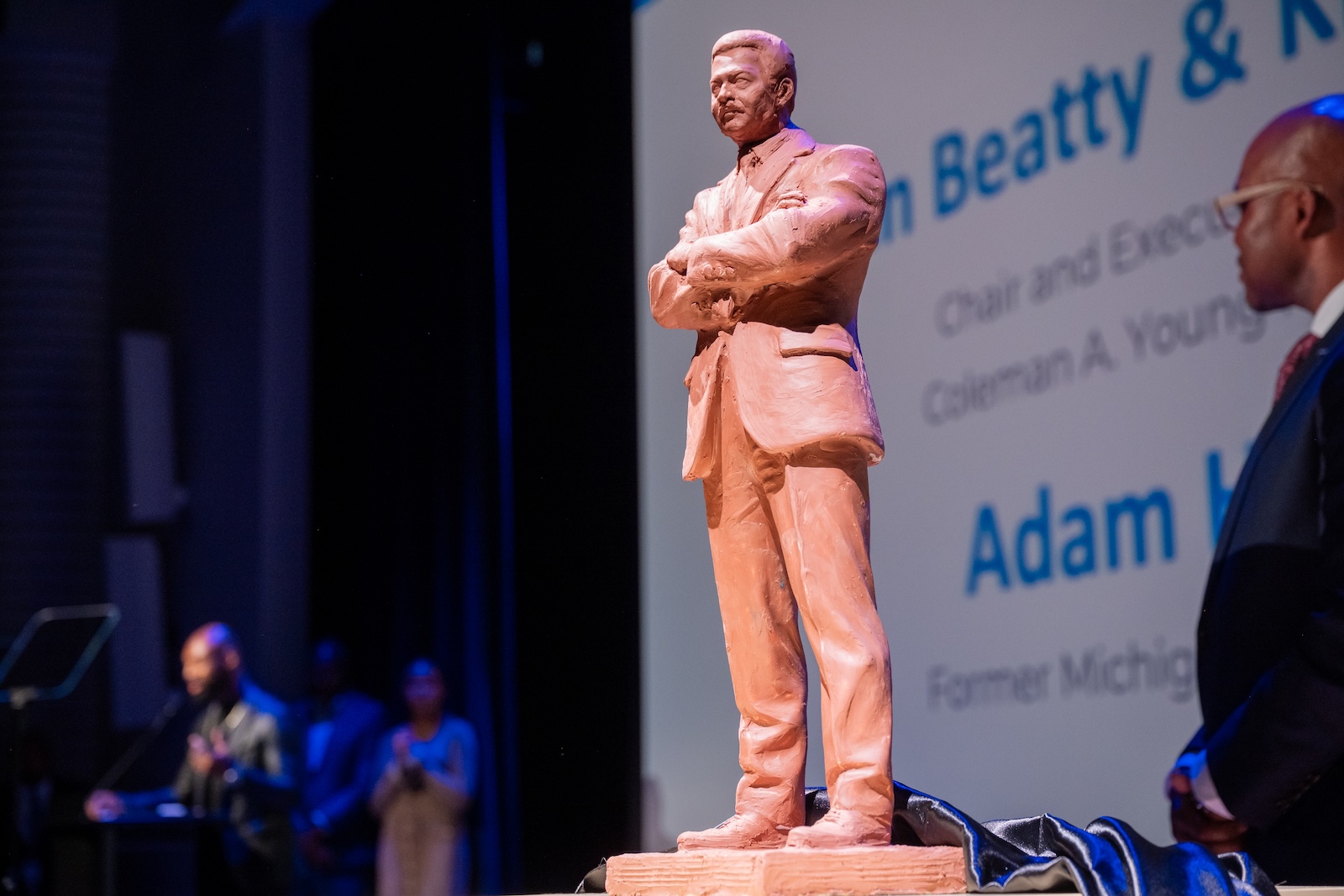
The evening was a first look at Detroit artist Austen Brantley’s maquette for the statue that will bring Young’s likeness to the U.S. Capitol. He will become the first Black American to represent Michigan in the National Statuary Hall Collection, replacing 19th-century governor Lewis Cass.
Every living mayor elected after Young was in attendance. Mary Sheffield, Detroit’s first woman mayor, shared her thoughts of Young. And his son, Coleman A. Young II, Detroit City Council president pro tem, fought back tears as he remembered his father’s insurmountable presence. The city called him a legend. He knew him as Dad.
The building where the reveal took place is a testament to Young’s work in action. In an interview with EBONY, Khary Turner, executive director of the Coleman A. Young Foundation, said Young attended the ceremony to break ground for the museum and told Dr. Charles Wright, “This isn’t big enough.”
In 1987, the museum opened a larger space after securing land and $1.4 million from the city. Ten years later, the upgraded building opened as the largest African American history museum in the world.
That’s the kind of determination Turner wants the country to know about Young. “They saw him as incorrigible when he was really committed, and he was willing to fight through division,” Turner says. “The great myth was that he was a pro-Black mayor, when the truth is, he was pro-Black and pro-Detroit,” Turner said. “Young created pathways for all Detroiters, including women and Latino Americans.”
Before Young thought of becoming mayor, Ford Motor Company passed him over for an electrician job in favor of a less qualified apprentice. On the assembly line, he organized an underground movement but was eventually fired. During the 1950s, Young faced the House Un-American Activities Committee and refused to back down. He told members, “I consider the activities of this Committee as un-American,” according to Detroit Historical Society.
Once elected, Young took on the police right away. He campaigned against STRESS, an undercover unit Detroiters were against for killing unarmed Black youth, and abolished it in 1974. Two years later, he hired William Hart, the city’s first Black police chief.
When Young was mayor, Turner said, “he managed to integrate city services, balance the budget, leave the city with a surplus, and serve longer than any mayor in the history of this city.” That was for 20 years.
A Statue in Motion
Getting the statue to the Capitol took “about three years of really painstaking process work,” Turner said. “The first big obstacle was belief.”
Former state Sen. Adam Hollier introduced the resolution to replace Cass with Young in 2022, and both chambers passed it in a bipartisan effort that December. Cass helped carry out the removal of the nation’s Indigenous people when he was Andrew Jackson’s secretary of war.
“He discriminated against Native Americans, and just as Coleman Young’s legacy aged well, Lewis Cass’ legacy did not,” Turner stated.
The Young Foundation has raised more than $1.2 million, with backing from the Kresge Foundation, DTE Foundation, Bedrock and other major donors.
Bedrock CEO Jared Fleisher announced that the company will commission a replica of Young’s statue for a new Riverfront Plaza in Detroit. “Bedrock contributed $250,000 to the effort, and they decided to name that plaza Coleman Young Park,” Turner said.
Young started the Coleman A. Young Foundation in 1982, and Turner calls it “the only non-political thing Coleman ever did with his life.” The foundation helps Detroit kids get to college and focuses on the long game. The goal is to expand its REAL Skills program by adding AI-assisted financial literacy and a skilled trades pathway.
“I want to do our part to create a generation of wealth builders in Detroit neighborhoods,” Turner said.
Meet the Artist
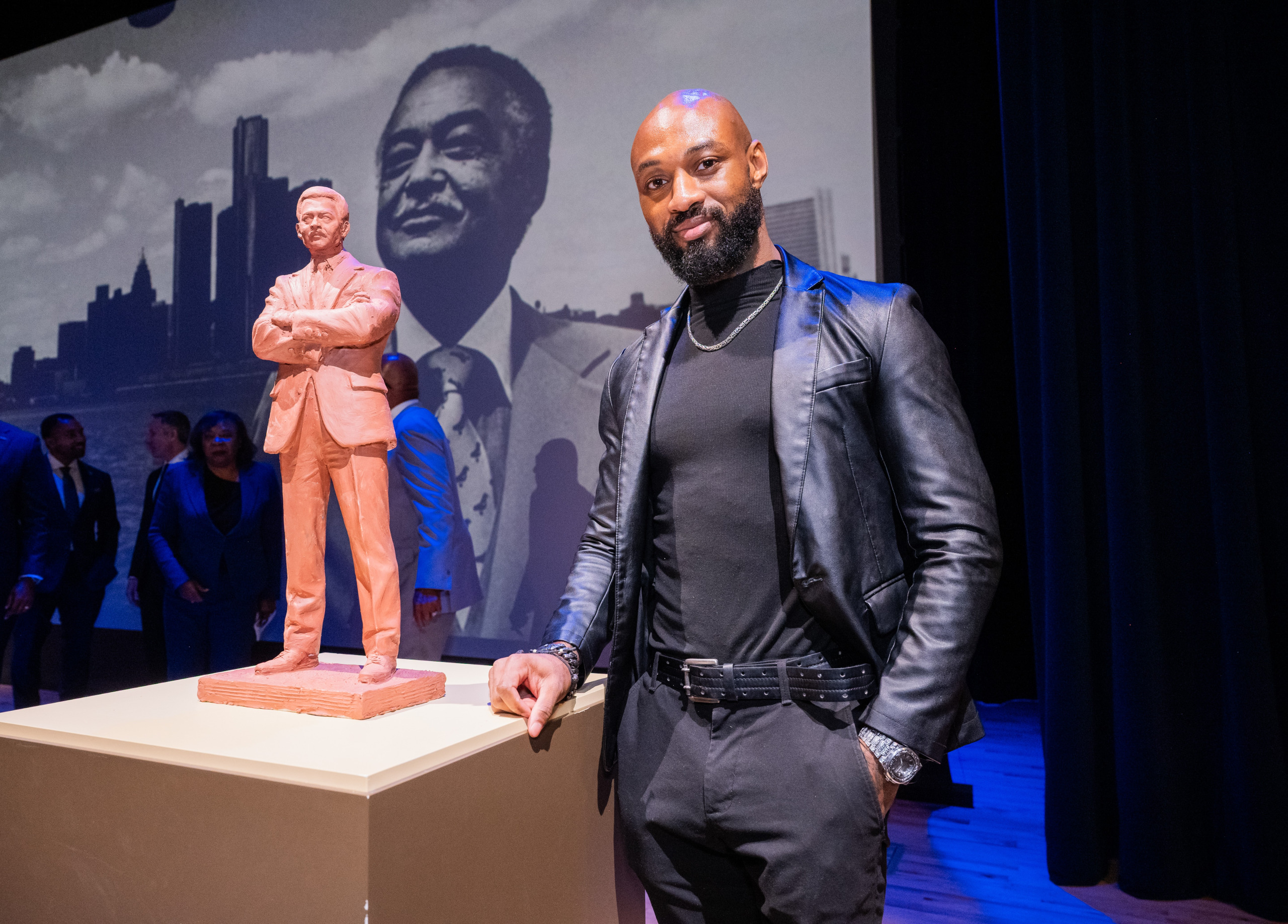
Brantley is a 31-year-old self-taught sculptor who discovered clay as a medium in his high school ceramics class.
“While everyone else was making pots and vessels, I was making these figures,” Brantley shared. “And I think I was kind of the odd man out in my class.”
His design of Young shows him with his arms folded, a self-assured look and a proud stance. “It’s about presence,” Brantley said. “It has to feel like him from up close, and then also from 20 feet away.”
When the statue reaches the Capitol, Brantley will follow Littleton Alston, who became the first African American sculptor in the National Statuary Hall Collection in 2023.
Detroit knows firsts, and the list keeps growing. On November 3, Michigan elected Abdul El-Sayed, who will become the first Muslim U.S. senator. Turner sees progress in each decade. “Coleman Young was the first Black man. Mary Sheffield is the first Black woman. Abdul El-Sayed is our first Muslim senator,” he stated. “I think historically we’ve prided ourselves on trying to do things that have not been done before.”
The artist Brantley wants to inspire the youth. “I want them to be able to see themselves reflected in the work,” he said, “and I want them to see that they could be somebody like that one day.”