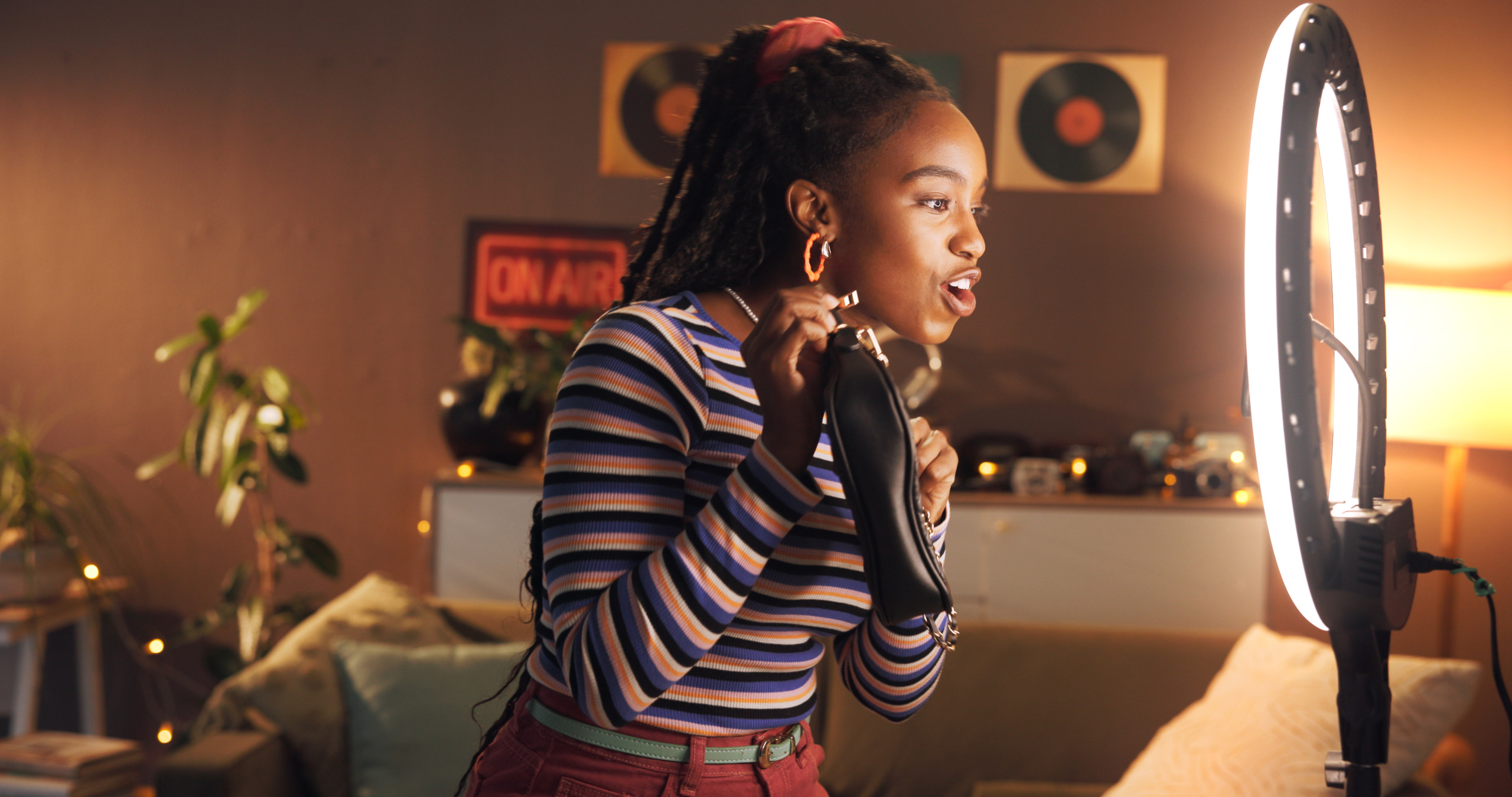
Becoming a content creator looks easy enough. Find a niche, set up the camera, say something meaningful, and repeat. Grow your audience and opportunities like brand deals, increased earning potential, and notoriety are sure to follow. Though the cost of scaling a career as a full-time creator embodies a steep price, often at the cost of being excessively visible, along with being subjected to the opinions of thousands of strangers.
From an external vantage point, creators appear to possess the ultimate expression of autonomy: self-employment through a personal, scalable platform that enables profit through their personality. But beneath the curated feed and viral moments is a reality that is far more layered and human.
The primary responsibility of a full-time content creator is visibility, which requires being chronically present, entertaining, and engaging to remain relevant. In most cases, that means pushing out content regardless of your wants and despite circumstances, because the expectations are made to feel unwavering.
While traditional careers mostly allow space for private processing — sick days, bereavement leave, quiet pivots — the content creator’s livelihood often depends on public consistency. Algorithms don’t account for grief. Engagement doesn’t pause for mental health and brand contracts rarely bend for emotional exhaustion. Yet, becoming a full-time creator continues to be epitomized as the ticket to financial freedom and self-determination. And in many ways, it still is.
But what is often misunderstood is that “working for yourself” doesn’t mean you are free from answering to anyone. In fact, creators frequently juggle multiple stakeholders: followers, sponsors, management teams, and the ever-shifting demands of platforms.
@jazzydanielle99 It ain’t for the weakkkk but bag collection coming soon
#microinfluencer #contentcreator #influencertips #burnout #mentalhealth


Yes, you are your own boss however, that frequently means you’re also your own marketing department, production team, publicist, strategist, and customer service representative. When companies pay you for your likeness, you are often required to align your personal brand with corporate expectations, sometimes jumping through hoops to satisfy the desires of a brand that may not fully understand the nuances of your audience.
Behind every “effortless” vlog or perfectly timed TikTok is hours of planning, scripting, filming, editing, negotiating, invoicing, and analytics tracking. There are moments of creative burnout that no one sees. More frequently, creators are becoming candid about what it takes to navigate the creator space in its entirety, detailing the continuous tension between digital visibility and offline reality.
Stephany Faublas, for instance, openly juggles multiple identities: content creator, mother, founder of the non-profit Fu Fund, and host of the podcast Afterbirth. She has allowed her audience into deeply personal aspects of her life, including her journey to become the mother she didn’t experience, while simultaneously building a life that came without a blueprint.
Her transparency resonates because it is authentic. But realness requires vulnerability, and the concept, when monetized, can be complicated.
Similarly, Aaliyah Jay has long dominated platforms like YouTube, Instagram, and TikTok with beauty and lifestyle content that helped define an era of digital influence. Recently, she peeled back the curtain, sharing a series documenting the tribulations she endured behind the scenes: financial hardships, declining mental and physical health, and a chemical pregnancy.
For an audience accustomed to glam, the revelations were jarring, a reminder that aesthetics do not equate to peace.
Another creator publicly expressing boundaries between content creation and nurturing reality is Jaelah Majette, who has become almost as known for stepping away from content creation as she is for the content itself. She has spoken candidly on her YouTube channel about having debilitating anxiety and ADHD, but still choosing to prioritize her reality by disengaging from digital performance in order to honor her needs.
In a culture that rewards constant output, stepping back can feel like career sabotage. Yet for some, it is survival.
The unique challenge of content creation is that the product and the person are often indistinguishable. In more traditional professions, your work may be separate from your personal life. For creators, the two frequently overlap in the aspect of relationships, home, health, and milestones while feeding into a constant online perception, leading to the line between authenticity and oversharing blurry.
All while the creator is still, simply, a human being navigating life in real time just as the next non-creator is.
As the audience, much of what we see is the highlight reel, not the emotional equity it took to produce the polished deliverable. Like any other career, content creation comes with trade-offs. What’s worth remembering is that behind the ring light is a person who is learning, grieving, celebrating, failing, healing — sometimes all at once, and sometimes in front of millions. Visibility may be the job, but humanity remains the commonality.