It’s nearly 2027, and Black people are still being subjected to being referred to as monkeys.
The three Black students who faced racist harassment from their white peers weren’t the first ones to face this kind of inhumane treatment at the University of Mississippi, commonly known as Ole Miss. And despite the incident occurring less than two weeks ago, they already aren’t the last, unfortunately.
On Wednesday, an “unaffiliated individual” made “an obvious attempt to antagonize and offend our students,” University Chancellor Glenn F. Boyce told WJTV. He commended students for their integrity and resolve “in the face of bigotry.”
Though the university didn’t share the full details of the second racist incident this month, this unfortunately is a case of another day, another legacy-laden American institution being haunted by the ghosts of its racist past it refuses to confront.
After the young Black women antagonized appeared on CBS Mornings, it’s clear the roommates who faced the harassment bear the brunt of the offense. It’s the tale of how racism thrives in America.
The Incident Explained
On Friday, November 6, Jakirya Metcalf watched Ring camera footage of two women walking by her apartment, mimicking monkey sounds and beating on their chests in an ape-like fashion toward her apartment door. Metcalf and her roommates, Victoria Johnson and Kaiyden Caldwell, are all Black and in their first year at Ole Miss.
Metcalf told CBS This Morning that she and Johnson approached the white students, who resided in the same off-campus apartment complex, asking for an explanation for their actions.
“One girl was like, ‘I’m sorry we did that to four doors,’” Victoria Johnson, one of the roommates, said. “And mind you, we didn’t see any one of those doors. It was just ours that was targeted. And she was like, ‘We didn’t mean any harm.’”
When Metcalf posted the footage to TikTok on Saturday, the backlash was swift. Metcalf’s video of the incident has been viewed more than 13 million times.
“This is absolutely disgusting and unacceptable. College is supposed to be a place where young adults can learn, grow, and feel safe,” Metcalf’s mother, Tasha Bolton, wrote on Facebook.
Many people pointed to the racist history of Black people being dehumanized and called monkeys, dating back to enslavement. Some called for the university to reprimand the offending students.
Several users screenshotted emails they sent to the school’s administration calling for action. Sonji Young commented, “My friends endured Ole Miss’ deeply steeped tradition of racism. Their stories make me cringe to this day. They’re emboldened to act this way because no one will hold them accountable.”
Ole Miss issued a statement the following Wednesday, stating that they “[have] been and will continue providing care and resources to our students.”
They continued, “We have met with the impacted students and their families to offer support and discuss the relevant processes, and the investigation is moving forward. Student privacy laws prohibit the university from commenting on any specific student, including any potential disciplinary action.”
Aliana Kunes, the first student seen in the footage, apologized when the roommates approached them, Metclaf and Johnson said. On Tuesday, November 10, a representative for the freshman released an apology statement on her behalf, according to WKRN.
“To the women I offended, and to the Ole Miss community, I sincerely apologize,” the statement read. “Before the incident on November 6, I never met the women involved and was unaware of their race; however, I recognize my actions were insensitive, inappropriate, and deeply harmful. I would have never intentionally made those noises or gestures toward a person of color. I have apologized to the women, and I pray they will forgive me.”
Kunis voluntarily withdrew from the university after issuing the statement, according to ABC News.
As of Monday, November 16, the investigation is still ongoing. However, Chancellor Glenn F. Boyce cited that “federal privacy laws” prevent the university from sharing information about the students and potential disciplinary actions.
In their interview, Metcalf, Caldwell and Johnson told CBS Mornings that they’ll be staying enrolled at Ole Miss and won’t let the incident deter them.
“I want people to be mindful of their actions now,” Johnson told the outlet. “So when people who would potentially experience the same situations speak out and don’t let things be swept under the rug, because this is a reality for us, and I feel like voices need to be heard.”
The second woman who made the monkey noises did not apologize when the Black students confronted her. Instead, she doubled down and “continued to make the gestures after the girl was apologizing.” Johnson said it was like “a slap in the face.”
That student is identified as Lauren Mayfield by Tom Hennessey’s GiveSendGo fundraising campaign “to cover lost income or opportunities, and anything else required so she does not have to fold.” Hennessey is an influencer known for creating fundraising campaigns for people criticized for making xenophobic comments. The fundraiser’s description states that the school is “treating a juvenile stunt as a hate crime because the residents were black.”
He’s raised more than $116,000 for Mayfield as of Monday morning.
The Damaging History Behind the Racist Trope
Black people being called monkeys and apes has a profoundly racist history rooted in racist violence. A pseudoscientific framework dehumanized people of African ancestry by using animalistic comparisons to justify chattel slavery. The implication was that Black people weren’t as evolved as those of European descent and suggested that they were separate species.
The primate metaphor became synonymous with stereotyping Black people as lazy, aggressive, barbaric and less intelligent. And though this language and imagery originated as early as the 19th century, its ugly roots continue to plague America today. This is especially reverberant in the Deep South state of Mississippi, where several suspected modern-day lynchings have taken place within a little over a year. It’s the same state where Nolan Wells died.
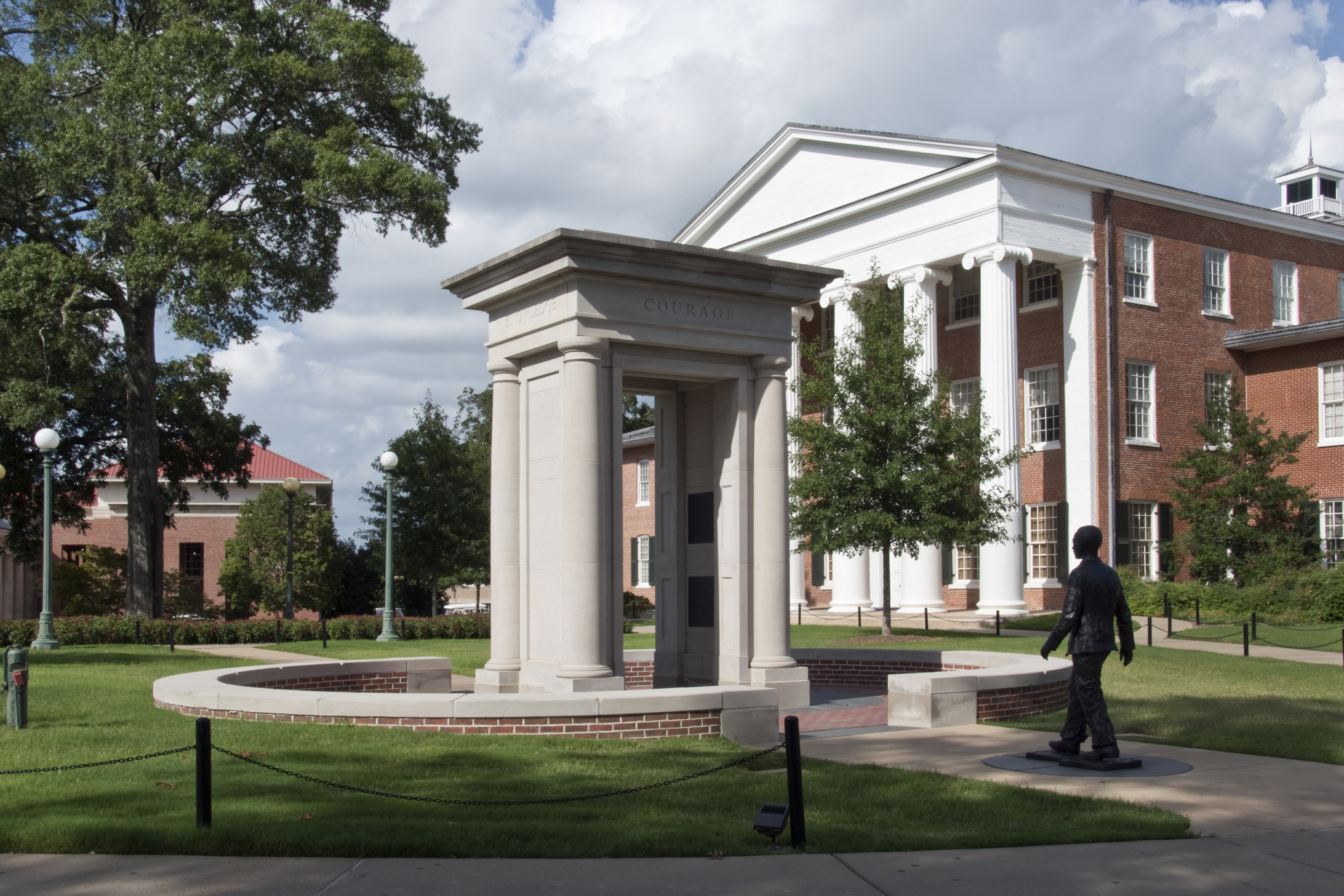
It’s no surprise that Ole Miss had to address two racist incidents within a two-week span. Just like it’s no surprise that the incident the three roommates faced mirrors a 2024 instance when a white student made monkey sounds at a Black female student while others around him chanted “lock her up” during a pro-Palestine protest. This is the same university that didn’t admit its first Black student, James Meredith, until 1962 after the Supreme Court ruled in his favor.
And this type of racism isn’t isolated to the Deep South. In February of this year, President Donald Trump shared AI-generated imagery depicting former President Barack Obama and former First Lady Michelle Obama as apes. In 2018, Roseanne Barr tweeted that former Obama senior advisor Valerie Jarrett, now Chief Executive Officer of The Obama Foundation, looked like the “planet of the apes had a baby,” prompting ABC to cancel her revived sitcom. She later apologized, blaming Ambien for her comments.
Whether it is subconscious or not, this language is indicative of the white supremacist history that reinforces the systems and cultures this country refuses to shake. That’s underscored through language, education, policy, and so much more. And it’s a significant part of why the current administration has been committed to cutting the diversity, equity and inclusion programs that advocate for the same marginalized students at schools like Ole Miss, whose welfare becomes at risk just for existing while Black at the very campuses that are supposed to empower them.
But as long as the powers that be are reactive to these situations and not proactive about dismantling the racism their institutions are built on, history will continue to repeat itself.