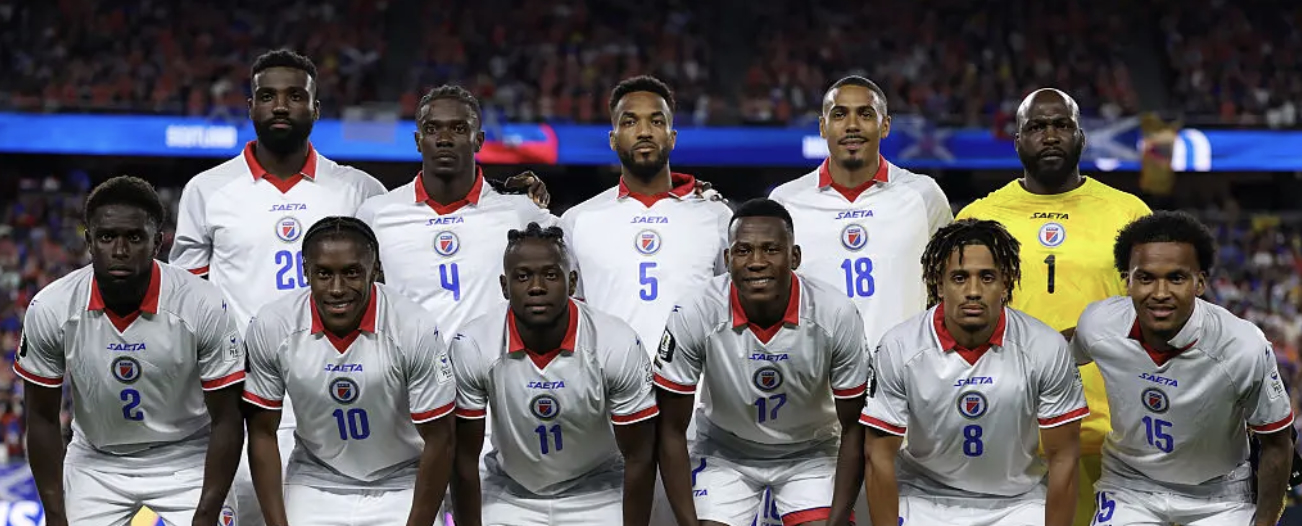
When the Haitian national anthem played before the team’s World Cup opener against Scotland, Dimitry Elias Léger needed to hear it to believe it was real.
“I had to watch the national anthem to feel like, oh, they were really here. It wasn’t a joke,” said Léger, the New York–based novelist whose new book follows a Haitian player from the island to global stardom and back. “It’s like the Knicks winning the championship. You don’t believe it’s going to happen till it happens.”
But no joke, it happened. Haiti is in the 2026 World Cup with its first appearance since 1974 and only the second in the nation’s history. The team that fell 1–0 to Scotland in its opener will face Brazil on June 19 in Philadelphia and will close the group stage against Morocco on June 24 in Atlanta.
What makes this achievement extraordinary is the contradiction beneath it. The squad is built almost entirely from players born and raised outside of the country. Making matters more difficult is that they haven’t played a home match in Haiti since 2021, and most have barely set foot there.
“We could be part of the 48 best soccer-playing countries in the world, even though our country does not exist as a country anymore,” Léger said. “We don’t have a president. We don’t have a government. They brought together 15 guys who have never played in Haiti but want to represent the country. And they did it well enough to qualify when other countries in the Caribbean, which are richer and more stable, didn’t get there.”
A Path Someone Had To Clear First
Patrick Tardieu knows what it costs to wear the jersey. He captained the Haitian national team from 1992 to 2002 and became the first Haitian to sign with Major League Soccer, clearing a path for the seven Haitian players competing in the league today.
He frames Haiti’s group-stage draw as David versus Goliath, and he doesn’t pretend the deck is even, voicing frustration — along with others — over what he sees as unfavorable officiating against smaller nations. But the disrespect, he argues, has always been the fuel.
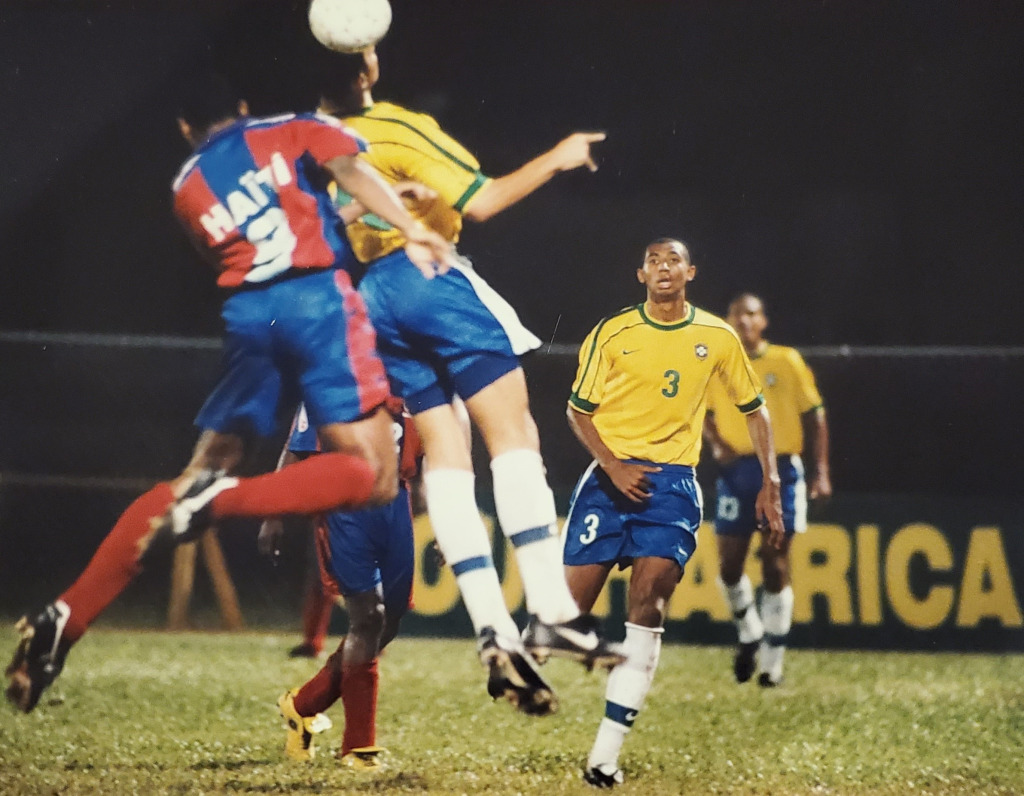

Tardieu points to a game most record books skipped: a 1999 Caribbean Cup match — the tournament that later became the Gold Cup — in which Haiti beat Brazil’s under-23 squad 4–3. The result went largely unpublicized until a crew from Brazil’s TV Globo tracked the players down years later to ask how it happened.
He recalled feeling insulted that Brazil hadn’t sent its senior squad, particularly given the deep affection and respect Haitians have for Brazilians. This slight fueled the Haitian team that day, and he now offers the memory as a message to the current squad: Beating the giants is not a fantasy. It’s history.
Powers Abroad. Perils at Home
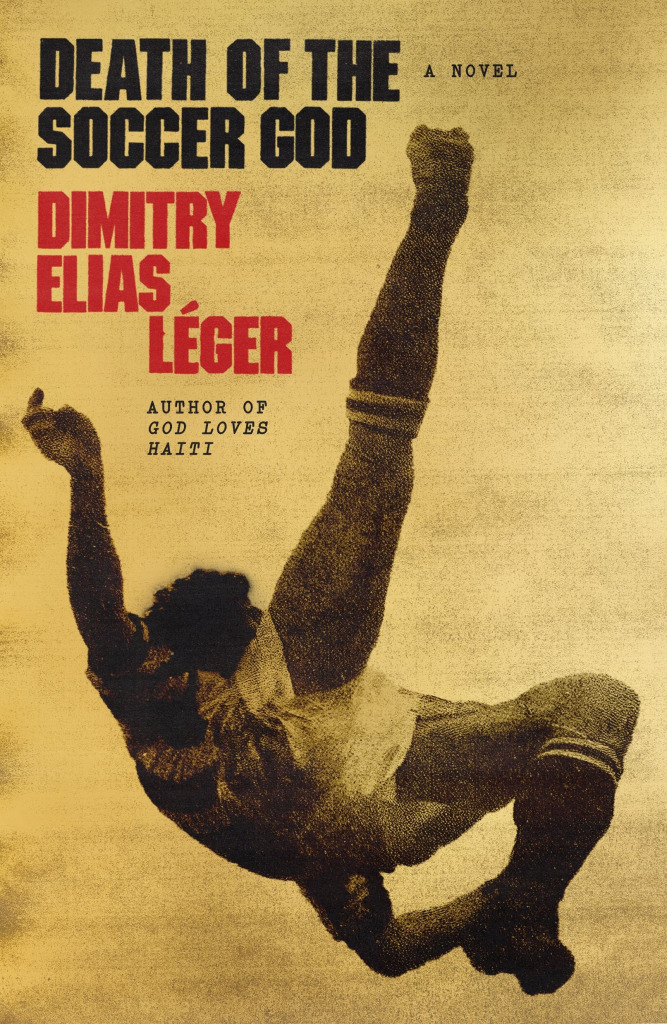
For Léger, the team is a microcosm of a much older pattern. Haitians overperform abroad while the homeland endures. Grammy winners, a Harvard president, writers, actors, and artists who shape culture far from the island are proof of this. His novel, Death of the Soccer God, is loosely inspired by Joe Gaetjens, the Haitian immigrant who scored the winning goal in the United States’ shocking 1950 upset of England, then returned to Haiti and disappeared.
To explain the duality, Léger reaches for Superman. “The yellow sun of this universe gave him [Clark Kent] his superpowers. In Krypton, he’d be a normal guy,” Leger said. Haitians, he argues, become extraordinary in exile while the place that made them burns.
“Traveling while Haitian is not the same as traveling while Black,” Léger said. “A Black American abroad is often met with open arms,” he says. “A Haitian is met with suspicion.” With 1.2 million Haitians in the United States and shifting immigration policy threatening loved ones without citizenship, the fear of persecution is, in his words, “part of our daily bread.”
His book asks the question he believes the whole moment poses: Who helps Superman? The novel, he says, is as much a hymn to the women holding up its hero as it is to the hero himself.
The Longer Arc of the Haitian Journey
Bertrhude Albert, Ph.D., hears every one of these threads and traces them to a single root. Born in Cap-Haïtien — the city where the Haitian Revolution began and ended — Albert immigrated to the United States as a child, earned three degrees at the University of Florida, and now runs what she calls the largest teacher-training nonprofit in Haiti, traveling there every month.
She insists the story the world tells about Haiti is missing its center. “We are more than our pain and our challenges,” she said. “The problem I have with the media is that they reduce us to only the struggles. They define us by only the struggles.” The counter-narrative, she argues, can only come from Haitians themselves. “The only way this story can be told is if our people speak — use our own mouth, our own brains, our own spirit,” she said.
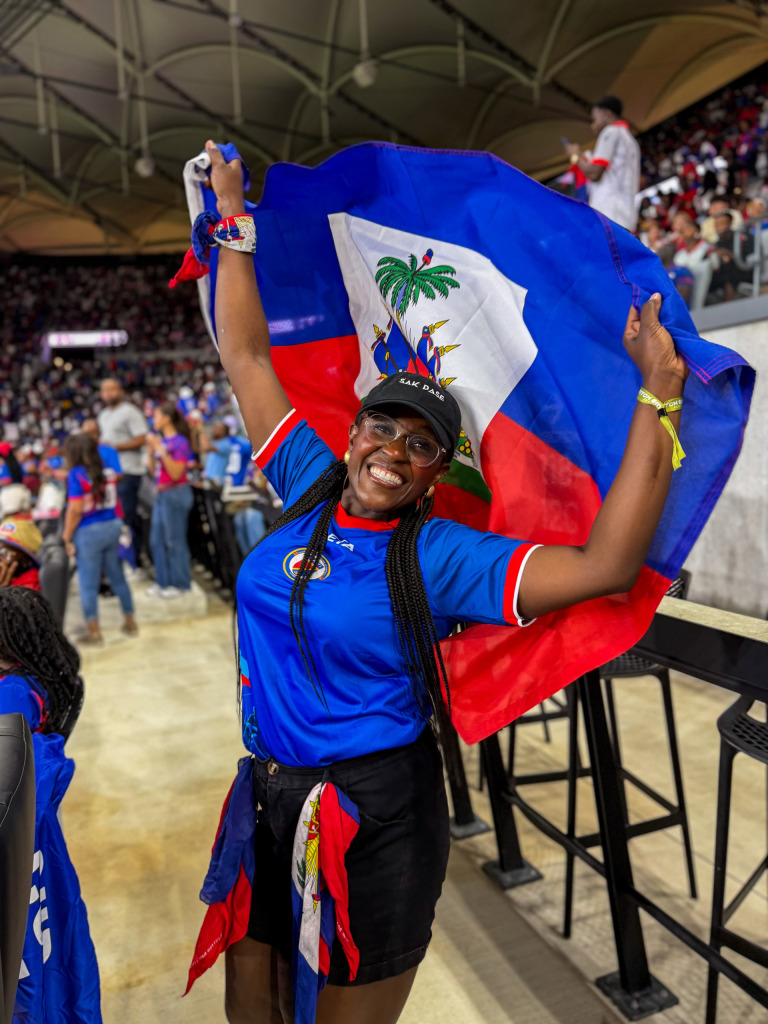
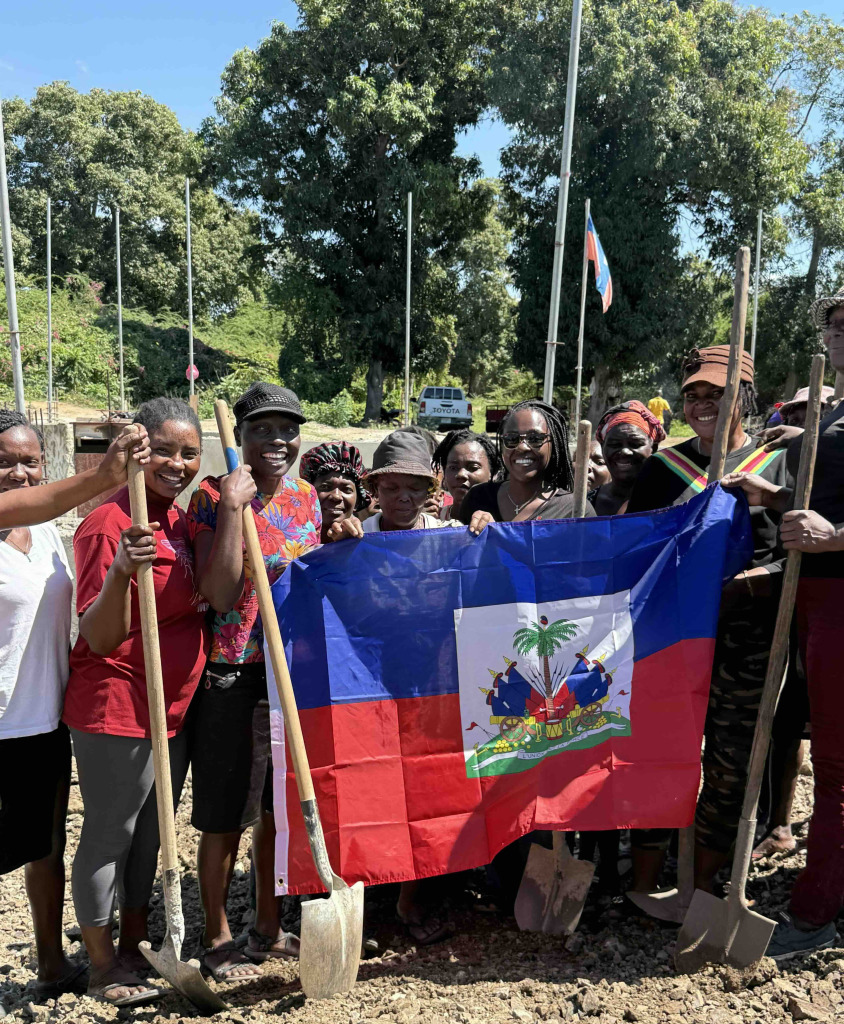
Her proof of this runs from 1791 to 2026. The revolution united enslaved Africans from different kingdoms, regions, and languages under one cause; the Creole they forged, she notes, still echoes that unity every time the crowd sings at a match. The story of the flag reverberates through the very spirit of the team and its supporters: red and blue stitched together after Jean-Jacques Dessalines tore the white from the French tricolor and Catherine Flon sewed the halves into one.
L’union fait la force. Unity is our strength
So when analysts list the odds against Haiti, Albert is unmoved. “Haiti was never supposed to win in 1804 either,” she said of the year the nation became the first free Black republic and the only one born of a successful slave revolt. After the loss to Scotland, she posted a video that struck a nerve: “The scoreboard read 0 – 1, but the people won,” she argued. As commentators worldwide praised Haiti’s performance, one influencer, she noted with pride, called the team “the prototype of excellent football.”
The Next Generation Has Something To Say
As a father, Tardieu only wishes the best for his 17-year-old son, who has the potential to represent a team on the field. After being invited to train with the Haitian national team, his son told his father that, given the opportunity, he wanted to play for Haiti rather than the United States, choosing heritage and difficulty over the easier path.
It’s the same for Albert; she pours into her work as an educator. She frames literacy as the unfinished business of 1804, breaking the mental chains in a country where more than 60% of students drop out before finishing elementary school. Her life’s work is to make an impact on students’ lives.
Whatever the result against Brazil, all three return to the same idea. Albert puts it most plainly, borrowing a line that could double as the tournament’s thesis for Haiti: the world is finally seeing the country for who it is, not who it’s been made out to be. “This is only the beginning,” she said. “Haiti is on the rise.”
Or, as Angela Bassett’s character, Queen Ramonda, said to Prince T’Challa in the Marvel film Wakanda Forever, “Show them who you are!”
Haiti faces Brazil on June 19 in Philadelphia and Morocco on June 24 in Atlanta.
Jonathan Giles is an Atlanta-based creative who writes for EBONY, Saint & Citizen, and is a correspondent for BET. He’s written for television, including A Little Late with Lilly Singh on NBC and Generation Gap on ABC.