Every March, college basketball sells the same promise: anything can happen.
The NCAA tournament thrives on unpredictability. Brackets collapse as unlikely underdogs crash the party, and programs that looked ordinary in November suddenly look unstoppable by April.
But when it comes to the coaches cutting down the nets, history tells a far more predictable story.
Across more than eight decades of the NCAA men’s basketball tournament, only six Black head coaches have ever won a national championship. The statistic stands out even more when set against the growing presence of Black leadership throughout the sport.
As the 2026 NCAA men’s and women’s tournaments begin, the question returns: could this year finally produce another championship moment for Black leadership in college basketball?
Representation Is Growing, But Not Equitable
The story of Black coaching in college basketball is not one of absence. In many ways, the opposite is true.
Black coaches are deeply embedded throughout the sport, particularly in the assistant ranks, where much of the day-to-day work of building programs takes place. They recruit elite talent, develop players, and help shape the systems that define successful teams.
Yet NCAA demographic data reveal an imbalance in how that leadership translates into head coaching opportunities.
In men’s NCAA basketball, Black coaches make up 36.9 percent of assistant coaches but only 19.8 percent of head coaches, based on 2025 demographic totals across all divisions.
The pattern appears on the women’s side as well.
In women’s NCAA basketball, Black coaches represent 37.5 percent of assistant coaches compared with 22.7 percent of head coaches.
Representation is clearly improving. But when it comes to the top chair, the numbers shrink.
That imbalance may not feel obvious during the regular season. It becomes far more visible when the entire sport gathers on its biggest stage.
Why March Madness Magnifies the Gap
The NCAA tournament acts as a snapshot of college basketball’s power structure.
It brings together the most successful programs of the season, the coaches trusted to lead them, and the institutions capable of sustaining championship runs.
When the bracket is revealed, the leadership imbalance becomes harder to ignore.
The 2026 men’s NCAA tournament includes nine Black head coaches, roughly 13 percent of the 68-team field. The women’s tournament features thirteen Black head coaches, about 19 percent of that bracket.
Those numbers represent progress compared with earlier eras. Black coaches are increasingly visible across both tournaments.
But placed alongside the broader coaching pipeline, the disparity becomes clear. If more than one-third of assistant coaches in college basketball are Black, yet fewer than one-fifth of tournament head coaches are Black, the gap between participation and leadership is difficult to ignore.
That disparity helps explain why the championship record remains so narrow.
The list is short but historically significant, with the six Black coaches who have won a national championship.
John Thompson broke the barrier in 1984 when his Georgetown team defeated Houston, becoming the first Black head coach to win the NCAA men’s title.
Nolan Richardson followed with Arkansas in 1994, bringing his relentless “40 Minutes of Hell” defensive philosophy to the top of the sport.
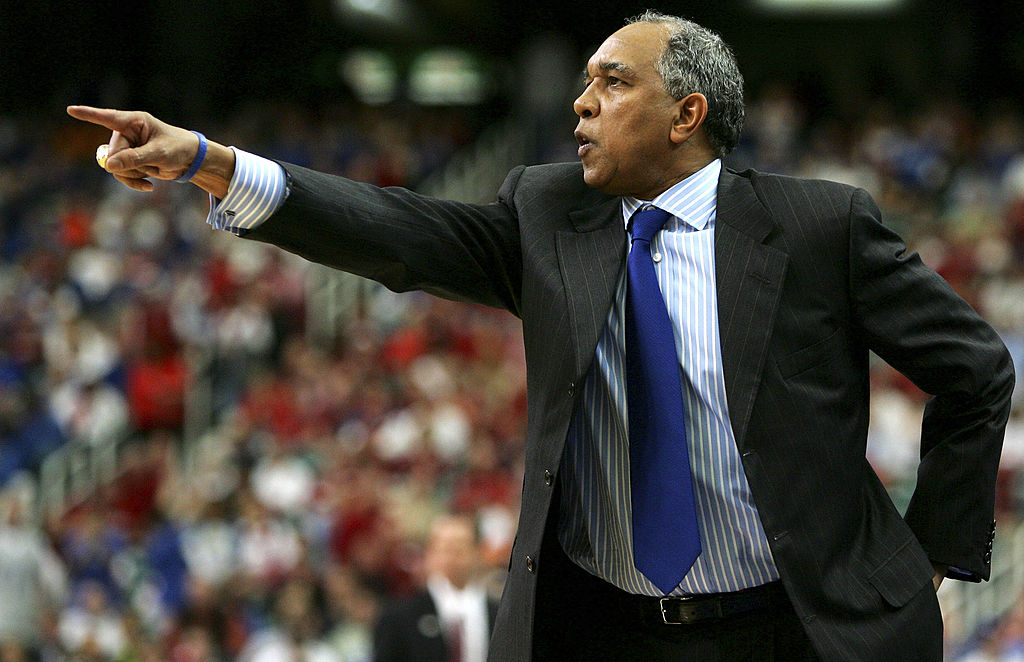
Tubby Smith led Kentucky to the national championship in 1998, continuing the lineage of Black leadership reaching college basketball’s summit.
More recently, Kevin Ollie guided UConn to the 2014 national championship in just his second season as head coach.
On the women’s side, Carolyn Peck made history in 1999 when Purdue won the NCAA championship, becoming the first Black woman to lead a program to the Division I title.
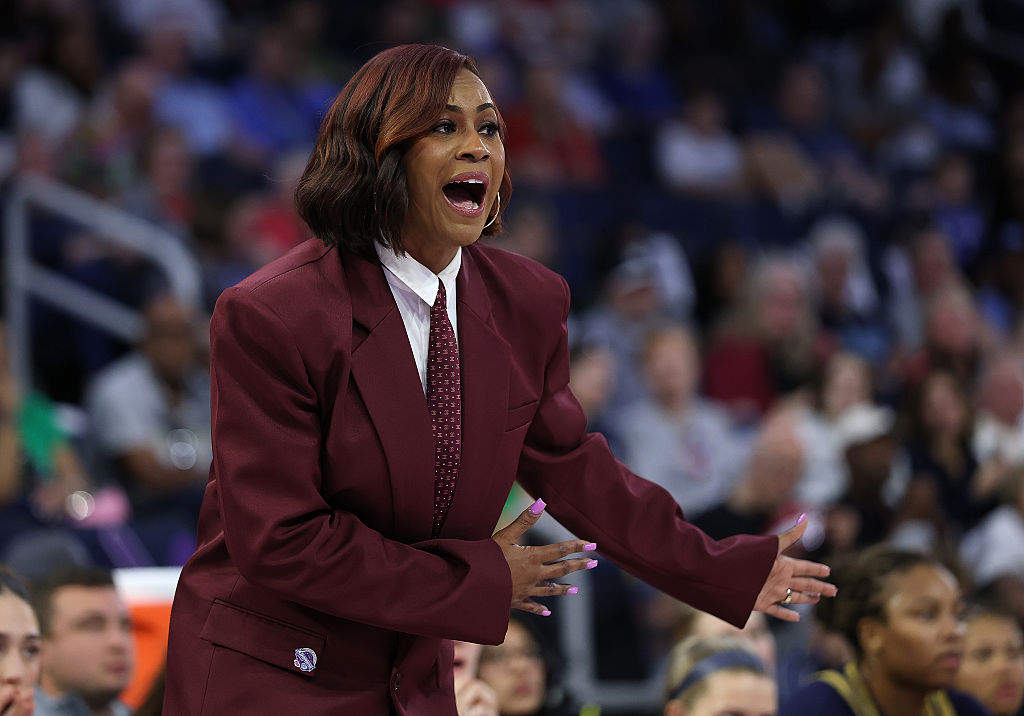
And in the modern era, Dawn Staley has transformed what sustained championship leadership looks like. The South Carolina coach has won national titles in 2017, 2022, and 2024, building one of the most dominant programs in the sport while becoming the first Black coach to win three NCAA Division I basketball championships.
Yet the small size of that list raises a deeper structural question. The pipeline of Black coaching talent has never been empty. What the sport continues to wrestle with is why the championship stage reflects so little of that depth.
The Patience Problem
Championship programs are rarely built overnight.
Elite programs often give coaches multiple recruiting cycles to establish culture, develop players, and build continuity. That kind of institutional patience can transform a rebuilding team into a championship contender.
But Black coaches have historically been hired into programs with fewer resources and shorter timelines for success. When early wins do not come quickly, those opportunities can disappear before a program has time to develop fully.
In a sport where championships often require years of stability, that difference matters. The result is a paradox at the center of college basketball today. Black coaches are everywhere in the sport. Yet the championship stage still reflects only a fraction of that leadership.
As the 2026 tournament unfolds, a new generation of Black coaches enters March with a chance to change that history. If one of them cuts down the nets in April, it will not be because the talent suddenly appeared.
The talent has always been there. The real question is whether the opportunity will finally catch up with it.