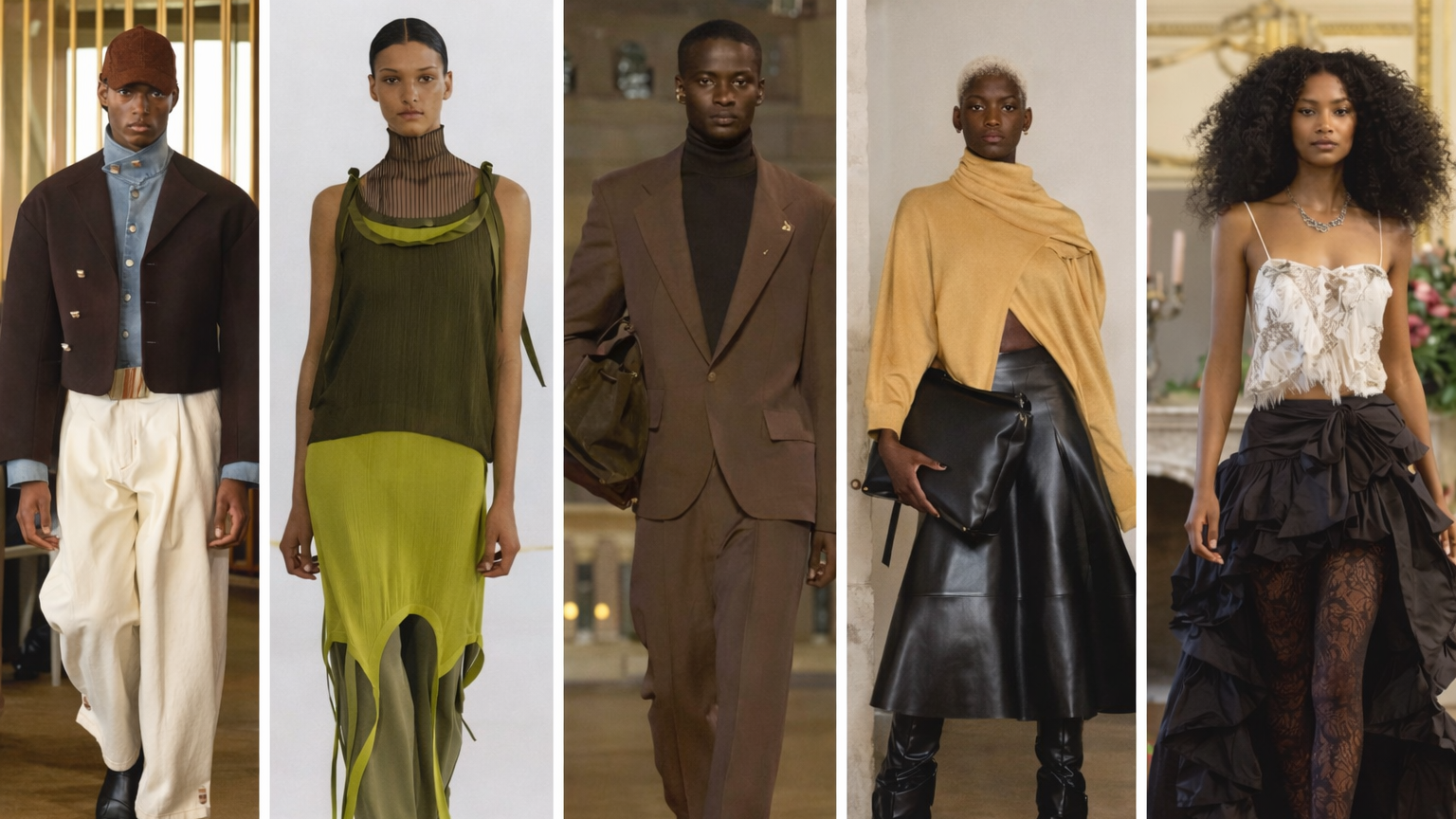
After seasons of conceptual theater and streetwear dominance, FW26 felt like a recalibration. Designers returned to the fundamental question: Will this live in someone’s closet? The oversized irony, logo-heavy posturing, and hyper-avant-garde experiments that once ruled the algorithm gave way to tailoring you can sit in, coats you can actually button, and denim that moves with intention.
With most people now back in the office at least four days a week, the runways reflected real life again, offering clothes you can wear to work without sacrificing taste or identity. It was not a retreat from creativity. It was a recommitment to commerce. Wearable. Sellable. Desirable.
Here are a few brands from NYFW that stopped us in our tracks and earned a closer look from the team at EBONY.
Aisling Camps
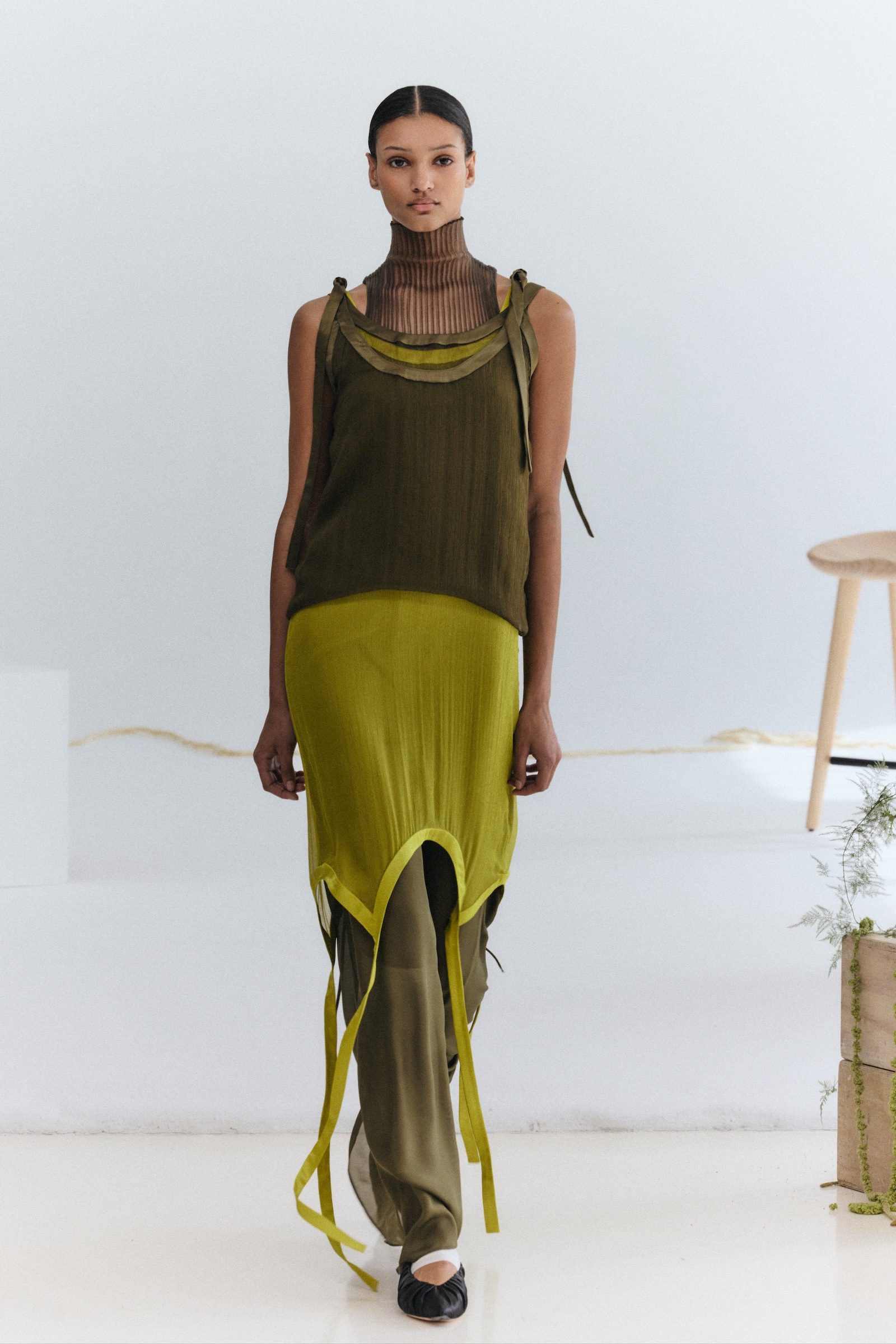
Aisling Camps pulled from Caribbean folkloric imagery and natural landscapes, translating mangroves, moss, pearl and algae into silk wovens and shifting chenilles. The use of transparency and mirrored silhouettes felt spiritual rather than trend-driven.
There is a growing return to diasporic storytelling on global runways, and Camps’ work contributed to that conversation. Nature was not decorative. It was ancestral. The organic lines and layered yarn opacities mimicked growth patterns and survival systems. In a fashion economy often dominated by Western references, this collection felt like a quiet expansion of the canon.
Nardos
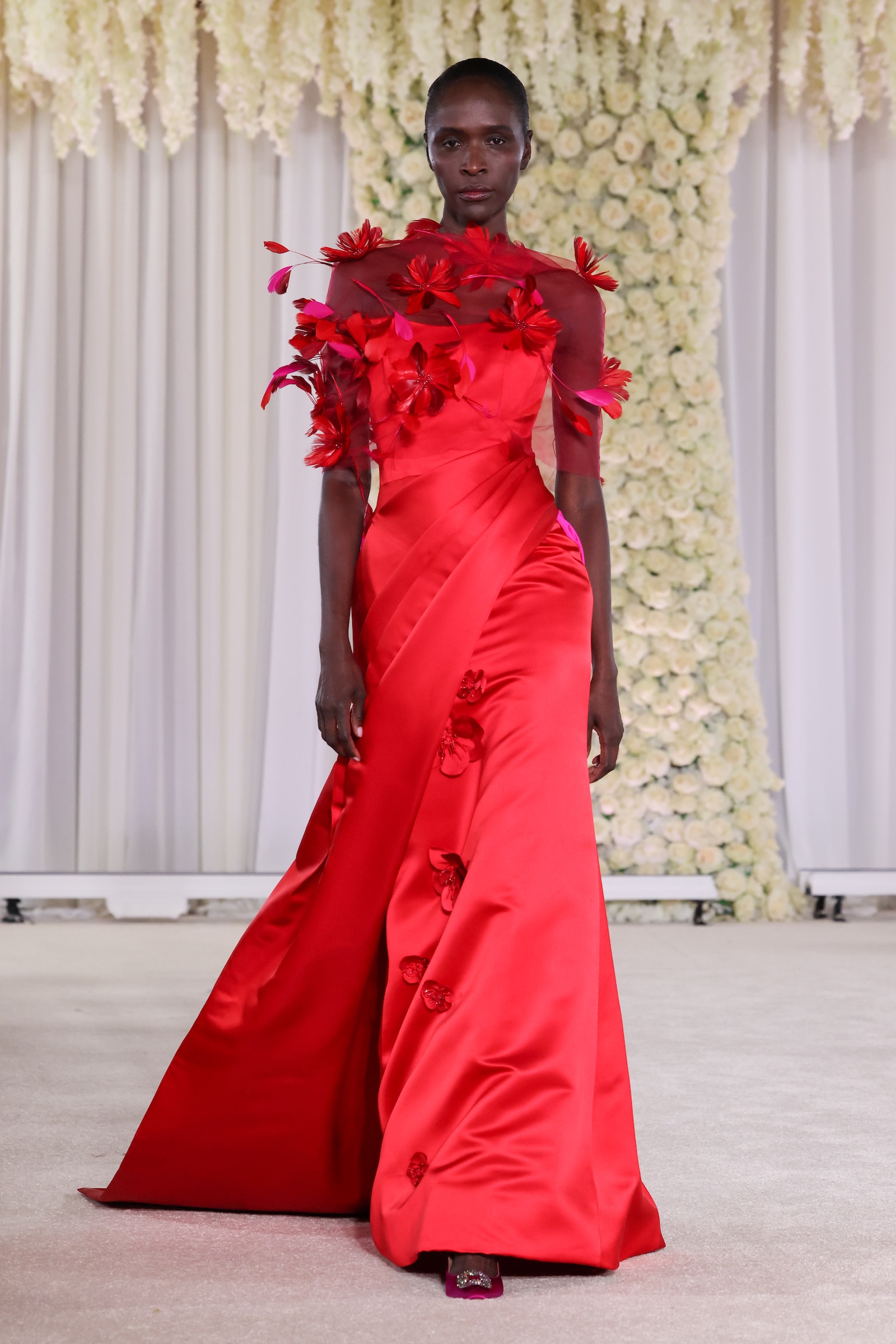
“The Infinite Banquet” by Nardos centered the dinner table as metaphor. Heritage as offering. The body as centerpiece.
As a first-generation immigrant building legacy from memory rather than inheritance, Nardos Imam’s narrative resonated deeply in a city shaped by immigrant labor. Hundreds of hours of handwork in an age of automation felt radical. Couture here was not about exclusivity. It was about permanence. Building heirlooms where none existed before. In a culture that moves at algorithm speed, slowing down became an act of resistance.
Prabal Gurung
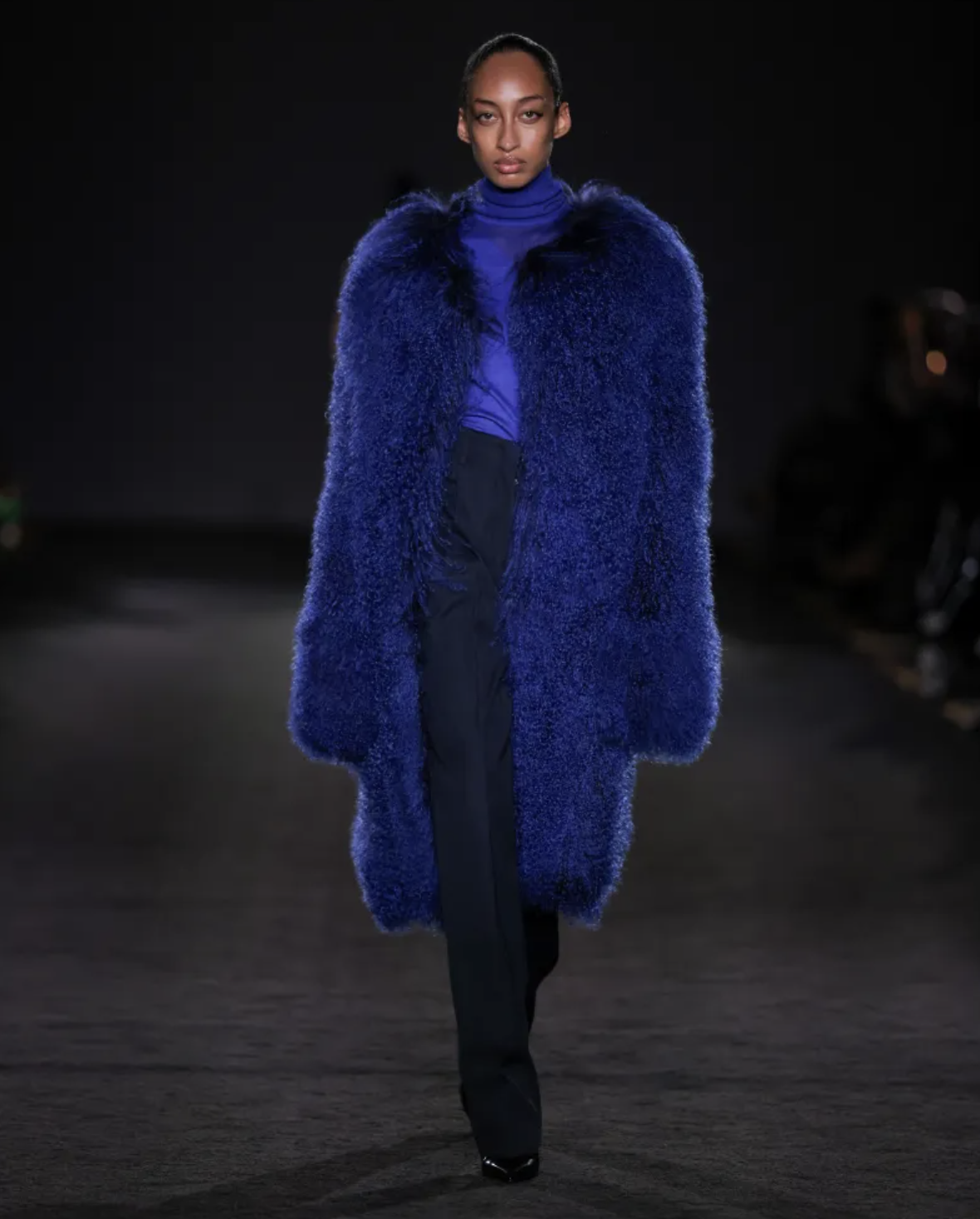
Prabal Gurung’s meditation on home felt deeply personal and globally resonant. Nepalese ritual, immigrant memory, and New York precision converged in tailoring that softened into lace and chiffon.
At a time when the concept of home feels politically charged and geographically unstable for many, Gurung reframed it as resilience rather than location. The anemone motif, blooming after rupture, felt symbolic. Beauty rooted in shadow. Craft spanning continents. Assembled in New York by immigrant hands.
The message was clear. Home is not nostalgia. It is endurance. And fashion, at its best, is how we carry that with us.
7 For All Mankind
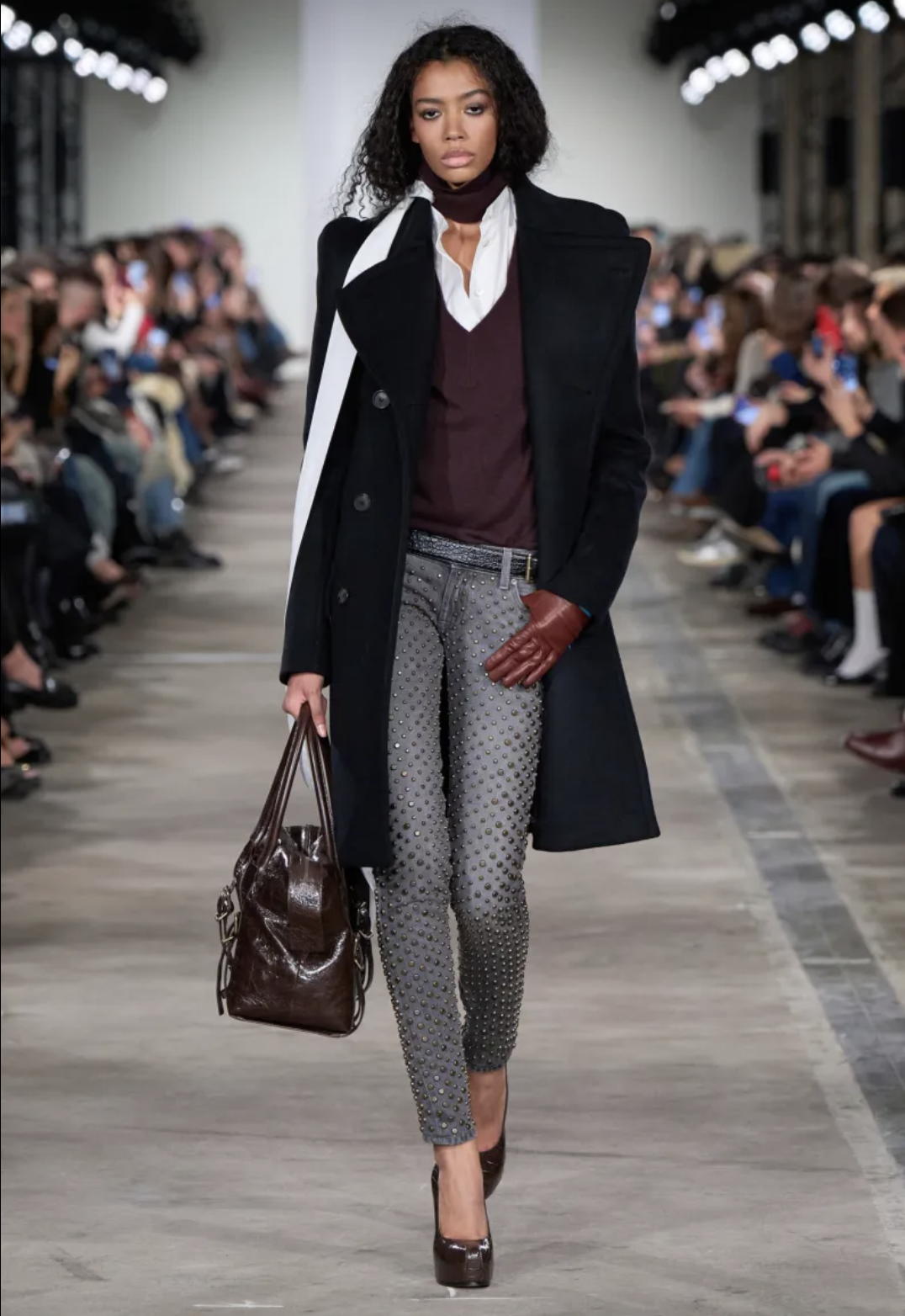
7 For All Mankind’s runway debut under Nicola Brognano reintroduced the skinny jean with defiance. Non-stretch. High attitude. Paired with bombé shoulders and layered knits.
The return of the skinny is cultural. Cyclical fashion often mirrors economic tightening. Sleeker silhouettes. Less excess fabric. The clash of West Coast ease and European tailoring reflected a globalized identity. Downtown rebellion meets uptown polish. Denim remains democratic, but styling determines status. Looks we could see Serena van der Woodsen and the Olsen twins in. We are so BACK!
Cult Gaia
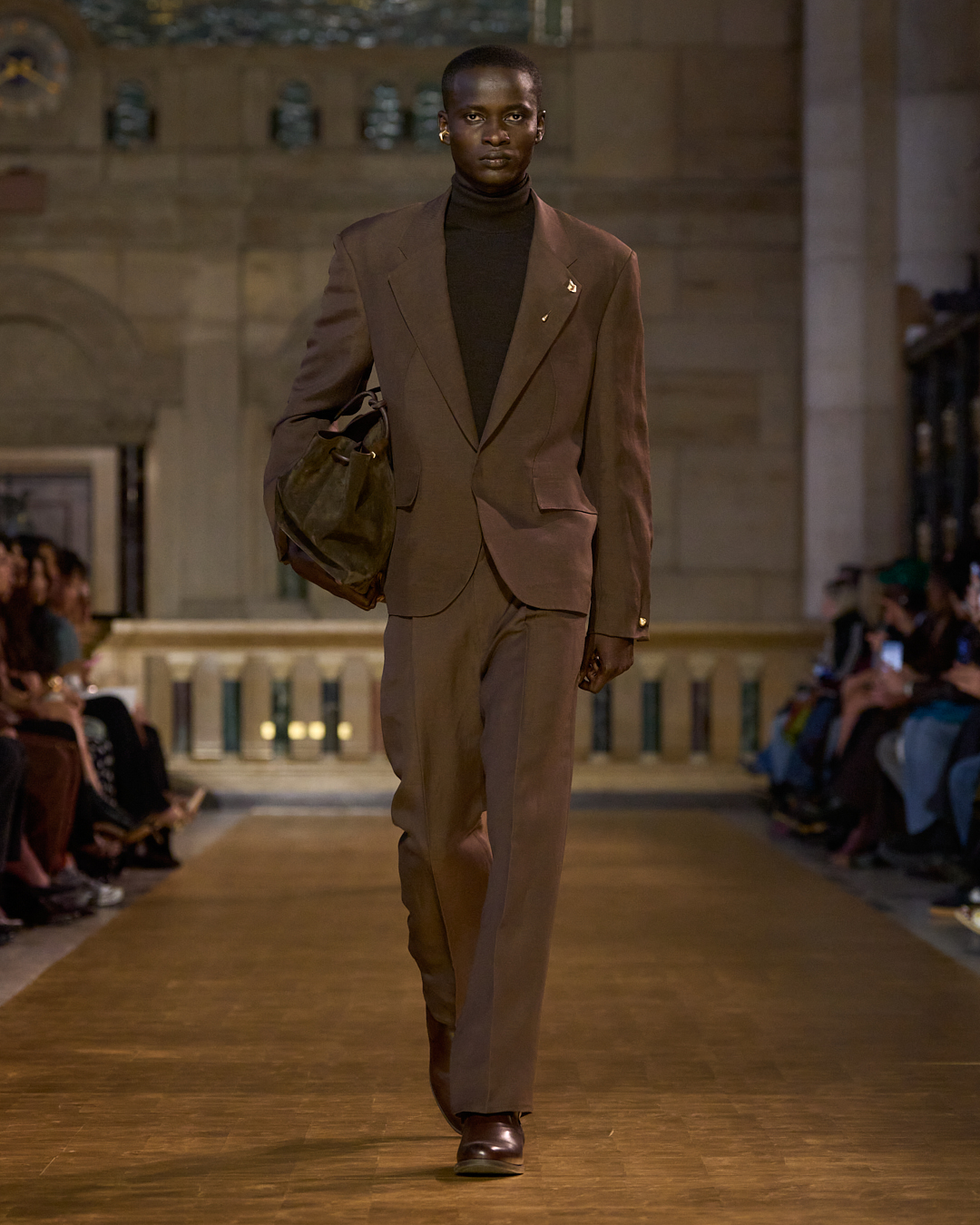
Cult Gaia’s Shirzan opened with the recorded voice of Jasmin Larian Hekmat’s grandmother singing Marzieh, turning lineage into the show’s first material. Named after the Farsi word for lioness, the collection framed femininity as ceremonial and instinctive rather than restrained. Engineered pleats became architectural.
The calla lily evolved from motif into structure, shaping hardware, suiting and sculptural footwear. This season also marked the brand’s debut into menswear, extending that same sculptural philosophy into tailored silhouettes that felt intentional, fluid and rooted in heritage rather than trend.
The chainmail lion bag anchored the cultural thesis, nodding to Iranian symbolism of protection and sovereignty while moving between armor and adornment. Even playful Bratz-inspired charms felt deliberate, proof that power can hold wit. Weighted brass jewelry, molded leather and stone-set details reinforced Cult Gaia’s object-driven identity. Spectacle here was not excess. It was ritual, memory, and inheritance, now expanded across genders and generations.
Campillo
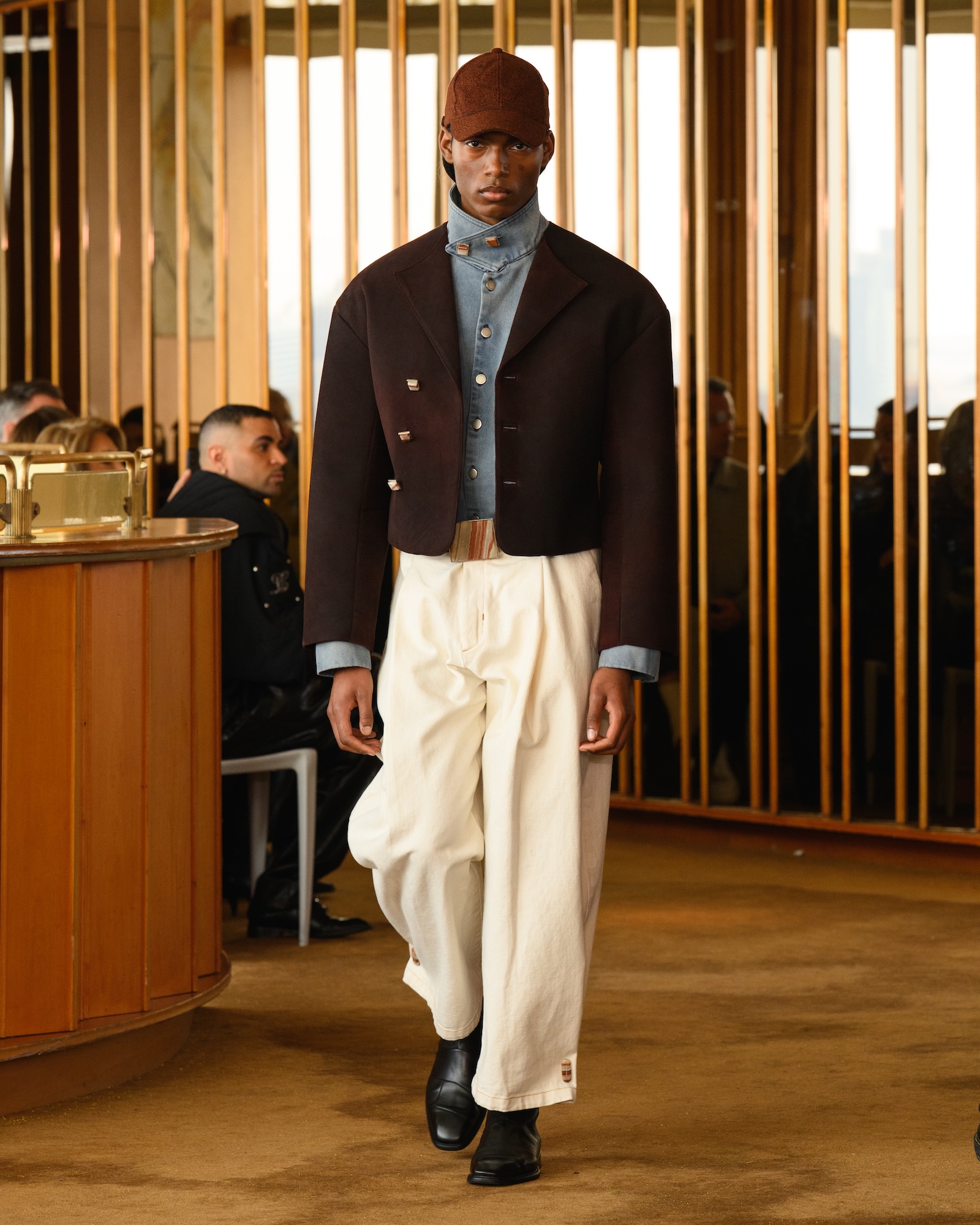
Campillo treated tailoring as architecture of identity. Charro-inspired silhouettes, jewel-toned silks, sharp shoulders. Construction over decoration.
In a cultural climate where identity is continuously negotiated, Campillo’s thesis felt urgent. Clothing reshapes posture. Confidence. Perception. The collaboration with artisans and material innovators underscored a commitment to craft over hype. This was fashion as philosophy, but wearable.
Christian Siriano
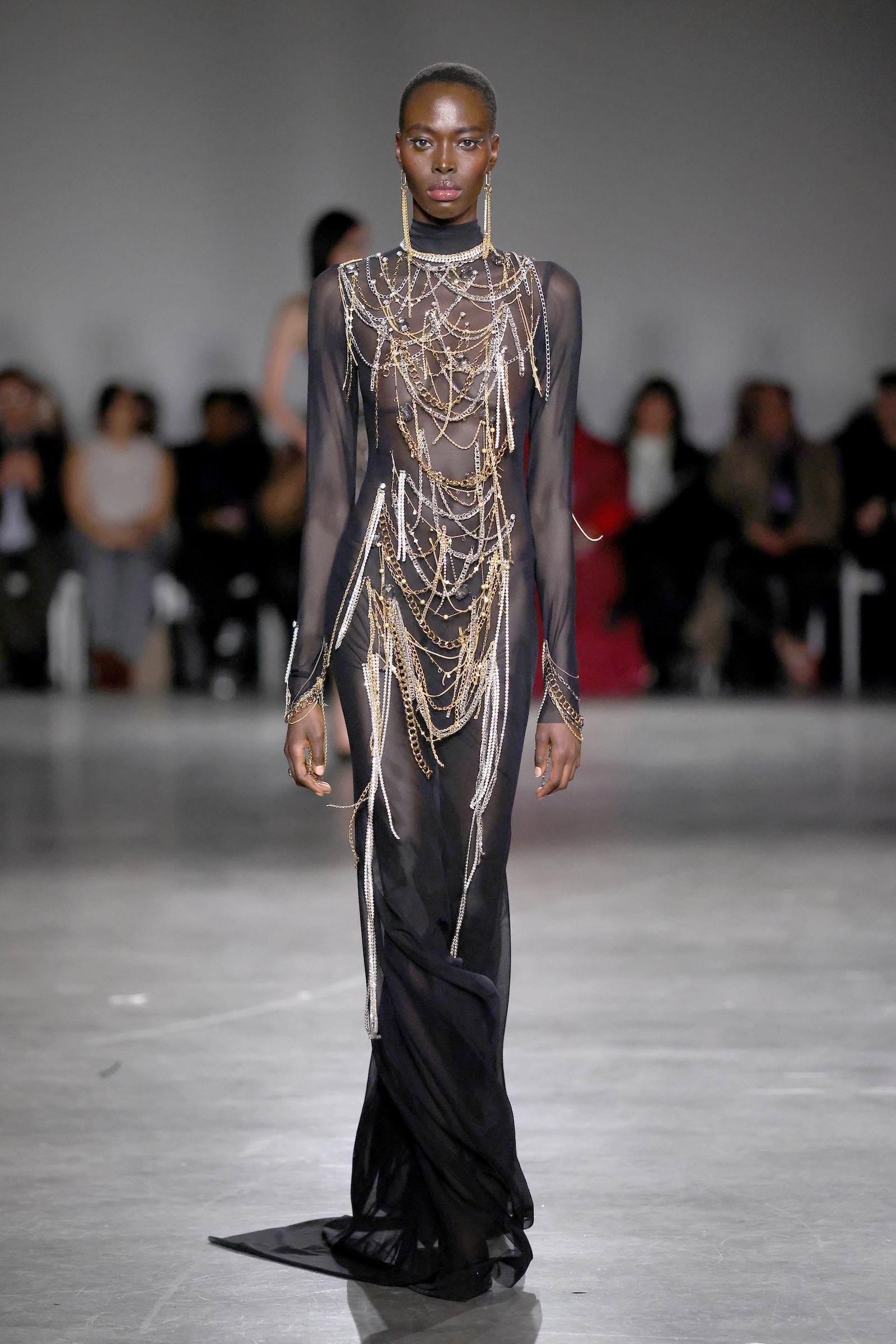
Christian Siriano embraced surrealism with sculptural silhouettes and high-gloss finishes that nodded to Dalí without slipping into costume. Inky blacks and jewel tones grounded the collection in discipline.
Siriano has long positioned himself as a democratizer of glamour, dressing bodies often excluded from traditional couture spaces. This season’s escapism felt purposeful. Fantasy as access. In a moment when many feel locked out of power structures, his gowns offered visibility. Drama was not frivolous. It was reclamation.
Chuks Collins
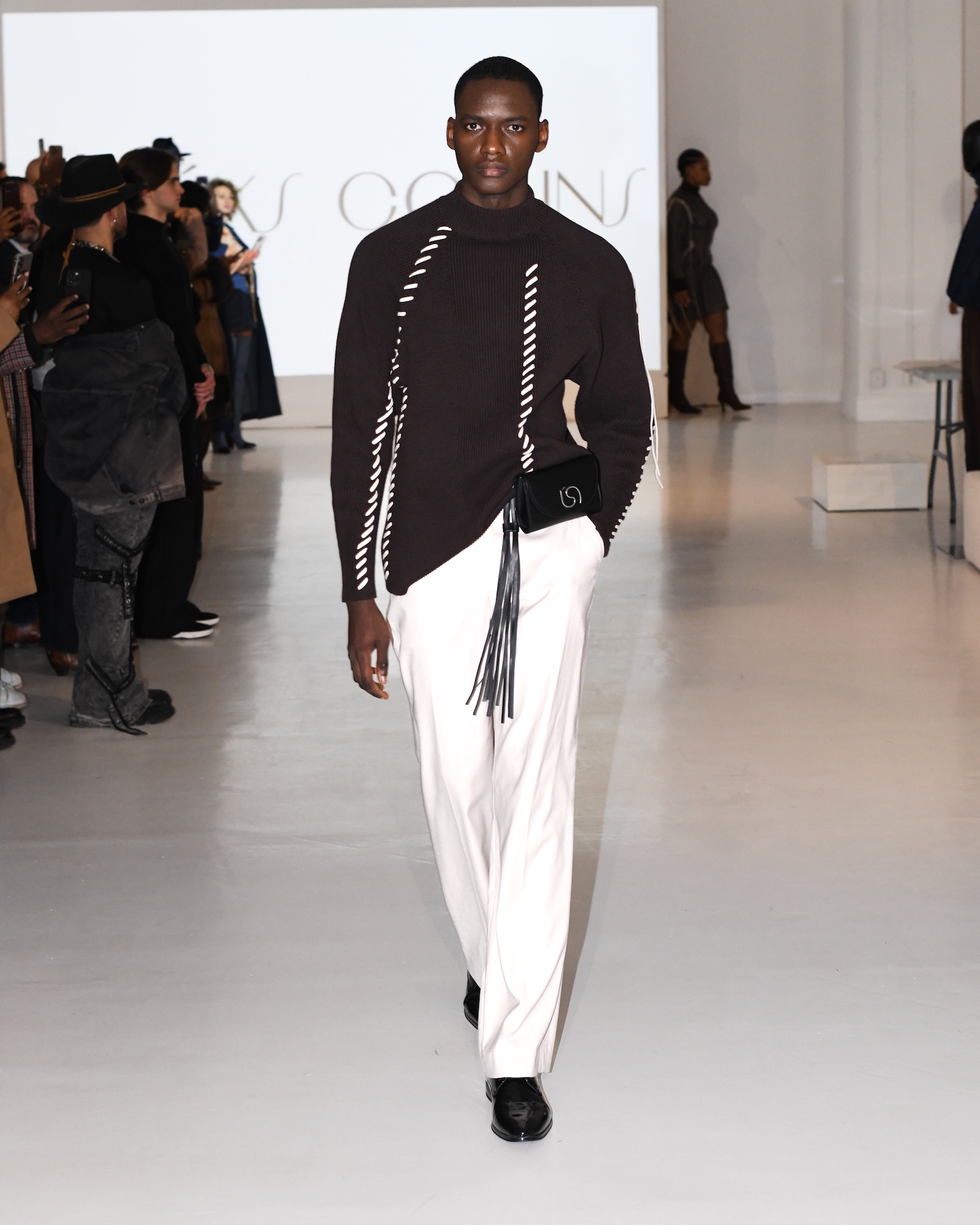
At Daylight Studios, Nigerian designer Chuks Collins presented Ancestral Futures as a meditation on lineage and longevity. In an intimate room filled with industry insiders and cultural thinkers, Collins reframed luxury as archive rather than excess. Styled by Alexander Julian, the collection balanced precision tailoring with sculptural volume, grounding its futurism in memory. This was not nostalgia dressed up as trend. It was heritage recalibrated for now.
Drawing from African textile traditions, tribal markings, and classical tailoring, Collins translated history into adaptive silhouettes, modular construction and hand-finished jacquards that felt almost digitally botanical. Regenerative materials, bio-leather, and coated wools underscored a deeper thesis: innovation without erasure. In a season centered on wearability and purpose, Ancestral Futures positioned craft as technology and memory as infrastructure. The message was clear. The future is strongest when it carries its past forward with intention.
LoveShackFancy
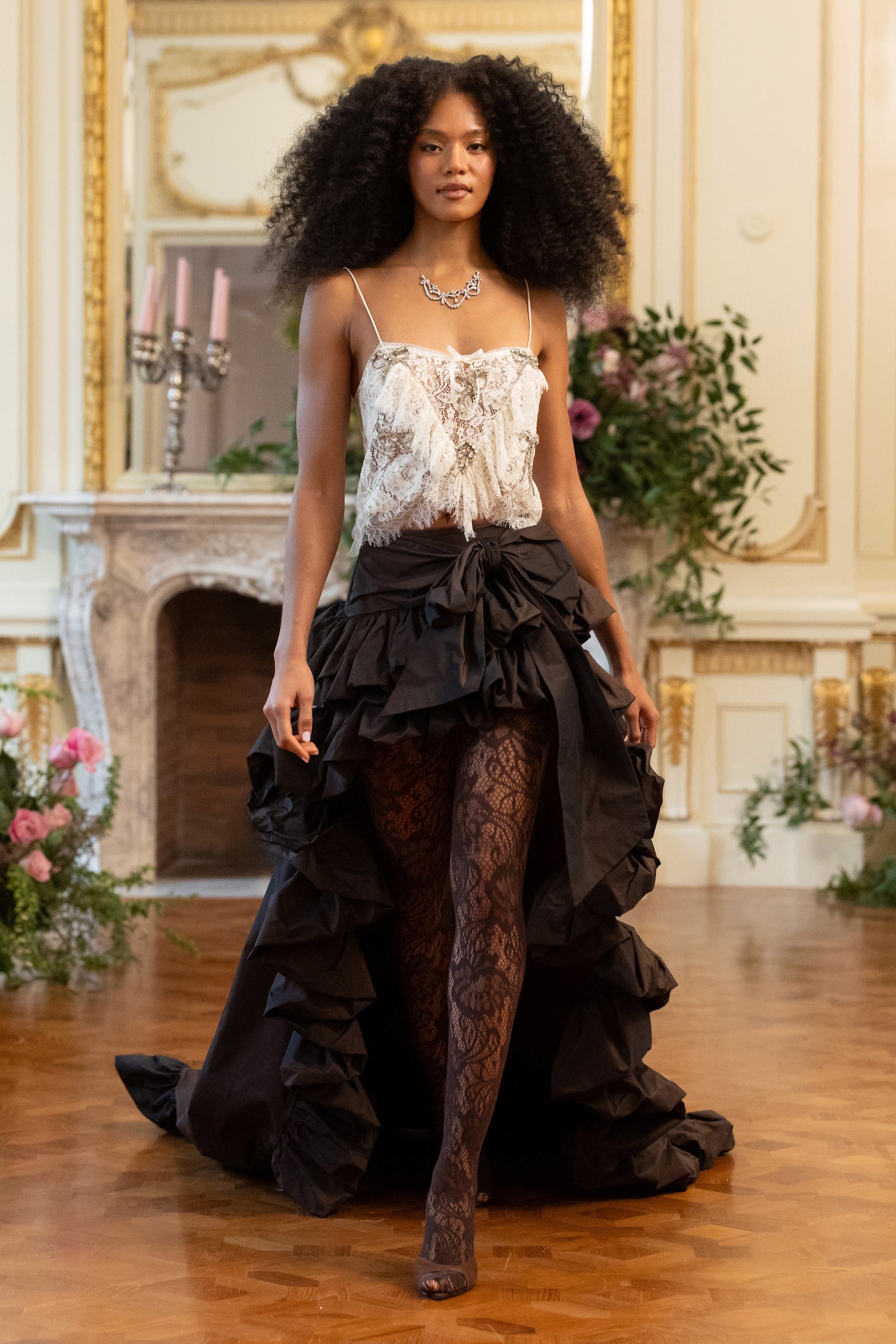
At the Cooper Hewitt mansion, LoveShackFancy leaned into Gilded Age fantasy, but there was something timely about the mood shift. Gone were the carefree florals of spring. In their place, deeper tones, velvets, lace, and silhouettes that felt less ingénue and more heiress-with-agency. Rebecca Hessel Cohen’s muse felt like the girl who grew up romanticizing Blair Waldorf and Marie Antoinette but now understands power dynamics, inheritance, and optics.
In a moment where “old money” aesthetics dominate TikTok feeds, LoveShackFancy presented the aesthetic as theater. The grandeur of Fifth Avenue, prosecco in hand, archival mood. But beneath the ruffles was a sharp understanding of how femininity performs in elite spaces. Softness can be strategic. Romance can be armor. The collection understood that cultural currency today is not just about wealth. It is about narrative control.
Collina Strada
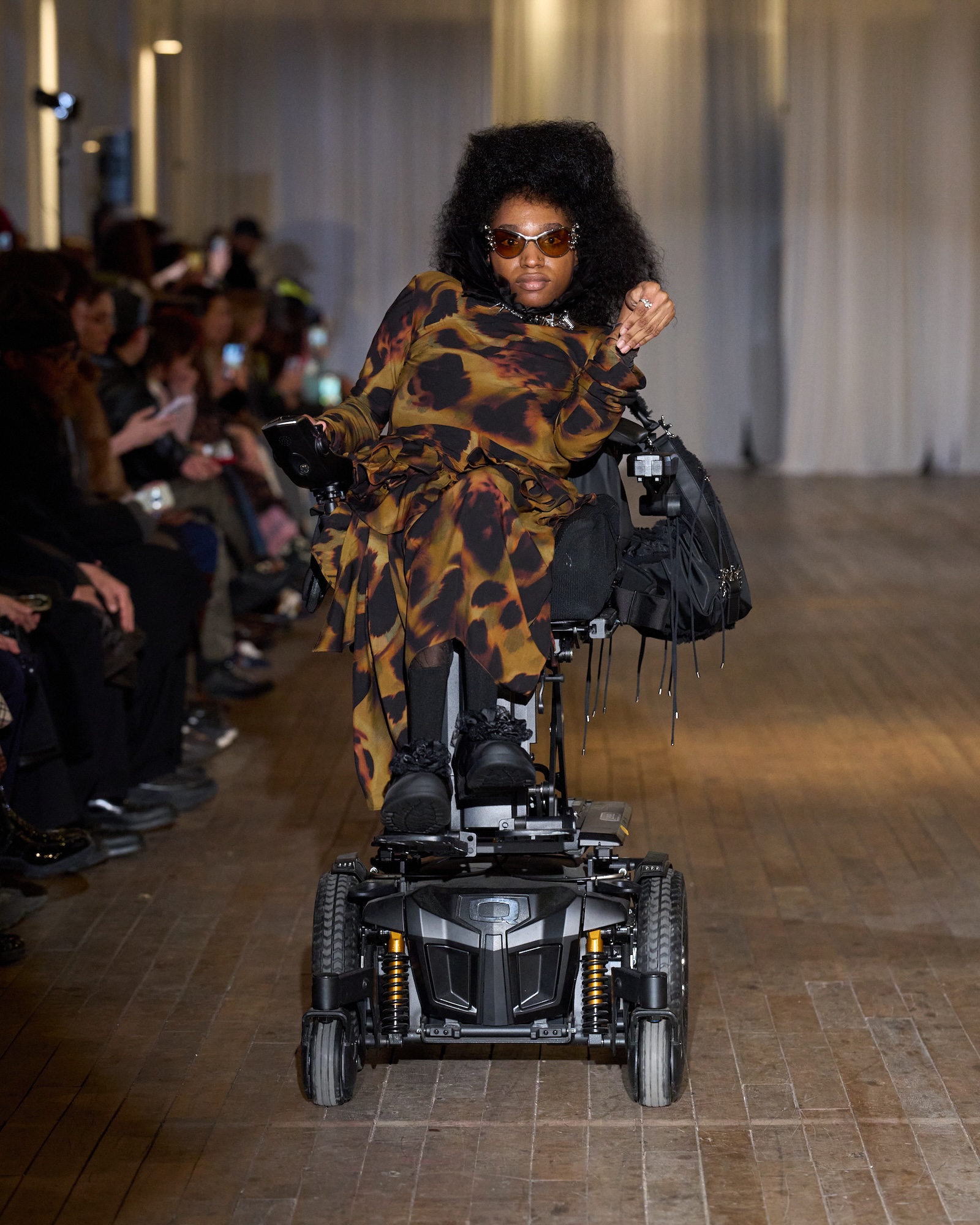
Collina Strada’s vampire metaphor was not subtle, and that was the point. “The world is a vampire” read less like costume and more like commentary. Climate dread. Digital burnout. Capitalism draining our warmth. Hillary Taymour turned that exhaustion into aesthetic language. Organza collars rose like protective halos. Plant-based furs wrapped the body like defiance.
There was something culturally resonant about retreating into self-made sanctuaries. Marginalized communities have always had to create interior worlds when the exterior felt hostile. Ballroom. Queer nightlife. Black Twitter. The satin-lined snow globe is metaphor, but it is also survival. Collina Strada asked what it means to fade from a world that refuses to reflect you accurately. And more importantly, how to look good doing it.
Jane Wade
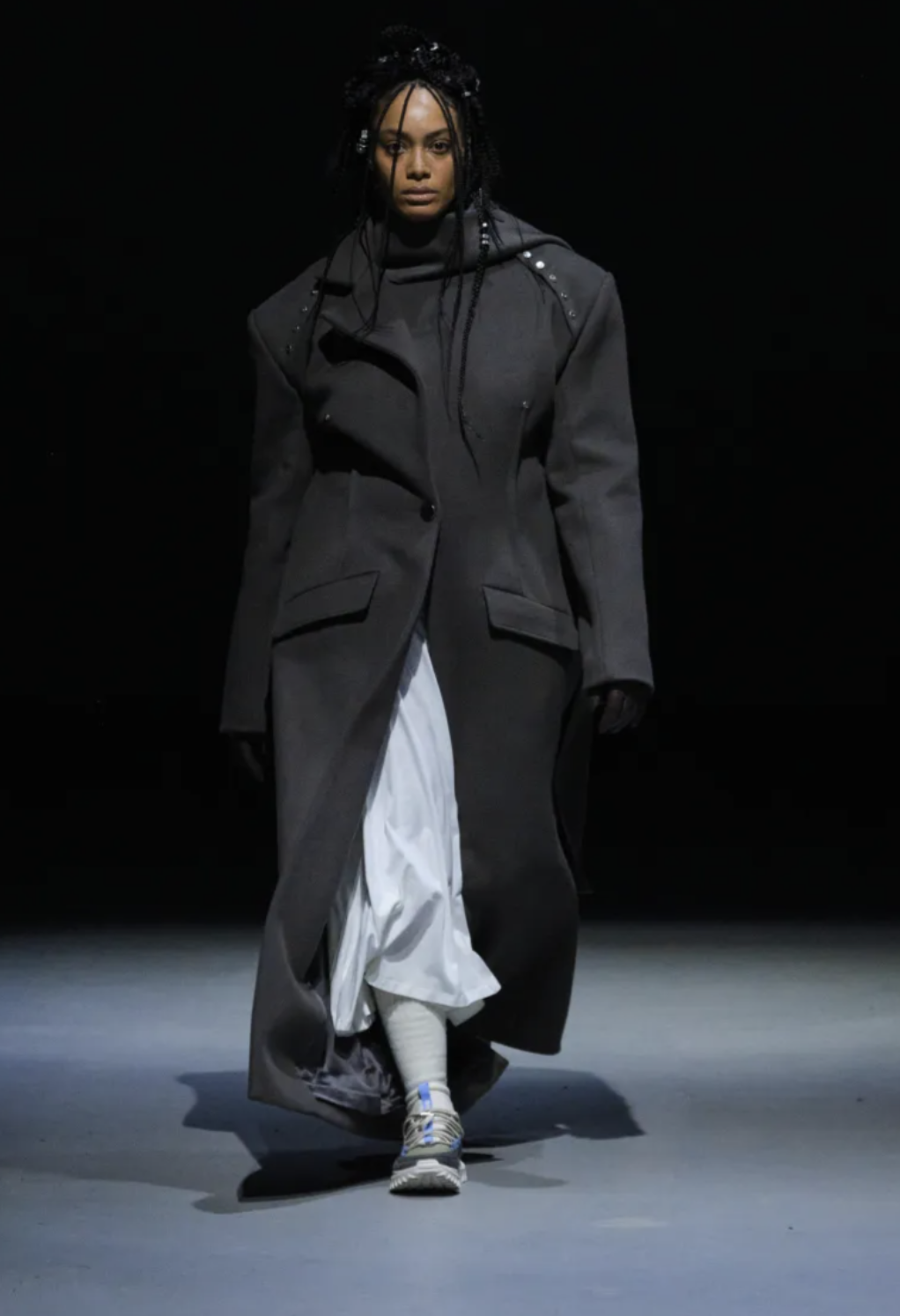
Jane Wade’s “THE SUMMIT” reframed corporate ambition through the lens of physical endurance. Office archetypes became expedition gear. Zip-off boots. Modular layers. Red Bull-backed stamina as an aesthetic thesis. It felt deeply millennial. Deeply Gen Z. Work is no longer a building. It is terrain.
In a culture obsessed with hustle, Wade asked what if the uniform acknowledged the climb. The collaboration with Sorel was not just practical, it was symbolic. Women navigating boardrooms, startups, layoffs and side hustles are scaling mountains daily. The clothes reflected that duality. Structured but adaptive. Polished but ready to pivot. Ambition here was not glossy. It was strategic and survivalist.
TWP
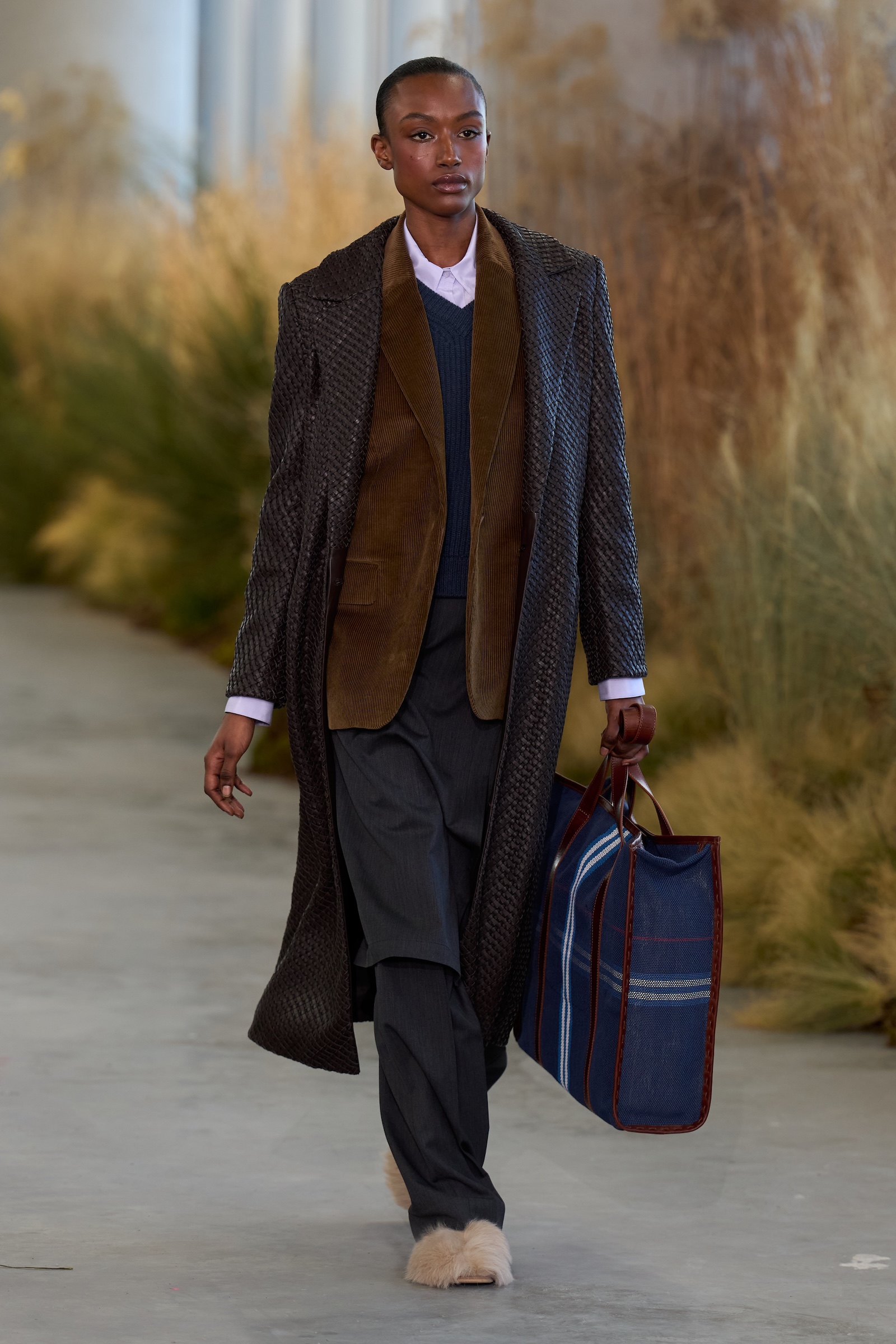
TWP explored the woman split between city propulsion and countryside restoration. “The city drives her, the country feeds her” felt less poetic and more diagnostic. Burnout culture has made duality necessary.
Cashmere coats over roomy flannel trousers nodded to 1920s Oxford bags, a subtle wink to women historically pushing boundaries in menswear silhouettes. The palette of sky-grey, oatmeal, and oak felt intentional. Quiet luxury continues to dominate, but TWP’s version had tactility. Tool belts in silver. Shaggy shearling. Fringed leather totes.
This was not about flexing wealth. It was about building a wardrobe that sustains you across environments. In a time when many are rethinking where and how they live, TWP made the case for clothes that move as fluidly as we do.
Zankov
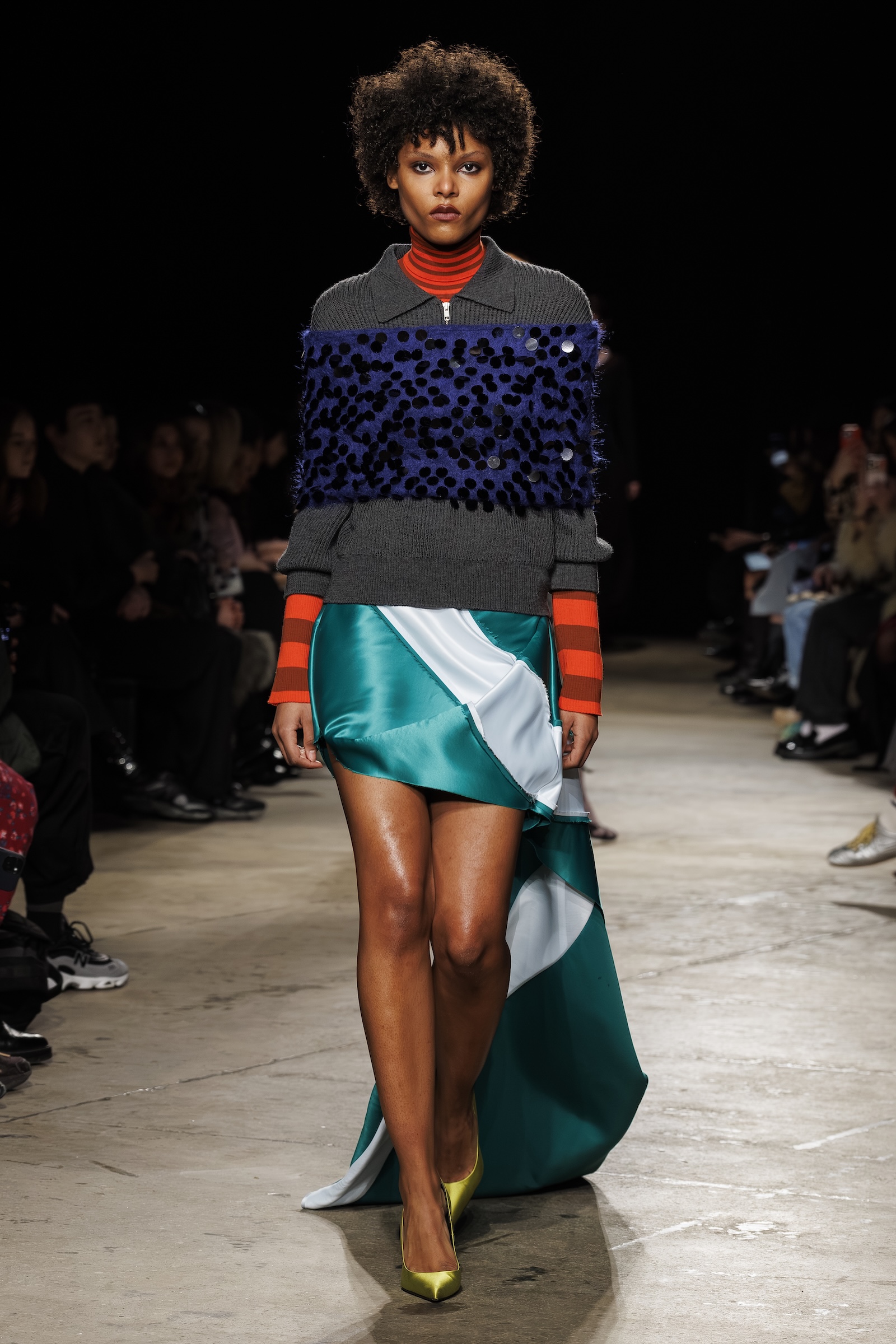
Zankov continues to make a case for tension as beauty. Subdued palettes met unexpected texture clashes. Knitted suits conversed with velvet. Lurex shimmered against charcoal wool.
Culturally, the collection felt aligned with a generation comfortable in contradiction. Soft and sharp. Nostalgic and futuristic. In a hyper-curated Instagram age, Zankov’s insistence that “the more wrong it is the better it looks” felt like rebellion. Style here was less about perfection and more about personal logic.
Derek Lam
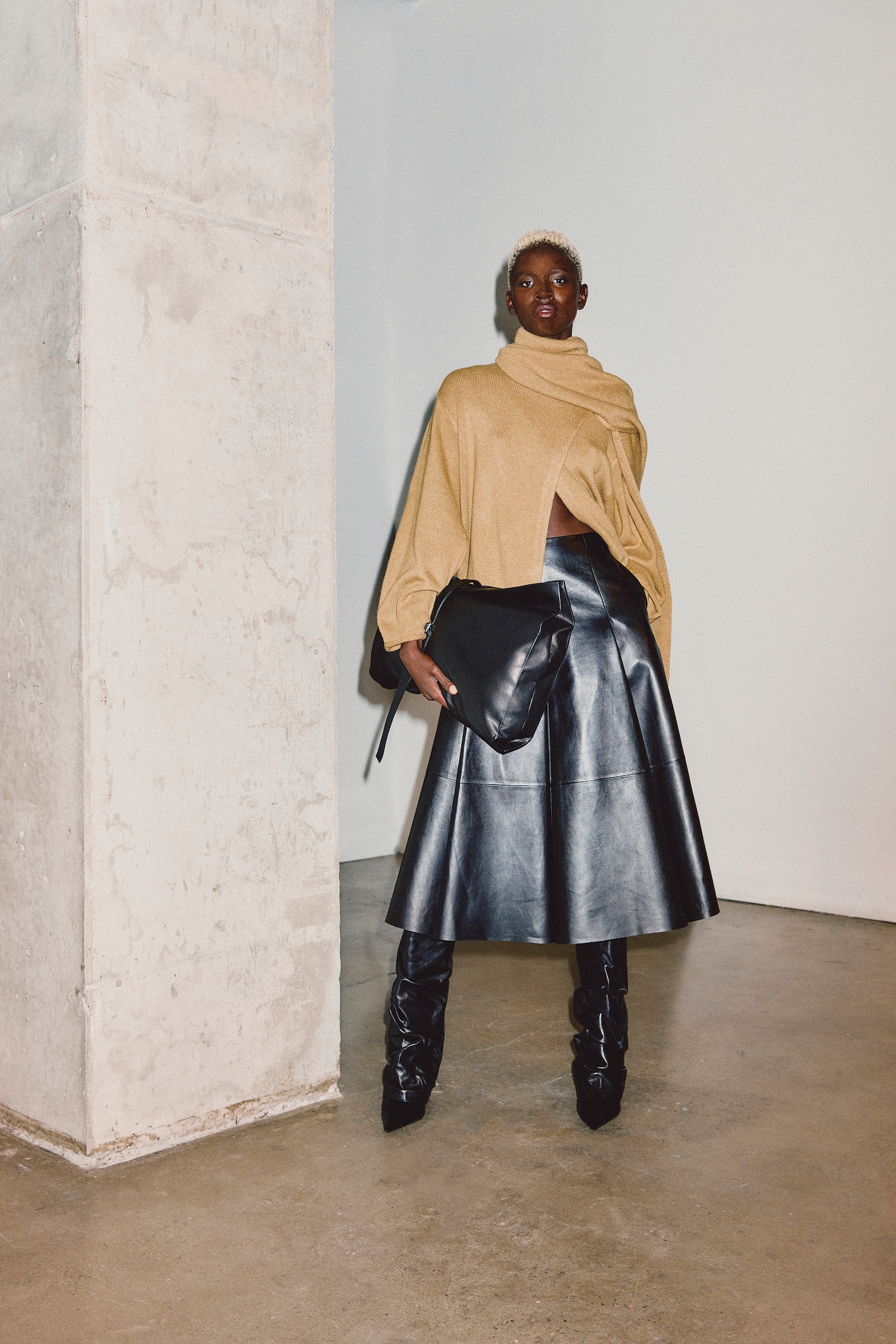
Under Robert Rodriguez, Derek Lam returned to modern American essentials with renewed warmth. Precision tailoring softened by sensual texture. Elevated but accessible pricing.
There is something culturally significant about re-centering American minimalism right now. The aesthetic once defined by restraint and quiet confidence has been overshadowed by logomania and spectacle. Rodriguez reintroduced calm. Fit, quality, discipline. In uncertain markets, clarity sells.
Fforme
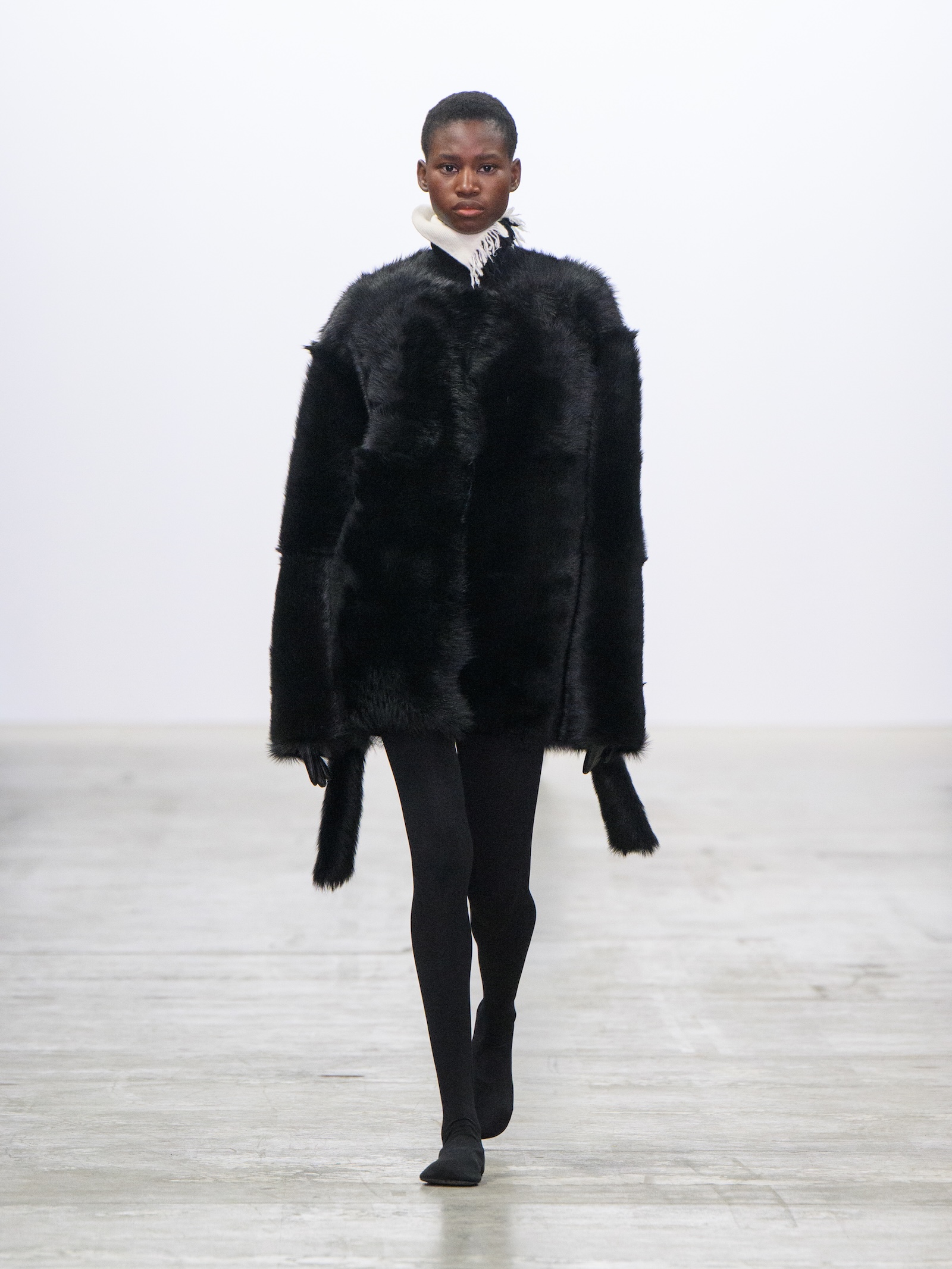
Fforme dissected tuxedo codes and Upper East Side ritual with surgical precision. Modular tailoring, raw edges, metallic halos hovering over silk.
Referencing Metropolitan and lost Seventh Avenue ateliers, the collection felt like a commentary on disappearing American craftsmanship. In an era of fast fashion dominance, the nostalgia for made-to-measure felt pointed. Elegance here was not nostalgic fantasy. It was critique.