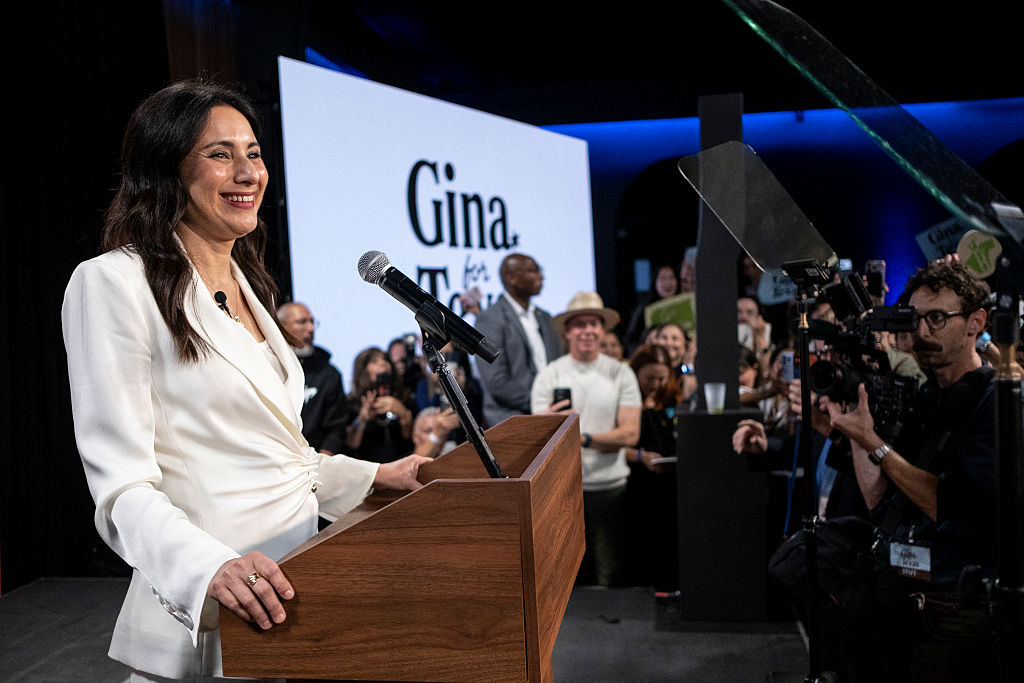
Texas has sent a shock through the nation, pulling off a historic win by electing the first Latina woman as Governor in the 2026 midterm election and the first democratic candidate in over 30 years.
Most of the nation didn’t see flipping a red state with a long-standing dedication to the Republican Party as a possibility leading up to the election; however, Black women’s dedication to doing the work prevailed at the polls and behind the scenes of Governor-elect Gina Hinojosa’s campaign.
The spotlight has been on the 90 percent of Black women who showed up to the polls to secure the seat in the Governor’s mansion; but Gina had a well-oiled machine of Black women as regional and statewide campaign directors who made it a priority to strategize and mobilize communities. “Our impact is so monumental that I don’t think democracy would thrive if Black women didn’t vote,” said Larissa Charles of the Hinojosa for Texas campaign.
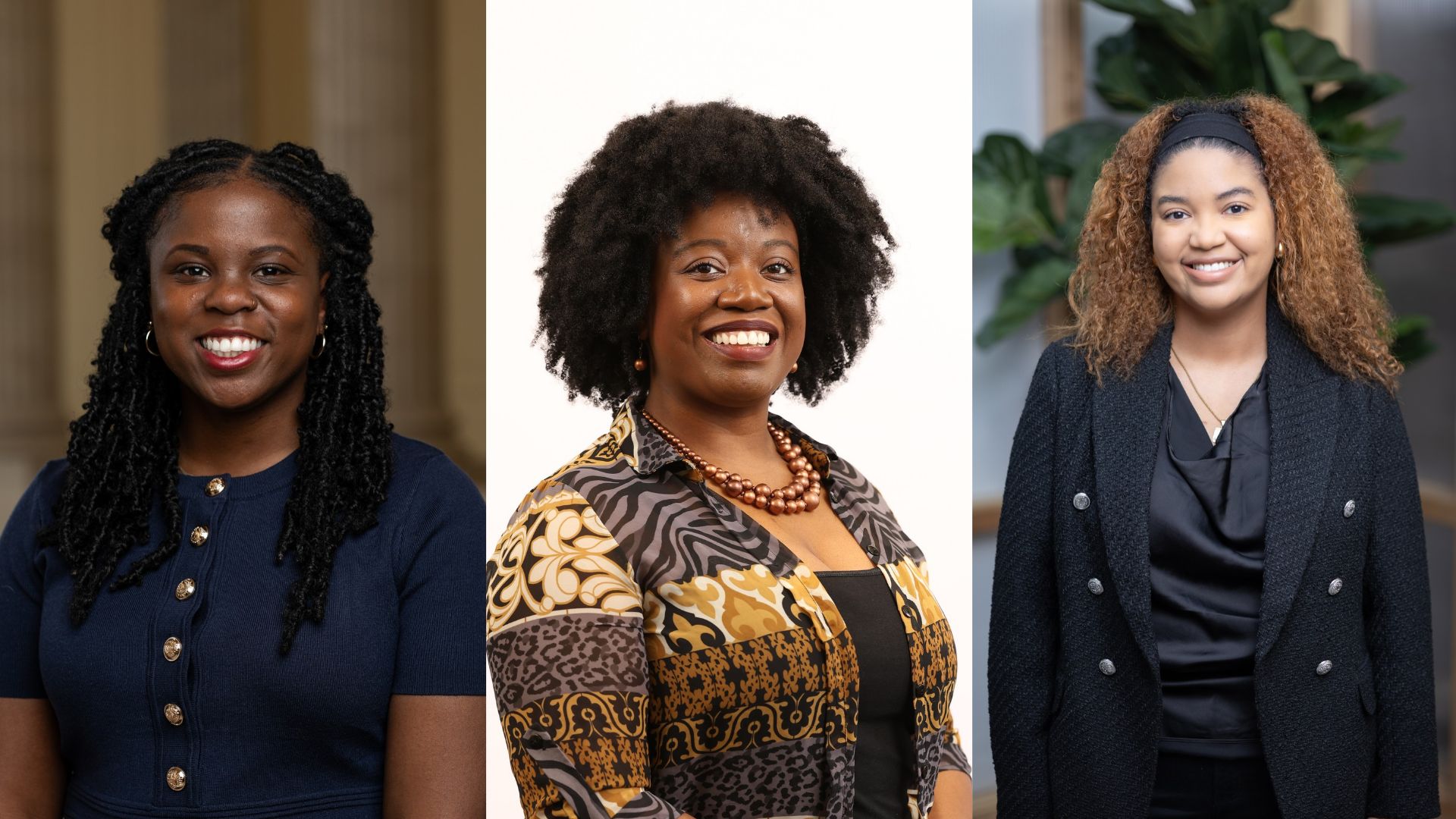
EBONY spoke with the three Black women and Texan natives who worked to build the infrastructure behind the Hinojosa for Texas campaign. Lashun Roy acted as the Statewide Organizing Director; Jermaca Brown and Larissa Charles are Regional Campaign Directors, Brown’s focus area being North and East Texas, while Charles’ is the Houston Gulf and Southeast Texas.
The women did not join the campaign by chance; they understood how their communities made all the difference in this election. There was a very clear distinction in this campaign and a commitment to understanding early on that Black Texans are not a monolith, and there is nuance to our experiences by region. Their input and strategic thinking shaped how Gina would show up in the Black community in every region in the state that only native Texans can understand.
The investment in underserved communities like Oak Cliff in Dallas and Third Ward in Houston was paramount, meaning understanding where to be and how to approach every stop on the campaign trail. The team gathered to show up in a community and, in return, the Black women in those communities showed up to make their mark in the campaign and become contributors to flipping a southern state that the country thought was devoted to the Republican Party after a reign of a red governor for 36 years.
If you could explain Black women’s political power in one sentence, how would you describe it?
Lashun Roy: In one sentence, I would say, historically, ‘Black women are the backbone of organizing.’
Jermaca Brown: I think my one sentence would be, ‘It’s just a fulfillment of our duty to rise to the occasion.’
Larissa Charles: I think [our] impact is so monumental that I don’t think democracy would thrive if Black women didn’t vote.
How did this midterm election differ from other elections?
Brown: I think people really started to lean into investing into Black communities, Black women, Black people, Black areas. We’re talented, and we happen to be Black, and that’s how we arrived here. We know what we bring to the table, and they invested back in that. So, it wasn’t that they were bringing in outside talent; they strategically had people in place from these regions to make sure it was prioritized and that they knew how to effectively reach out to our specific communities to make sure that we could reach out to our communities to make these gains.
Charles: One, this campaign has been one of the most joyful experiences that I’ve ever had. I don’t think I’ve ever worked on a campaign where I’ve felt so valued, respected and loved. Senior staff was always willing to listen, but I think the air in Texas just felt so different. People were so willing to be a part of the process, and also, no matter where you went in Black communities and neighborhoods, we always turned out. We are the backbone of the Democratic Party, but something just felt so different in this eagerness for real change.
Roy: Yeah, I’ll echo both Jermaca and Larissa. I think one thing that Jermaca said really stood out to me was the fact that my expertise was trusted during this whole process. I never felt like I had to fight for my ideas or my expertise to be heard or seen.
What do you think that other politicians misunderstand about Black women that this campaign prioritized?
Roy: Our worth, our value, and what we’re capable of. That Black women and staffers are at the table for a reason. It’s not just a thing that looks good, or to make sure that you have a diverse team, but there is a reason that we’re at that table, and we have earned this.
Charles: Honestly, down to the basics, it’s representation. We had regional teams that had folks that looked like them, that talked like them, that understood the culture. Someone from El Paso doesn’t understand Houston culture, right? It’s why we took Gina to Houston to barbershops and beauty salons because we knew that’s where conversation was happening. I think a lot of statewide campaigns in the past have always had a high concentration of staff in Austin, and then they might send one regional person to Houston. That doesn’t work. That’s not feasible, Houston’s too big.
Brown: I mean, for me personally, being in Dallas, a lot of people prioritize North Dallas and they forget the South, whether it’s South Dallas or Oak Cliff, the Southern sector. If I was gonna be on this team, I said, “We’re not missing the South”. Some of our biggest turnouts are coming from the South, specifically Black women in the South. We had Ms. Netto Jackson out there putting up four-by-four signs. She’s in her mid-seventies, and she’s out there putting up signs in a truck, making sure that that was happening. I can just list off Black woman after Black woman that made sure our votes were protected, that volunteers were showing up, and these people were there, from sunup to sundown, whether that was during the election, before and after, [they were] still showing up and asking what they can do.
What are you ladies hopeful for in the future? What do you want to come of this blue wave?
Charles: I think what I want to come out of the blue wave is that we keep investing and we keep mobilizing and organizing. I think one of the beautiful things about Texas turning blue is like we’ve done the thing that we’ve talked about doing for 30-plus years. But then how do we keep it? We have to then build a government to deliver for people, but then we also have to keep talking to voters and let them know of all the good things that we’ve done. You have to show them results, because if you don’t show them anything, they’re gonna be like, “How have you made my life better?” Let’s just be frank, two years is not a lot of time. The work doesn’t end. I think we should absolutely still celebrate, but the investment in the conversation should not stop.
Roy: I think one of my biggest things as a native Texan, I’d always heard, “Lashun, the problem is, you just need to get out of Texas.” People tried to convince me that I’d get a win under my belt [if I left]. This is not my first campaign, second, or third, but we finally got the win. I might argue probably one of the most monumental wins we could have gotten. So I think one of the things that I am most hopeful for out of this win for us is getting back to a shared sense of values. The idea that, first and foremost, this country is a democracy and that people can be in charge and work with people on the opposite side of the fence from them, and still accomplish things. I think we’ve gotten so far away from that.
Brown: I’m excited about what it looks like. I’m excited about the future. I’m excited about having Miss T [Senfronia Thompson] as our Speaker of the House. I’m excited about having Gina as a Governor. I’m excited about having a female lieutenant governor. I’m excited that a generation who all just voted for the first time get to see this. I’m excited for government to be boring again and not wake up every day and there’s something crazy on the news. So, we can get back to governing for the people. That’s what I’m looking forward to, and I think that Black women have led that charge; we will continue to lead that charge, and I’m excited that we have people in power who will listen to us do that.