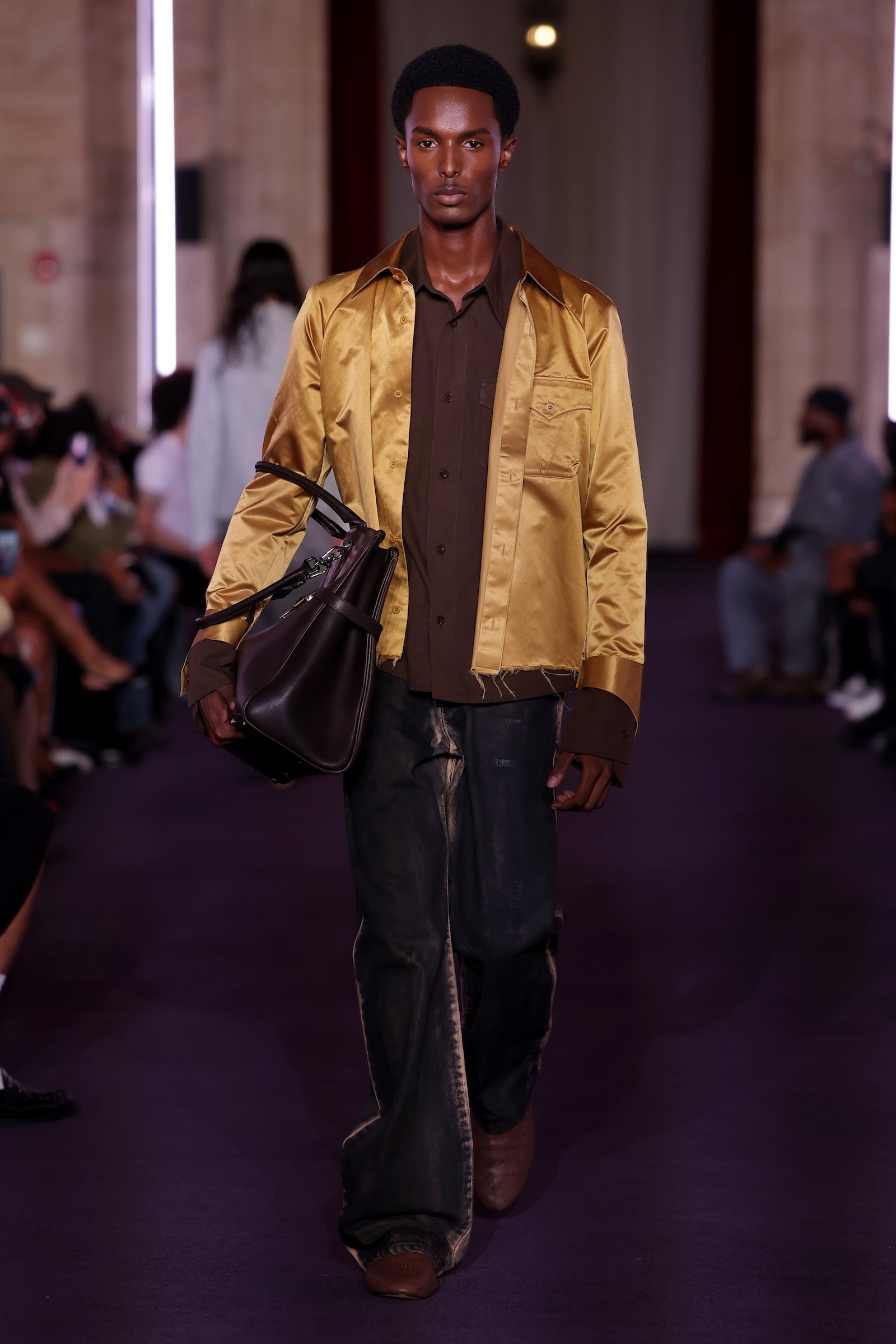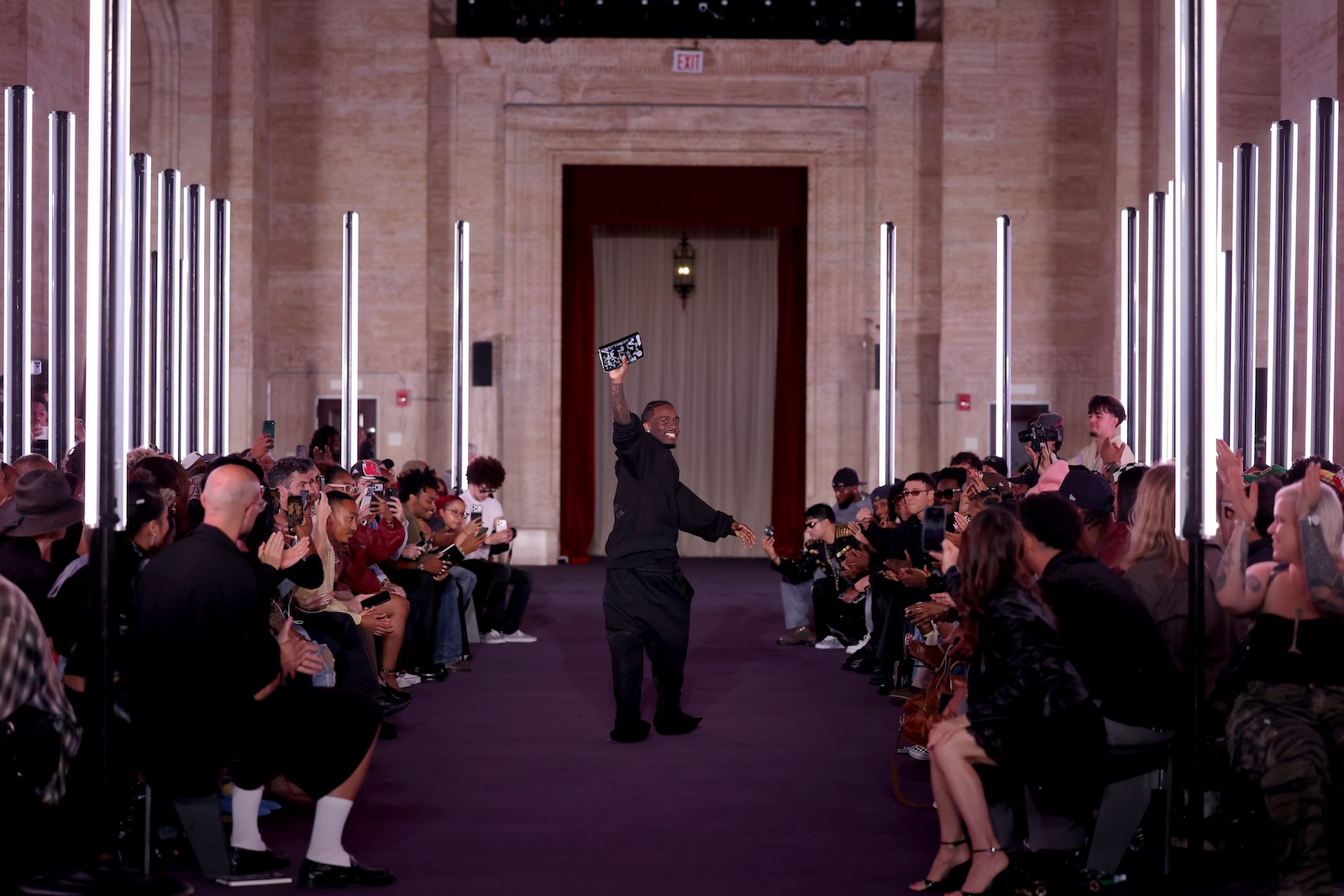
When the first few looks of Kai Cenat’s debut VIVET collection came down the runway at Cipriani in Lower Manhattan, it was hard to ignore the familiarity. Oversized hoodies, loose sweatpants, washed neutrals and hoods wrapped tightly around models’ faces immediately recalled the early Yeezy years, when Kanye West helped usher in a new era of distressed sweats, exaggerated proportions and intentionally undone luxury. For a moment, I wondered if we were about to watch another young label reproduce an aesthetic fashion has spent the better part of a decade copying. But VIVET quickly became more interesting once Cenat moved past those opening references and allowed more of himself into the clothes.
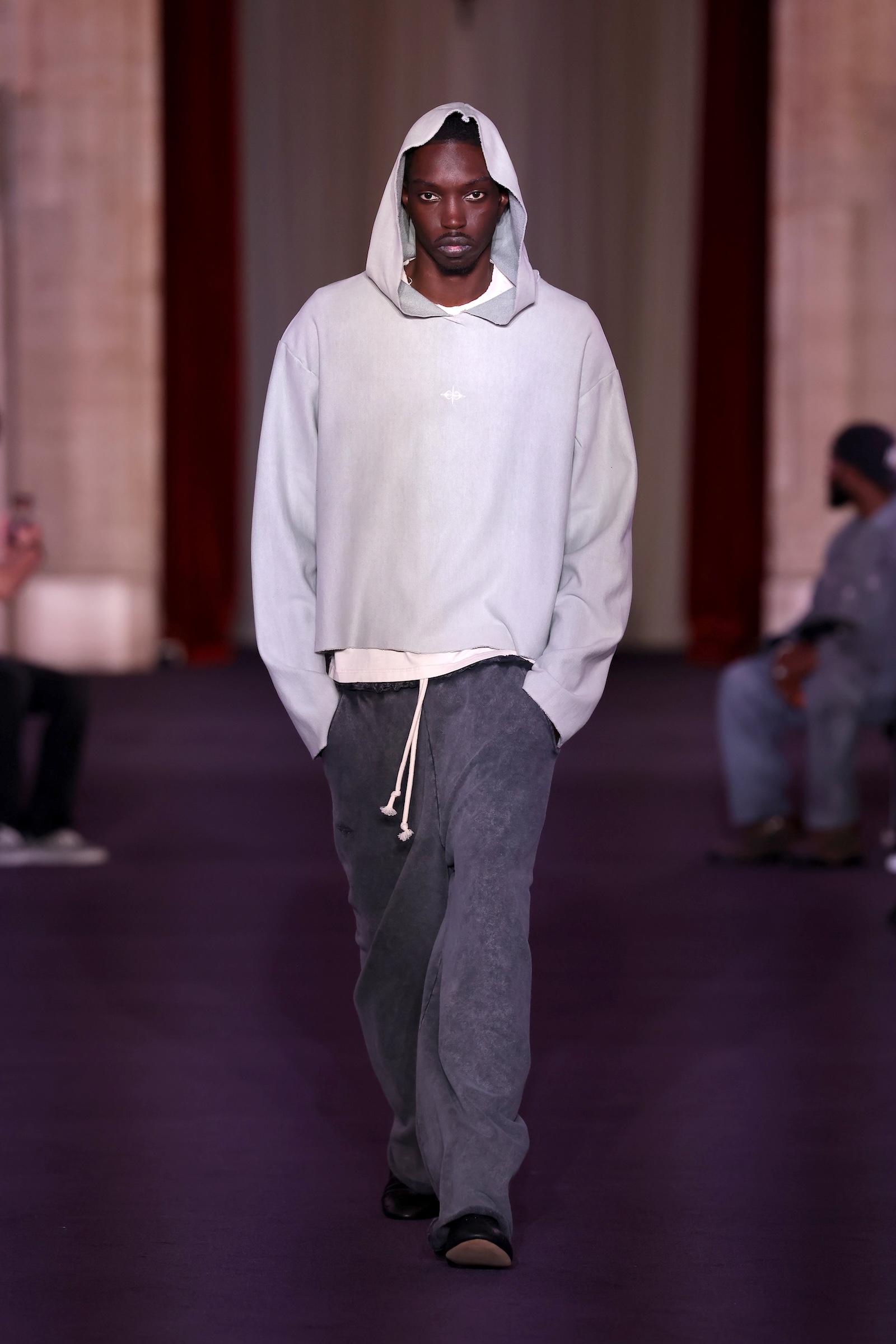
The shift happened gradually, which was fitting considering the collection was designed as a three-act story of progression. Origin began with the most unrefined pieces, including the Beginner Hoodie, the first VIVET garment Cenat sewed himself. Exploration moved into heavier outerwear, leather, skinny denim and boots before Authorship brought more structure through tailoring, silk and cleaner silhouettes. Instead of simply telling us that Cenat had grown as a designer, the runway allowed us to watch it happen. The clothes became increasingly assured as the show continued, and the further VIVET moved away from the oversized sweats of its opening, the clearer Cenat’s instincts became.
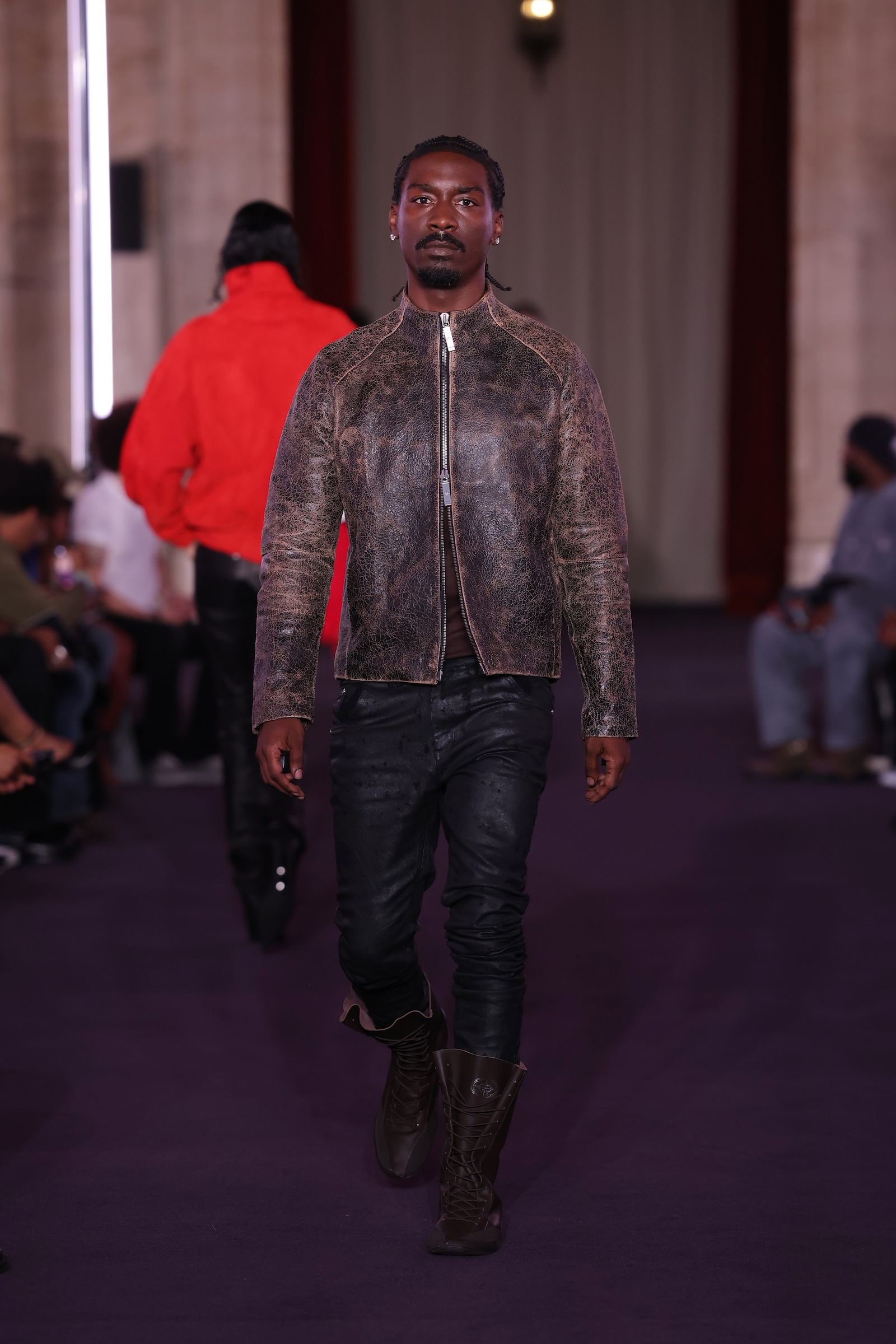
Leather was where the collection really began to find its footing. Distressed jackets, moto-inspired trousers, oversized bombers and heavy coats brought a tougher energy to the runway, while waxed and varnished finishes kept the clothes from feeling too pristine. A cropped distressed brown leather jacket with slim black trousers was particularly strong in its simplicity, while an olive bomber finished with oversized black leather pockets and paired with leather shorts showed a more considered approach to proportion. The menswear felt strongest when Cenat played with the tension between streetwear and something more sensual, particularly through fitted leather, exaggerated boots and outerwear that looked worn rather than newly purchased.
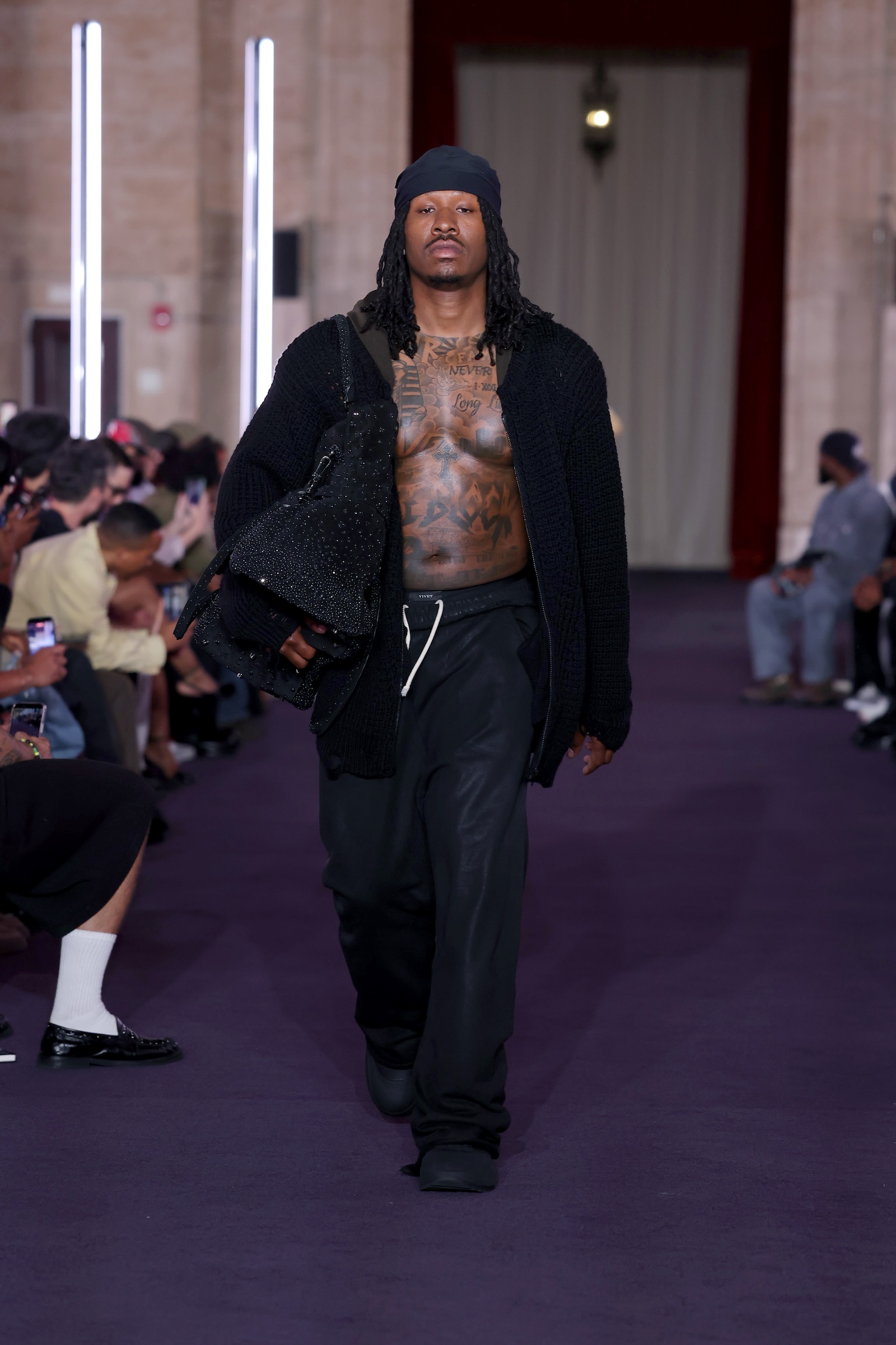
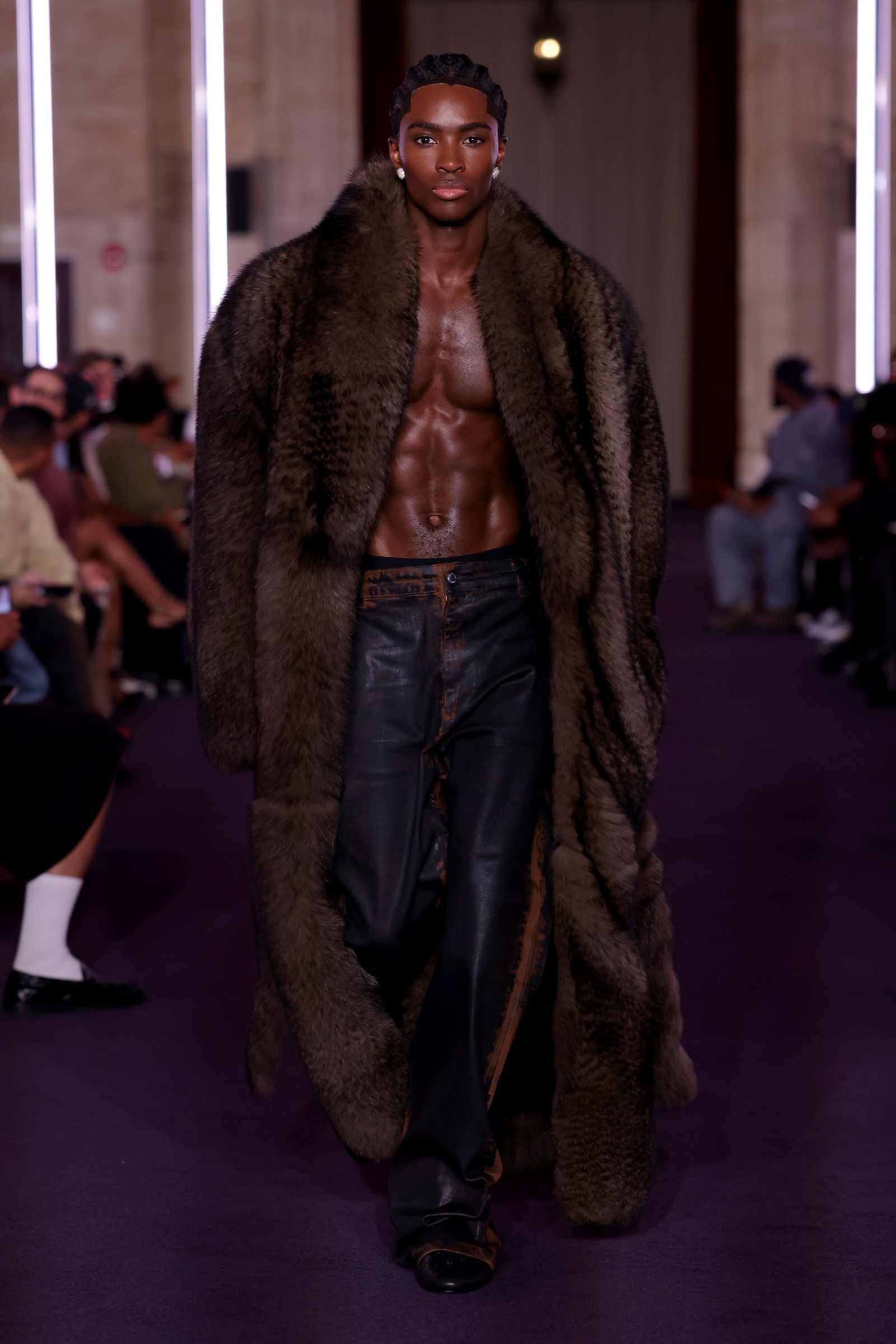
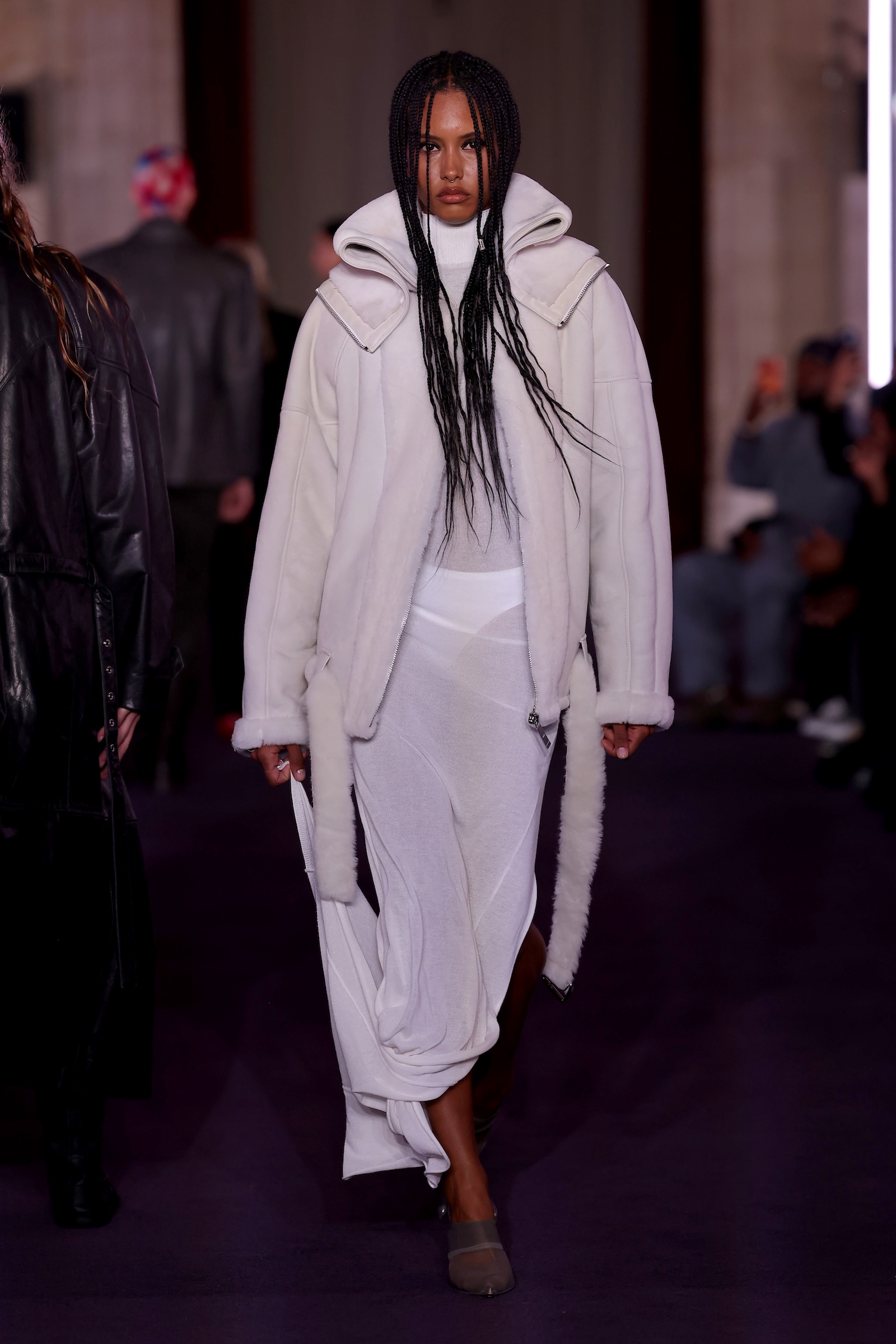
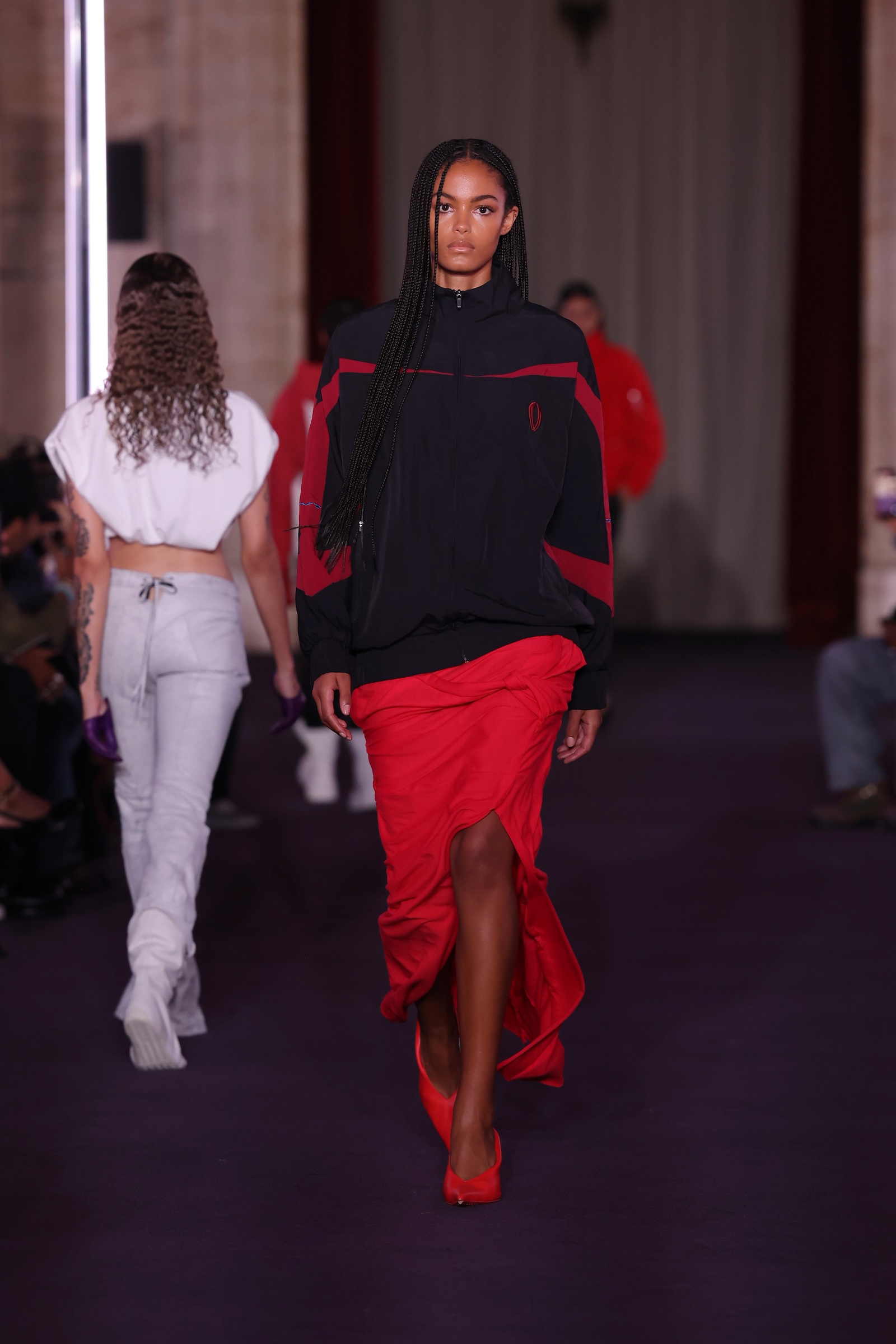
The womenswear also helped expand the VIVET vocabulary beyond the world Cenat is most immediately associated with. A black track jacket slashed with red was paired with a twisted red skirt and matching pumps, taking a familiar sportswear piece somewhere sexier and more sophisticated. An all-white look layered a dramatic shearling jacket over sheer, fluid fabric, offering softness against the collection’s harder leather pieces. Toward the end, an enormous brown fur coat worn open against a bare torso and leather trousers delivered one of the show’s biggest statements. By that point, VIVET had traveled considerably from the gray hoodie that opened the collection, and that distance ultimately became the story.
Cenat’s interest in craft was also more apparent once you looked beyond the spectacle of a creator with his level of visibility launching a fashion brand. When he announced that fashion design would be his next frontier back in 2025 at the Streamer Awards, we the people continued to watch the space and wait for him to make his debut. He spent months in Italy studying textile manufacturing, pattern-making and leather construction, and elements of that education appeared through exposed seams, gusseted elbows, diagonal pleating and hand-finished surfaces. “VIVET isn’t just a label to me, it’s the physical archive of my own growth,” Cenat explained in the collection notes, describing how learning the craft from the inside out changed his understanding of luxury. That idea of process is important because VIVET works best when it feels connected to Cenat’s actual journey rather than simply attached to his celebrity.
There were personal references here, too. Pieces including the scuba moto shirt, varnished jeans and cargo work jacket drew from Cenat’s Haitian heritage and carnival traditions, while the Streamer bag translated the digital world that made him famous into a luxury leather object. Those details could become particularly important as VIVET develops because they allow Cenat to build a design language that cannot simply be traced back to another designer’s mood board. His story, his relationship to internet culture, his Haitian background and the way his generation mixes streetwear, luxury and performance are far more compelling foundations than recreating the visual codes that defined fashion ten years ago.
That is also where the debut leaves VIVET. The collection was not without obvious references, and its earliest looks leaned too heavily into a Yeezy vocabulary to pretend otherwise. But dismissing the entire show on those first impressions would miss what happened afterward. As the layers became more intentional, the leather more dominant and the silhouettes sharper, Cenat began separating himself from the comparisons. There is still editing to be done and a more distinct signature to establish, but for a debut, VIVET showed something worth paying attention to: not a finished designer, but one who appears genuinely interested in becoming one.