In women’s college basketball, the road to a national championship almost always runs through two places: Storrs, Connecticut and Columbia, South Carolina.
And sometimes, because sport enjoys irony, those roads collide before the final destination.
That is what happened Friday night at Mortgage Center in Phoenix, Arizona, where Dawn Staley’s South Carolina Gamecocks met Geno Auriemma’s undefeated UConn Huskies in a national semifinal that felt like fate waiting to happen.
These are not just two elite programs. They are the programs of this era, the forces that keep finding each other when the stakes are the highest.
Saying it plainly, last year UConn thumped South Carolina 82-59 in the national championship game. Auriemma now holds a 9-7 edge over Staley overall, though South Carolina has won two of their three Final Four meetings.
And that is what we should be talking about: how South Carolina won last night.
We should be talking about how Staley’s team turned a heavyweight fight into a defensive lesson. How the Gamecocks held Sarah Strong and Azzi Fudd to a combined 7-for-31 shooting, won 62-48, and ended UConn’s 54-game winning streak.
We should be talking about South Carolina’s four players in double figures. About the poise. The discipline. The readiness. This was the kind of performance that shows up on the scoreboard, but tells you exactly which team was prepared to meet the moment. But that is not what people will remember. At least not at first.
They will remember the handshake.
Or more precisely, they will remember when the game stopped being about basketball and became about ego, irritation, and whatever was said between two legends — one at the precipice of glory and the other at the edge of defeat.
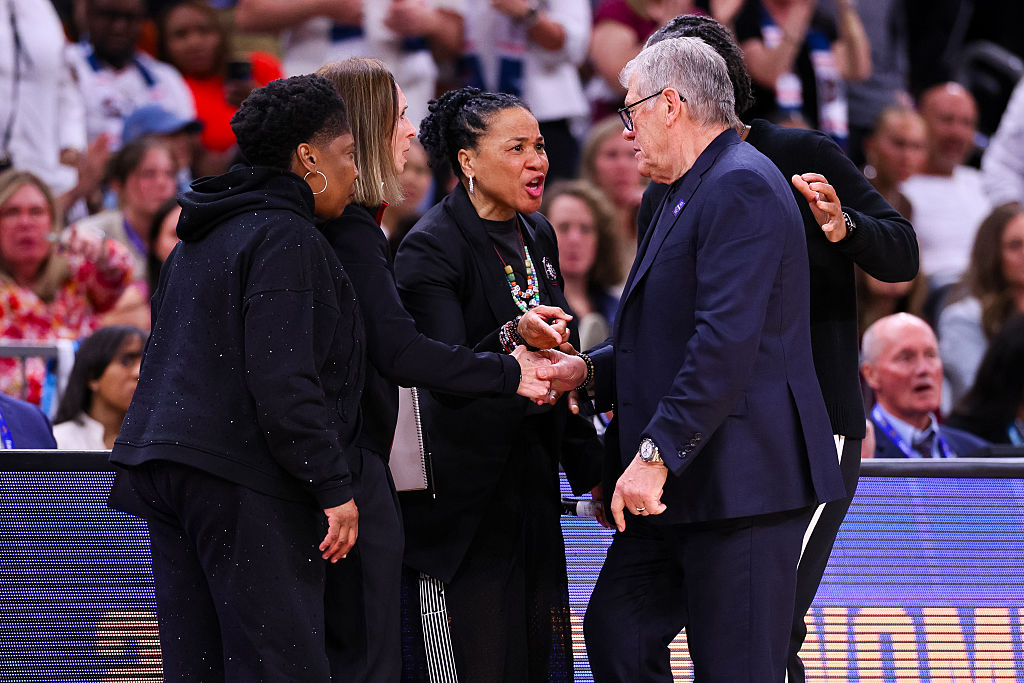
With less than a second left, Auriemma walked toward Staley to shake hands, but he stopped to said something. We still do not know exactly what he said. Maybe we never will. Both Staley and Auriemma have declined to say it publicly.
But the words almost matter less than the reaction.
We saw the “heated” exchange. We know assistants and officials had to step in. And we know that once the game officially ended, when it was time for the actual handshake line, Auriemma did not participate and instead headed off the floor.
That distinction matters.
The pregame coach-to-coach handshake. Auriemma later said he was upset because Staley did not meet him at halfcourt for the customary pregame handshake. Which can be confusing because there was a pre-game handshake where Staley and her coaching staff shook hands with Auriemma and his staff.
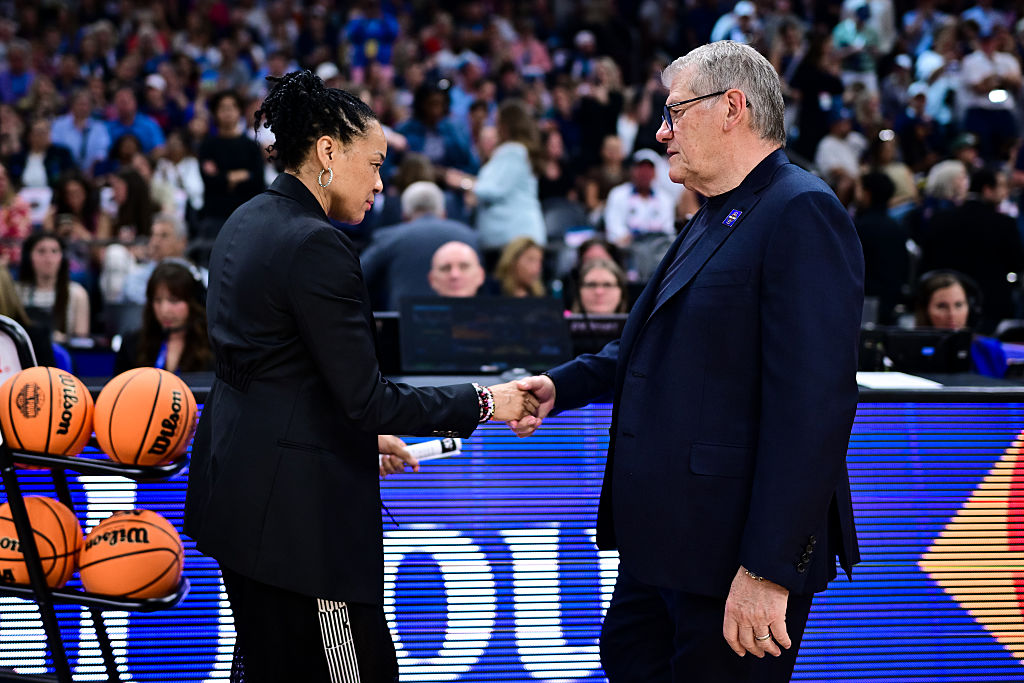
What Auriemma is referring to is a handshake typically had once the players are announced. This handshake is better understood as a tradition than a rule. Whereas the postgame handshake line is much closer to the NCAA’s code of conduct, one of its clearest rituals of sportsmanship.
One is custom. The other is an expected act of respect.
So, if the grievance is about protocol, about decorum, about “the way it’s always been done,” then walking away from the game’s clearest act of sportsmanship makes his complaint hypocritical and “that dog won’t hunt.”
Beyond this point, I won’t belabor the optics. They are there, and you felt them the moment it happened. But what interests me most is how quickly a great game got rerouted into a familiar American story: one white man not getting what he wanted.
Perhaps Auriemma had a point about the officiating. Statistically, South Carolina shot 22 free throws compared to UConn’s six.
But sometimes the explanation is simpler. Sometimes, the other team is just dictating the night. South Carolina did that.
That is the theft of this moment. Not of outcome. Not celebrating the Gamecocks or discussing the brilliance of a game plan masterfully executed, but of attention to a handshake.
The women of South Carolina deserved better than that.
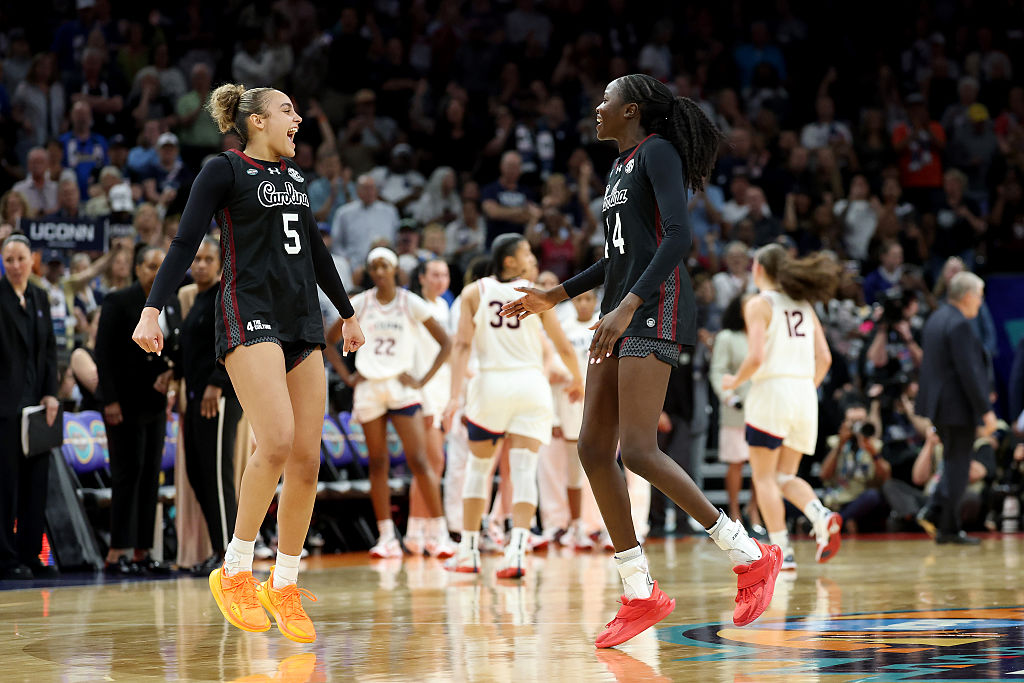
They deserved the night to end with the thing they earned on the court. They deserved the lasting image to be of their defense, their composure, their refusal to blink against a program that represents the sport’s highest standard.
They should be able to revel with their teammates in the fact that they also own a part of this standard.
Instead, the images that will remain are of Staley being held back by assistant coaches, yelling, “I would never do that,” and of Auriemma’s lone walk back to the locker room while his players and assistants carried out the sportsmanship he had spent the night invoking.
Unless we insist otherwise, what history may blur is just how brilliant South Carolina was this night.
And that might be the biggest loss of all.